Japanese Knives
The upgrade is not really about the word "Japanese". It is about numbers you can check on a manufacturer's own page. A Wüsthof Classic 8-inch is 58 HRC with a 3mm spine and weighs 265g. A Tojiro DP gyuto at 210mm is 59 to 60 HRC with a 1.9mm spine and weighs 187g. Those are two different tools doing the same job, and the difference is something you feel on the first sweet potato.
The three decisions
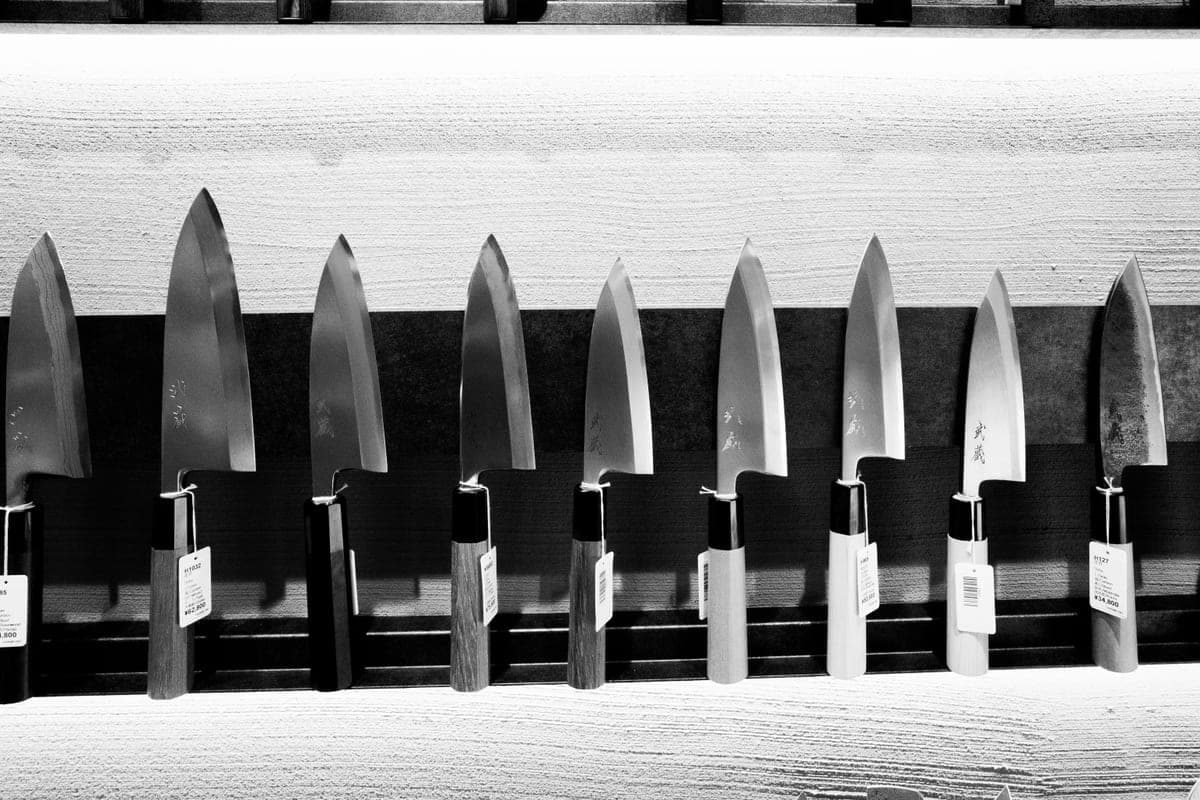
- Shape. A gyuto is the Japanese chef's knife and the right first purchase for almost everyone — same role as what you already use. A santoku is shorter and flatter and suits a small board. A nakiri is flat, tall and tipless, and it cannot touch protein. All ten shapes explained.
- Size. 210mm, and measure your cutting board before you argue with that. A 240mm gyuto overhangs a standard home board and you stop using the tip. Size guide.
- Steel. VG-10 at around 60 HRC is the default and it deserves to be: fine edge, good retention, stain resistant, easy to sharpen. Powder steels like SG2 hold an edge roughly twice as long and are harder to sharpen and easier to chip. VG-10 against SG2.
Match the knife to the complaint
| The complaint | The fix |
|---|---|
| Heavy and tiring | A lighter Japanese knife — 170 to 190g rather than 265g |
| Wedges in dense produce | A thinner spine — under 2.5mm |
| Goes dull within a week | A whetstone, first. Then harder steel. |
| Too long for my board | A 165mm santoku or a 180mm gyuto |
| Vegetable slices stay joined | A flat edge — a nakiri |
If your complaint is that the knife goes dull rather than that it feels wrong in the hand, a stone will help you more than a purchase will — and it costs less. Read why your knife is not sharp first. We would rather you spent nothing here than bought the wrong thing.
The rules you take on with the knife
- No bone, no joints, no frozen food, no prying. Keep a cheap heavy knife for those.
- Hand wash and dry immediately. The dishwasher is out, for stainless as well as carbon.
- Soft board only — rubber, hinoki or end-grain wood. Glass, stone, ceramic and bamboo all chip thin edges. Which boards work.
- Never a pull-through sharpener. It reprofiles a 15-degree edge toward 20 and tears steel out of hard blades. The explanation.
- Store it sheathed or racked, never loose in a drawer — which chips more tips than cutting does.
What to buy alongside it
A knife is a third of the purchase. The other two thirds are a 1,000-grit stone and a board that is kind to the edge, and both cost less than the knife. A maintained inexpensive knife outperforms a neglected expensive one every single day, which is the single most useful thing on this site.
Start at your first Japanese knife if you want the whole decision in one page, or go straight to the gyuto roundup if you have already decided on the shape.
What to buy