Skip to content
Hone & Handle
An assortment of kitchen knives and tools on a wooden table

Knife Brands

Model against model, using each maker's published specifications rather than their marketing.

Hone & Handle earns a commission from qualifying purchases made through links on this page, at no extra cost to you. It does not change what we recommend or the order we rank things in — here is how we choose and here is the full disclosure.

"Which brand is best?" is the wrong question, and every brand's marketing is designed to make you keep asking it. The better question is what each one optimizes for.

Five Japanese brands at a glance
BrandSteelHardnessOptimizes for
TojiroVG-10, clad59–60 HRCValue and thinness
MACProprietary high-carbon Mo-V61 HRCBalance and consistency
ShunVG-MAX, Damascus clad61 HRCFinish, handles, service
GlobalCROMOVA 1856–58 HRCLightness and one-piece design
MiyabiSG2 powder steel63 HRCEdge retention and acute grinds

Why we can compare these fairly

Specialist knife retailers write excellent content and they can only ever recommend their own stock. A reader trying to decide between a Tojiro, a Shun and a MAC gets no help from a shop that carries one of them.

We link to Amazon, which sells all of them, so there is no commercial reason to steer you toward any particular maker. That is a genuine editorial advantage and it is why this section exists. The full selection process is on our methodology page, and how the site is funded is on the disclosure page.

What we compare on

Every figure on these pages comes from a manufacturer page or a specialist retailer listing, linked at the point it appears. Four numbers do most of the work:

  • Rockwell hardness (HRC) — how long the edge holds and how fine an apex it supports. 56 to 58 is Western, 59 to 61 is Japanese, 62 to 64 is powder steel.
  • Spine thickness at the heel — the single best predictor of whether a knife separates food or splits it. 1.9mm on a Tojiro against 3mm on a Wüsthof is a 58 percent difference in the wedge.
  • Factory edge angle — and this one surprises people. Wüsthof grinds the Classic at 14 degrees per side, more acute than Shun's 16. The old "German 20, Japanese 15" story is out of date.
  • Weight — 265g against 170g is not a detail. It is what your forearm notices after twenty minutes.

A pattern you will notice

Across these comparisons, price tracks refinement much more closely than it tracks performance. The cheapest knife here has the thinnest spine. What the money buys is handles, finish, cladding, warranty and service — all real things, none of which cut.

Where to start

The brand guide covers all five Japanese makers plus the Western names they compete with, and flags the tells that a "Japanese" brand is not.

If you already have two candidates, go straight to the head-to-head: Shun against Wüsthof is the classic Japan-versus-Germany decision, Tojiro against Shun asks whether the premium is worth it, and MAC against Shun is performance against presence.

Head to head

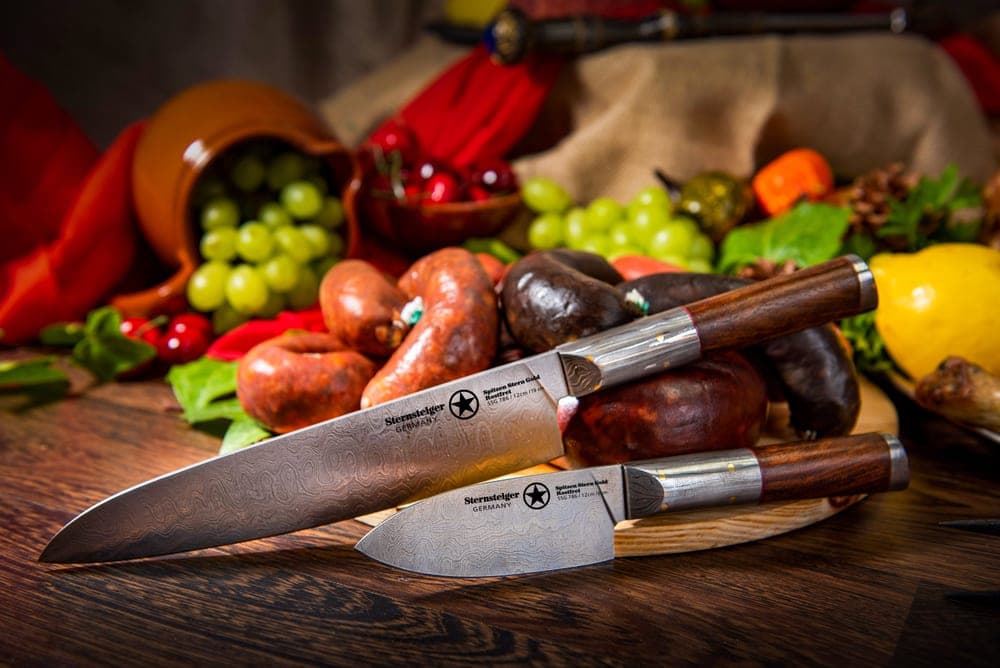
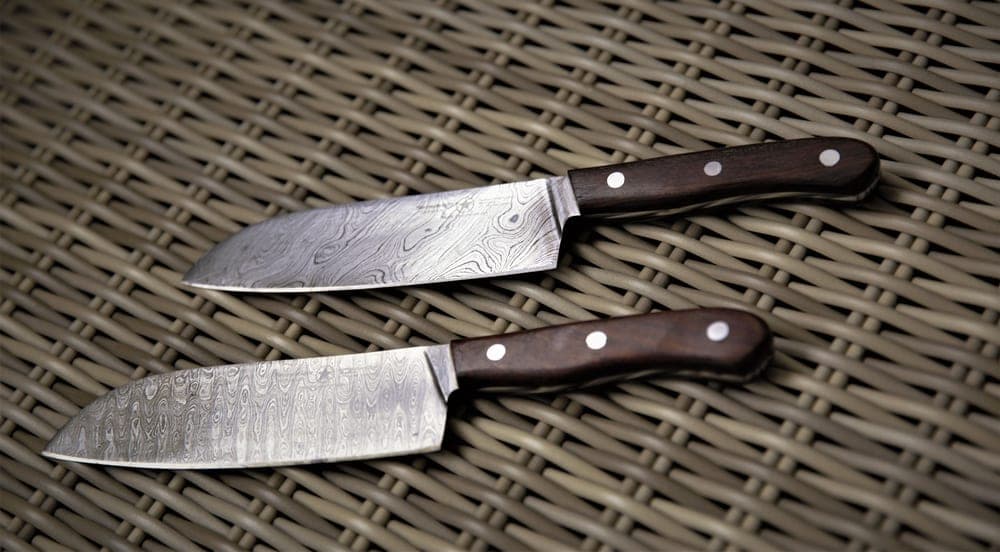
Two kitchen knives placed side by side on a dark surface

Best brand head-to-head
Shun vs Wüsthof

Shun Classic against Wüsthof Classic on published hardness, edge angle, spine and weight — and which suits how you actually cook.

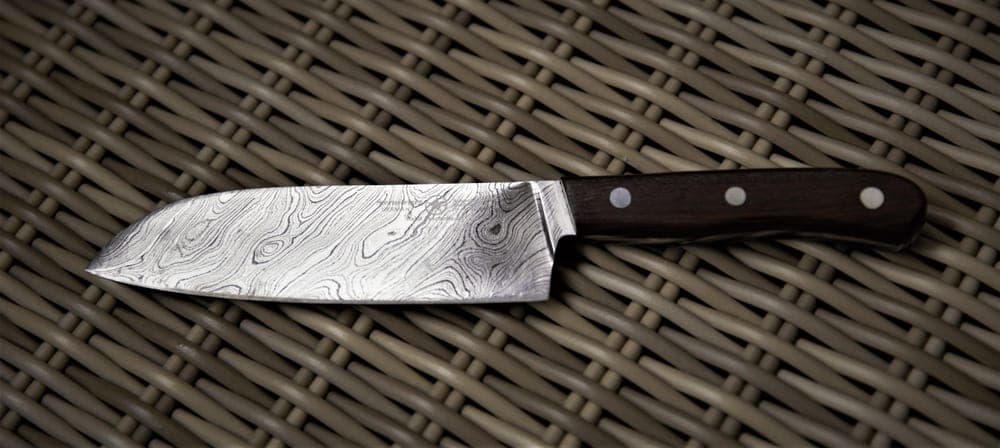
Close detail of a patterned knife blade

Tojiro vs Shun

Tojiro DP against Shun Classic: near-identical cutting cores, very different prices, and what the gap actually pays for.

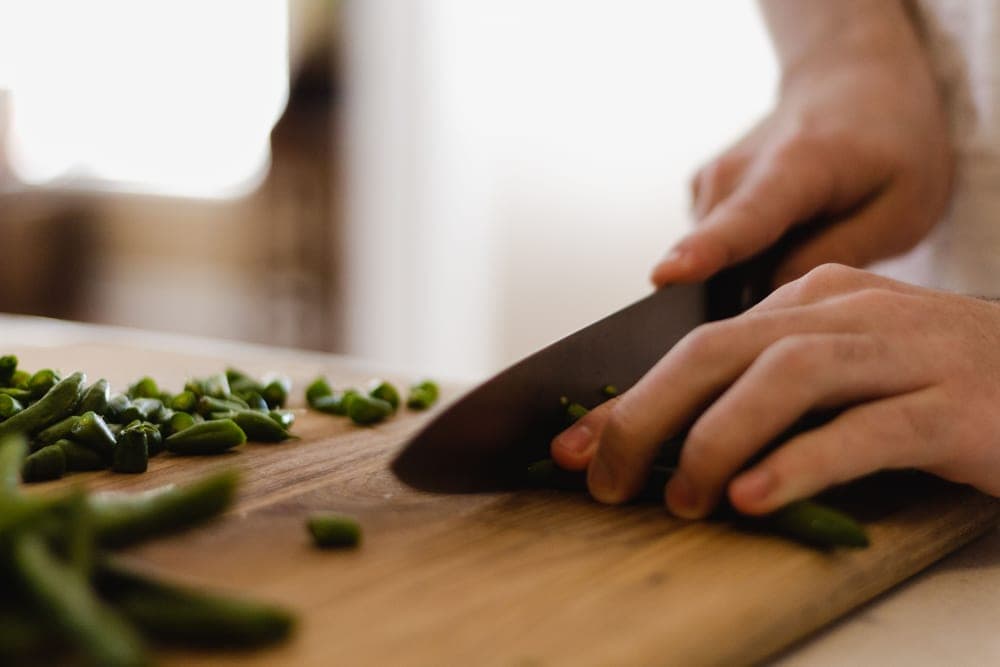
A thin-bladed Japanese knife cutting vegetables

MAC vs Shun

MAC MTH-80 against Shun Classic: same hardness, different priorities, and which one most cooks should buy.

A Damascus-patterned blade photographed close up

Shun vs Miyabi

Shun's VG-MAX at 61 HRC against Miyabi's SG2 at 63 — what two Rockwell points and four degrees of edge angle actually change.

Two kitchen knives resting on a dark surface

Shun vs Global

Shun's clad 61 HRC blade against Global's one-piece 56 HRC design, and why the handle decides this comparison.

Kitchen knives arranged on a wooden surface

Victorinox vs Wüsthof

Victorinox Fibrox against Wüsthof Classic: stamped versus forged, 56 HRC versus 58, and whether the gap is worth paying.

A thin Japanese knife cutting produce on a board

Tojiro vs MAC

Tojiro DP against MAC Professional: nearly the same hardness, different spines, and a large gap in finish.

Reviews

A thin Japanese chef's knife cutting vegetables on a board

Tojiro DP Gyuto Review (F-808)

Why the Tojiro DP F-808 is the standing recommendation for a first Japanese knife, and the one thing you may need to fix.

Guides

Common questions

Which Japanese knife brand is best?

They are optimized for different things. Tojiro is the value leader with genuinely thin grinds; MAC makes the best all-round working knives; Shun has the best finish, handles and service; Miyabi uses the hardest steel; Global is the most distinctive design. Pick the trait you actually care about.

Can we compare brands fairly if you earn commission?

We link to Amazon, which sells all of these brands, so there is no commercial reason to favor one over another. That is a real editorial advantage over specialist retailers, who can only recommend their own stock. Our selection process is set out on the methodology page.

Is a more expensive brand always better?

No. The Tojiro DP has a thinner spine (1.9mm) than the MAC MTH-80 (2.5mm) and costs considerably less; the Shun Classic's premium over both is largely fit, finish and Damascus cladding that does nothing for cutting. Price tracks refinement more closely than it tracks performance.

How do you verify brand specifications?

Every figure quoted on this site comes from a manufacturer page or a specialist retailer listing, and the source is linked on the page where the figure appears. We do not publish specifications from memory.

Sources