Brands
Victorinox vs Henckels
What this is based on: published manufacturer specifications and retailer listings, cited on each product; the weight of professional and owner reviews across multiple retailers; and hands-on experience sharpening and cooking with knives of this type. We have not individually tested every model listed, we do not run instrumented sharpness testing, and we do not claim a test we did not run.
Quick picks
| # | Product | Best for | Score | Price |
|---|---|---|---|---|
| 1 | 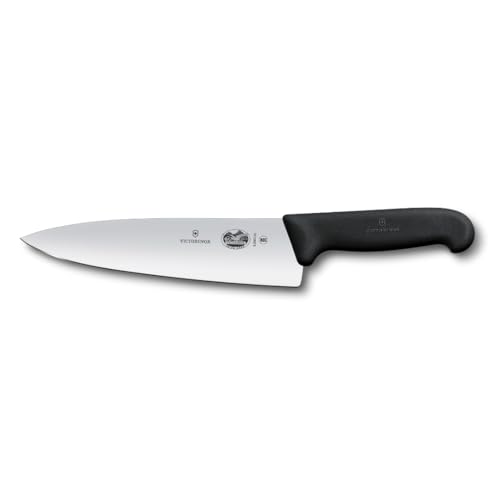 Victorinox Fibrox Pro 8" Chef's Knife | A beater, or a sanity check before you spend more | 7.0 | |
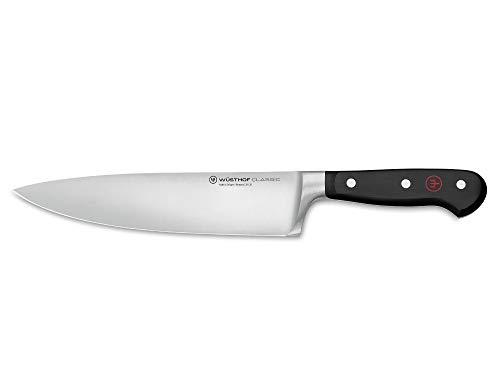
| 2 | 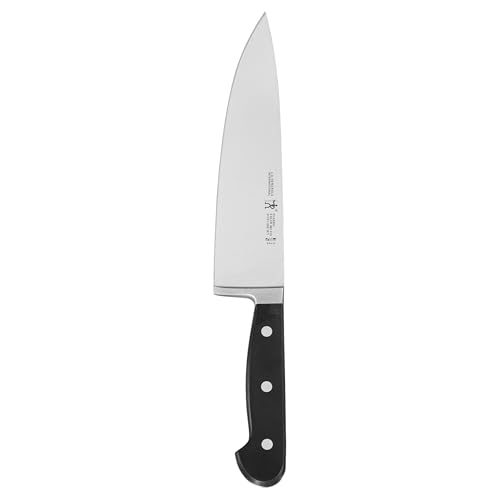 Henckels Classic 8" Chef's Knife (31161-201) | A forged, bolstered knife on a small budget | 6.4 | |
| 3 | 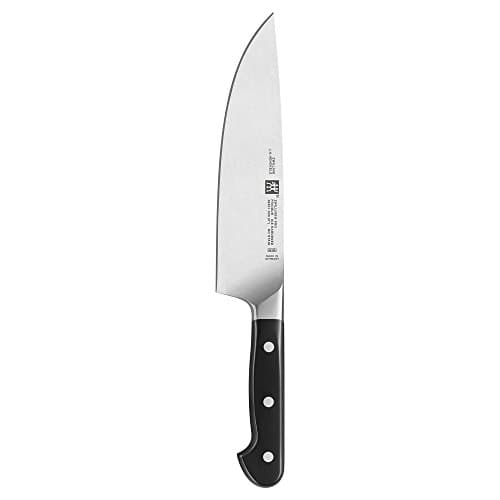 Zwilling Pro 8" Chef's Knife (38401-203) | Cooks who choke up on the blade | 7.3 |
That is a blunt opening for a comparison, so here is the reasoning behind it. These two knives are usually weighed against each other as "the cheap Swiss one against the cheap German one", with an assumption that forged beats stamped. The assumption is doing all the work, and when you go looking for the numbers that would support it, only one of these makers has published any.
What each maker publishes
| Victorinox Fibrox Pro 8" | Henckels Classic 8" | |
|---|---|---|
| Blade length | 8 in | 8.00 in |
| Construction | Stamped, no bolster | Fully forged |
| Steel | X55CrMo14 high-carbon stainless | "High-quality, German stainless steel" - no grade published |
| Hardness | 56 HRC | Not published |
| Factory edge | 18° | Not published ("finely honed") |
| Weight | 5.6 oz | Not published |
| Handle | Fibrox Pro thermoplastic elastomer | Traditional triple-rivet |
| Origin | Switzerland | Made in Spain |
| Care guidance | Hand wash | Listed as dishwasher safe |
| Warranty | Lifetime against defects | Lifetime |
Four cells on the Henckels side say "Not published", and they are the four that would tell you how the knife performs. That is not a research failure on our part - it is what is on the manufacturer's own page for this model, which lists a blade length, a forged construction, a triple-rivet handle, a lifetime warranty and Made in Spain. No hardness. No angle. No weight.
Why the missing numbers are the story
A knife's behavior comes from three things: how hard the steel is, how acute the bevel is, and how thin the blade is behind the edge. Victorinox publishes the first two and the weight. Henckels publishes none of the three for the Classic. So any claim that the forged knife cuts better is being made on the word "forged" alone.
Forging is a real process with real consequences, and none of them is hardness. Hammering a billet to shape produces mass, an integral bolster and a tang that runs the length of the handle; it does not change what the steel does when heat treated, which is where hardness comes from. For comparison, within the same corporate group, the Zwilling Pro publishes 57 HRC - one Rockwell point above the stamped Victorinox. If forging were the lever, that gap would be wider.
Henckels' page for this knife carries both "German engineered" in the marketing copy and "Made in Spain" in the specification. Neither is untrue and they answer different questions. If provenance is part of what you are buying, read the specification line rather than the headline - and note that the group's German-made line is Zwilling, covered in Victorinox against Zwilling.
5.6 oz against an unpublished weight
The Victorinox is 5.6 oz, which is light enough that people who learned on a forged knife sometimes find it insubstantial. The Henckels is forged with a bolster, so it is certainly heavier - but Henckels does not say by how much, and a forged 8 inch German knife can be anywhere from roughly 7 to 9.5 oz depending on the line. For reference, the two forged German knives in our registry that do publish a figure are both 9.3 oz.
Weight is not a quality measure, it is a preference, and it is the clearest real difference between these two. Heavy knives drop through an onion under their own mass and feel planted; light knives are quicker and kinder over a long prep session. If your hands or wrists complain after prep, the Victorinox is the answer and our knives for arthritis guide explains why mass works against you there.
The handles are a genuine split
Fibrox Pro is a textured thermoplastic elastomer with no bolster. It is the least beautiful handle in our registry and the most secure one when your hands are wet or greasy, which is exactly why it is standard issue in commercial kitchens. No bolster also means the whole edge reaches a stone from day one.
The Henckels Classic handle is the traditional triple-rivet German shape - the one a great many cooks learned on, harder and smoother in the hand, better looking, and less secure wet. It comes with a bolster, which brings the standard forged-knife trade: your index finger cannot choke up onto the blade, and the last half inch of edge sits behind the bolster where a stone cannot reach it. Over years that leaves a dull stub at the heel. Our Wüsthof Classic review works through that problem in detail, including the half-bolster versions some makers sell to solve it.
Both handles are symmetrical, so neither has any handedness.
Sharpening and upkeep
Both of these are soft knives by Japanese standards and both are forgiving to sharpen. The Victorinox at a published 56 HRC grinds fast, raises a burr almost immediately and tolerates a wandering angle, which makes it one of the best knives in existence to learn freehand sharpening on - easiest knives to sharpen explains why, and how to use a whetstone is the place to start.
The Henckels is in the same general class - German stainless in this price bracket typically lands in the mid to high 50s - but because no figure is published you are inferring rather than knowing. Both will take a grooved steel rod happily, which is the maintenance routine these knives were designed around: honing is not sharpening sets out why that is a weekly job rather than a sharpening one. Hone two or three times a week, put either on a 1,000-grit stone a few times a year, and both will stay usable indefinitely.
One practical note on care. Henckels lists the Classic as dishwasher safe and Victorinox says to hand wash the Fibrox Pro. Follow the Victorinox advice for both knives. The dishwasher harms a blade mechanically rather than chemically, and a dishwasher-safe rating is a statement about corrosion, not about the edge.
Which one to buy
- You want the most capable knife per dollar. Victorinox Fibrox Pro. Cheaper, fully documented, lighter, and the best wet-hand grip at any price.
- You want a forged blade with a bolster on a small budget. Henckels Classic. It is a real forged knife with a lifetime warranty at a price where most competitors are stamped, and the triple-rivet handle is a shape people genuinely like.
- You want the forged German knife that publishes everything. Zwilling Pro: 57 HRC, approximately 15 degrees per side, 3.25 mm at the spine, 9.3 oz, Made in Germany, and the curved half bolster that leaves the heel clear for sharpening.
- Your hands hurt after prep. Victorinox. It is the lightest knife in this comparison by a wide margin.
- You are upgrading rather than replacing. Neither. Both of these are soft, thick knives by the standards this site is written for, and the step that changes how food cuts is a thinner, harder blade - best chef knives for the money is where to start.
The verdict
The Victorinox Fibrox Pro wins this, and it wins it on documentation as much as on price. It is cheaper, lighter, better in a wet hand, easier to sharpen all the way to the heel, and it is the only one of the two whose maker will tell you what the steel is, how hard it is and what angle it arrived at. The Henckels Classic is not a bad knife - it is a forged, warranted, comfortable blade at a fair price - but you are buying it on a brand and a process rather than on a specification, because there is no specification to buy it on.
If what you actually want is the forged German knife done properly, the group's own answer is the Zwilling Pro, and Victorinox against Zwilling runs that comparison with both spec sheets in view. Our Victorinox Fibrox Pro review explains why we keep it as the control sample on this site, and how much to spend on a chef's knife sets out where the money stops buying performance.
One buying note that follows from how soft both of these are: you do not need an expensive hard stone for either. Our Shapton Glass Stone 1000 review explains who a hard ceramic binder is actually for, and why mid-50s HRC steel is not it.
The picks in detail
#1 · A beater, or a sanity check before you spend more
Victorinox Fibrox Pro 8" Chef's Knife
Not a Japanese knife and not pretending to be. It is the control sample: if your cooking does not improve after upgrading from this, the knife was never the problem.
What it does well
- Stamped, light and genuinely non-slip when wet
- Soft enough that a pull-through sharpener will not destroy it
- Costs a fraction of everything else here
Where it gives way
- 56 HRC means frequent honing and frequent sharpening
- 18-degree edge is blunt by Japanese standards
- No bolster, no heft, no presence — it feels like a tool because it is one
Skip it if: This site's usual reader. At 56 HRC with an 18-degree edge it is a softer, blunter tool than anything else on this page.
| Blade length | 8 in |
|---|---|
| Steel | X55CrMo14 high-carbon stainless |
| Hardness | 56 HRC |
| Edge angle | 18 degrees |
| Weight | 5.6 oz |
| Handle | Fibrox Pro thermoplastic elastomer, no bolster |
#2 · A forged, bolstered knife on a small budget
Henckels Classic 8" Chef's Knife (31161-201)
A fully forged knife at a price where almost everything else is stamped, carrying the triple-rivet shape most cooks already know. Henckels publishes no hardness, no edge angle and no weight for it, and its own page says it is made in Spain.
What it does well
- Fully forged with a bolster at a price where the competition is stamped
- The triple-rivet Henckels handle is the shape a lot of cooks learned on, and it is comfortable
- Lifetime warranty, and cheap enough to own as the knife you do not worry about
Where it gives way
- No published hardness, no published edge angle and no published weight - there is no number on this knife to compare against anything
- Henckels' own page says made in Spain while the marketing copy leans on "German engineered"; both are true and only one is on the box
- Listed as dishwasher safe, which is guidance we would not follow on any thin edge
- The Victorinox Fibrox Pro costs less and publishes its steel grade, its hardness and its edge angle
Skip it if: Anyone who wants to compare it on numbers. There is not a single performance figure on the manufacturer's page for this knife.
| Blade length | 8.00 in |
|---|---|
| Steel | "High-quality, German stainless steel" - no grade published |
| Hardness | Not published |
| Factory edge | Not published ("finely honed") |
| Construction | Fully forged |
| Handle | Traditional triple-rivet |
| Weight | Not published |
| Origin | Made in Spain |
| Care | Listed as dishwasher safe |
| Warranty | Lifetime |
#3 · Cooks who choke up on the blade
Zwilling Pro 8" Chef's Knife (38401-203)
The German knife with the curved half bolster, which is the one real ergonomic idea in this category. 57 HRC and 3.25 mm at the spine, so it is tough rather than keen.
What it does well
- The curved half bolster leaves the heel clear, so you can sharpen the whole edge and choke up onto the blade
- Friodur ice-hardening and a forged full tang - this is a knife that tolerates a careless kitchen
- 15 degrees per side is more acute than the German reputation suggests
Where it gives way
- 3.25 mm at the spine is the thickest blade here; it wedges in dense produce
- 57 HRC gives up real edge retention to any 60+ HRC Japanese blade
- 266 g is heavy over a long prep session
Skip it if: Anyone whose complaint is wedging. At 3.25 mm the spine is the thickest in our registry, and no amount of sharpening thins a blade.
| Blade length | 8 in |
|---|---|
| Blade height | 1.87 in |
| Overall length | 13 in |
| Steel | Friodur X2 ice-hardened high-carbon stainless |
| Hardness | 57 HRC |
| Edge angle | approx. 15 degrees per side, double bevel |
| Spine at heel | 3.25 mm |
| Weight | 9.3 oz (266 g) |
| Handle | Triple-riveted resin with a curved half bolster |
| Origin | Made in Germany |
Common questions
Is Henckels the same as Zwilling?
Where are Henckels Classic knives made?
Which knife holds an edge longer?
Is a forged knife worth the extra money here?
Is the Henckels Classic dishwasher safe?
Sources
Read next
Brands
Victorinox vs Zwilling
Brands
Victorinox vs Wüsthof
Japanese Knives
Best Chef Knives for the Money
Japanese Knives