Brands
Victorinox Fibrox Pro Review
What this is based on: published manufacturer specifications and retailer listings, cited on each product; the weight of professional and owner reviews across multiple retailers; and hands-on experience sharpening and cooking with knives of this type. We have not individually tested every model listed, we do not run instrumented sharpness testing, and we do not claim a test we did not run.
Quick picks
| # | Product | Best for | Score | Price |
|---|---|---|---|---|
| 1 | 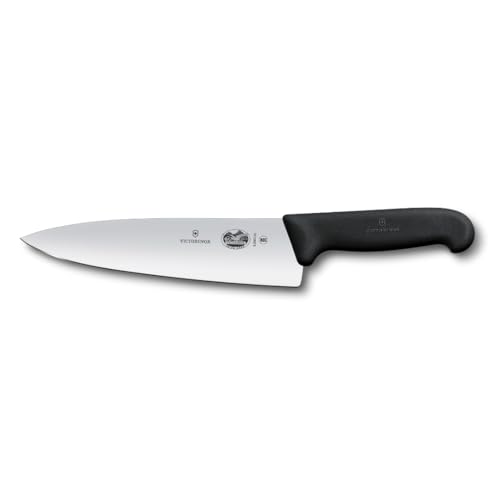 Victorinox Fibrox Pro 8" Chef's Knife | A beater, or a sanity check before you spend more | 7.0 | |
| 2 |  Tojiro DP Gyuto 210mm (F-808) | First Japanese knife | 8.6 | |
| 3 | 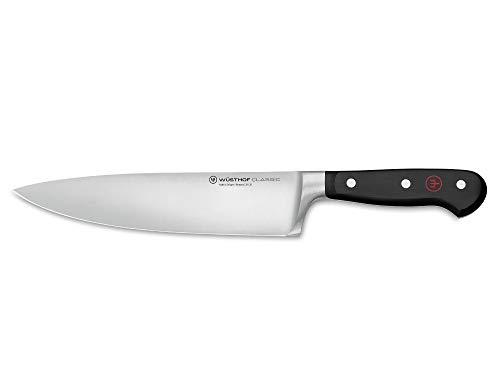 Wüsthof Classic 8" Chef's Knife | Cooks who want weight and a bolster | 7.4 |
This is the knife that turns up in more professional kitchens than every brand this site covers combined, and the reason is not that it out-cuts them. It is that a working kitchen is a hostile environment for a knife, and this one is built to be adequate, light, grippy and cheap enough to replace. Reviewing it against a Shun on keenness would miss the point entirely.
| Victorinox Fibrox Pro 8" | |
|---|---|
| Blade length | 8 in |
| Steel | X55CrMo14 high-carbon stainless, mono-steel |
| Hardness | 56 HRC |
| Edge angle | 18° |
| Construction | Stamped, no bolster |
| Weight | 5.6 oz |
| Handle | Fibrox Pro thermoplastic elastomer |
The steel, honestly
X55CrMo14 at 56 HRC is soft. Not defective, not badly heat-treated — soft on purpose. The consequence is that this edge fails by rolling rather than wearing: it bends sideways under load while the apex itself stays intact, which is why a Victorinox that feels dead often comes back to life in thirty seconds on a honing rod. That is a genuinely convenient failure mode, and it is the opposite of what a 61 HRC Japanese knife does, which is hold its geometry for weeks and then need a stone.
The cost is interval. Expect to hone this knife before most sessions and sharpen it meaningfully more often than anything else in the drawer. If that sounds like a flaw, consider that the maintenance it needs is the easiest kind: soft steel raises a burr in very few strokes on almost any abrasive, so a dull Fibrox is a five-minute job rather than a twenty-minute one.
It is also the one knife on this site that a cheap pull-through sharpener will not ruin. Those devices scrape steel out of an edge at a fixed wide angle, which is a disaster on a thin hard blade and roughly a wash on a soft 18-degree one. We still would not recommend it — here is why — but the stakes are low, and that is part of what makes this a useful knife to own.
Stamped, light, and thicker than it looks
The blade is punched from rolled sheet, ground, and fitted to a handle with no bolster. That is why it weighs 5.6 oz, which is the lightest 8-inch chef's knife this site covers — a Wüsthof Classic is 9.3 oz for the same blade length. Over an hour of prep that difference is the one you feel in your wrist, and plenty of cooks genuinely prefer this knife for long sessions over knives that cost ten times as much.
What lightness cannot buy is thinness behind the edge. Soft steel has to carry more material to survive, so the Fibrox wedges in a dense sweet potato where a 1.9 mm Japanese blade parts it, and it crushes the shoulder of a very ripe tomato rather than slicing through. The 18-degree edge compounds this: it is four degrees wider per side than a Wüsthof Classic and three wider than a MAC, and you can feel every one of them on hard produce.
The profile has a moderate belly, enough to rock-chop herbs comfortably, and the tip is fine enough for detail work. No complaints there. It does what an 8-inch chef's knife is supposed to do; it just does it with more force required.
The handle is the best thing about it
This is not a consolation prize. The Fibrox Pro grip is textured thermoplastic elastomer with a slight swell and no bolster, and it is the most secure handle on any knife this site covers when your hands are wet, oily or covered in raw chicken. A pakkawood handle gets slippery; polished stainless gets very slippery; this does not.
It is also completely symmetrical, so it works identically in either hand — worth noting given how many Japanese knives are handed. Left-handed cooks who have been frustrated by a D-shaped Shun handle will find nothing to complain about here. The left-handed guide.
The absence of a bolster has a second benefit that only shows up years in: you can sharpen the full length of the edge including the very heel, forever. Bolstered knives develop an un-sharpenable patch at the heel that gets more annoying with every sharpening.
It looks like catering equipment. There is no Damascus, no hammered finish, no wood, no presence. If part of what you want from a knife is to enjoy looking at it, this is not that knife and does not try to be.
The best way to own one
The most common mistake with this knife is treating it as a budget version of a good knife. It is better understood as a different tool with a different job.
- Make it the knife other people use. Housemates, guests, visiting family. Nobody has to be trained on it and nobody has to be told to be careful.
- Give it the abusive jobs. Squash and pumpkin, anything half-frozen, scraping the board, opening packaging you should not open with a knife. Every one of those is a chip on a hard Japanese edge and a non-event here.
- Keep a rod beside it. Honing is the main maintenance this knife wants, and a few passes before use will keep it cutting for months between actual sharpenings. The difference.
- Use it as a benchmark. If you are unsure whether an expensive knife would change your cooking, cook on this for a fortnight first. If your food does not improve, the knife was never the limiting factor — the board or the edge was.
Weight. 5.6 oz against 9.3 oz for a Wüsthof Classic at the same length. The least tiring knife here.
Wet grip. Nothing else on this site holds as well with slippery hands.
Heel access. No bolster means the whole edge stays sharpenable for the life of the knife.
Replaceability. Losing or damaging it is an inconvenience rather than an event.
Against the alternatives
The Tojiro DP gyuto is the upgrade, and it is a large one: VG-10 at 59-60 HRC with a 1.9 mm spine and a roughly 15-degree edge. That is the step that makes a tomato behave, and it is the knife to buy when you are ready to own something you look after. It is also ambidextrous, so nothing is lost on the handle front.
The Wüsthof Classic is the forged Western alternative: 58 HRC, 14 degrees per side, 3 mm at the spine and 9.3 oz with a full bolster. It holds an edge longer than the Fibrox and gives you weight and a bolster if those are what you want, at a much higher price. The direct comparison is in Victorinox against Wüsthof: stamped against forged.
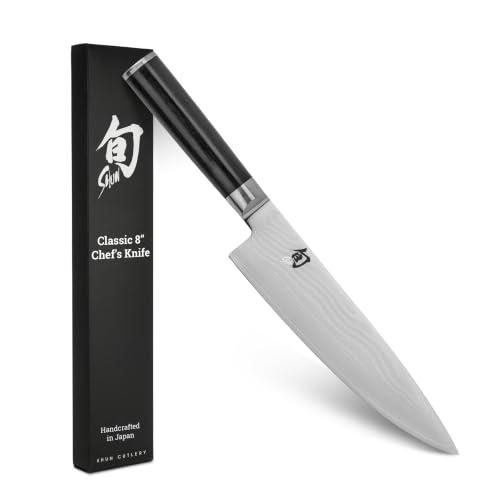
A Shun is the other direction entirely. 61 HRC, 16 degrees, Damascus cladding, and a knife that demands a soft board and a stone. Whether that premium is worth it over this is laid out in Shun against Victorinox.
Not a block set. If you came here looking at a Victorinox set rather than the single knife, read are knife sets worth it first — the single knife plus a stone is a better kitchen than the box.
How to sharpen it
This is the one knife on the site where the aggressive options are reasonable. At 56 HRC behind an 18-degree bevel there is nothing delicate to protect, and narrowing that edge toward 15 degrees is a genuine improvement rather than a risk — which is exactly what a three-stage diamond machine is built to do. If you own several knives in this class, the Chef'sChoice Trizor XV is the device that suits them, and the steel-loss objection that rules it out for Japanese blades matters much less on a knife this cheap to replace.
A 1000-grit stone is still the cheapest and kindest route, and soft steel is the easiest thing to learn on: the burr comes up in very few strokes, so a beginner gets the feedback they need quickly. Either way, hone before use and the knife will hold a working edge for months.
The verdict
A genuinely good knife that is honest about its specification, and the best value in the category by a wide margin. It will never take or hold the edge a Japanese knife does, and it is not meant to. What it offers is lightness, grip, forgiveness and a price that makes it the sensible companion to a knife you actually care about.
If it has to be your only knife, you will cook well with it and spend the saved money on a board and a rod, which is a defensible kitchen. If you already own something good, buy one anyway — it is the cheapest way to stop the good knife from meeting a frozen squash.
For where this sits against the rest of the 8-inch field, see best 8-inch chef knives.
The forged German knife most buyers weigh against this one is Zwilling's premium line, and the gap is smaller than the price suggests - one Rockwell point. Victorinox against Zwilling runs the stamped-versus-forged question with both spec sheets in view.
The other knife shoppers put against this one at the budget end is the Henckels Classic, which is forged and costs more and publishes no hardness, no edge angle and no weight. Victorinox against Henckels works through what that missing spec sheet means.
The picks in detail
#1 · A beater, or a sanity check before you spend more
Victorinox Fibrox Pro 8" Chef's Knife
Not a Japanese knife and not pretending to be. It is the control sample: if your cooking does not improve after upgrading from this, the knife was never the problem.
What it does well
- Stamped, light and genuinely non-slip when wet
- Soft enough that a pull-through sharpener will not destroy it
- Costs a fraction of everything else here
Where it gives way
- 56 HRC means frequent honing and frequent sharpening
- 18-degree edge is blunt by Japanese standards
- No bolster, no heft, no presence — it feels like a tool because it is one
Skip it if: This site's usual reader. At 56 HRC with an 18-degree edge it is a softer, blunter tool than anything else on this page.
| Blade length | 8 in |
|---|---|
| Steel | X55CrMo14 high-carbon stainless |
| Hardness | 56 HRC |
| Edge angle | 18 degrees |
| Weight | 5.6 oz |
| Handle | Fibrox Pro thermoplastic elastomer, no bolster |
#2 · First Japanese knife
Tojiro DP Gyuto 210mm (F-808)
The default answer to 'my first real Japanese knife'. VG-10 at around 60 HRC in a plain three-layer build, at a price that makes the inevitable first chip survivable.
What it does well
- VG-10 at 59-60 HRC takes a genuinely fine edge and holds it far longer than a German knife at 56-58
- 1.9 mm spine and 43 mm heel make it thin behind the edge without being fragile
- Cheap enough that learning to sharpen on it is not frightening
Where it gives way
- Handle finish is functional and unlovely; some units need the bolster easing with sandpaper
- Stainless cladding is soft and scratches readily
- Nothing about the fit and finish will impress anyone
Skip it if: Anyone who wants the knife to be beautiful. The handle is a workmanlike composite with a stainless bolster and nothing about it is charming.
| Blade length | 210 mm (8.3 in) |
|---|---|
| Steel | VG-10 core, 13-chrome stainless cladding (san mai) |
| Hardness | 59-60 HRC |
| Heel height | 43 mm |
| Spine at heel | 1.9 mm |
| Weight | approx. 187 g |
| Handle | Western, laminated composite wood with stainless bolster |
#3 · Cooks who want weight and a bolster
Wüsthof Classic 8" Chef's Knife
The German benchmark, and the knife most of this site's readers are replacing. 265 g, a 3 mm spine, 58 HRC, and a 14-degree-per-side factory edge that is more acute than its reputation suggests.
What it does well
- Forged, full tang, triple-riveted — it will outlive you
- 14 degrees per side from Wüsthof's Precision Edge Technology is sharper than most people assume
- Soft enough at 58 HRC to be nearly chip-proof
Where it gives way
- 265 g is heavy; the 3 mm spine wedges in dense produce
- 58 HRC gives up meaningful edge retention to a 61 HRC Japanese blade
- Full bolster gets in the way when you sharpen the heel
Skip it if: Anyone whose complaint is 'my knife feels heavy and wedges in a sweet potato' — that is the 3 mm spine, and a thinner Japanese blade is the fix.
| Blade length | 8 in (200 mm) |
|---|---|
| Steel | X50CrMoV15 high-carbon stainless |
| Hardness | 58 HRC |
| Edge angle | 14 degrees per side (28 degrees inclusive) |
| Blade height | 1.9 in (47 mm) |
| Spine | 3 mm |
| Weight | 9.3 oz (265 g) |
Common questions
Is the Victorinox Fibrox Pro a good knife?
What steel is the Victorinox Fibrox Pro?
Why do chefs use Victorinox knives?
Is the Victorinox Fibrox Pro dishwasher safe?
Fibrox or Fibrox Pro?
Should this be my only knife?
Sources
Read next
Brands
Victorinox vs Wüsthof
Brands
Shun vs Victorinox
Japanese Knives
Best 8-Inch Chef Knives
Japanese Knives
Are Knife Sets Worth It?
Japanese Knives
How Much Should You Spend on a Chef Knife?