Brands
Shun vs Victorinox
What this is based on: published manufacturer specifications and retailer listings, cited on each product; the weight of professional and owner reviews across multiple retailers; and hands-on experience sharpening and cooking with knives of this type. We have not individually tested every model listed, we do not run instrumented sharpness testing, and we do not claim a test we did not run.
Quick picks
| # | Product | Best for | Score | Price |
|---|---|---|---|---|
| 1 | 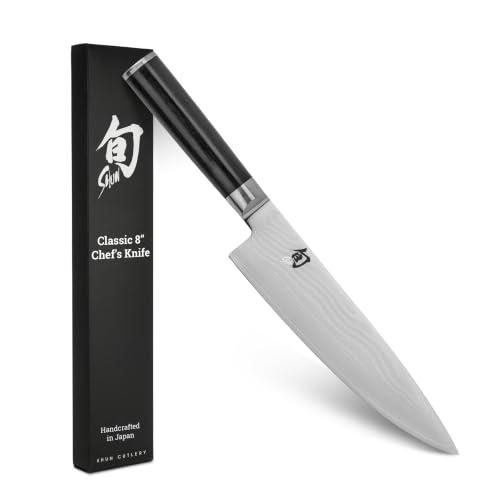 Shun Classic 8" Chef's Knife (DM0706) | A knife you want to look at | 8.3 | |
| 2 | 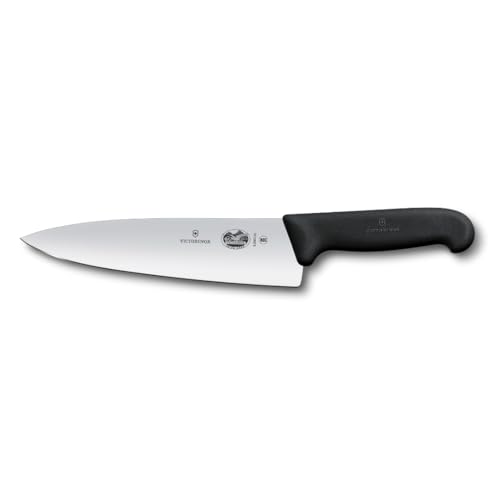 Victorinox Fibrox Pro 8" Chef's Knife | A beater, or a sanity check before you spend more | 7.0 | |
| 3 | 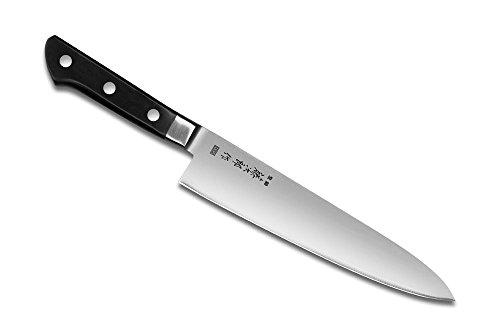 Tojiro DP Gyuto 210mm (F-808) | First Japanese knife | 8.6 |
This is the widest price gap in the category, and it is the comparison most likely to be answered dishonestly in either direction. The Shun is not a marketing exercise, and the Victorinox is not a compromise. They are built to two different specifications for two different lives.
| Shun Classic (DM0706) | Victorinox Fibrox Pro 8" | |
|---|---|---|
| Origin | Seki, Japan | Switzerland / Europe |
| Steel | VG-MAX core, 34 Damascus layers each side | X55CrMo14 stainless, mono-steel |
| Hardness | 61 HRC | 56 HRC |
| Factory edge | 16° per side | 18° |
| Construction | Clad, with bolster and end cap | Stamped, no bolster |
| Weight | Not published by Kai | 5.6 oz |
| Handle | D-shaped pakkawood, right-hand biased | Fibrox Pro thermoplastic, ambidextrous |
| Warranty | Limited lifetime | Lifetime against defects |
The five points of hardness
Five HRC is not a rounding error. At 61 HRC the Shun's VG-MAX core holds a 16-degree bevel through weeks of ordinary prep. At 56 HRC the Victorinox edge starts rolling within days — which is why the correct way to own one is with a rod next to the board, not a stone in a cupboard. Rolled edges come back in seconds; the Shun does not need that attention, but when it does need it, it needs a stone.
The flip side is chipping. The Shun at 61 HRC and 16 degrees will chip on a bone, a frozen edge or a hard board. The Victorinox simply dents. If the knife lives in a kitchen with other people in it, that resilience is worth more than keenness.
Stamped against clad
The Victorinox is a stamped blade: punched from rolled sheet, ground, no bolster. That is why it weighs 5.6 oz, and the lightness is genuinely pleasant — it is the least tiring knife in a long prep session. It is also why it cannot be thin behind the edge the way the Shun is, because soft thin steel bends.
The Shun is a three-layer laminate with a hard core and softer stainless cladding, which is what makes high hardness survivable in a kitchen knife. You feel it as less wedging through a dense carrot and a cleaner release on potato.
The handle is the decision for some buyers
Shun's D-shaped handle is beautiful and is shaped for a right-handed pinch grip. Left-handed cooks should not buy the Classic; the left-handed guide explains which Japanese knives actually work, and the Shun Premier is the symmetrical option in the same steel.
The Fibrox Pro handle is textured thermoplastic with no bolster. It is the best handle on either knife when your hands are wet with chicken, and it looks exactly as industrial as it is.
What owning each one costs you
Price is the obvious difference and the least interesting one. The real asymmetry is in what each knife demands afterwards.
| Shun Classic | Victorinox Fibrox Pro | |
|---|---|---|
| Maintenance between sharpenings | Ceramic rod; a steel rod does little at 61 HRC | Any rod, including the one in the block set |
| Sharpening | Whetstone, roughly 16° per side | Almost anything, including an electric |
| Board requirement | Soft rubber or wood only | Tolerates a harder surface |
| Failure mode | Chips | Rolls, then straightens |
| If it is lost or damaged | A significant replacement | Replace it without thinking about it |
That table is the real comparison. The Shun is a better knife that asks you to change how you store, wash, cut and maintain it. The Victorinox asks nothing and gives back less. A buyer who will not change their habits gets more cutting performance over a year from the cheap knife, because it will be the one that is actually sharp.
The knife in between
There is a third answer that this comparison usually leads to. The Tojiro DP gyuto is VG-10 at 59-60 HRC with a 1.9 mm spine and an ambidextrous Western handle, at a price much nearer the Victorinox than the Shun. It gives you the Japanese cutting experience — the thin spine, the hard core, the clean release — without the Shun's D-handle or the Shun's price, and without the Victorinox's soft edge.
If what you actually want is to find out whether hard Japanese steel suits you before committing, that is the knife to buy. The value end of the Japanese market.
There is also a case for buying both ends. A Shun for the work you care about and a Victorinox as the knife anyone in the house can grab is a genuinely sensible two-knife kitchen, and it costs less than most people spend on a single mid-range knife plus a block set. The cheap knife absorbs the squash, the frozen edges and the guests; the good one stays sharp because nothing abuses it.
The verdict
Shun Classic if you are a right-handed cook who sharpens on stones, cuts on wood or soft rubber, and wants the knife to be lovely. It is the better cutting instrument by any measure that matters.
Victorinox Fibrox Pro if the knife is shared, if it will go in the sink, if it needs to be replaceable, or if you simply want a competent 8-inch knife for very little money. Keep a rod beside it.
Neither, buy the Tojiro DP if this comparison has made you realize you want Japanese performance without the Shun price or the D-handle. It is VG-10 at 59-60 HRC with a 1.9 mm spine and an ambidextrous Western handle, and it sits almost exactly between these two. The wider case is in how much to spend on a chef knife.
For a closer look at the cheaper knife on its own terms, read the Victorinox Fibrox Pro review.
The picks in detail
#1 · A knife you want to look at
Shun Classic 8" Chef's Knife (DM0706)
The Damascus-clad knife people actually buy. A 16-degree-per-side VG-MAX edge at 61 HRC, a D-shaped pakkawood handle, and a look that sells itself.
What it does well
- 16 degrees per side is a sensible factory angle — acute, but not so thin it chips on a carrot
- Handle geometry is genuinely comfortable in a pinch grip
- Kai's warranty and free sharpening service are real, useful things
Where it gives way
- You pay a significant premium over a MAC or Tojiro for the Damascus cladding
- The D-shaped handle is oriented for right-handed use
- Thin tip is easy to snap if you twist it in a squash
Skip it if: Left-handed cooks who dislike a D-shaped handle, and anyone who resents paying for 68 layers of cladding that do nothing for cutting.
| Blade length | 8 in |
|---|---|
| Steel | VG-MAX core, 34 layers Damascus cladding each side |
| Hardness | 61 HRC |
| Edge angle | 16 degrees per side |
| Handle | D-shaped pakkawood with stainless bolster and end cap |
| Warranty | Limited lifetime |
#2 · A beater, or a sanity check before you spend more
Victorinox Fibrox Pro 8" Chef's Knife
Not a Japanese knife and not pretending to be. It is the control sample: if your cooking does not improve after upgrading from this, the knife was never the problem.
What it does well
- Stamped, light and genuinely non-slip when wet
- Soft enough that a pull-through sharpener will not destroy it
- Costs a fraction of everything else here
Where it gives way
- 56 HRC means frequent honing and frequent sharpening
- 18-degree edge is blunt by Japanese standards
- No bolster, no heft, no presence — it feels like a tool because it is one
Skip it if: This site's usual reader. At 56 HRC with an 18-degree edge it is a softer, blunter tool than anything else on this page.
| Blade length | 8 in |
|---|---|
| Steel | X55CrMo14 high-carbon stainless |
| Hardness | 56 HRC |
| Edge angle | 18 degrees |
| Weight | 5.6 oz |
| Handle | Fibrox Pro thermoplastic elastomer, no bolster |
#3 · First Japanese knife
Tojiro DP Gyuto 210mm (F-808)
The default answer to 'my first real Japanese knife'. VG-10 at around 60 HRC in a plain three-layer build, at a price that makes the inevitable first chip survivable.
What it does well
- VG-10 at 59-60 HRC takes a genuinely fine edge and holds it far longer than a German knife at 56-58
- 1.9 mm spine and 43 mm heel make it thin behind the edge without being fragile
- Cheap enough that learning to sharpen on it is not frightening
Where it gives way
- Handle finish is functional and unlovely; some units need the bolster easing with sandpaper
- Stainless cladding is soft and scratches readily
- Nothing about the fit and finish will impress anyone
Skip it if: Anyone who wants the knife to be beautiful. The handle is a workmanlike composite with a stainless bolster and nothing about it is charming.
| Blade length | 210 mm (8.3 in) |
|---|---|
| Steel | VG-10 core, 13-chrome stainless cladding (san mai) |
| Hardness | 59-60 HRC |
| Heel height | 43 mm |
| Spine at heel | 1.9 mm |
| Weight | approx. 187 g |
| Handle | Western, laminated composite wood with stainless bolster |
Common questions
Is a Shun worth it over a Victorinox?
Are Victorinox knives good quality?
Which is easier to sharpen, Shun or Victorinox?
Can left-handed cooks use a Shun Classic?
Sources
Read next
Brands
Shun vs Wüsthof
Brands
Tojiro vs Shun
Brands
Victorinox vs Wüsthof
Japanese Knives
Best 8-Inch Chef Knives
Japanese Knives
How Much Should You Spend on a Chef Knife?