Japanese Knives
Best Japanese Knives Under $100
What this is based on: published manufacturer specifications and retailer listings, cited on each product; the weight of professional and owner reviews across multiple retailers; and hands-on experience sharpening and cooking with knives of this type. We have not individually tested every model listed, we do not run instrumented sharpness testing, and we do not claim a test we did not run.
Quick picks
| # | Product | Best for | Score | Price |
|---|---|---|---|---|
| 1 | 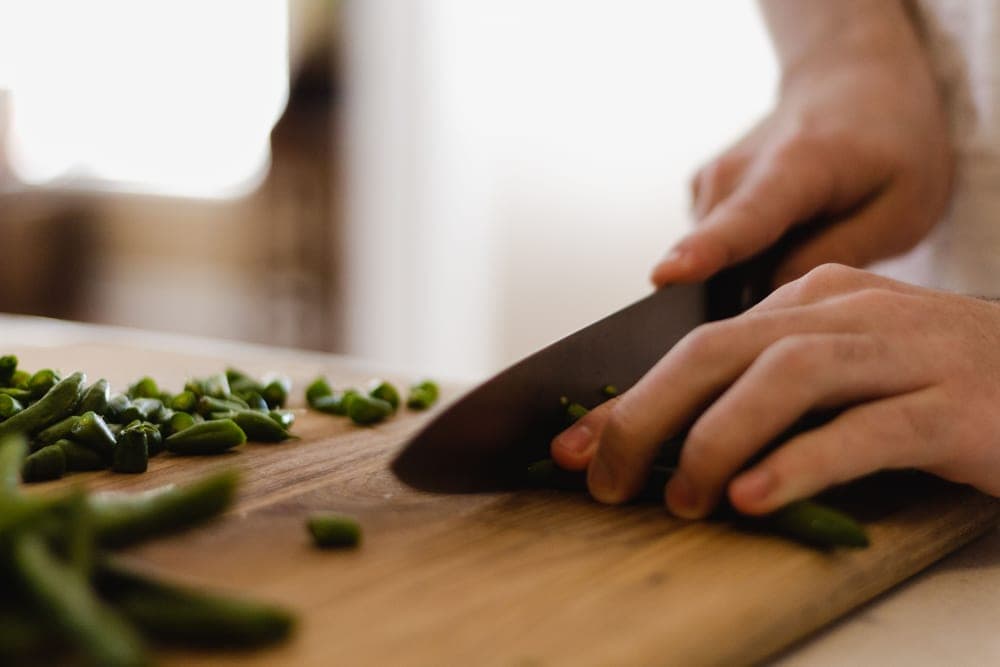 Tojiro DP Gyuto 210mm (F-808) | First Japanese knife | 8.6 | |
| 2 | 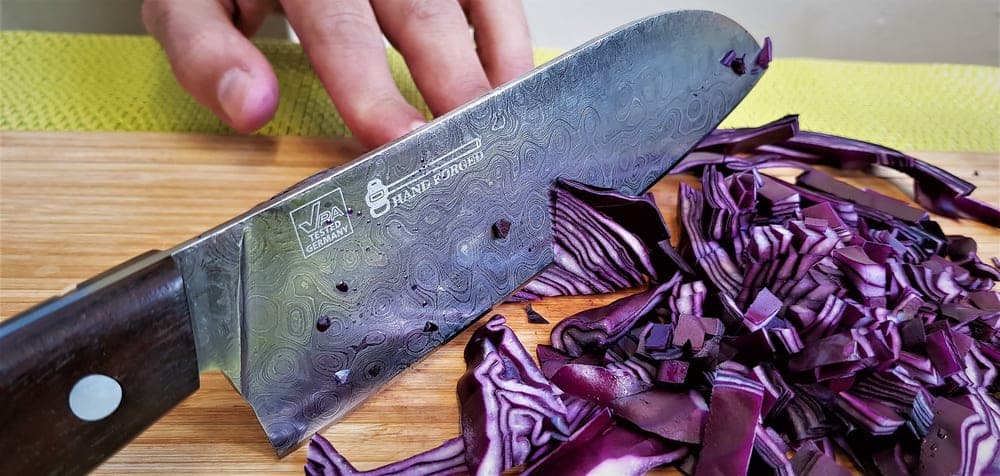 Tojiro DP Nakiri 165mm (F-502) | First nakiri | 8.7 | |
| 3 | 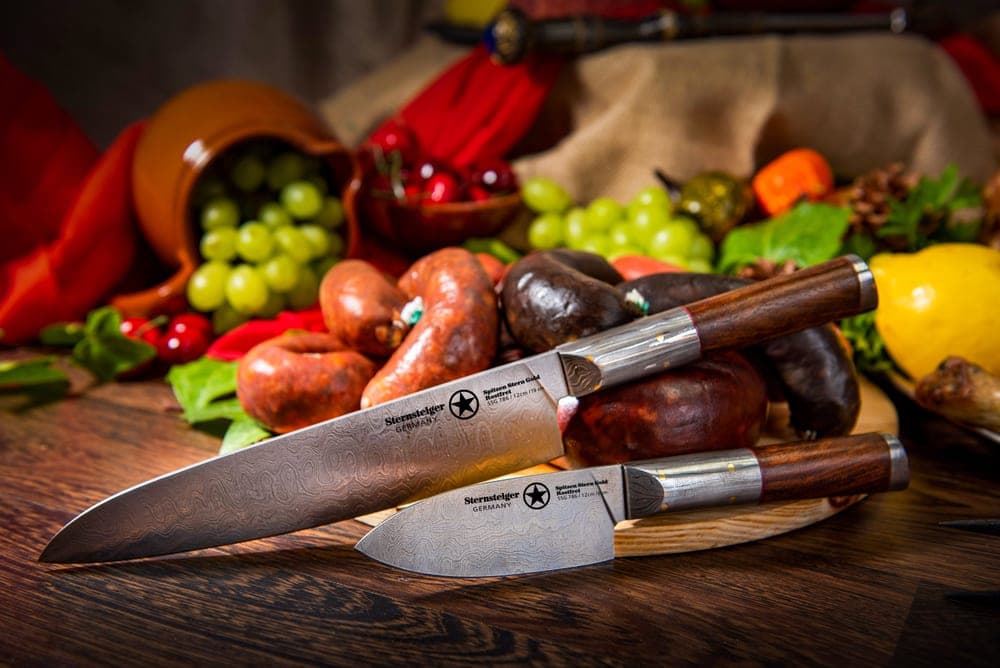 Victorinox Fibrox Pro 8" Chef's Knife | A beater, or a sanity check before you spend more | 7.0 |
The knives that survive at this price all make the same decision: put the money in the blade, take it out of everything else. A Tojiro DP has a laminated composite handle and a stainless bolster that some units need easing with sandpaper. It also has a 1.9mm spine and a VG-10 core at 59 to 60 HRC — the same core steel used in knives costing four times as much.
What to be suspicious of
- Damascus with no named core. The pattern is cladding. If the listing does not say what the cutting core is, assume it is unremarkable stainless.
- HRC numbers with no steel attached. "62 HRC Japanese steel" with no alloy named is a marketing figure, not a specification.
- "Japanese-style". That phrase describes a shape, not an origin or a steel.
- Sets. A three-piece set at this price is three compromised knives instead of one good one.
Which compromises are fine
| Compromise | Verdict |
|---|---|
| Plain composite handle | Fine. It works and it lasts. |
| Soft stainless cladding that scratches | Fine. Cosmetic only. |
| Bolster edge that needs sanding | Acceptable. Ten minutes with 400 grit paper. |
| A thick grind behind the edge | Not fine. That is the whole reason to buy the knife. |
| Unnamed steel | Not fine. You cannot sharpen what you cannot identify. |
Buy the stone with it
At this price the knife and a 1,000-grit stone together still cost less than one mid-range knife. That combination outperforms the mid-range knife alone, permanently, because a maintained cheap edge beats a neglected expensive one every single day. Whetstone picks · how to use one.
The verdict
The Tojiro DP gyuto is the answer, and the nakiri is the answer if you already own a general-purpose knife. The Victorinox Fibrox is here as the honest alternative: it is not Japanese, it is 56 HRC with an 18-degree edge, and if you sharpen it properly and find it cuts fine, you have saved yourself a purchase and learned something useful.
The picks in detail
#1 · First Japanese knife
Tojiro DP Gyuto 210mm (F-808)
The default answer to 'my first real Japanese knife'. VG-10 at around 60 HRC in a plain three-layer build, at a price that makes the inevitable first chip survivable.
What it does well
- VG-10 at 59-60 HRC takes a genuinely fine edge and holds it far longer than a German knife at 56-58
- 1.9 mm spine and 43 mm heel make it thin behind the edge without being fragile
- Cheap enough that learning to sharpen on it is not frightening
Where it gives way
- Handle finish is functional and unlovely; some units need the bolster easing with sandpaper
- Stainless cladding is soft and scratches readily
- Nothing about the fit and finish will impress anyone
Skip it if: Anyone who wants the knife to be beautiful. The handle is a workmanlike composite with a stainless bolster and nothing about it is charming.
| Blade length | 210 mm (8.3 in) |
|---|---|
| Steel | VG-10 core, 13-chrome stainless cladding (san mai) |
| Hardness | 59-60 HRC |
| Heel height | 43 mm |
| Spine at heel | 1.9 mm |
| Weight | approx. 187 g |
| Handle | Western, laminated composite wood with stainless bolster |
#2 · First nakiri
Tojiro DP Nakiri 165mm (F-502)
A flat 165 mm edge in VG-10 at 59-61 HRC for the price of a mid-range German paring knife. The obvious first nakiri.
What it does well
- 45 mm of blade height means your knuckles clear the board
- Genuinely flat edge — full contact, no accordion slices
- 1.8 mm spine falls through vegetables rather than wedging
Where it gives way
- No tip, so it cannot do fine tip work at all
- 207 g is heavier than the profile suggests
- Western handle and bolster feel dense for such a light job
Skip it if: Anyone expecting it to replace a chef's knife. A nakiri does not have a tip and cannot break down a chicken.
| Blade length | 165-170 mm |
|---|---|
| Steel | Takefu VG-10 core, three-layer |
| Hardness | 59-61 HRC |
| Heel height | 45 mm |
| Spine | 1.8 mm, consistent |
| Weight | approx. 207 g |
#3 · A beater, or a sanity check before you spend more
Victorinox Fibrox Pro 8" Chef's Knife
Not a Japanese knife and not pretending to be. It is the control sample: if your cooking does not improve after upgrading from this, the knife was never the problem.
What it does well
- Stamped, light and genuinely non-slip when wet
- Soft enough that a pull-through sharpener will not destroy it
- Costs a fraction of everything else here
Where it gives way
- 56 HRC means frequent honing and frequent sharpening
- 18-degree edge is blunt by Japanese standards
- No bolster, no heft, no presence — it feels like a tool because it is one
Skip it if: This site's usual reader. At 56 HRC with an 18-degree edge it is a softer, blunter tool than anything else on this page.
| Blade length | 8 in |
|---|---|
| Steel | X55CrMo14 high-carbon stainless |
| Hardness | 56 HRC |
| Edge angle | 18 degrees |
| Weight | 5.6 oz |
| Handle | Fibrox Pro thermoplastic elastomer, no bolster |
Common questions
Can you get a genuine Japanese knife under $100?
What should I be suspicious of at this price?
Is a cheap Japanese knife better than an expensive German one?
Sources
Read next
Japanese Knives
Best Gyuto Under $200
Japanese Knives
Your First Japanese Knife
Japanese Knives
Best Knives for Home Cooks
Japanese Knives
Japanese vs German Knives
Whetstones & Skill
Best Whetstones for Kitchen Knives
Steel & Care