Knife Sharpeners
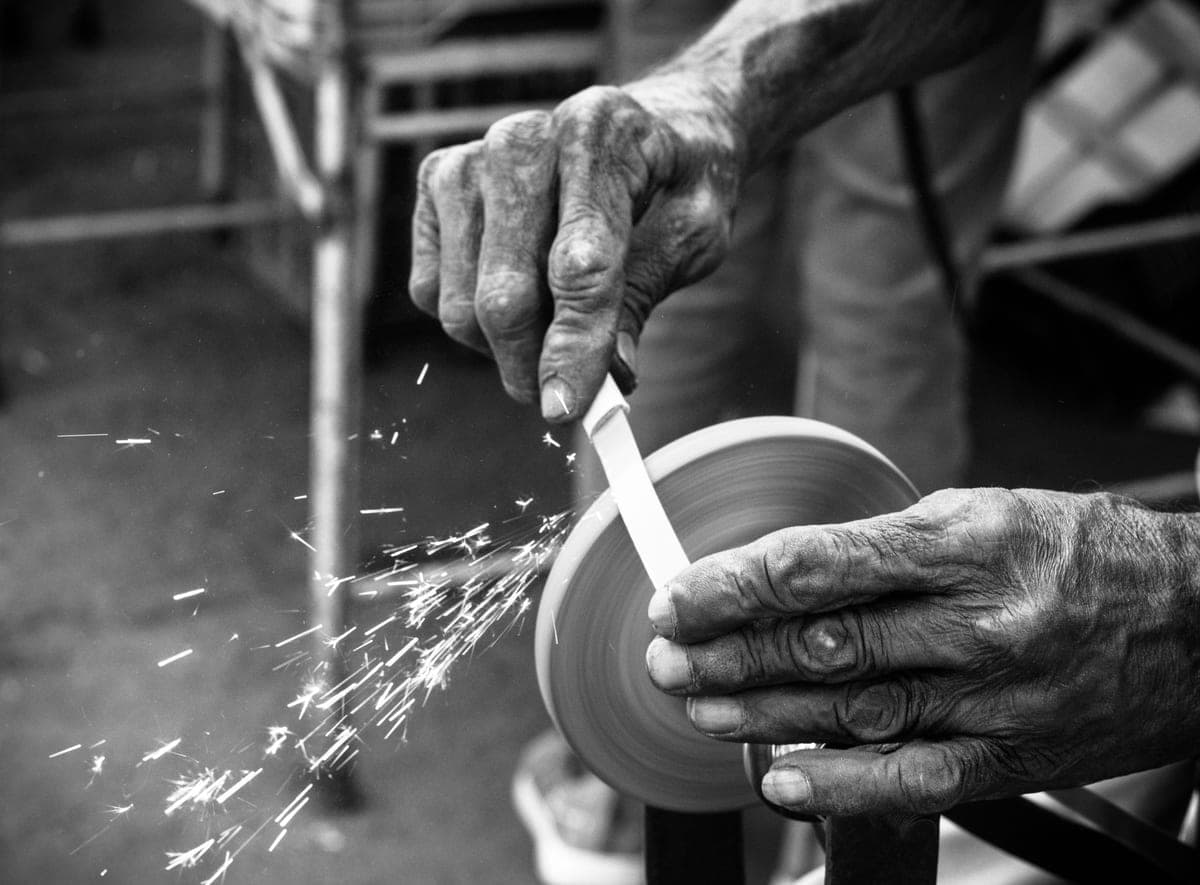
This section is about the devices: what each one actually does to an edge, and which ones are defensible on a knife you care about. The test that matters is simple — does the tool follow your knife's geometry, or impose its own?
The ladder
| Method | Follows your grind? | Steel removed | Skill |
|---|---|---|---|
| Whetstone, freehand | Completely | Least | Real, learnable in an evening |
| Adjustable guided system | If you set it right | Low | Minimal |
| Rolling sharpener | At 15° or 20° only | Low | Almost none |
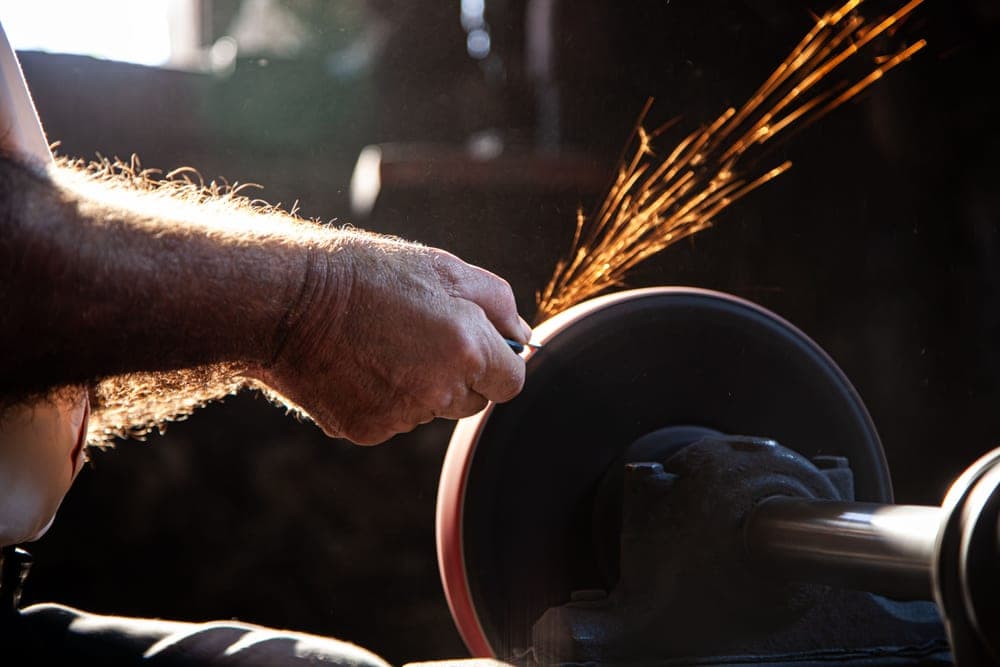
| Electric, 15° | No — imposes a triple bevel | High | None |
| Carbide pull-through | No | Very high, destructively | None |
The tool you will use most is not a sharpener
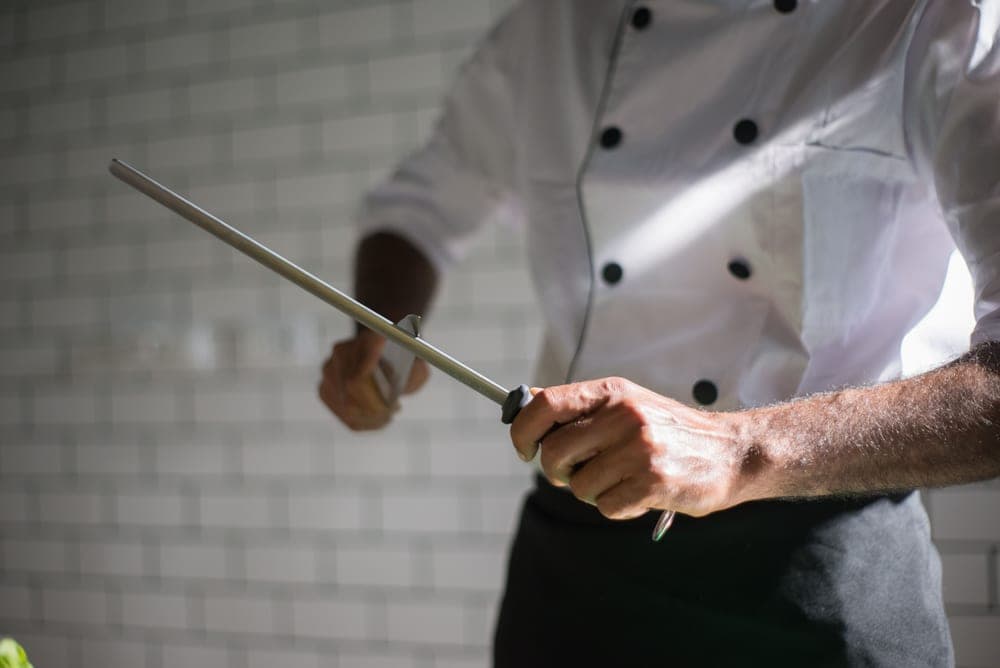
Most of what feels like dullness day to day is a rolled edge, not a worn one — the thin apex has bent over to one side under load and is still entirely there. A honing rod pushes it back in about ten seconds.
The catch is material. A rod only works if it is harder than the blade, and most steel rods are not hard enough for a Japanese knife at 60 HRC or above — they simply slide off. Ceramic is roughly four times harder than the majority of knife steels, which is why it is the right choice for hard blades. Which rod to buy.
The one thing to stop doing
Two hardened plates in a fixed V. Dragging a blade through them scrapes steel out rather than abrading it, and forces the edge toward the V's angle regardless of how the knife was ground. On a 15-degree Japanese edge at 60+ HRC the result is a reprofiled, micro-chipped blade. The full explanation, and what to use instead.
Choosing a device honestly
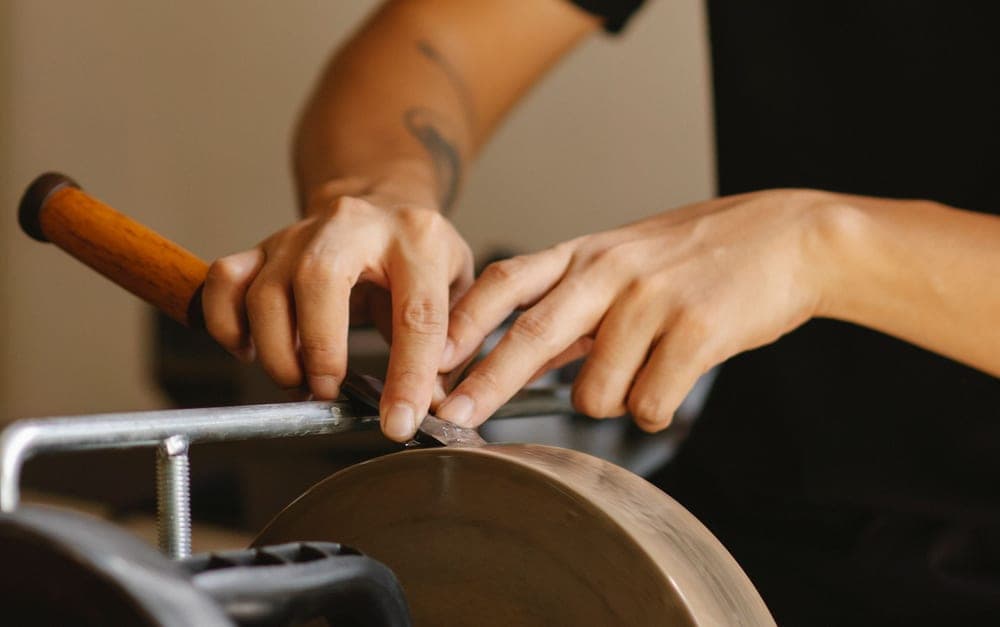
- You will learn freehand: buy a stone and stop reading this section. Stone picks.
- You want precision without the skill: an adjustable guided system. One-degree increments mean you can match a published factory grind rather than approximate it.
- You want zero learning curve: a rolling sharpener at 15 degrees. Two pieces, magnetic, nothing to set.
- You have a drawer of soft Western knives and no patience: an electric sharpener is a genuine improvement over permanently dull knives. Keep your Japanese knife out of it.
Where to go next
The head-to-heads do most of the work here: electric against whetstone for the main argument, and rod against whetstone for the distinction people most often get wrong. If you already know you want a device, the Japanese-knife roundup ranks the ones that will not damage the edge.
What to buy