Japanese Knives
Gyuto vs Santoku: Which Should You Buy?
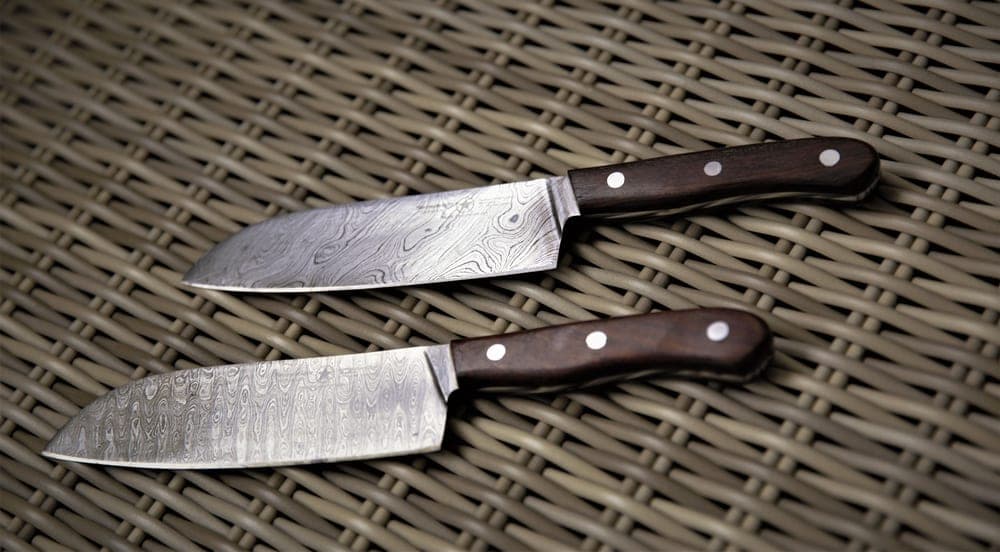
What this is based on: published manufacturer specifications and retailer listings, cited on each product; the weight of professional and owner reviews across multiple retailers; and hands-on experience sharpening and cooking with knives of this type. We have not individually tested every model listed, we do not run instrumented sharpness testing, and we do not claim a test we did not run.
Quick picks
| # | Product | Best for | Score | Price |
|---|---|---|---|---|
| 1 | 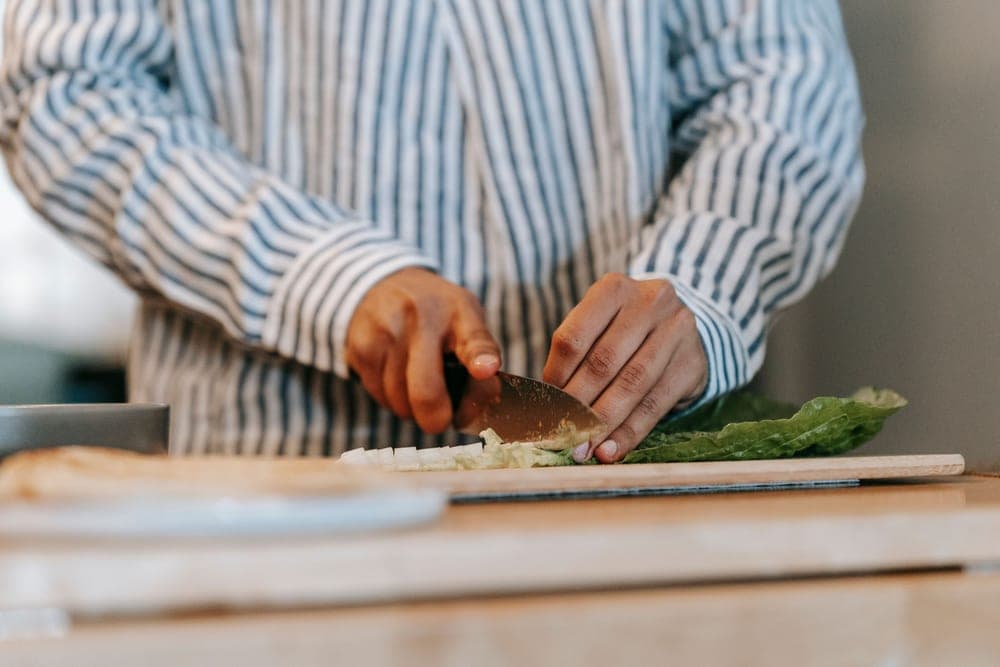 MAC Professional 8" Chef's Knife with Dimples (MTH-80) | The one-knife kitchen | 8.8 | |
| 2 | 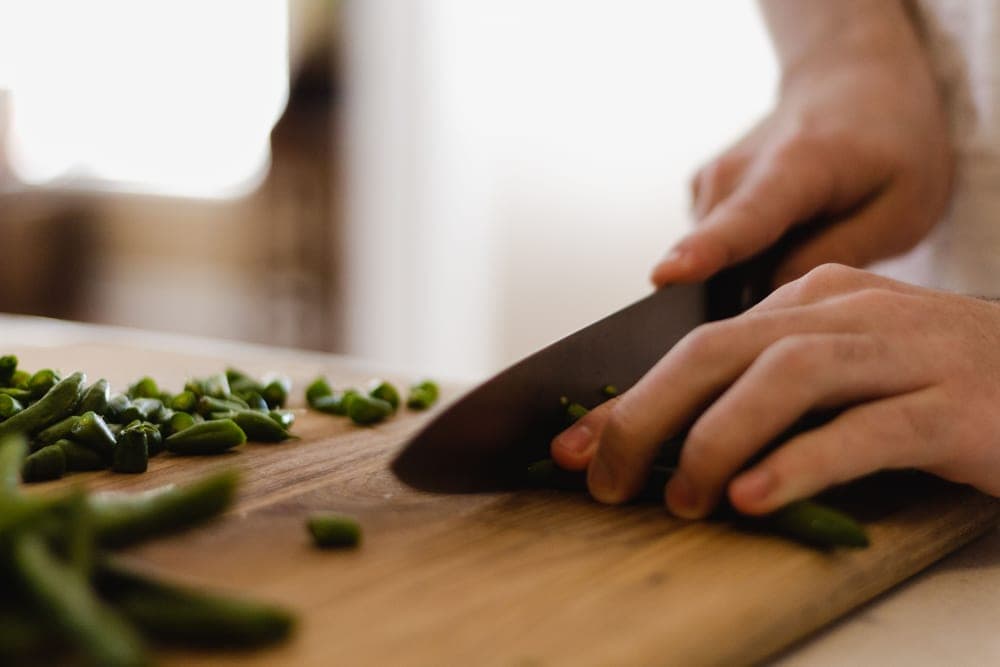 MAC Professional 6.5" Santoku (MSK-65) | Precision vegetable work | 8.5 | |
| 3 | Tojiro DP Gyuto 210mm (F-808) | First Japanese knife | 8.6 | |
| 4 |  Tojiro DP Santoku 170mm (F-503) | A second Japanese knife on a budget | 8.4 |
| Gyuto | Santoku | |
|---|---|---|
| Typical length | 210mm (180–240mm available) | 165–170mm (160–190mm available) |
| Profile | Curved belly, rises to a point | Near-flat, short curve into a sheep's-foot tip |
| Tip | Fine point, good for detail work | Blunt sheep's foot, almost no point |
| Best cutting motion | Rock or push, both work | Push cut, straight down and forward |
| Weight (comparable models) | approx. 190g at 210mm | approx. 150g at 170mm |
The profile is the whole argument
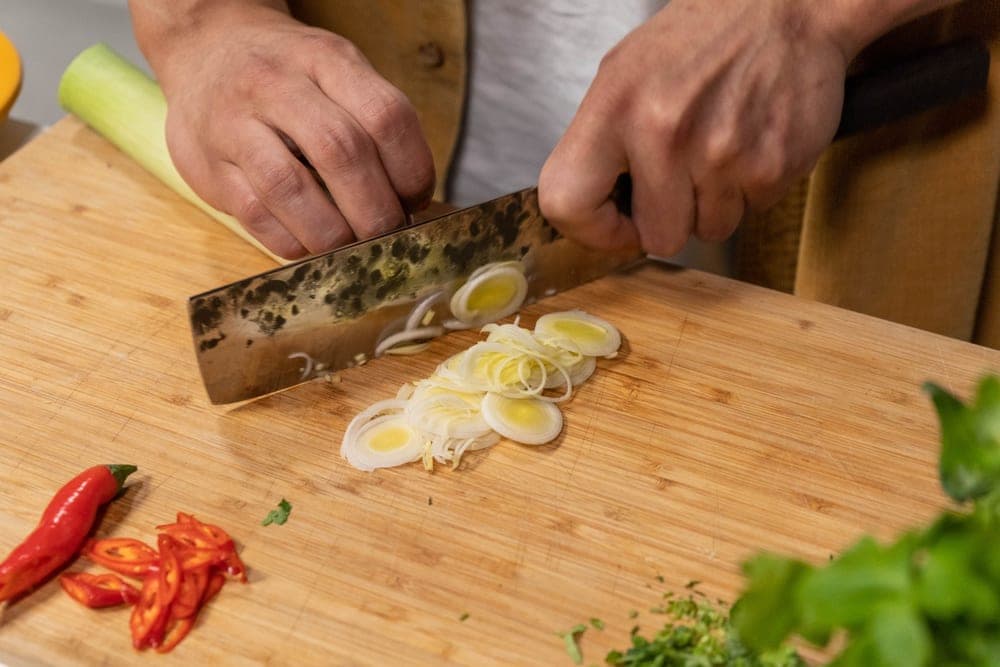
A gyuto's belly curves. That curve lets you plant the tip on the board and rock the heel through a pile of herbs, which is the technique most Western cooks learn first. It also means that on a straight downward cut only part of the edge contacts the board, which is why the last fiber of an onion slice sometimes stays attached.
A santoku is close to flat. Straight down, the whole edge lands, so the cut finishes cleanly every time. But the flat profile has nothing to rock on, so a rocking grip feels like the knife is fighting you. That is the single most common reason people buy a santoku and then quietly stop using it.
The tip matters more than length
A gyuto's point does jobs a santoku cannot: scoring skin, trimming silverskin, splitting a chili from the stem, separating a chicken thigh at the joint. A santoku's sheep's-foot tip is safer and better for nothing in particular.
If you cook a lot of boneless protein, that alone settles it. If you cook mostly vegetables and buy your chicken in pieces, it does not matter.
Measure your board before you decide
- Board 18 inches or more: a 210mm gyuto has room. Buy it.
- Board 12 to 15 inches: a 210mm gyuto will overhang on long cuts. A santoku, or a 180mm gyuto, is the better fit.
- No fixed board, cooking on a worktop protector: santoku, without much doubt.
Which model, if you have decided
If you want the gyuto
The MAC MTH-80 at 8 inches is the all-round pick: 61 HRC, a 2.5mm spine, 15 degrees per side from the factory, 6.8oz. If you want to spend less, the Tojiro DP F-808 gives you VG-10 at 59 to 60 HRC and a thinner 1.9mm spine with a plainer handle. Full detail on the gyuto roundup.
If you want the santoku
The MAC MSK-65 carries the same thin grind and 15-degree geometry in a 6.5-inch santoku. The Tojiro DP F-503 is the value equivalent. More on the santoku roundup.
If everything you cut is a vegetable, neither of these is the sharpest answer — a nakiri is flatter than a santoku and taller than both. It just cannot touch protein.
The verdict
For most people reading this — upgrading from a block set, cooking on a standard home board, comfortable with a rocking grip — the gyuto is the right first Japanese knife. It is more versatile, and versatility is what you want from the only good knife you own.
Buy the santoku when you already have a general-purpose knife you like, or when your kitchen is genuinely small. Buying it as a first Japanese knife because it looks distinctively Japanese is how it ends up in the drawer.
The picks in detail
#1 · The one-knife kitchen
MAC Professional 8" Chef's Knife with Dimples (MTH-80)
The knife that wins the most side-by-side tests and asks the least of you. Thin, light, 61 HRC, and forgiving enough that a mediocre sharpening job still cuts well.
What it does well
- 6.8 oz with a 2.5 mm spine — genuinely light in the hand over a long prep session
- 15 degrees per side from the factory, which is the angle you will maintain anyway
- 25-year warranty and a reputation for consistency unit to unit
Where it gives way
- Costs meaningfully more than a Tojiro DP for a similar hardness
- Mono-steel, so no cladding to protect the core if you drop it edge-first
- The dimples do less for release than the marketing implies
Skip it if: Anyone chasing maximum edge retention. At 61 HRC in a mono-steel it will not out-last a powder-steel blade, and the dimples are cosmetic more often than useful.
| Blade length | 8 in (approx. 200 mm) |
|---|---|
| Steel | Sub-zero tempered high-carbon molybdenum vanadium alloy |
| Hardness | 61 HRC |
| Edge angle | 15 degrees per side (double bevel) |
| Blade height | 1 7/8 in |
| Spine at heel | 2.5 mm |
| Weight | 6.8 oz |
| Handle | Riveted Pakkawood with integrated bolster |
#2 · Precision vegetable work
MAC Professional 6.5" Santoku (MSK-65)
The MTH-80's logic in a santoku: thin, light, 15 degrees per side, and consistent from unit to unit.
What it does well
- Extremely thin behind the edge for its price
- Same 15-degree factory geometry as the rest of the Professional line
- Light and neutral in the hand
Where it gives way
- Thin tip is easy to damage
- No bolster to protect your knuckles in a heavy grip
- Costs more than the Tojiro equivalent
Skip it if: Heavy jobs. It is thin, and thin blades dislike bone and frozen food.
| Blade length | 6.5 in |
|---|---|
| Steel | Sub-zero tempered high-carbon molybdenum vanadium alloy |
| Hardness | approx. 61 HRC (MAC Professional line) |
| Edge angle | 15 degrees per side |
#3 · First Japanese knife
Tojiro DP Gyuto 210mm (F-808)
The default answer to 'my first real Japanese knife'. VG-10 at around 60 HRC in a plain three-layer build, at a price that makes the inevitable first chip survivable.
What it does well
- VG-10 at 59-60 HRC takes a genuinely fine edge and holds it far longer than a German knife at 56-58
- 1.9 mm spine and 43 mm heel make it thin behind the edge without being fragile
- Cheap enough that learning to sharpen on it is not frightening
Where it gives way
- Handle finish is functional and unlovely; some units need the bolster easing with sandpaper
- Stainless cladding is soft and scratches readily
- Nothing about the fit and finish will impress anyone
Skip it if: Anyone who wants the knife to be beautiful. The handle is a workmanlike composite with a stainless bolster and nothing about it is charming.
| Blade length | 210 mm (8.3 in) |
|---|---|
| Steel | VG-10 core, 13-chrome stainless cladding (san mai) |
| Hardness | 59-60 HRC |
| Heel height | 43 mm |
| Spine at heel | 1.9 mm |
| Weight | approx. 187 g |
| Handle | Western, laminated composite wood with stainless bolster |
#4 · A second Japanese knife on a budget
Tojiro DP Santoku 170mm (F-503)
The gyuto's sibling: same VG-10 san mai, same price bracket, shorter and flatter. The cheapest honest route into a Japanese santoku.
What it does well
- Same steel and geometry philosophy as the F-808 gyuto
- Light and easy to control for shorter cooks
- Inexpensive enough to learn stone work on
Where it gives way
- Plain finish, same as the rest of the DP line
- 170 mm limits you on anything large
- Soft cladding scratches quickly
Skip it if: Anyone who already has a 210 mm gyuto and a small board — the overlap is large.
| Blade length | 170 mm |
|---|---|
| Steel | VG-10 core, three-layer stainless cladding |
| Hardness | 59-61 HRC |
| Handle | Western composite wood with bolster |
Common questions
Is a gyuto or a santoku better for a home cook?
What does santoku mean?
Can one knife do both jobs?
Are gyutos and santokus sharpened the same way?
Sources
Read next
Japanese Knives
Best Gyuto Knives
Japanese Knives
Best Santoku Knives
Japanese Knives
Santoku vs Nakiri
Japanese Knives
Gyuto vs Chef Knife
Japanese Knives
Japanese Knife Types
Japanese Knives