Japanese Knives
Santoku vs Nakiri
What this is based on: published manufacturer specifications and retailer listings, cited on each product; the weight of professional and owner reviews across multiple retailers; and hands-on experience sharpening and cooking with knives of this type. We have not individually tested every model listed, we do not run instrumented sharpness testing, and we do not claim a test we did not run.
Quick picks
| # | Product | Best for | Score | Price |
|---|---|---|---|---|
| 1 | 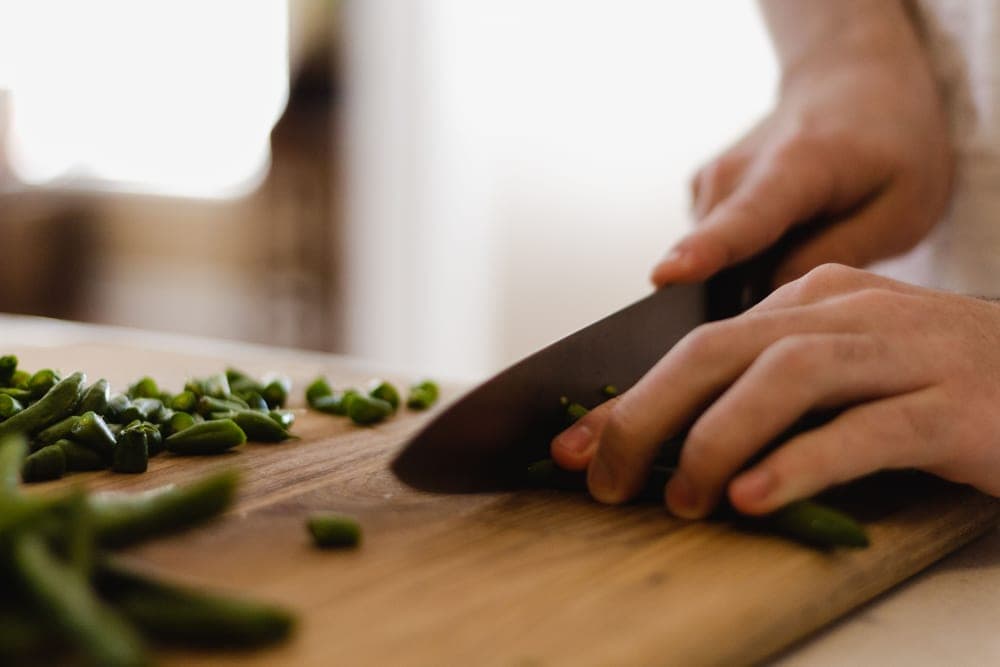 MAC Professional 6.5" Santoku (MSK-65) | Precision vegetable work | 8.5 | |
| 2 | 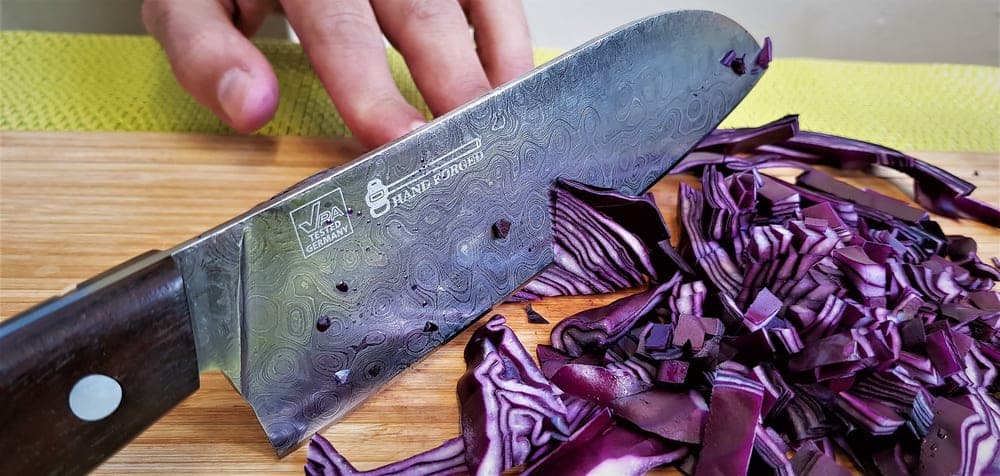 Tojiro DP Nakiri 165mm (F-502) | First nakiri | 8.7 | |
| 3 | 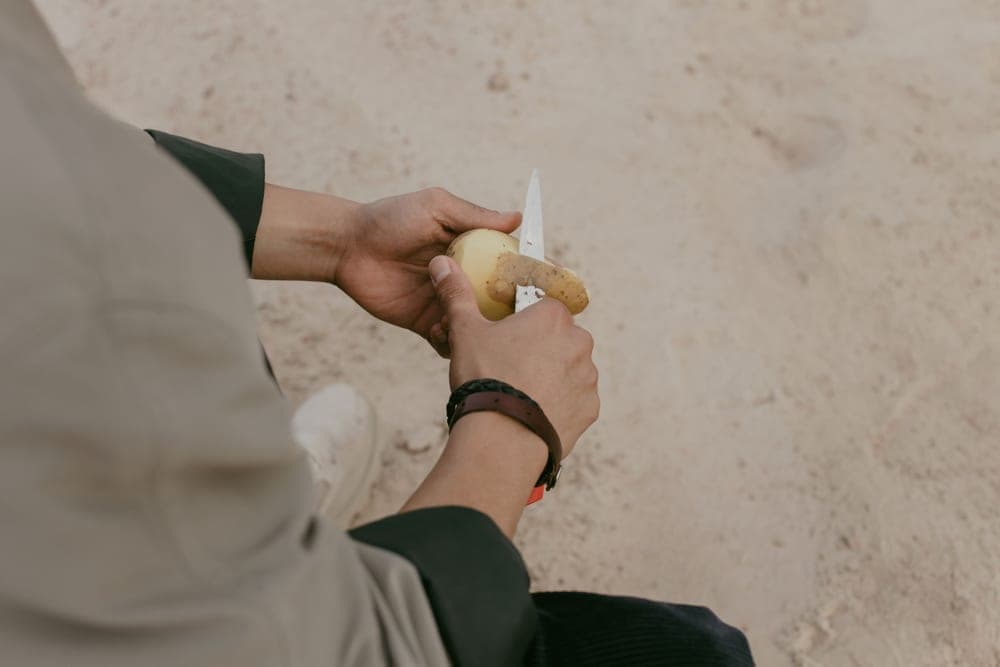 Tojiro DP Santoku 170mm (F-503) | A second Japanese knife on a budget | 8.4 |
| Santoku | Nakiri | |
|---|---|---|
| Length | 165–170mm | 165mm |
| Edge | Near-flat with a curve into the tip | Completely flat, heel to tip |
| Front of blade | Sheep's foot — a rounded, usable point | Squared off — no point at all |
| Boneless protein | Yes | No |
| Full-contact vegetable cuts | Good | Best in class |
| Blade height | approx. 42–45mm | approx. 45–50mm |
That curve is the whole decision
The santoku's front curve gives it a usable — if blunt — point. You can score a chicken breast with it, start a cut into a melon, separate a boneless thigh. Not elegantly, but you can. A nakiri cannot do any of that; the front of the blade is a flat vertical edge.
In exchange, the nakiri's last 15mm are as useful as the first 15mm. On a santoku, the curved section rides above the board on a straight downward cut, so the effective flat edge is shorter than the blade.
Height, and why it matters more than it sounds
A nakiri is usually taller — around 45 to 50mm at the heel against 42 to 45mm for a santoku. Over a long prep session that is the difference between your knuckles clearing the board and not. It also gives you more flat face to scoop with.
Which to buy
- You own no Japanese knife yet: neither. Buy a gyuto. Both of these are second knives.
- You own a gyuto and cut a lot of vegetables: nakiri. It adds something the gyuto does not do.
- You own a gyuto but your board is tiny: santoku. It replaces the gyuto on cramped nights.
- You want one Japanese knife and your board is small: santoku, because the nakiri's missing tip will bite you.
The verdict
For most kitchens the santoku is the safer purchase and the nakiri is the more interesting one. If you already have a general-purpose knife you like, the Tojiro DP nakiri adds a capability; the MAC MSK-65 santoku mostly adds a smaller version of what you already own.
The picks in detail
#1 · Precision vegetable work
MAC Professional 6.5" Santoku (MSK-65)
The MTH-80's logic in a santoku: thin, light, 15 degrees per side, and consistent from unit to unit.
What it does well
- Extremely thin behind the edge for its price
- Same 15-degree factory geometry as the rest of the Professional line
- Light and neutral in the hand
Where it gives way
- Thin tip is easy to damage
- No bolster to protect your knuckles in a heavy grip
- Costs more than the Tojiro equivalent
Skip it if: Heavy jobs. It is thin, and thin blades dislike bone and frozen food.
| Blade length | 6.5 in |
|---|---|
| Steel | Sub-zero tempered high-carbon molybdenum vanadium alloy |
| Hardness | approx. 61 HRC (MAC Professional line) |
| Edge angle | 15 degrees per side |
#2 · First nakiri
Tojiro DP Nakiri 165mm (F-502)
A flat 165 mm edge in VG-10 at 59-61 HRC for the price of a mid-range German paring knife. The obvious first nakiri.
What it does well
- 45 mm of blade height means your knuckles clear the board
- Genuinely flat edge — full contact, no accordion slices
- 1.8 mm spine falls through vegetables rather than wedging
Where it gives way
- No tip, so it cannot do fine tip work at all
- 207 g is heavier than the profile suggests
- Western handle and bolster feel dense for such a light job
Skip it if: Anyone expecting it to replace a chef's knife. A nakiri does not have a tip and cannot break down a chicken.
| Blade length | 165-170 mm |
|---|---|
| Steel | Takefu VG-10 core, three-layer |
| Hardness | 59-61 HRC |
| Heel height | 45 mm |
| Spine | 1.8 mm, consistent |
| Weight | approx. 207 g |
#3 · A second Japanese knife on a budget
Tojiro DP Santoku 170mm (F-503)
The gyuto's sibling: same VG-10 san mai, same price bracket, shorter and flatter. The cheapest honest route into a Japanese santoku.
What it does well
- Same steel and geometry philosophy as the F-808 gyuto
- Light and easy to control for shorter cooks
- Inexpensive enough to learn stone work on
Where it gives way
- Plain finish, same as the rest of the DP line
- 170 mm limits you on anything large
- Soft cladding scratches quickly
Skip it if: Anyone who already has a 210 mm gyuto and a small board — the overlap is large.
| Blade length | 170 mm |
|---|---|
| Steel | VG-10 core, three-layer stainless cladding |
| Hardness | 59-61 HRC |
| Handle | Western composite wood with bolster |
Common questions
What is the difference between a santoku and a nakiri?
Which is better for a beginner?
Do I need both?
Sources
Read next
Japanese Knives
Best Santoku Knives
Japanese Knives
Best Nakiri Knives
Japanese Knives
Nakiri vs Chef Knife
Japanese Knives
Gyuto vs Santoku: Which Should You Buy?
Japanese Knives
Japanese Knife Types
Japanese Knives