Steel & Care
Knife Steel Guide
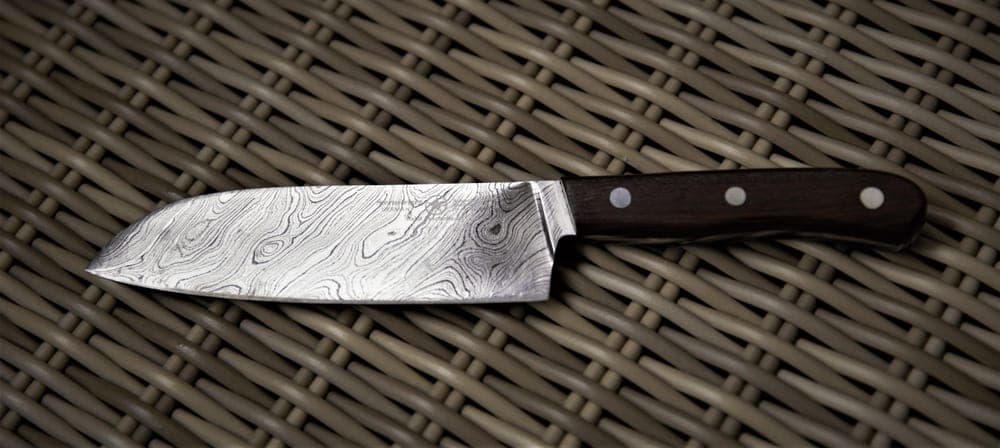
What this is based on: published manufacturer specifications and retailer listings, cited on each product; the weight of professional and owner reviews across multiple retailers; and hands-on experience sharpening and cooking with knives of this type. We have not individually tested every model listed, we do not run instrumented sharpness testing, and we do not claim a test we did not run.
Quick picks
| # | Product | Best for | Score | Price |
|---|---|---|---|---|
| 1 | 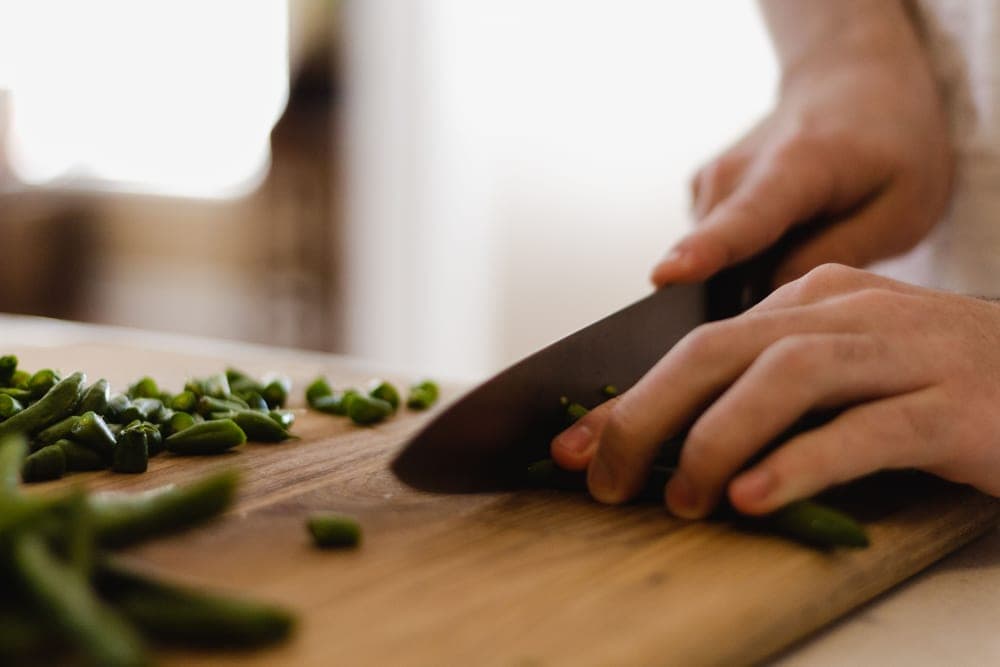 Tojiro DP Gyuto 210mm (F-808) | First Japanese knife | 8.6 | |
| 2 |  Miyabi Birchwood SG2 8" Chef's Knife | Someone who already sharpens their own | 8.6 | |
| 3 | 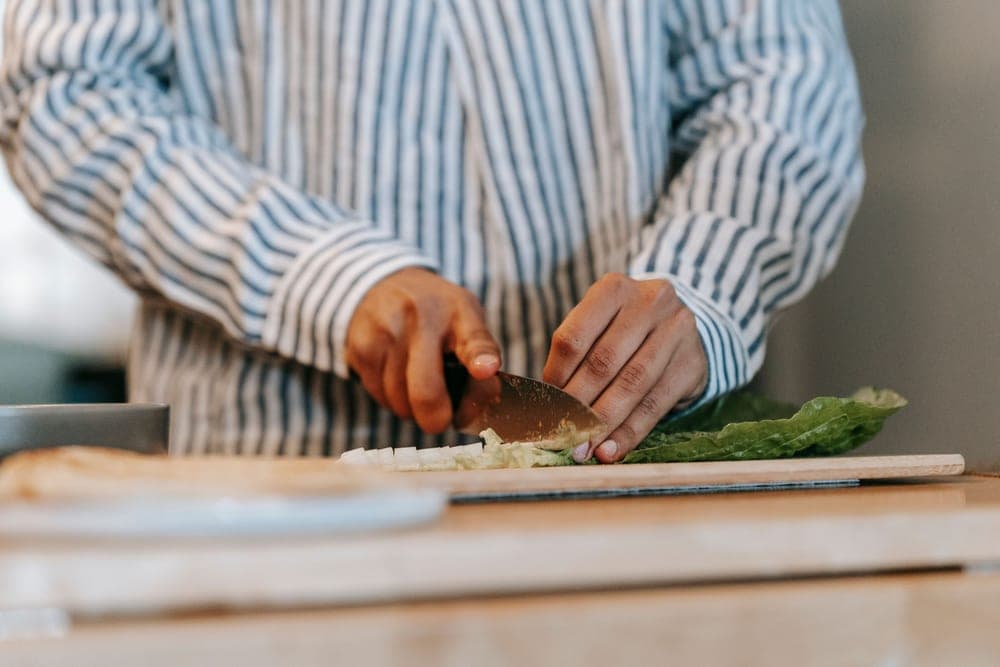 MAC Professional 8" Chef's Knife with Dimples (MTH-80) | The one-knife kitchen | 8.8 | |
| 4 | Wüsthof Classic 8" Chef's Knife | Cooks who want weight and a bolster | 7.4 |
| Steel | Typical HRC | Edge retention | Corrosion resistance | Ease of sharpening | Found in |
|---|---|---|---|---|---|
| X55CrMo14 | 56 | Low | High | Very easy | Victorinox Fibrox |
| CROMOVA 18 | 56–58 | Low–medium | High | Easy | Global |
| X50CrMoV15 | 58 | Medium | High | Easy | Wüsthof Classic |
| VG-10 | 59–61 | Good | High (approx. 15% chromium) | Moderate | Tojiro DP, many Japanese lines |
| VG-MAX | 61 | Good | High | Moderate | Shun Classic |
| MAC proprietary Mo-V | 61 | Good | High | Moderate | MAC Professional |
| SG2 / R2 (powder) | 62–64 | Excellent — roughly twice VG-10 | High | Hard | Miyabi, premium Japanese lines |
| Shirogami (White) carbon | 60–63 | Medium | None — it will rust | Very easy, finest edge | Traditional Japanese knives |
| Aogami (Blue) carbon | 61–64 | Good | None | Easy | Traditional Japanese knives |
What HRC actually measures
The Rockwell C scale measures resistance to indentation — how hard the steel is. In a knife that translates into two practical things: how long the apex resists deforming under load, and how fine an apex it can hold without folding over.
Three points of Rockwell is not a small difference. 58 HRC and 61 HRC are noticeably different knives, and they fail differently: a softer edge rolls, which a honing rod fixes in seconds, while a harder edge chips, which needs a stone.
58 to 61 HRC covers almost every kitchen knife worth buying. Below 56 you are honing constantly. Above 63 you are in specialist territory where a hard board or a careless twist takes a piece out of the edge.
The four properties, and why you cannot have all of them
- Edge retention — how long it stays sharp. Driven by hardness and by hard carbides in the alloy.
- Toughness — resistance to chipping. Falls as hardness rises. This is the direct trade.
- Corrosion resistance — driven by chromium content, roughly 13 percent and up for stainless. Carbon steels have essentially none.
- Ease of sharpening — falls as hardness and carbide content rise. A carbon steel at 62 HRC sharpens more easily than a powder stainless at 62, because the carbides differ.
Carbides: the part nobody explains
Carbides are hard particles of carbon bonded with chromium, vanadium or molybdenum, suspended in the softer steel matrix. They are what resists wear, so more and harder carbides means better edge retention.
They also make the steel harder to abrade — which is why a soft clay stone barely touches SG2 — and, if they are large, they can act as stress risers that make the edge chip. Powder metallurgy solves this by producing very fine, evenly distributed carbides, which is exactly why SG2 can run at 63 HRC and still be usable. VG-10 against SG2 in detail.
Cladding, san mai and Damascus
Most Japanese stainless knives are laminated: a hard cutting core with softer steel on both sides. Three layers is called san mai. The Tojiro DP uses VG-10 between two layers of 13-chrome stainless; the Shun Classic uses VG-MAX between 34 Damascus layers each side.
The cladding adds toughness and protects the core, and — when it is Damascus — looks striking. It does not cut. When comparing knives, compare the cores.
Choosing, in one paragraph
If you are buying your first good knife, VG-10 at around 60 HRC. It sits in the middle of every trade-off: fine edge, good retention, genuinely stain resistant, and it sharpens on any ordinary 1,000-grit stone. If you already sharpen on hard stones and want the longest interval, SG2. If you want the finest edge possible and do not mind maintenance, carbon steel. If you want maximum forgiveness, a Western stainless at 56 to 58.
The picks in detail
#1 · First Japanese knife
Tojiro DP Gyuto 210mm (F-808)
The default answer to 'my first real Japanese knife'. VG-10 at around 60 HRC in a plain three-layer build, at a price that makes the inevitable first chip survivable.
What it does well
- VG-10 at 59-60 HRC takes a genuinely fine edge and holds it far longer than a German knife at 56-58
- 1.9 mm spine and 43 mm heel make it thin behind the edge without being fragile
- Cheap enough that learning to sharpen on it is not frightening
Where it gives way
- Handle finish is functional and unlovely; some units need the bolster easing with sandpaper
- Stainless cladding is soft and scratches readily
- Nothing about the fit and finish will impress anyone
Skip it if: Anyone who wants the knife to be beautiful. The handle is a workmanlike composite with a stainless bolster and nothing about it is charming.
| Blade length | 210 mm (8.3 in) |
|---|---|
| Steel | VG-10 core, 13-chrome stainless cladding (san mai) |
| Hardness | 59-60 HRC |
| Heel height | 43 mm |
| Spine at heel | 1.9 mm |
| Weight | approx. 187 g |
| Handle | Western, laminated composite wood with stainless bolster |
#2 · Someone who already sharpens their own
Miyabi Birchwood SG2 8" Chef's Knife
SG2 powder steel at 63 HRC behind a 9.5-to-12-degree edge and 101 layers of Damascus. The sharpest knife here out of the box, and the least forgiving.
What it does well
- 63 HRC SG2 holds an edge appreciably longer than VG-10 at 60 — commonly cited as roughly twice as long
- A sub-12-degree factory edge is genuinely rare and it shows on the first cut
- 178 g with a 2.1 mm spine — light and thin for a Damascus-clad knife
Where it gives way
- 63 HRC and a very acute edge is a chipping risk on any hard board
- Powder steel is slow on a soft clay stone; you want a hard stone or diamond
- Costs several times what a Tojiro DP does
Skip it if: A first Japanese knife. At 63 HRC with an edge under 12 degrees per side it will chip on a hard board or a careless twist, and it is slow to sharpen on a soft stone.
| Blade length | 8 in |
|---|---|
| Steel | SG2 micro-carbide powder steel core, 50 Damascus layers each side |
| Hardness | 63 HRC, Cryodur ice-hardened |
| Edge angle | approx. 9.5-12 degrees per side, double bevel |
| Blade height | 1.75 in |
| Spine at heel | 2.1 mm |
| Weight | 6.2 oz (178 g) |
| Handle | Karelian birch with stainless bolster and mosaic pin |
| Origin | Seki, Japan |
#3 · The one-knife kitchen
MAC Professional 8" Chef's Knife with Dimples (MTH-80)
The knife that wins the most side-by-side tests and asks the least of you. Thin, light, 61 HRC, and forgiving enough that a mediocre sharpening job still cuts well.
What it does well
- 6.8 oz with a 2.5 mm spine — genuinely light in the hand over a long prep session
- 15 degrees per side from the factory, which is the angle you will maintain anyway
- 25-year warranty and a reputation for consistency unit to unit
Where it gives way
- Costs meaningfully more than a Tojiro DP for a similar hardness
- Mono-steel, so no cladding to protect the core if you drop it edge-first
- The dimples do less for release than the marketing implies
Skip it if: Anyone chasing maximum edge retention. At 61 HRC in a mono-steel it will not out-last a powder-steel blade, and the dimples are cosmetic more often than useful.
| Blade length | 8 in (approx. 200 mm) |
|---|---|
| Steel | Sub-zero tempered high-carbon molybdenum vanadium alloy |
| Hardness | 61 HRC |
| Edge angle | 15 degrees per side (double bevel) |
| Blade height | 1 7/8 in |
| Spine at heel | 2.5 mm |
| Weight | 6.8 oz |
| Handle | Riveted Pakkawood with integrated bolster |
#4 · Cooks who want weight and a bolster
Wüsthof Classic 8" Chef's Knife
The German benchmark, and the knife most of this site's readers are replacing. 265 g, a 3 mm spine, 58 HRC, and a 14-degree-per-side factory edge that is more acute than its reputation suggests.
What it does well
- Forged, full tang, triple-riveted — it will outlive you
- 14 degrees per side from Wüsthof's Precision Edge Technology is sharper than most people assume
- Soft enough at 58 HRC to be nearly chip-proof
Where it gives way
- 265 g is heavy; the 3 mm spine wedges in dense produce
- 58 HRC gives up meaningful edge retention to a 61 HRC Japanese blade
- Full bolster gets in the way when you sharpen the heel
Skip it if: Anyone whose complaint is 'my knife feels heavy and wedges in a sweet potato' — that is the 3 mm spine, and a thinner Japanese blade is the fix.
| Blade length | 8 in (200 mm) |
|---|---|
| Steel | X50CrMoV15 high-carbon stainless |
| Hardness | 58 HRC |
| Edge angle | 14 degrees per side (28 degrees inclusive) |
| Blade height | 1.9 in (47 mm) |
| Spine | 3 mm |
| Weight | 9.3 oz (265 g) |
Common questions
What HRC hardness should a kitchen knife be?
What is the best knife steel?
Does higher HRC mean a better knife?
What is powder steel?
Is Damascus steel better?
Sources
Read next
Steel & Care
VG-10 vs SG2 Steel
Steel & Care
Carbon vs Stainless Kitchen Knives
Steel & Care
Why Is My Knife Chipping?
Japanese Knives
Japanese vs German Knives
Whetstones & Skill
Best Whetstone for Japanese Knives