Skip to content
Hone & Handle
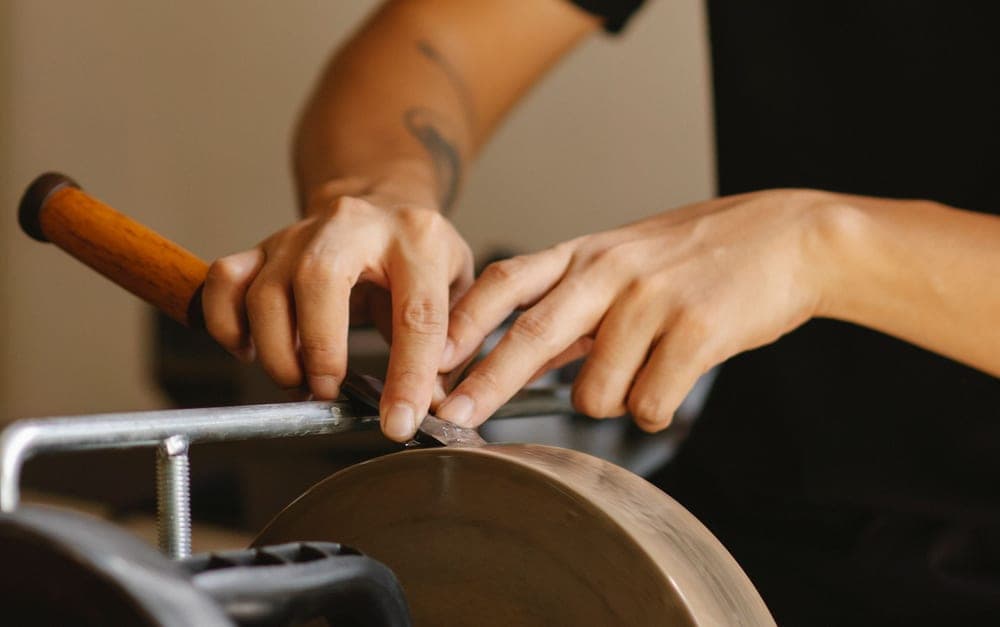
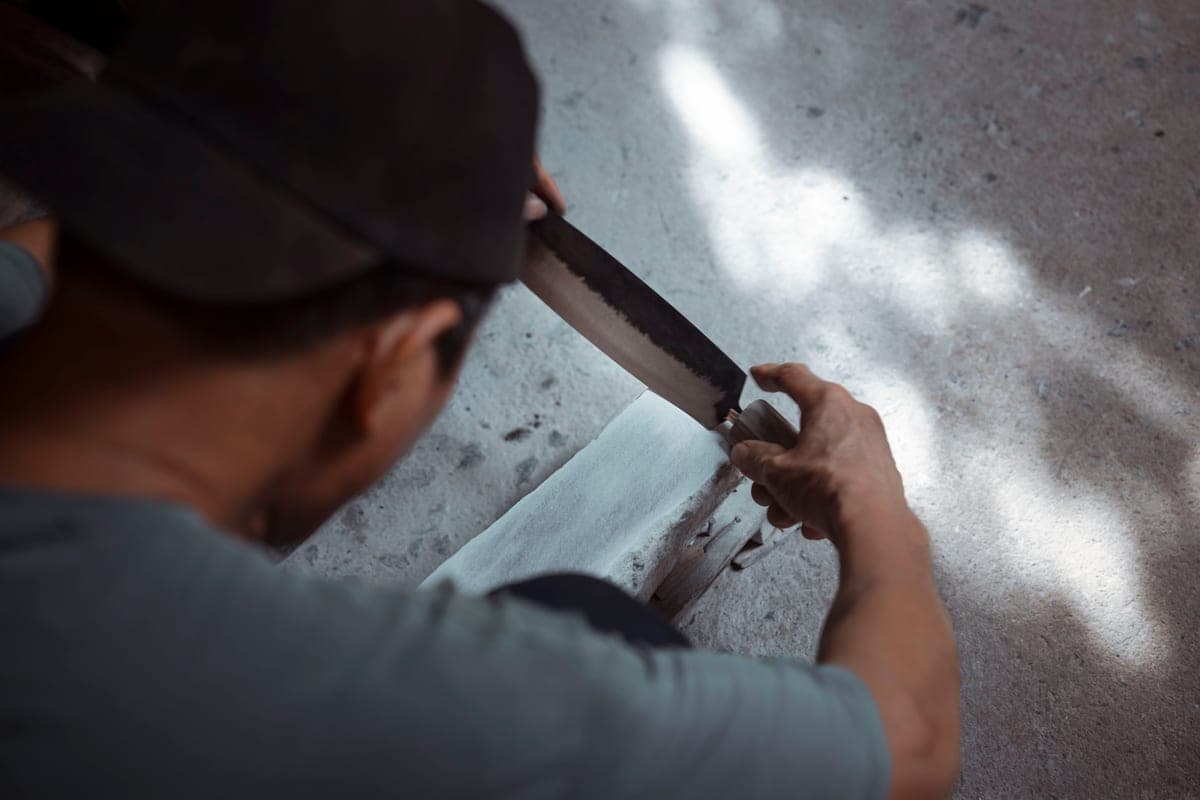
A person drawing a knife blade across a wet sharpening stone

Whetstones & Sharpening

One stone and twenty minutes of practice does more for your kitchen than any knife you can buy. Here is the whole of it.

Hone & Handle earns a commission from qualifying purchases made through links on this page, at no extra cost to you. It does not change what we recommend or the order we rank things in — here is how we choose and here is the full disclosure.

A whetstone costs less than any decent knife and improves every knife you own, permanently. It is the highest-value purchase in this entire category and it is the one most people put off.

They put it off because it looks like a skill problem. It is not much of one. Holding a consistent angle takes about twenty minutes of deliberate practice to get workable and a handful of sessions to get good, and a permanent marker on the bevel tells you immediately whether you are doing it right.

If you buy one thing, buy this

A 1,000-grit stone. That number does the work: coarse enough to bring back a knife that has gone properly dull, fine enough that the edge it leaves is one you can cook with. A 1,000/6,000 combination stone costs barely more and adds a finishing side.

Which one depends almost entirely on one question — whether you will tolerate soaking it. The whetstone roundup sets out the four worth owning and the soaking requirement for each.

The three things that decide whether it works

  1. The angle. 15 degrees per side for a Japanese knife. Two stacked US quarters under the spine is close enough to calibrate from, and a marker on the bevel verifies it. The angle guide.
  2. The burr. The ribbon of fatigued steel that folds to the far side of the edge when the two ground planes finally meet. Raising one is how you know you have sharpened rather than polished; removing it is how you finish. No burr, no sharp knife.
  3. Pressure. Much less than instinct suggests. Heavy pressure flexes the blade and rounds the apex you are trying to create.

A word about grit numbers

Grit is not an international standard. Japanese JIS, American ANSI and European FEPA scales number the same particle size differently, and the gap widens at fine grits. A JIS 1,000 water stone and an ANSI 1,000 diamond plate are not the same thing.

The rule that avoids all of it: stay inside one maker's range when you build a progression. Full chart on the grit guide.

The routine, once it is a habit

A complete kitchen sharpening routine
TaskToolHow oftenHow long
Realign a rolled edgeCeramic rodWeekly10 seconds
Rebuild a worn edge1,000-grit stone2–4 times a year10–20 minutes
Refine and deburr6,000-grit side, then a stropEnd of every stone session2–5 minutes
Remove a chip400-grit stoneRarely — and fix the causePatience
Flatten the stoneFlattening plateEvery few sessions on a soft stone2 minutes

The test that replaces a schedule

Hold a sheet of paper by one corner and slice down through it. Cuts cleanly: do nothing. Catches then cuts: hone it. Tears or will not start: get the stone out. That is more reliable than any calendar — more on frequency here.

Where to start

If you have never sharpened: read how to use a whetstone for setup and technique, then the eight steps.

If you have tried and it did not work: the diagnostic walks the seven causes in order, and it is nearly always one of the first three.

If you want a device rather than a skill, that is a legitimate choice and it lives in the sharpeners section.

What to buy
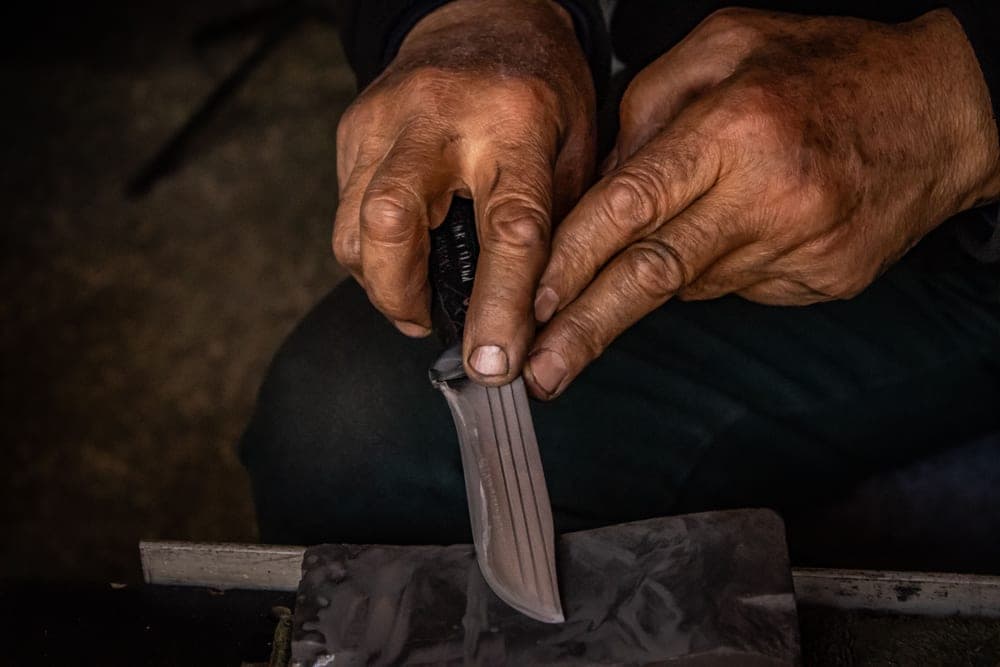
A sharpening stone set out on a workshop bench

Best starter set

Best Whetstone Sets

What a genuine whetstone starter kit contains, which bundled extras are filler, and how to build a better one yourself.

Our top pick: King KDS Combination Whetstone #1000/#6000

Head to head

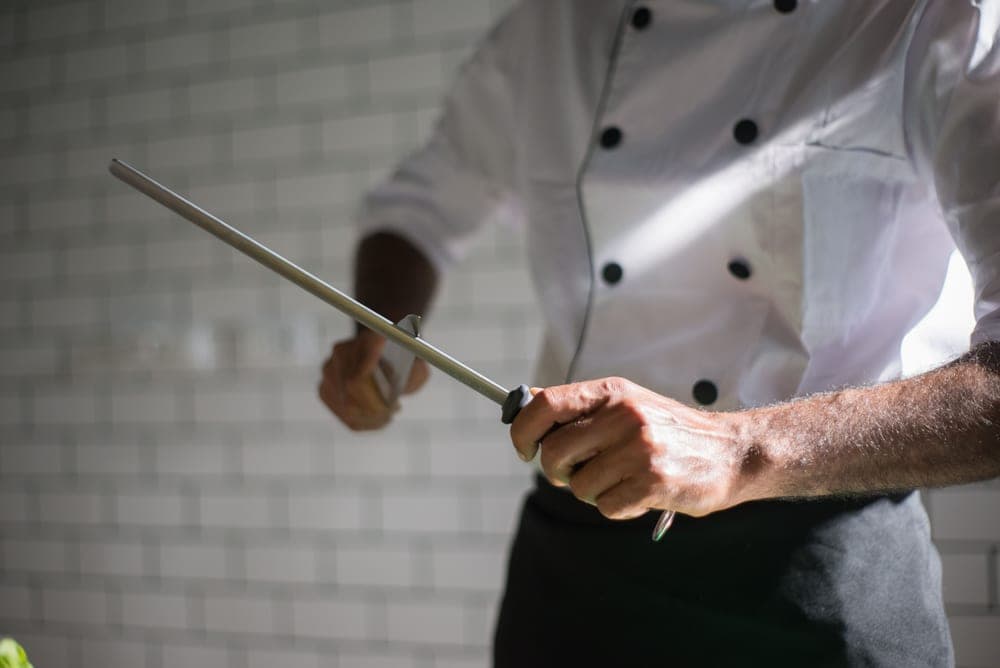
A honing rod held beside a kitchen knife

Sharpening vs Honing

Honing realigns, sharpening rebuilds, stropping deburrs. Which tool solves which problem, and how to tell them apart.

Guides

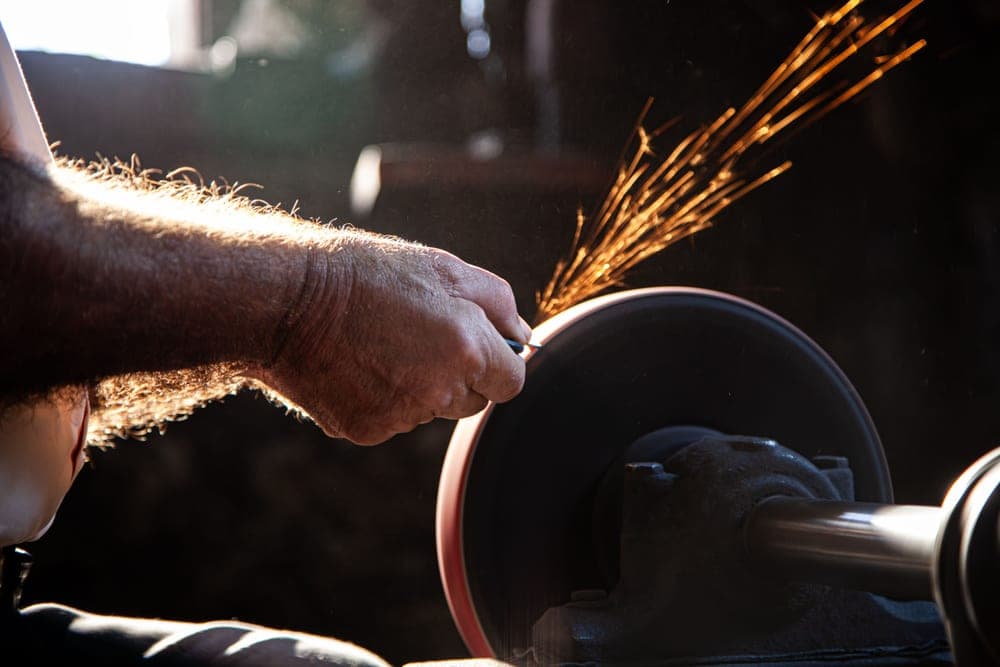
Sparks thrown from a blade held against an abrasive surface

Whetstone Grit Chart

A clean grit chart for kitchen knives, what each range does, and why a 1,000 on one stone is not a 1,000 on another.

A blade edge photographed in close detail

Knife Sharpening Angle Chart

Sharpening angles by knife type in a single table, and a practical method for finding and holding 15 degrees freehand.

A blade being worked along a wet sharpening stone

How to Use a Whetstone

Whetstone setup, stroke, pressure and upkeep — including flattening, which most people skip until the stone stops working.

A leather strop and a knife on a wooden bench

How to Strop a Knife

Stropping technique: direction, pressure, pass count, compound choice, and the spine-lifting mistake that ruins the edge.

When something goes wrong

Common questions

What whetstone should I buy first?

A 1,000-grit stone, ideally a 1,000/6,000 combination. 1,000 grit is coarse enough to bring back a properly dull kitchen knife and fine enough to leave an edge you can cook with. Everything below 1,000 is repair and everything above is refinement.

What angle do I sharpen at?

15 degrees per side for a Japanese kitchen knife, which is 30 degrees inclusive. MAC specifies 15 and Shun specifies 16, so anywhere in that band matches most factory grinds. Consistency matters more than the exact figure.

Do I need to soak the stone?

It depends on the binder, not the grit. Clay-bonded stones such as the King KDS want 10 to 15 minutes in water. Splash-and-go stones like the Shapton Glass and the Naniwa Professional just need the surface wetted.

Why is my knife still not sharp after sharpening?

Almost always one of three things: you never raised a burr, so you polished a dull edge; your angle wandered, so the apex is rounded; or you left the burr attached and it tore off during the first cut. All three are technique, not equipment.

How long does it take to learn?

One evening to get a workable edge, a few sessions to get consistent. Sharpening has a reputation for difficulty that it does not really deserve — the only genuinely hard part is holding a steady angle, and a permanent marker on the bevel tells you immediately whether you are.

Sources