Whetstones & Skill
Whetstone vs Oilstone
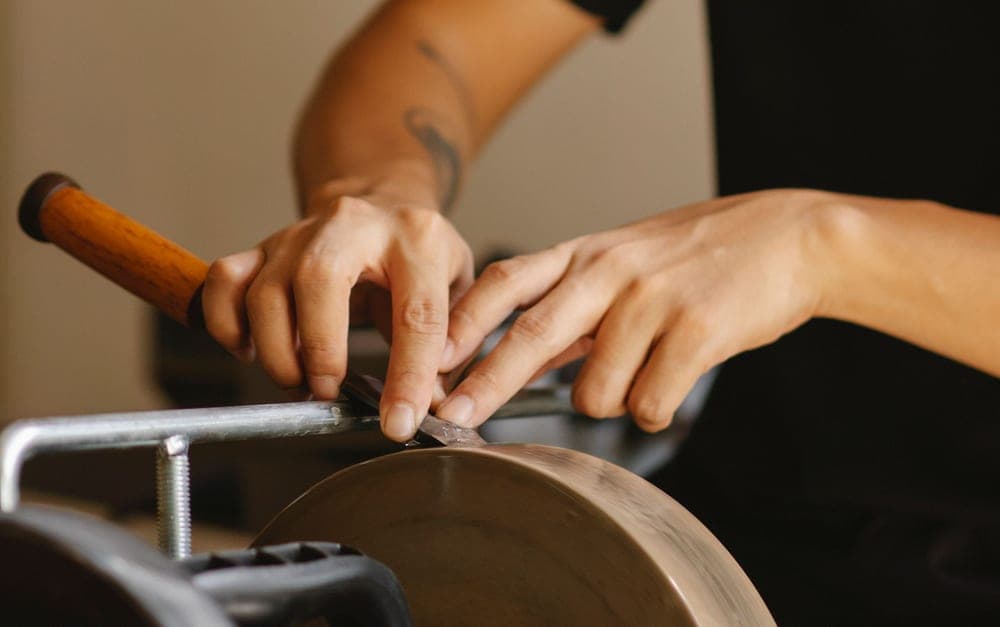
What this is based on: published manufacturer specifications and retailer listings, cited on each product; the weight of professional and owner reviews across multiple retailers; and hands-on experience sharpening and cooking with knives of this type. We have not individually tested every model listed, we do not run instrumented sharpness testing, and we do not claim a test we did not run.
Quick picks
| # | Product | Best for | Score | Price |
|---|---|---|---|---|
| 1 |  Naniwa Professional (Chosera) 1000 | The one stone to own if you only own one | 8.6 | |
| 2 |  King KDS Combination Whetstone #1000/#6000 | Your first stone | 8.4 | |
| 3 | Shapton Glass Stone 1000 | Hard steels and no patience for soaking | 8.3 |
A pedantic note first, because the phrasing causes real confusion: "whetstone" simply means a stone for whetting — sharpening — an edge, so an oilstone is a whetstone. In everyday use the word has drifted to mean a Japanese-style water stone, and that is how it is used on this site and on the rest of this page. What you are actually choosing between is the lubricant the stone was built around, and that choice follows from the binder.
What the binder decides
- Water stone: soft binder, renewing surface. Clay, magnesia or a porous ceramic holds abrasive loosely. Under pressure, dull grit breaks away and fresh grit is exposed, and the debris forms a slurry that does some cutting of its own. The stone is always presenting a new surface, which is why it is fast.
- Oilstone: hard binder, fixed surface. Aluminium oxide (India), silicon carbide (Crystolon) or natural novaculite (Arkansas) in a dense body. The grit stays put, so the stone stays flat — and the surface loads with steel swarf, which is what the oil is for: it floats the debris out instead of letting it glaze the stone.
- Consequence for your knife. Hard, abrasion-resistant modern steels need fresh sharp abrasive to be cut rather than burnished. A renewing surface supplies that. A fixed surface increasingly does not, which is why an oilstone feels fine on a soft carbon blade and sluggish on VG-10 at 60 HRC.
Side by side
| Water stone | Oilstone | |
|---|---|---|
| Lubricant | Water; soak or splash depending on binder | Honing oil, or mineral oil |
| Cutting speed on hard steel | Fast — fresh abrasive is continually exposed | Slow — fixed abrasive dulls and burnishes |
| Finest practical grit | 8000-12000 readily available | Hard Arkansas is the practical ceiling |
| Flatness over time | Dishes; needs flattening | Stays flat for years |
| Mess | Water and grey slurry; rinses off | Oil and black swarf; does not rinse off |
| Food-contact comfort | Water only | Oil residue needs washing off the blade |
The last row is small but it matters in a kitchen. An oilstone leaves a film of oil and steel particles on the bevel that you must wash off before the knife touches food. Water stones leave water.
When an oilstone is still the right stone
- Woodworking edges. Chisels and plane irons want a dead-flat reference surface more than they want speed, and they are usually softer steel. An India or Arkansas stone is excellent here and will outlive you.
- A garage, not a kitchen. No soaking, no drying, no flattening, and it tolerates being left in a drawer with the oil on it. For an axe, a mower blade or a pocket knife that lives outside, that convenience is real.
- You already own one and your knives are soft. If your kitchen is 56-58 HRC stamped stainless, an oilstone will sharpen it perfectly well. Do not buy a water stone to solve a problem you do not have.
Which water stone to buy
- One stone, minimum fuss. Naniwa Professional 1000. Magnesia binder, splash and go, 20 mm of abrasive, and it still raises a slurry that tells you what the edge is doing.
- Cheapest route in, and the best teacher. King KDS #1000/#6000. Soft clay, a 10-15 minute soak on the 1000 side, two grits in one block.
- Hard steel, or you will never remember to soak. Shapton Glass 1000. Hard ceramic on a glass plate, splash and go, dishes slowly, cuts powder steels that a soft clay stone polishes rather than cuts.
Oil in a porous water-stone binder is close to permanent: it fills the pores that water is meant to occupy, the slurry stops forming, and the stone glazes. There is no reliable way to get it out. If you have both kinds of stone in the house, label them.
The verdict
Water stone for kitchen knives, and specifically for anything Japanese — the renewing surface is what makes hard steel sharpen quickly and what makes high grits possible. Oilstone for workshop edges and for soft steel you want to maintain with no ceremony. If you are buying your first water stone, see the beginner picks; if you want to understand why two stones labelled 1000 feel completely different, that is the brand guide.
The picks in detail
#1 · The one stone to own if you only own one
Naniwa Professional (Chosera) 1000
The stone that does the most with one grit. Hard enough to dish slowly, soft enough to raise a slurry that tells you what the edge is doing.
What it does well
- Splash and go, but still builds a rich, informative slurry
- Fast enough to reset a dull edge, refined enough to finish on
- 20 mm of abrasive — years of use before it is spent
Where it gives way
- Expensive for a single grit
- Magnesia binder does not like being stored wet
- You will still want a finishing stone eventually
Skip it if: A tight budget. It costs more than a combination stone and gives you one grit.
| Grit | 1000 |
|---|---|
| Size | 210 x 70 x 20 mm |
| Soaking | Splash and go |
| Binder | Magnesia |
#2 · Your first stone
King KDS Combination Whetstone #1000/#6000
The stone almost everyone learns on. Soft, forgiving, cheap, and it tells you loudly when your angle wanders.
What it does well
- Two useful grits in one block for the price of half a premium stone
- Soft binder builds slurry readily, which gives beginners real feedback
- Almost impossible to damage a knife on it
Where it gives way
- Dishes quickly and needs flattening often
- The soak is a real commitment — you cannot sharpen on a whim
- Slow on hard powder steels like SG2
Skip it if: Impatient people. The 1000 side wants a 10-15 minute soak before every session and the clay binder dishes fast.
| Grits | #1000 / #6000, combination |
|---|---|
| Binder | Clay |
| Soaking | #1000 side: 10-15 minutes. #6000 side: splash only |
| Size | 207 x 66 x 36 mm |
| Weight | approx. 956 g |
#3 · Hard steels and no patience for soaking
Shapton Glass Stone 1000
5 mm of hard abrasive bonded to a glass plate. Splash and go, dishes slowly, and cuts hard steel that a King barely scratches.
What it does well
- Genuinely splash and go — water on, sharpen, done in five minutes
- Hard binder dishes far more slowly than a clay stone
- Cuts hard powder steels that soft stones struggle with
Where it gives way
- Only 5 mm of usable abrasive; the glass base is not a stone
- Hard and quiet, so it hides angle errors from a beginner
- Costs roughly what a full King combination stone does, for one grit
Skip it if: Learning on. It is hard and quiet — it gives far less feedback than a soft stone, which is exactly what a beginner needs.
| Grit | 1000 (Shapton scale) |
|---|---|
| Size | 210 x 70 mm, 5 mm abrasive on a 5 mm glass base |
| Soaking | Splash and go after a 5-6 minute soak on first use only |
| Binder | Non-absorbent ceramic |
Common questions
What is the difference between a whetstone and an oilstone?
Is an oilstone or a water stone better for kitchen knives?
Can I use water on an oilstone?
Do water stones wear out faster than oilstones?
Sources
Read next
Whetstones & Skill
Best Whetstones for Kitchen Knives
Whetstones & Skill
Best Whetstone Brands
Whetstones & Skill
Whetstone Grit Chart
Whetstones & Skill
How to Use a Whetstone
Whetstones & Skill
How Many Whetstones Do You Need?
Sharpeners