Japanese Knives
Best Japanese Chef Knives for Home Cooks
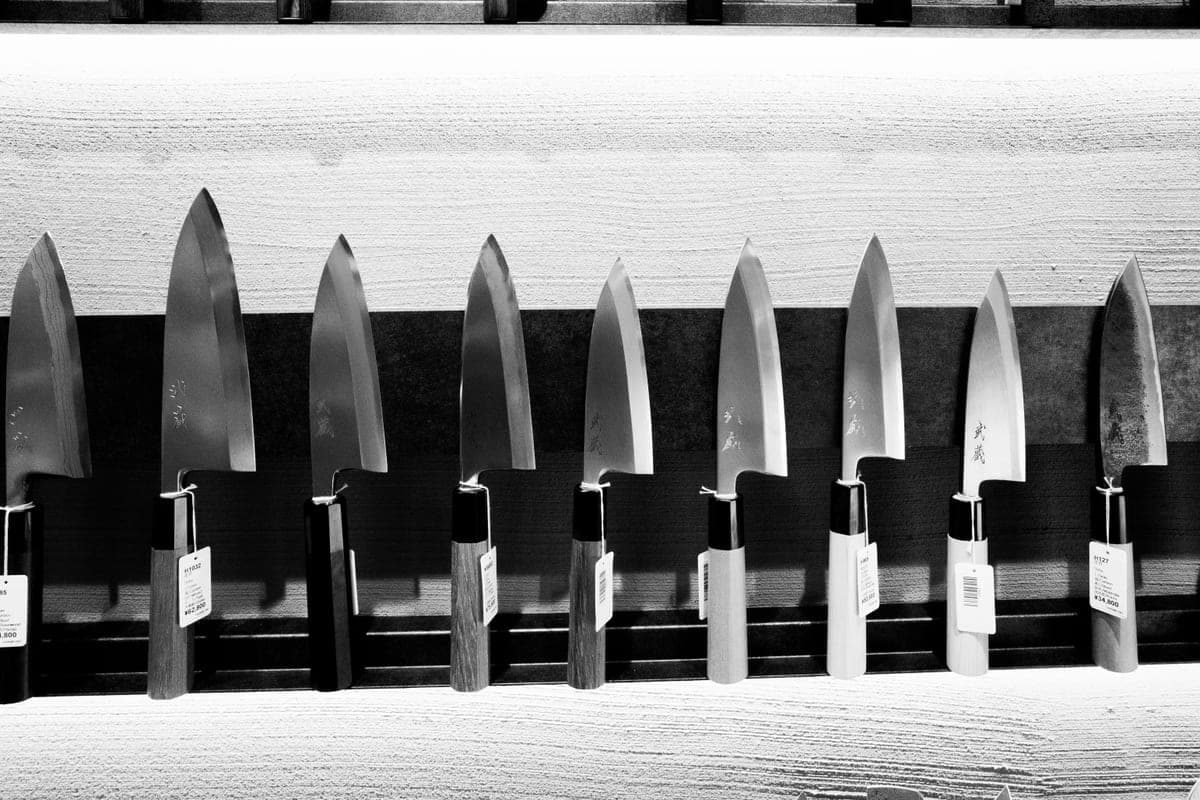
What this is based on: published manufacturer specifications and retailer listings, cited on each product; the weight of professional and owner reviews across multiple retailers; and hands-on experience sharpening and cooking with knives of this type. We have not individually tested every model listed, we do not run instrumented sharpness testing, and we do not claim a test we did not run.
Quick picks
| # | Product | Best for | Score | Price |
|---|---|---|---|---|
| 1 | 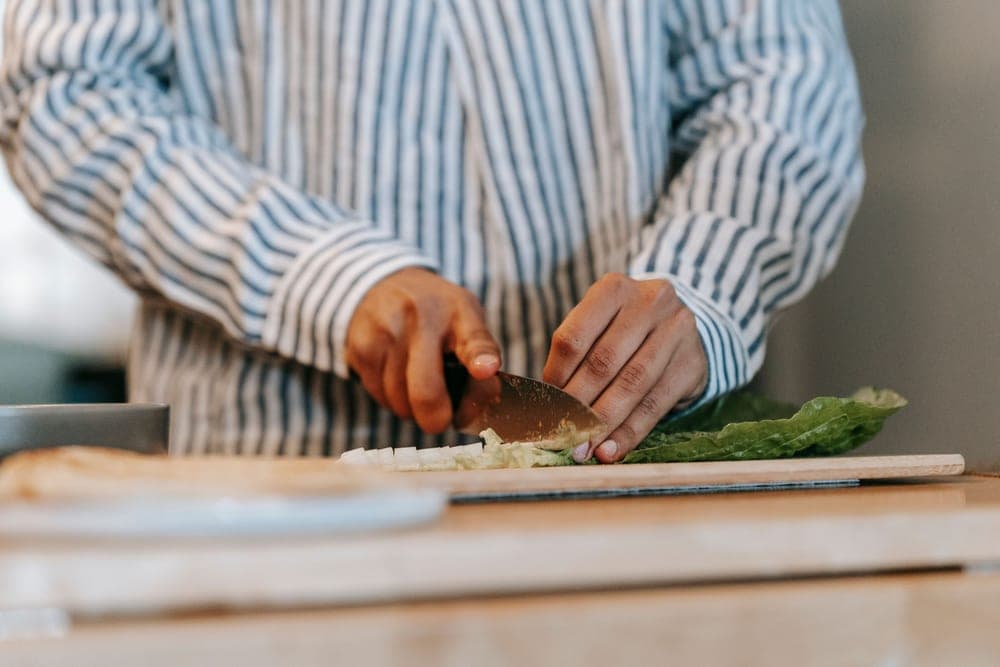 MAC Professional 8" Chef's Knife with Dimples (MTH-80) | The one-knife kitchen | 8.8 | |
| 2 | 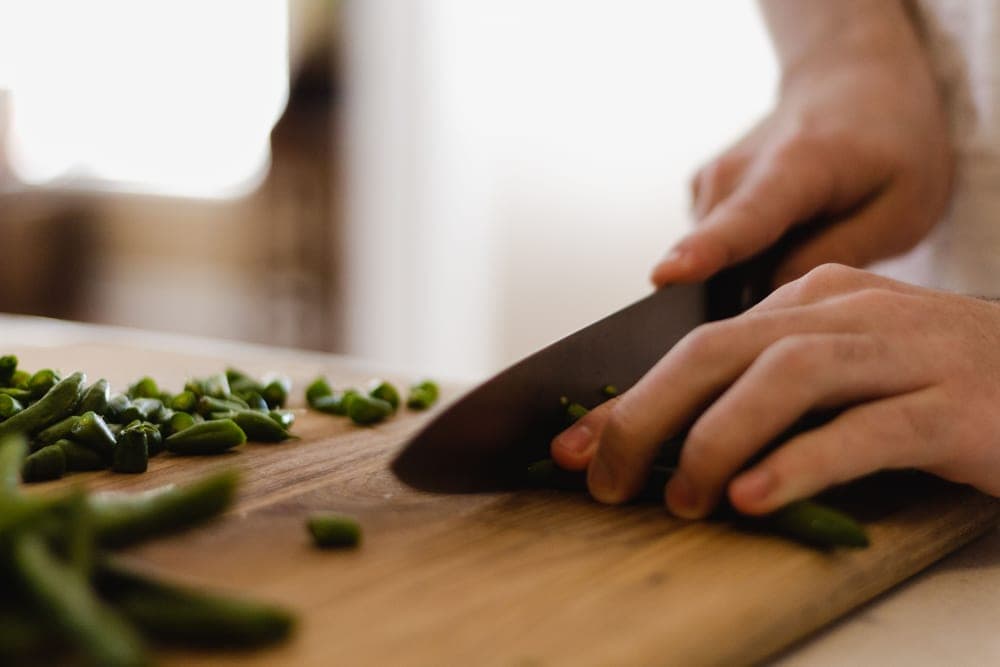 Tojiro DP Gyuto 210mm (F-808) | First Japanese knife | 8.6 | |
| 3 | 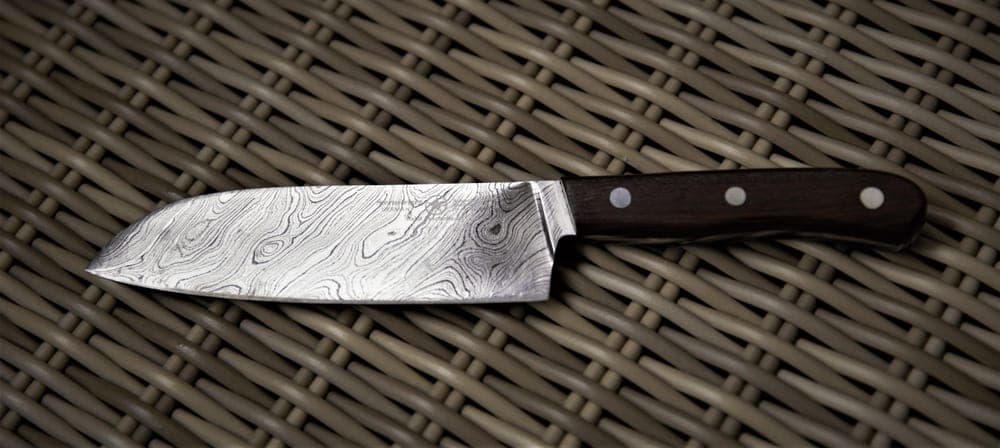 Shun Classic 8" Chef's Knife (DM0706) | A knife you want to look at | 8.3 | |
| 4 |  Global G-2 8" Chef's Knife | Cooks who want the lightest knife in the drawer | 7.6 | |
| 5 |  Wüsthof Classic 8" Chef's Knife | Cooks who want weight and a bolster | 7.4 | |
| 6 |  Victorinox Fibrox Pro 8" Chef's Knife | A beater, or a sanity check before you spend more | 7.0 |
The upgrade is not really about the word "Japanese". It is about two measurable things: hardness and thickness. A German chef's knife is typically hardened to 56 to 58 HRC and carries a 3mm spine; the Wüsthof Classic on this page is 58 HRC with a 3mm spine and weighs 265g. A Japanese chef's knife is usually 59 to 61 HRC with a spine under 2.5mm; the Tojiro DP gyuto is 59 to 60 HRC with a 1.9mm spine and weighs 187g. That is a different tool doing the same job.
Harder steel takes a finer edge and keeps it longer. A thinner blade separates food instead of splitting it, which is why a good Japanese knife feels like it is falling through an onion rather than being pushed through one. The cost is that hard, thin edges chip. Everything below is ranked with that trade-off in view, and every pick names who it is wrong for.
How these were chosen
Candidates had to be currently sold to US buyers, from a manufacturer with published specifications we could read and cite, and in the price band a home cook stepping up from a block set will actually consider. We scored each on four criteria, which are the same four used on every knife roundup on this site and are set out in full on our methodology page:
- Edge and steel — the alloy, its published hardness, and how fine and durable an edge that combination supports.
- Geometry — spine thickness, blade height, factory edge angle, and how much of that translates into cutting rather than wedging.
- Handle — grip security, balance, and whether the shape works for both hands.
- Value — what you get relative to what it costs, judged against the alternatives on this page rather than in the abstract.
Two knives here are not Japanese at all. The Wüsthof Classic is the German benchmark most readers are replacing, and the Victorinox Fibrox is the control sample: if the Fibrox cuts well after you sharpen it, the knife was never the problem and a stone will serve you better than a purchase.
Which of these is for you
| If your current knife… | Buy | Why |
|---|---|---|
| feels heavy and tiring | Global G-2 or MAC MTH-80 | 170g and 193g respectively, against 265g for a Wüsthof Classic |
| wedges in dense produce | Tojiro DP or MAC MTH-80 | 1.9mm and 2.5mm spines, against 3mm |
| goes dull within a week | Any 60+ HRC knife here, plus a stone | Hardness buys interval; a stone buys the edge back |
| is fine, you just want a nicer one | Shun Classic | Sensible 16-degree edge under 68 layers of Damascus cladding |
| is a mystery block-set knife | Victorinox Fibrox first | Cheap enough to confirm the problem before you spend |
What to avoid on the way in
Buying a set. A block set spends your money on a bread knife, a boning knife and six steak knives you will not use. One good chef's knife, one paring knife and a serrated bread knife covers almost everything.
Buying the knife before the stone. A £30 whetstone applied to your existing knife delivers more improvement, more often, than any purchase on this page. See our whetstone picks.
Running a new Japanese knife through a pull-through sharpener. It reprofiles a 15-degree edge toward 20 and grinds away the thin geometry you just paid for. We go into this on the pull-through page.
A short word about steel
Four steels cover almost everything on this page. VG-10 is a cobalt-bearing stainless with around 15 percent chromium, typically run at 59 to 61 HRC; it takes a very fine edge, resists stains well, and sharpens easily. VG-MAX is Kai's proprietary variant used in Shun's Classic line at 61 HRC. MAC's alloy is a sub-zero-tempered high-carbon molybdenum vanadium steel, also 61 HRC. CROMOVA 18, in the Global, runs softer at 56 to 58.
None of these is a bad steel and the differences between them matter less than the geometry wrapped around them. If you want the detail — including why a powder steel like SG2 buys edge retention at the cost of toughness — read VG-10 against SG2 and the knife steel guide.
What to buy after the knife
- A 1,000-grit stone. Non-negotiable. A hard Japanese edge deserves a stone, and a stone is the only tool that maintains the geometry rather than replacing it. Start at the whetstone roundup.
- A ceramic honing rod. A steel rod is often softer than a 61 HRC blade and will do nothing. Ceramic is harder. See honing rods.
- A board that is not glass, stone or bamboo. Hard surfaces roll and chip thin edges. Our board picks explain which materials are kind to an edge.
- A sheath or a rack. Loose drawer storage is the single most common cause of a chipped tip. Storage guide.
The verdict
The MAC MTH-80 wins because it asks the least of you. It is light, thin, 61 HRC, ground to 15 degrees per side from the factory, and consistent enough unit to unit that you can buy one online without worrying. It is not the cheapest and it is not the prettiest, and it will not out-last a powder steel blade — but it is the one that makes the most cooks better immediately.
If money is the constraint, the Tojiro DP gyuto gets you most of the way there for much less, and the money you save covers a stone. If the knife is also an object you want to enjoy looking at, the Shun Classic is the honest answer, as long as you accept that the Damascus cladding is decoration rather than performance.
The picks in detail
#1 · The one-knife kitchen
MAC Professional 8" Chef's Knife with Dimples (MTH-80)
The knife that wins the most side-by-side tests and asks the least of you. Thin, light, 61 HRC, and forgiving enough that a mediocre sharpening job still cuts well.
What it does well
- 6.8 oz with a 2.5 mm spine — genuinely light in the hand over a long prep session
- 15 degrees per side from the factory, which is the angle you will maintain anyway
- 25-year warranty and a reputation for consistency unit to unit
Where it gives way
- Costs meaningfully more than a Tojiro DP for a similar hardness
- Mono-steel, so no cladding to protect the core if you drop it edge-first
- The dimples do less for release than the marketing implies
Skip it if: Anyone chasing maximum edge retention. At 61 HRC in a mono-steel it will not out-last a powder-steel blade, and the dimples are cosmetic more often than useful.
| Blade length | 8 in (approx. 200 mm) |
|---|---|
| Steel | Sub-zero tempered high-carbon molybdenum vanadium alloy |
| Hardness | 61 HRC |
| Edge angle | 15 degrees per side (double bevel) |
| Blade height | 1 7/8 in |
| Spine at heel | 2.5 mm |
| Weight | 6.8 oz |
| Handle | Riveted Pakkawood with integrated bolster |
#2 · First Japanese knife
Tojiro DP Gyuto 210mm (F-808)
The default answer to 'my first real Japanese knife'. VG-10 at around 60 HRC in a plain three-layer build, at a price that makes the inevitable first chip survivable.
What it does well
- VG-10 at 59-60 HRC takes a genuinely fine edge and holds it far longer than a German knife at 56-58
- 1.9 mm spine and 43 mm heel make it thin behind the edge without being fragile
- Cheap enough that learning to sharpen on it is not frightening
Where it gives way
- Handle finish is functional and unlovely; some units need the bolster easing with sandpaper
- Stainless cladding is soft and scratches readily
- Nothing about the fit and finish will impress anyone
Skip it if: Anyone who wants the knife to be beautiful. The handle is a workmanlike composite with a stainless bolster and nothing about it is charming.
| Blade length | 210 mm (8.3 in) |
|---|---|
| Steel | VG-10 core, 13-chrome stainless cladding (san mai) |
| Hardness | 59-60 HRC |
| Heel height | 43 mm |
| Spine at heel | 1.9 mm |
| Weight | approx. 187 g |
| Handle | Western, laminated composite wood with stainless bolster |
#3 · A knife you want to look at
Shun Classic 8" Chef's Knife (DM0706)
The Damascus-clad knife people actually buy. A 16-degree-per-side VG-MAX edge at 61 HRC, a D-shaped pakkawood handle, and a look that sells itself.
What it does well
- 16 degrees per side is a sensible factory angle — acute, but not so thin it chips on a carrot
- Handle geometry is genuinely comfortable in a pinch grip
- Kai's warranty and free sharpening service are real, useful things
Where it gives way
- You pay a significant premium over a MAC or Tojiro for the Damascus cladding
- The D-shaped handle is oriented for right-handed use
- Thin tip is easy to snap if you twist it in a squash
Skip it if: Left-handed cooks who dislike a D-shaped handle, and anyone who resents paying for 68 layers of cladding that do nothing for cutting.
| Blade length | 8 in |
|---|---|
| Steel | VG-MAX core, 34 layers Damascus cladding each side |
| Hardness | 61 HRC |
| Edge angle | 16 degrees per side |
| Handle | D-shaped pakkawood with stainless bolster and end cap |
| Warranty | Limited lifetime |
#4 · Cooks who want the lightest knife in the drawer
Global G-2 8" Chef's Knife
One piece of steel, dimpled hollow handle, 170 g. Nothing else feels like it — which is exactly why you should hold one before you buy.
What it does well
- 170 g and perfectly balanced — the least tiring knife here over two hours of prep
- One-piece construction with no rivets or bolster to trap food
- 2 mm spine means it is thin behind the edge out of the box
Where it gives way
- 56-58 HRC is soft for a Japanese knife; expect to hone it often
- The dimpled steel handle is polarizing and slick when wet
- CROMOVA 18 does not take as fine a finishing edge as VG-10
Skip it if: Anyone with wet hands and no patience: the smooth steel handle gets slippery, and at 56-58 HRC it will not hold an edge like a 61 HRC blade.
| Blade length | 8 in (200 mm) |
|---|---|
| Steel | CROMOVA 18 stainless |
| Hardness | 56-58 HRC |
| Edge angle | 10-15 degrees, double bevel |
| Blade height | 1.7 in (45 mm) |
| Spine | 2 mm |
| Weight | 6 oz (170 g) |
#5 · Cooks who want weight and a bolster
Wüsthof Classic 8" Chef's Knife
The German benchmark, and the knife most of this site's readers are replacing. 265 g, a 3 mm spine, 58 HRC, and a 14-degree-per-side factory edge that is more acute than its reputation suggests.
What it does well
- Forged, full tang, triple-riveted — it will outlive you
- 14 degrees per side from Wüsthof's Precision Edge Technology is sharper than most people assume
- Soft enough at 58 HRC to be nearly chip-proof
Where it gives way
- 265 g is heavy; the 3 mm spine wedges in dense produce
- 58 HRC gives up meaningful edge retention to a 61 HRC Japanese blade
- Full bolster gets in the way when you sharpen the heel
Skip it if: Anyone whose complaint is 'my knife feels heavy and wedges in a sweet potato' — that is the 3 mm spine, and a thinner Japanese blade is the fix.
| Blade length | 8 in (200 mm) |
|---|---|
| Steel | X50CrMoV15 high-carbon stainless |
| Hardness | 58 HRC |
| Edge angle | 14 degrees per side (28 degrees inclusive) |
| Blade height | 1.9 in (47 mm) |
| Spine | 3 mm |
| Weight | 9.3 oz (265 g) |
#6 · A beater, or a sanity check before you spend more
Victorinox Fibrox Pro 8" Chef's Knife
Not a Japanese knife and not pretending to be. It is the control sample: if your cooking does not improve after upgrading from this, the knife was never the problem.
What it does well
- Stamped, light and genuinely non-slip when wet
- Soft enough that a pull-through sharpener will not destroy it
- Costs a fraction of everything else here
Where it gives way
- 56 HRC means frequent honing and frequent sharpening
- 18-degree edge is blunt by Japanese standards
- No bolster, no heft, no presence — it feels like a tool because it is one
Skip it if: This site's usual reader. At 56 HRC with an 18-degree edge it is a softer, blunter tool than anything else on this page.
| Blade length | 8 in |
|---|---|
| Steel | X55CrMo14 high-carbon stainless |
| Hardness | 56 HRC |
| Edge angle | 18 degrees |
| Weight | 5.6 oz |
| Handle | Fibrox Pro thermoplastic elastomer, no bolster |
Common questions
Is a Japanese chef knife actually better than a German one?
What size should I buy — 210mm or 240mm?
Do I need to sharpen a Japanese knife differently?
Will a Japanese knife chip if I use it on bone?
Should my first Japanese knife be expensive?
Sources
Read next
Japanese Knives
Best Gyuto Knives
Japanese Knives
Gyuto vs Santoku: Which Should You Buy?
Japanese Knives
Your First Japanese Knife
Whetstones & Skill
Best Whetstone for Japanese Knives
Steel & Care
VG-10 vs SG2 Steel
Brands