Steel & Care
VG-10 vs SG2 Steel
What this is based on: published manufacturer specifications and retailer listings, cited on each product; the weight of professional and owner reviews across multiple retailers; and hands-on experience sharpening and cooking with knives of this type. We have not individually tested every model listed, we do not run instrumented sharpness testing, and we do not claim a test we did not run.
Quick picks
| # | Product | Best for | Score | Price |
|---|---|---|---|---|
| 1 | 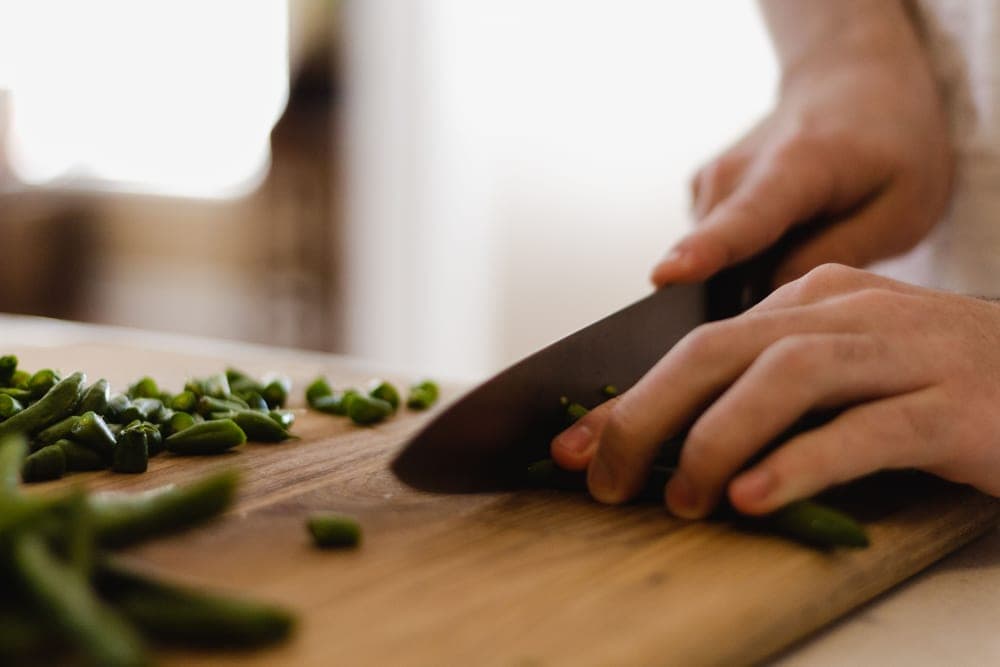 Tojiro DP Gyuto 210mm (F-808) | First Japanese knife | 8.6 | |
| 2 |  Miyabi Birchwood SG2 8" Chef's Knife | Someone who already sharpens their own | 8.6 | |
| 3 | 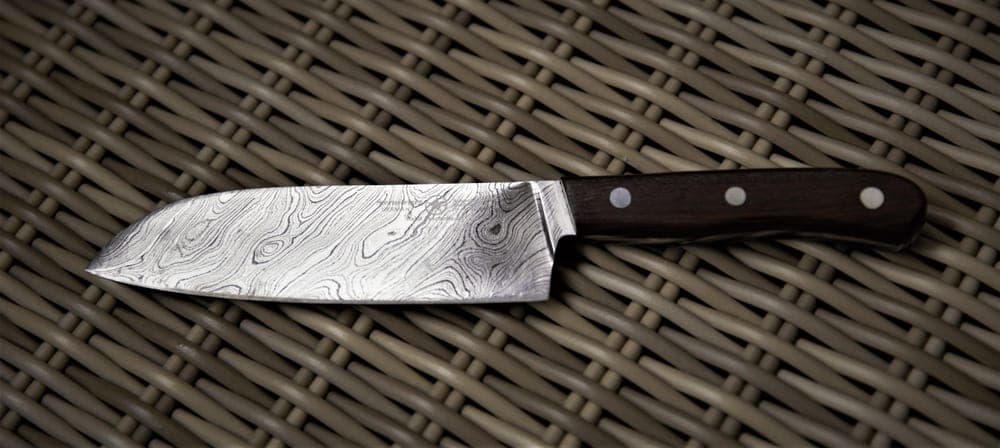 Shun Classic 8" Chef's Knife (DM0706) | A knife you want to look at | 8.3 |
| VG-10 | SG2 / R2 | |
|---|---|---|
| Manufacture | Conventional ingot | Powder metallurgy |
| Typical hardness | 60–61 HRC | 62–64 HRC |
| Edge retention | Good | Roughly twice as long |
| Toughness | Better | Lower |
| Ease of sharpening | Moderate — any 1,000-grit stone | Hard — wants a hard stone or diamond |
| Finest achievable edge | Very fine | Marginally finer |
| Corrosion resistance | High | High |
| Price | Far cheaper | Substantially more |
What powder metallurgy actually changes
Conventional steel is cast as an ingot, and as it cools the carbides — the hard wear-resisting particles — form unevenly, some of them large. Powder metallurgy atomizes the molten alloy into fine powder, then consolidates it under heat and pressure, which produces a much more uniform distribution of much finer carbides.
That uniformity is why SG2 can be run at 63 HRC and remain usable. Large carbides in a very hard steel act as stress risers and the edge crumbles; fine even ones do not. The same fineness is what lets it take a slightly better polish on a finishing stone.
What it costs you
- Toughness. VG-10 is usually a bit tougher at kitchen hardness, and that shows up as forgiveness — a twisted cut, a chicken joint, a harder board than ideal.
- Sharpening effort. The carbides that resist wear also resist your stone. A soft clay stone like a King will barely bite SG2.
- Price. Substantially more, for a knife you will sharpen fewer times.
If you buy SG2, change your stone
This is the practical consequence people miss. A soft clay-bonded stone that works beautifully on VG-10 will feel like it is doing nothing on SG2. You want either a hard splash-and-go stone or a diamond plate for the coarse work.
The Suehiro Cerax 1000's high abrasive concentration is specifically effective on hard, abrasion-resistant steels including SG2 and HAP40. Details on the whetstone page for Japanese knives.
Who each is for
Buy VG-10 if…
- This is your first or second good knife.
- You are still building the habit of sharpening.
- The knife will meet a hard board, a chicken joint or a housemate.
- You want the money to go into stones and a board instead.
Buy SG2 if…
- You already sharpen confidently on hard stones or diamond.
- You cut on wood or soft rubber, always.
- You want the longest possible interval between sharpenings.
- The extra cost is not a consideration.
A 63 HRC blade with a very acute factory edge punishes every habit you have not fixed yet — the bamboo board, the twist through a squash, the loose drawer. Learn on VG-10, then upgrade if the interval genuinely bothers you. Start here.
The verdict
VG-10 for almost everyone. It sits in the middle of every trade-off and it is the reason the Tojiro DP is such a persistent recommendation. SG2 is a genuine upgrade for people whose sharpening is already sorted — and a genuine downgrade in daily experience for people whose sharpening is not.
The picks in detail
#1 · First Japanese knife
Tojiro DP Gyuto 210mm (F-808)
The default answer to 'my first real Japanese knife'. VG-10 at around 60 HRC in a plain three-layer build, at a price that makes the inevitable first chip survivable.
What it does well
- VG-10 at 59-60 HRC takes a genuinely fine edge and holds it far longer than a German knife at 56-58
- 1.9 mm spine and 43 mm heel make it thin behind the edge without being fragile
- Cheap enough that learning to sharpen on it is not frightening
Where it gives way
- Handle finish is functional and unlovely; some units need the bolster easing with sandpaper
- Stainless cladding is soft and scratches readily
- Nothing about the fit and finish will impress anyone
Skip it if: Anyone who wants the knife to be beautiful. The handle is a workmanlike composite with a stainless bolster and nothing about it is charming.
| Blade length | 210 mm (8.3 in) |
|---|---|
| Steel | VG-10 core, 13-chrome stainless cladding (san mai) |
| Hardness | 59-60 HRC |
| Heel height | 43 mm |
| Spine at heel | 1.9 mm |
| Weight | approx. 187 g |
| Handle | Western, laminated composite wood with stainless bolster |
#2 · Someone who already sharpens their own
Miyabi Birchwood SG2 8" Chef's Knife
SG2 powder steel at 63 HRC behind a 9.5-to-12-degree edge and 101 layers of Damascus. The sharpest knife here out of the box, and the least forgiving.
What it does well
- 63 HRC SG2 holds an edge appreciably longer than VG-10 at 60 — commonly cited as roughly twice as long
- A sub-12-degree factory edge is genuinely rare and it shows on the first cut
- 178 g with a 2.1 mm spine — light and thin for a Damascus-clad knife
Where it gives way
- 63 HRC and a very acute edge is a chipping risk on any hard board
- Powder steel is slow on a soft clay stone; you want a hard stone or diamond
- Costs several times what a Tojiro DP does
Skip it if: A first Japanese knife. At 63 HRC with an edge under 12 degrees per side it will chip on a hard board or a careless twist, and it is slow to sharpen on a soft stone.
| Blade length | 8 in |
|---|---|
| Steel | SG2 micro-carbide powder steel core, 50 Damascus layers each side |
| Hardness | 63 HRC, Cryodur ice-hardened |
| Edge angle | approx. 9.5-12 degrees per side, double bevel |
| Blade height | 1.75 in |
| Spine at heel | 2.1 mm |
| Weight | 6.2 oz (178 g) |
| Handle | Karelian birch with stainless bolster and mosaic pin |
| Origin | Seki, Japan |
#3 · A knife you want to look at
Shun Classic 8" Chef's Knife (DM0706)
The Damascus-clad knife people actually buy. A 16-degree-per-side VG-MAX edge at 61 HRC, a D-shaped pakkawood handle, and a look that sells itself.
What it does well
- 16 degrees per side is a sensible factory angle — acute, but not so thin it chips on a carrot
- Handle geometry is genuinely comfortable in a pinch grip
- Kai's warranty and free sharpening service are real, useful things
Where it gives way
- You pay a significant premium over a MAC or Tojiro for the Damascus cladding
- The D-shaped handle is oriented for right-handed use
- Thin tip is easy to snap if you twist it in a squash
Skip it if: Left-handed cooks who dislike a D-shaped handle, and anyone who resents paying for 68 layers of cladding that do nothing for cutting.
| Blade length | 8 in |
|---|---|
| Steel | VG-MAX core, 34 layers Damascus cladding each side |
| Hardness | 61 HRC |
| Edge angle | 16 degrees per side |
| Handle | D-shaped pakkawood with stainless bolster and end cap |
| Warranty | Limited lifetime |
Common questions
Is SG2 better than VG-10?
What is R2 steel and is it the same as SG2?
Is SG2 harder to sharpen?
Will SG2 chip more easily than VG-10?
Which should I buy?
Sources
Read next
Steel & Care
Knife Steel Guide
Brands
Shun vs Miyabi
Whetstones & Skill
Best Whetstone for Japanese Knives
Steel & Care
Why Is My Knife Chipping?
Japanese Knives
Best Japanese Chef Knives for Home Cooks
Steel & Care