Whetstones & Skill
Whetstone Grit Chart
What this is based on: published manufacturer specifications and retailer listings, cited on each product; the weight of professional and owner reviews across multiple retailers; and hands-on experience sharpening and cooking with knives of this type. We have not individually tested every model listed, we do not run instrumented sharpness testing, and we do not claim a test we did not run.
Quick picks
| # | Product | Best for | Score | Price |
|---|---|---|---|---|
| 1 | 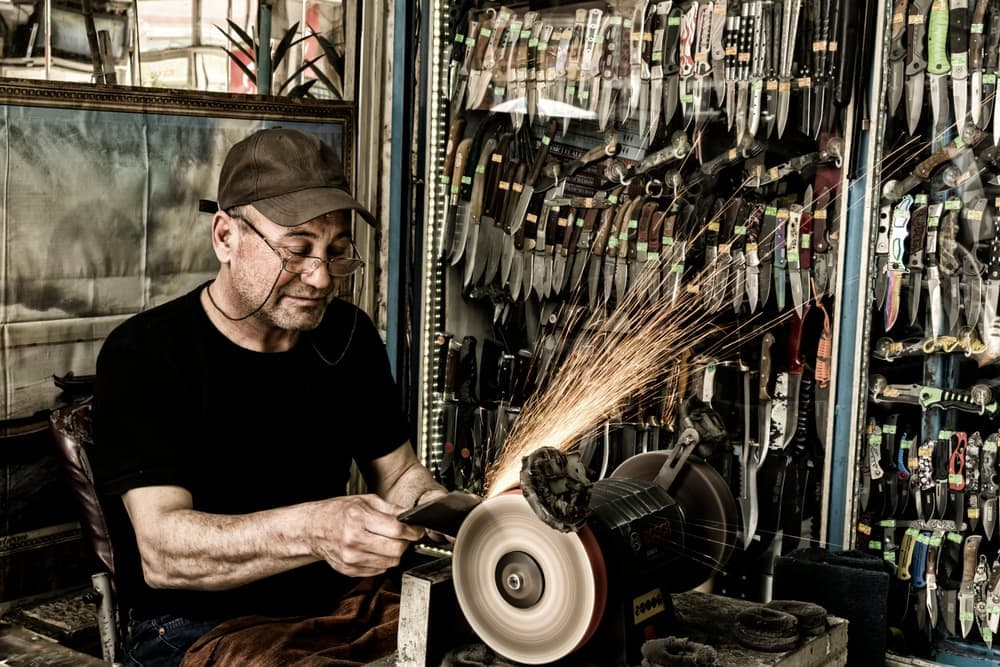 King KDS Combination Whetstone #1000/#6000 | Your first stone | 8.4 | |
| 2 | Naniwa Professional (Chosera) 1000 | The one stone to own if you only own one | 8.6 | |
| 3 | 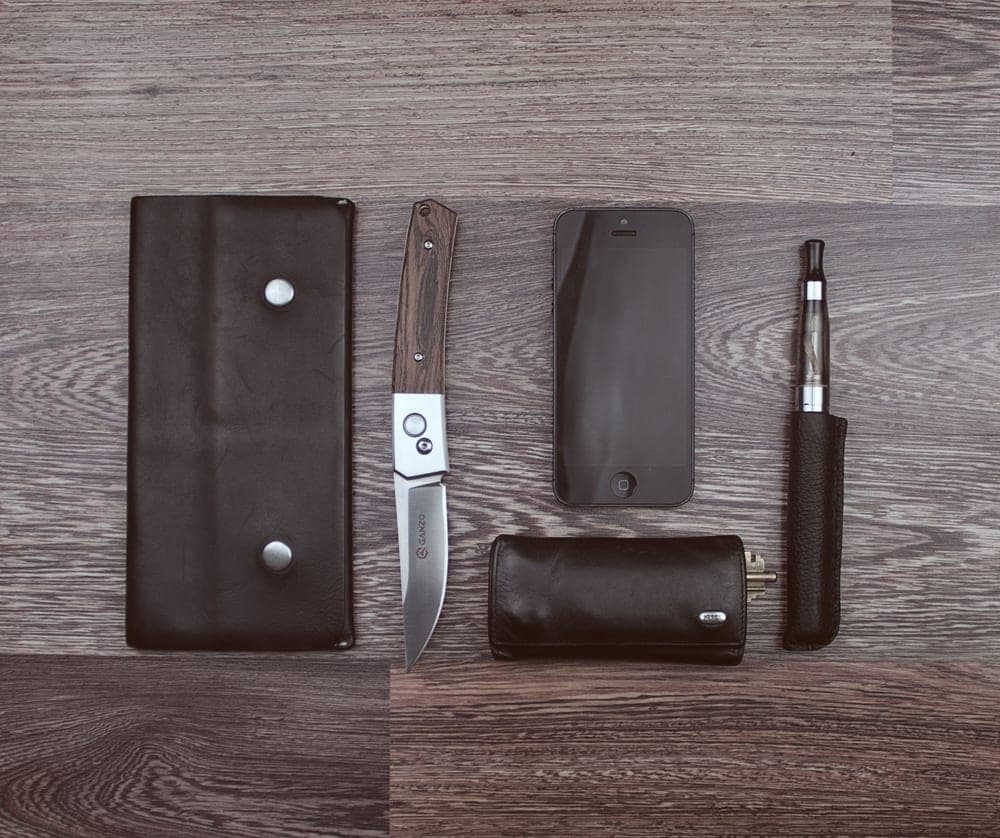 Leather Bench Strop with Stropping Compound | Finishing after the stones | 8.0 |
| Grit (JIS) | Called | What it does | When you need it |
|---|---|---|---|
| 120–400 | Coarse / repair | Removes steel fast. Grinds out chips, resets a bevel. | A chipped edge, a broken tip, reprofiling |
| 600–800 | Medium-coarse | Fast sharpening with a rough finish | A very dull knife, or a large one you want done quickly |
| 1,000 | Medium — the workhorse | Sets a genuinely sharp working edge | Every sharpening session. This is the one stone to own. |
| 2,000–3,000 | Fine | Refines the 1,000 scratch pattern, cleans the apex | Most sessions, if you own one |
| 5,000–6,000 | Very fine / finishing | A polished edge that glides through soft food | Fish, tomatoes, anything with delicate skin |
| 8,000–12,000 | Polishing | Mirror finish, superb feel, short-lived on a kitchen knife | Pleasure, mostly |
| Strop + compound | Deburring | Removes the burr; refines the apex marginally | Every session — the cheapest gain here |
Grit numbers are not a shared standard
This is the thing that makes grit charts online contradict each other. There are at least three widely used scales — Japanese JIS, American ANSI/CAMI and European FEPA — and they number the same particle size differently. The divergence is small at coarse grits and large at fine ones.
Practical consequence: a JIS 1,000 water stone and an ANSI 1,000 diamond plate are not the same. Japanese kitchen stones are quoted in JIS, which is the scale used throughout this site and in the chart above. Shapton uses its own internal scale that is close to but not identical with JIS.
Stay inside one maker's range when you build a progression. A King 1,000 into a King 6,000 is guaranteed to be going in the right direction. A King 1,000 into an unbranded "3000" might be going backward.
Progressions that actually work
The one-stone routine
1,000 grit, then strop. Genuinely complete for a kitchen knife. Takes ten minutes and produces an edge that will go through a ripe tomato without pressure.
The two-stone routine
1,000 then 6,000, then strop. The 6,000 refines the scratch pattern and gives a cleaner cut through skins and soft flesh. This is what a 1,000/6,000 combination stone is for.
The repair routine
400, then 1,000, then 6,000, then strop. Only when you have a chip to remove or a badly reprofiled edge to correct. Do not start at 400 out of habit — you are removing steel your knife does not get back.
Why higher is not always better
A fine grit leaves a polished apex with very small teeth. That glides beautifully through soft, homogeneous food. It is worse at initiating a cut through a skin — a tomato, a bell pepper, a sausage casing — because the light sawing action that starts those cuts needs a slightly toothier edge.
Most professional kitchens finish kitchen knives somewhere between 1,000 and 3,000 for exactly this reason. The 8,000-grit mirror edge is beautiful and it is largely gone after a board of onions.
How many stones you need
One. A 1,000 grit stone and a strop is a complete, honest kitchen setup, and most people stop there and are entirely well served. If you want two, make it a 1,000/6,000 combination. Everything after that is a hobby, and a good one — but it is not maintenance.
Which stone to buy is on the whetstone roundup; how to use it is on the technique guide.
The picks in detail
#1 · Your first stone
King KDS Combination Whetstone #1000/#6000
The stone almost everyone learns on. Soft, forgiving, cheap, and it tells you loudly when your angle wanders.
What it does well
- Two useful grits in one block for the price of half a premium stone
- Soft binder builds slurry readily, which gives beginners real feedback
- Almost impossible to damage a knife on it
Where it gives way
- Dishes quickly and needs flattening often
- The soak is a real commitment — you cannot sharpen on a whim
- Slow on hard powder steels like SG2
Skip it if: Impatient people. The 1000 side wants a 10-15 minute soak before every session and the clay binder dishes fast.
| Grits | #1000 / #6000, combination |
|---|---|
| Binder | Clay |
| Soaking | #1000 side: 10-15 minutes. #6000 side: splash only |
| Size | 207 x 66 x 36 mm |
| Weight | approx. 956 g |
#2 · The one stone to own if you only own one
Naniwa Professional (Chosera) 1000
The stone that does the most with one grit. Hard enough to dish slowly, soft enough to raise a slurry that tells you what the edge is doing.
What it does well
- Splash and go, but still builds a rich, informative slurry
- Fast enough to reset a dull edge, refined enough to finish on
- 20 mm of abrasive — years of use before it is spent
Where it gives way
- Expensive for a single grit
- Magnesia binder does not like being stored wet
- You will still want a finishing stone eventually
Skip it if: A tight budget. It costs more than a combination stone and gives you one grit.
| Grit | 1000 |
|---|---|
| Size | 210 x 70 x 20 mm |
| Soaking | Splash and go |
| Binder | Magnesia |
#3 · Finishing after the stones
Leather Bench Strop with Stropping Compound
Ten dollars of leather and abrasive that removes the burr your finishing stone left behind. The cheapest real improvement in this whole category.
What it does well
- Turns a good stone edge into a noticeably better one in two minutes
- Extends the interval between full sharpenings
- Costs less than almost anything else in the kitchen
Where it gives way
- Easy to round the edge over if you lift the spine
- Does nothing for a genuinely dull knife
- Leather needs re-charging with compound periodically
Skip it if: Sharpening. A strop refines and deburrs; it removes almost no steel and will not fix a dull knife.
| Function | Burr removal and edge refinement |
|---|---|
| Compound | Typically chromium oxide, roughly 0.5 micron |
| Direction | Edge-trailing strokes only |
Common questions
What grit whetstone do I need for kitchen knives?
Is a higher grit always better?
Are grit numbers standardized?
How many stones do I actually need?
Sources
Read next
Whetstones & Skill
Best Whetstones for Kitchen Knives
Whetstones & Skill
How to Use a Whetstone
Whetstones & Skill
Knife Sharpening Angle Chart
Whetstones & Skill
Best Whetstone for Japanese Knives
Whetstones & Skill
How to Strop a Knife
Whetstones & Skill