Whetstones & Skill
How to Flatten a Whetstone
What this is based on: published manufacturer specifications and retailer listings, cited on each product; the weight of professional and owner reviews across multiple retailers; and hands-on experience sharpening and cooking with knives of this type. We have not individually tested every model listed, we do not run instrumented sharpness testing, and we do not claim a test we did not run.
Quick picks
| # | Product | Best for | Score | Price |
|---|---|---|---|---|
| 1 | 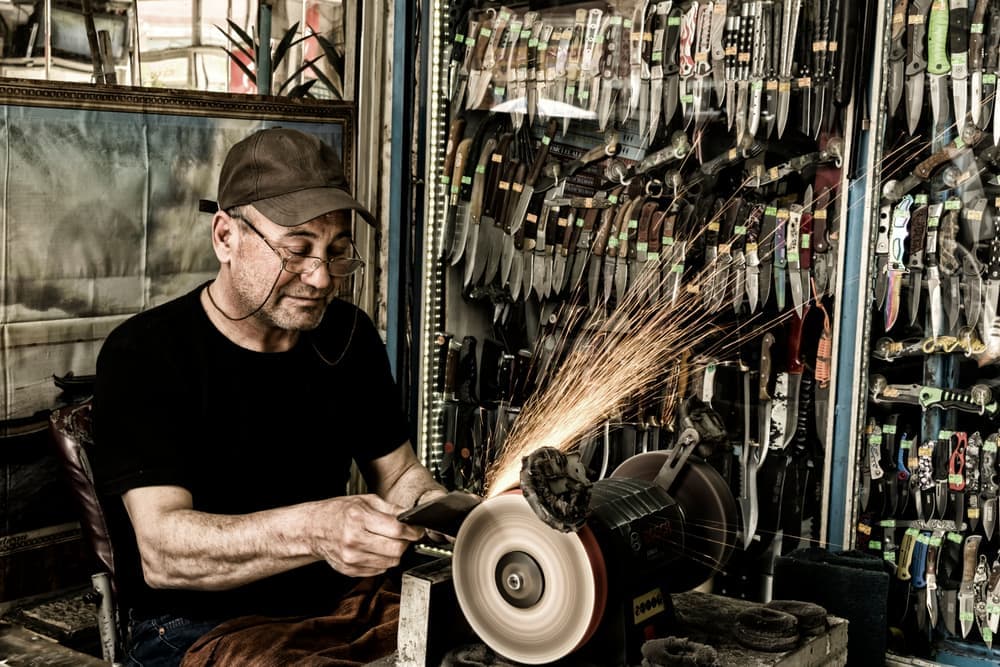 King KDS Combination Whetstone #1000/#6000 | Your first stone | 8.4 | |
| 2 | Naniwa Professional (Chosera) 1000 | The one stone to own if you only own one | 8.6 | |
| 3 | 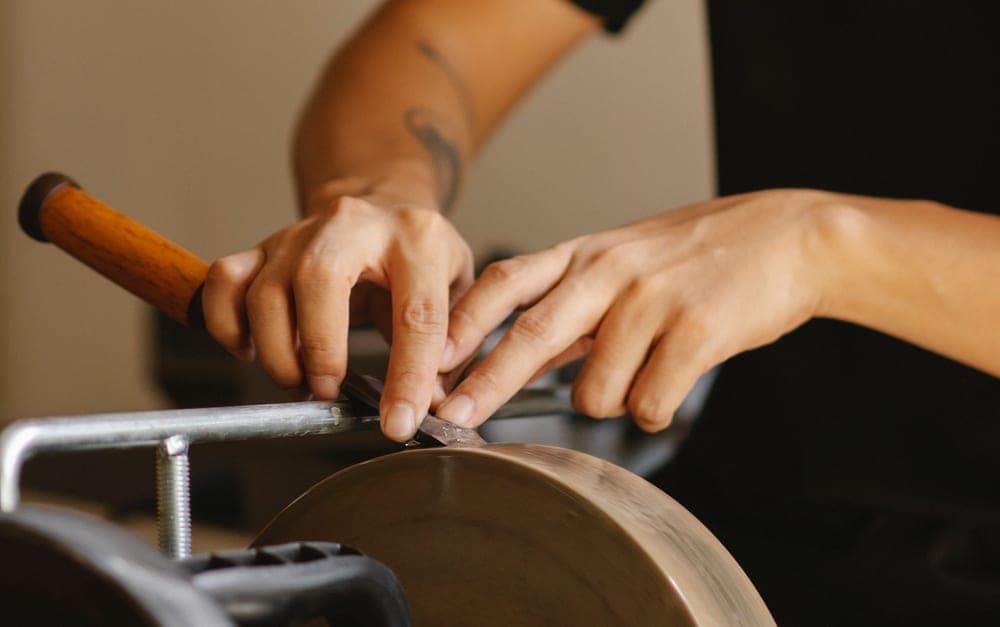 Shapton Glass Stone 1000 | Hard steels and no patience for soaking | 8.3 |
Stones wear where you use them, and you use the middle. After a few knives the face is slightly hollow — usually a fraction of a millimetre, which is more than enough. The blade rides lower in that hollow, so the angle between edge and stone changes as the stroke crosses it. Every stroke is then a slightly different bevel, and the apex never meets cleanly.
This is why flattening belongs near the front of any honest sharpening advice, not in a footnote. It is the one maintenance task that decides whether good technique can work at all.
Step 1: the pencil grid test
- Dry the stone enough to take pencil, then draw a grid across the face — four or five lines each way, corner to corner is fine too. An ordinary HB pencil works.
- Wet the stone and run your flattening surface across the whole face with light, even pressure, in a figure of eight or in overlapping passes along the length.
- Stop after a dozen passes and look. Pencil remaining in the middle means a hollow. Pencil remaining at one end means the stone is wedge-shaped, which happens if you always sharpen in one direction.
- Keep going until no pencil remains anywhere, then rinse thoroughly. You are done.
Rinsing matters more than it sounds. Flattening leaves coarse loose grit on the face, and a stray 200 grit particle on a 6000 grit stone will put a scratch across a finished bevel.
Step 2: pick a flattening surface
| Method | Speed | Stays flat itself? | Best for |
|---|---|---|---|
| Dedicated flattening or lapping plate | Fast | Yes, by design | Anyone who owns more than two stones |
| Coarse diamond plate | Fastest | Yes, if a quality plate | Hard ceramic stones and heavy dishing |
| Wet-and-dry paper on float glass | Slow | Yes, the glass is the reference | Occasional use, lowest cost |
Avoid flattening one stone against another. It works, slowly, and it dishes the second stone while it does it. Avoid concrete slabs for finishing stones for the same reason — a slab is only as flat as whatever cast it.
Step 3: how often, by stone type
| Stone | Binder | Soak | Flattening tendency |
|---|---|---|---|
| King KDS 1000/6000 | Clay | #1000 side: 10-15 minutes | Softest here — check every few sessions |
| Naniwa Professional 1000 | Magnesia | Splash and go | Holds flat well for a fast-cutting stone |
| Shapton Glass 1000 | Non-absorbent ceramic on glass | Splash and go after first use | Hardest here — flattens rarely |
There is a direct trade here and it is worth understanding before you buy your next stone. Soft stones release abrasive readily, which is why a King cuts well for the money and why it dishes. Hard stones hold their shape and cut more slowly, which is why a Shapton Glass suits 63 HRC powder steel and stays flat through it. Our stone picks set out the full comparison, and the grit guide explains which numbers to own.
Four things people get wrong
- Flattening dry. Water carries the swarf away. Dry flattening glazes the surface and loads the plate.
- Pressing hard. Weight does not speed it up much and does tilt the plate. Light, even, many passes.
- Only flattening the coarse stone. Finishing stones dish too, and a dished 6000 undoes the work of a flat 1000.
- Leaving the edges sharp. A freshly flattened stone has crisp corners that can nick a blade or your hand. A few passes at 45 degrees along each long edge chamfers them.
Flatten at the start of a session, not the end. A stone stored flat can still dry unevenly, and you want the surface true at the moment the blade meets it. It also means you never start a sharpening session on an unknown surface, which is where most mystery failures begin. Why a sharpened knife can still be dull lists the others.
The short version
Pencil grid, abrade until the grid is gone, rinse well, chamfer the edges. Do it every few sessions on a clay stone and whenever the pencil test says so on a harder one. It is two minutes of work that makes every minute of sharpening afterwards count — and it is the first thing to check when a knife comes off the stone no sharper than it went on. The full whetstone walkthrough covers the rest of the setup, and the usual sharpening mistakes are worth a read alongside it.
The picks in detail
#1 · Your first stone
King KDS Combination Whetstone #1000/#6000
The stone almost everyone learns on. Soft, forgiving, cheap, and it tells you loudly when your angle wanders.
What it does well
- Two useful grits in one block for the price of half a premium stone
- Soft binder builds slurry readily, which gives beginners real feedback
- Almost impossible to damage a knife on it
Where it gives way
- Dishes quickly and needs flattening often
- The soak is a real commitment — you cannot sharpen on a whim
- Slow on hard powder steels like SG2
Skip it if: Impatient people. The 1000 side wants a 10-15 minute soak before every session and the clay binder dishes fast.
| Grits | #1000 / #6000, combination |
|---|---|
| Binder | Clay |
| Soaking | #1000 side: 10-15 minutes. #6000 side: splash only |
| Size | 207 x 66 x 36 mm |
| Weight | approx. 956 g |
#2 · The one stone to own if you only own one
Naniwa Professional (Chosera) 1000
The stone that does the most with one grit. Hard enough to dish slowly, soft enough to raise a slurry that tells you what the edge is doing.
What it does well
- Splash and go, but still builds a rich, informative slurry
- Fast enough to reset a dull edge, refined enough to finish on
- 20 mm of abrasive — years of use before it is spent
Where it gives way
- Expensive for a single grit
- Magnesia binder does not like being stored wet
- You will still want a finishing stone eventually
Skip it if: A tight budget. It costs more than a combination stone and gives you one grit.
| Grit | 1000 |
|---|---|
| Size | 210 x 70 x 20 mm |
| Soaking | Splash and go |
| Binder | Magnesia |
#3 · Hard steels and no patience for soaking
Shapton Glass Stone 1000
5 mm of hard abrasive bonded to a glass plate. Splash and go, dishes slowly, and cuts hard steel that a King barely scratches.
What it does well
- Genuinely splash and go — water on, sharpen, done in five minutes
- Hard binder dishes far more slowly than a clay stone
- Cuts hard powder steels that soft stones struggle with
Where it gives way
- Only 5 mm of usable abrasive; the glass base is not a stone
- Hard and quiet, so it hides angle errors from a beginner
- Costs roughly what a full King combination stone does, for one grit
Skip it if: Learning on. It is hard and quiet — it gives far less feedback than a soft stone, which is exactly what a beginner needs.
| Grit | 1000 (Shapton scale) |
|---|---|
| Size | 210 x 70 mm, 5 mm abrasive on a 5 mm glass base |
| Soaking | Splash and go after a 5-6 minute soak on first use only |
| Binder | Non-absorbent ceramic |
Common questions
How do I know if my whetstone needs flattening?
How often should you flatten a whetstone?
What can I use to flatten a whetstone?
Does a dished stone really matter?
Sources
Read next
Whetstones & Skill
How to Use a Whetstone
Whetstones & Skill
Whetstone Grit Chart
Whetstones & Skill
Why Your Knife Still Isn't Sharp
Whetstones & Skill
Common Knife Sharpening Mistakes
Whetstones & Skill
Best Whetstones for Kitchen Knives
Whetstones & Skill