Whetstones & Skill
Common Knife Sharpening Mistakes
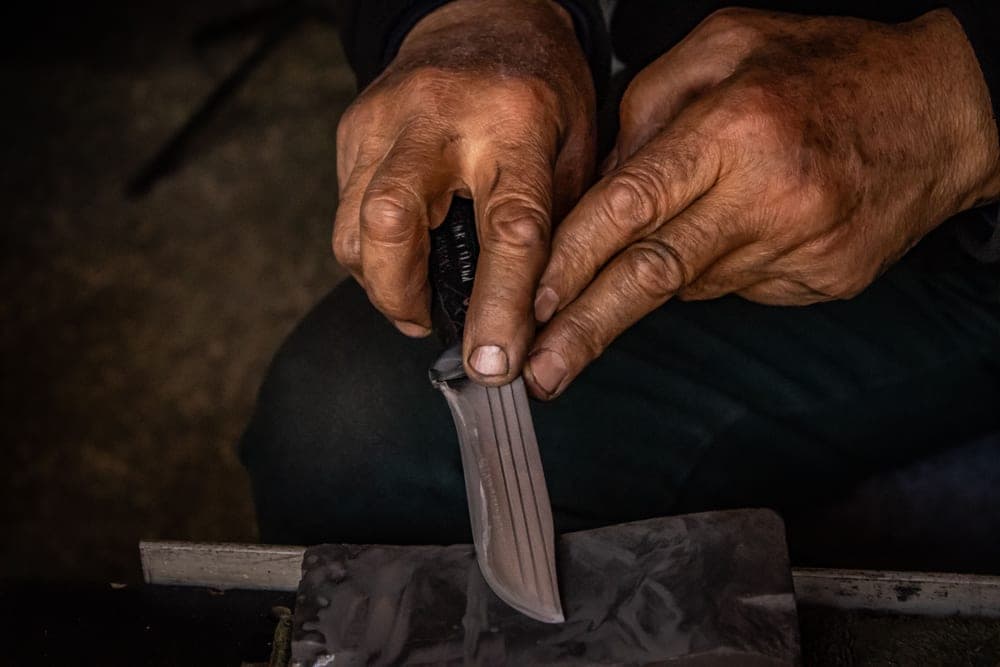
What this is based on: published manufacturer specifications and retailer listings, cited on each product; the weight of professional and owner reviews across multiple retailers; and hands-on experience sharpening and cooking with knives of this type. We have not individually tested every model listed, we do not run instrumented sharpness testing, and we do not claim a test we did not run.
Quick picks
| # | Product | Best for | Score | Price |
|---|---|---|---|---|
| 1 |  King KDS Combination Whetstone #1000/#6000 | Your first stone | 8.4 | |
| 2 |  Leather Bench Strop with Stropping Compound | Finishing after the stones | 8.0 | |
| 3 | 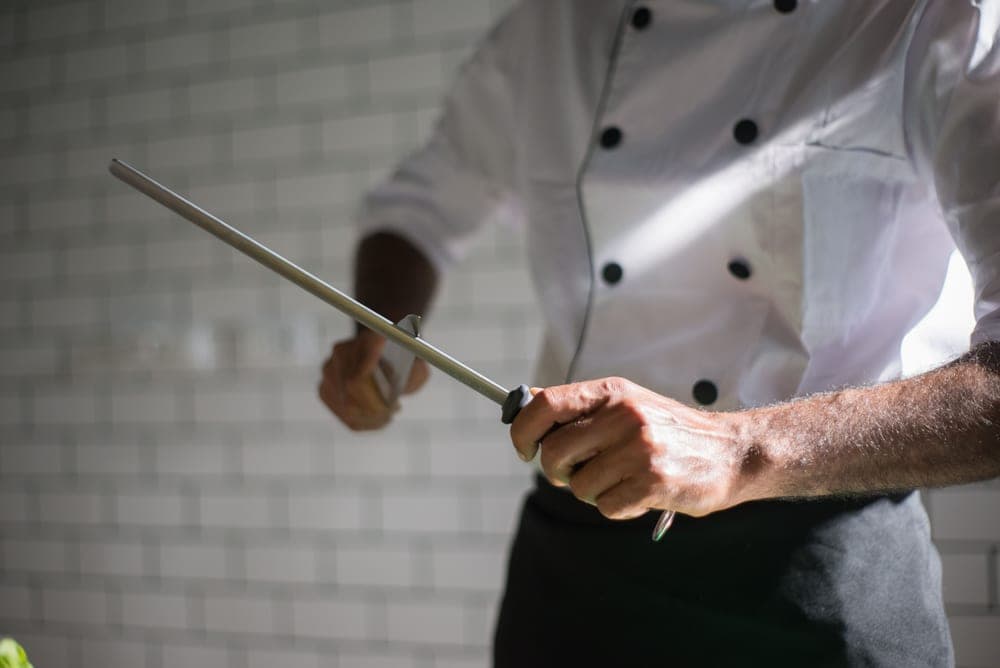 Idahone Fine Ceramic Honing Rod, 12" | Maintaining a hard Japanese edge between sharpenings | 8.8 |
1. Stopping before a burr forms
The commonest mistake by a distance. No burr means the two ground planes never met and the apex is still a flat strip. Fix: check for a burr across the edge on the opposite side before you flip. Do not proceed without one.
2. Letting the angle wander
A rounded apex will not cut regardless of grit or time spent. Fix: lock your wrist, drive the stroke from your shoulders, and verify with the marker test. Angle guide.
3. Too much pressure
It flexes the blade, rounds the apex, dishes the stone and generates heat. Fix: enough to keep the bevel flat and no more. Reduce pressure as the edge sharpens.
4. Leaving the burr on
A burr feels wonderfully sharp and tears off on the first cut. Fix: strop it off, edge-trailing, ten to fifteen light passes per side. How to strop.
5. Never flattening the stone
A dished stone makes a consistent angle physically impossible. Fix: pencil grid, flattening plate, until the grid is gone. Soft stones need it every few sessions.
6. Starting on a coarse stone out of habit
Every pass on a 400-grit stone removes steel the knife never gets back. Fix: start at 1,000 unless there is actual damage to remove. Coarse grits are for chips, not for routine sharpening.
7. Neglecting the tip
The curve gets far fewer passes than the flat, because people do not lift the handle as the contact point moves forward. Fix: work the edge in thirds and treat the tip as its own section, lifting the handle so the bevel stays flat on the stone.
8. Using a steel rod on a hard Japanese knife
A rod only works if it is harder than the blade. Most steel rods are not hard enough for a 60+ HRC Japanese edge — they slide off and do nothing. Fix: use ceramic, which is roughly four times harder than most knife steels. Rod picks.
9. Using a pull-through sharpener on a good knife
Fixed carbide or ceramic wheels do not follow your knife's grind — they impose their own, tearing steel out of a hard thin edge and reprofiling it toward roughly 20 degrees. Fix: do not. The full explanation.
Two more that are worth knowing
- Oil on a water stone. It clogs the binder permanently and there is no recovery. Water stones get water. If you do not know which you have, assume water.
- Testing the edge on your thumb. It tells you a burr is present, which you may not want, and it is an excellent way to cut yourself. Use a light reflection check and a tomato instead.
The whole list, compressed
| Mistake | Fix |
|---|---|
| No burr | Keep going; check before flipping |
| Angle wanders | Marker test; lock the wrist |
| Heavy pressure | Lighten as you go |
| Burr left on | Strop, edge-trailing |
| Dished stone | Pencil grid, flatten |
| Coarse by default | Start at 1,000 |
| Neglected tip | Work in thirds, lift the handle |
| Steel rod on hard steel | Switch to ceramic |
| Pull-through sharpener | Stop using it |
The picks in detail
#1 · Your first stone
King KDS Combination Whetstone #1000/#6000
The stone almost everyone learns on. Soft, forgiving, cheap, and it tells you loudly when your angle wanders.
What it does well
- Two useful grits in one block for the price of half a premium stone
- Soft binder builds slurry readily, which gives beginners real feedback
- Almost impossible to damage a knife on it
Where it gives way
- Dishes quickly and needs flattening often
- The soak is a real commitment — you cannot sharpen on a whim
- Slow on hard powder steels like SG2
Skip it if: Impatient people. The 1000 side wants a 10-15 minute soak before every session and the clay binder dishes fast.
| Grits | #1000 / #6000, combination |
|---|---|
| Binder | Clay |
| Soaking | #1000 side: 10-15 minutes. #6000 side: splash only |
| Size | 207 x 66 x 36 mm |
| Weight | approx. 956 g |
#2 · Finishing after the stones
Leather Bench Strop with Stropping Compound
Ten dollars of leather and abrasive that removes the burr your finishing stone left behind. The cheapest real improvement in this whole category.
What it does well
- Turns a good stone edge into a noticeably better one in two minutes
- Extends the interval between full sharpenings
- Costs less than almost anything else in the kitchen
Where it gives way
- Easy to round the edge over if you lift the spine
- Does nothing for a genuinely dull knife
- Leather needs re-charging with compound periodically
Skip it if: Sharpening. A strop refines and deburrs; it removes almost no steel and will not fix a dull knife.
| Function | Burr removal and edge refinement |
|---|---|
| Compound | Typically chromium oxide, roughly 0.5 micron |
| Direction | Edge-trailing strokes only |
#3 · Maintaining a hard Japanese edge between sharpenings
Idahone Fine Ceramic Honing Rod, 12"
The honing rod that is actually harder than your knife. 1200 ANSI alumina ceramic, which is roughly 3000-3500 on the Japanese scale.
What it does well
- Ceramic is harder than the steel in a 60+ HRC Japanese knife; a steel rod often is not
- 1200 ANSI realigns without removing meaningful steel
- High-alumina body resists the grooving that ruins cheaper rods
Where it gives way
- Ceramic is brittle — one hard knock on a stone counter and it is done
- Removes so little steel that it cannot rescue a truly dull knife
- 12 in is longer than some drawers
Skip it if: Anyone who bangs the rod on the counter. Ceramic chips; steel does not.
| Rod length | 12 in (30.5 cm) |
|---|---|
| Rod diameter | 1/2 in (12.7 mm) |
| Overall length | 17.5 in (44.5 cm) |
| Grit | Fine, 1200 ANSI (approx. 3500 JIS) |
| Material | High-alumina ceramic |
| Handle | Hard rock maple, 5.25 in |
| Origin | Made in the USA |
Common questions
What is the most common knife sharpening mistake?
Is it bad to sharpen a knife too often?
Can I ruin a knife by sharpening it wrong?
Should I use oil or water on a whetstone?
Sources
Read next
Whetstones & Skill
Why Your Knife Still Isn't Sharp
Whetstones & Skill
How to Use a Whetstone
Whetstones & Skill
Knife Sharpening Angle Chart
Whetstones & Skill
How to Sharpen a Japanese Knife
Sharpeners
Pull-Through Knife Sharpeners
Whetstones & Skill