Japanese Knives
Best 8-Inch Chef Knives
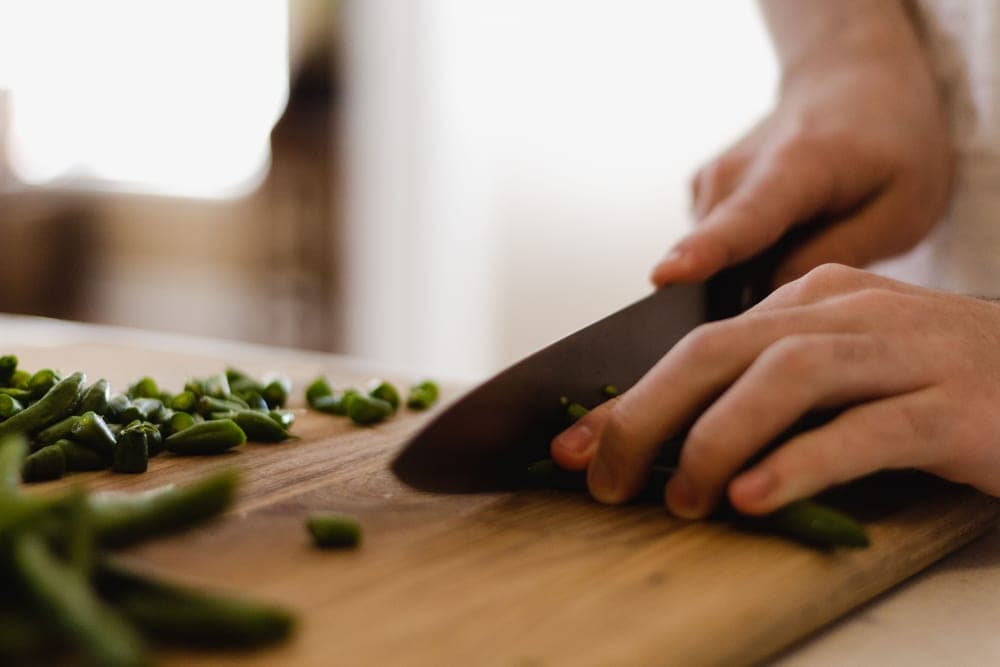
What this is based on: published manufacturer specifications and retailer listings, cited on each product; the weight of professional and owner reviews across multiple retailers; and hands-on experience sharpening and cooking with knives of this type. We have not individually tested every model listed, we do not run instrumented sharpness testing, and we do not claim a test we did not run.
Quick picks
| # | Product | Best for | Score | Price |
|---|---|---|---|---|
| 1 | 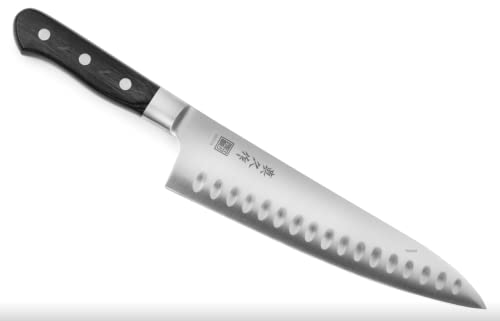 MAC Professional 8" Chef's Knife with Dimples (MTH-80) | The one-knife kitchen | 8.8 | |
| 2 |  Tojiro DP Gyuto 210mm (F-808) | First Japanese knife | 8.6 | |
| 3 | 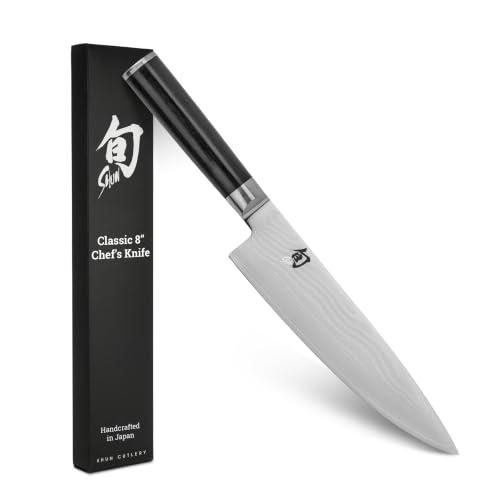 Shun Classic 8" Chef's Knife (DM0706) | A knife you want to look at | 8.3 | |
| 4 | 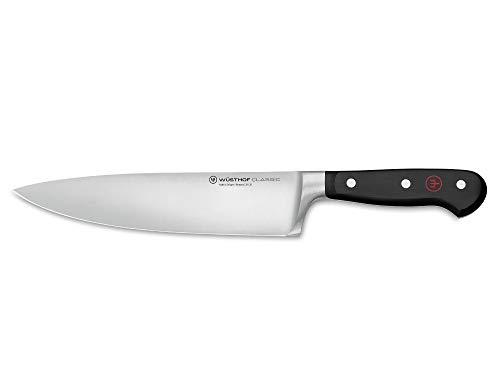 Wüsthof Classic 8" Chef's Knife | Cooks who want weight and a bolster | 7.4 | |
| 5 | 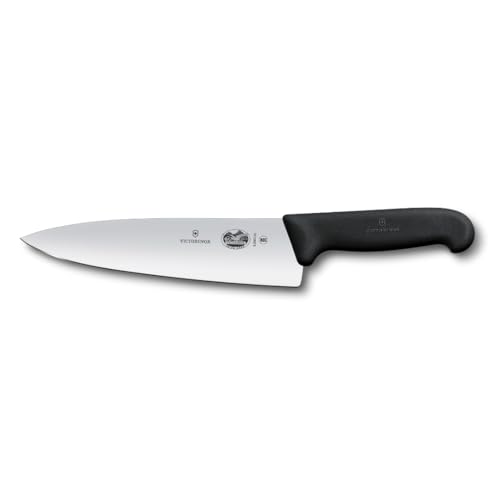 Victorinox Fibrox Pro 8" Chef's Knife | A beater, or a sanity check before you spend more | 7.0 |
Eight inches is the length that wins by default, and not for sentimental reasons. It is long enough that the blade clears a whole onion on one pass and long enough to rock through a butternut squash without the heel running out of board. It is short enough to stay controllable on a 16-inch board, short enough to store in a drawer with a sheath, and short enough that the tip stays where you expect it during fine work. A 240 mm knife is a better tool for someone breaking down produce by the case. For everybody else it is an upgrade that makes the daily job slightly worse.
The five compared
Every figure below is the manufacturer's or retailer's published specification, not an estimate. The spread in weight is the number to look at first: these knives are the same length and the heaviest is two-thirds heavier than the lightest.
| Steel | Hardness | Edge angle | Weight | |
|---|---|---|---|---|
| MAC MTH-80 | High-carbon moly-vanadium, sub-zero tempered | 61 HRC | 15° per side | 6.8 oz |
| Tojiro DP 210 mm | VG-10 core, three-layer stainless clad | 59-60 HRC | Approx. 15° per side | approx. 187 g (6.6 oz) |
| Shun Classic 8" | VG-MAX core, 34-layer Damascus clad | 61 HRC | 16° per side | Not published by Kai |
| Wüsthof Classic 8" | X50CrMoV15 mono-steel | 58 HRC | 14° per side | 9.3 oz |
| Victorinox Fibrox Pro 8" | X55CrMo14 stainless | 56 HRC | 18° | 5.6 oz |
What actually separates them
Hardness decides how often you sharpen. Five points of HRC is the difference between touching up every few months and touching up every few weeks. The MAC and the Shun sit at 61 HRC, the Wüsthof at 58, the Victorinox at 56. The trade is chip resistance: a 56 HRC edge rolls and comes back with a honing rod, a 61 HRC edge stays put but chips if you hit a bone.
Spine thickness decides how it feels in food. The Tojiro is 1.9 mm at the heel and the Wüsthof is 3 mm. That is the wedging you feel halfway through a dense sweet potato, and it is a bigger difference in use than any steel argument.
Weight decides whether you reach for it. The Victorinox at 5.6 oz and the Wüsthof at 9.3 oz are the two ends of the same length. If your wrist aches after an hour of prep, the knife is probably too heavy, not too dull. If the knife feels like it skates, it is probably too light for you.
The handle decides nothing about performance and everything about ownership. Shun's D-shaped pakkawood is beautiful and favors a right-handed pinch grip. The Tojiro's composite handle is charmless and fits every hand. The Victorinox Fibrox is the most comfortable wet-handed handle on this list and looks like catering equipment, because it is.
Which one to buy
Buy the MAC MTH-80 if this is the knife you want to own for a decade. It is the quiet professional answer: 61 HRC without the brittleness of a powder steel, a 15-degree factory edge, 2.5 mm at the spine, and dimples that actually help release potato. It is not the prettiest knife here and it does not try to be.
Buy the Tojiro DP if you are stepping up from a block set and do not yet know what you like. It is real VG-10 at 59-60 HRC with a 1.9 mm spine for a fraction of the Shun, which means the inevitable first chip is a lesson rather than a disaster. See your first Japanese knife for the full argument.
Buy the Shun Classic if you want the knife to be beautiful and you are right-handed. Same 61 HRC as the MAC, a 16-degree edge, and the Damascus cladding that made Shun a household name. Check Shun against Wüsthof before you commit.
Buy the Wüsthof Classic if you like weight and a full bolster, or if the knife will be used by people who are rough with it. At 58 HRC and 3 mm it is the most forgiving knife here, and a 14-degree factory edge is steeper than its reputation suggests.
Buy the Victorinox Fibrox Pro if you need a knife now, or you want a beater to keep the good one out of trouble. It is 56 HRC and 18 degrees, so it will never take the edge the others do, and at 5.6 oz it is the knife most likely to still be in the drawer in ten years.
Check what you cut on. A glass, stone, ceramic or bamboo board is harder than every steel on this page and will undo a new knife in weeks. Board guide.
Check how you will sharpen it. A 61 HRC blade does not belong in a carbide pull-through slot. Sharpeners for hard Japanese steel.
The verdict
The MAC MTH-80. It is the 8-inch knife that asks the least of you and gives the most back: hard enough to hold an edge through a month of real cooking, thin enough to stop wedging, light enough to use for an hour, and ground at an angle you can maintain on a single 1000-grit stone. The Tojiro is the same argument at a lower price with a worse handle, and if money is the constraint, that is the one to buy.
If you are still choosing a length rather than a knife, read 210 mm or 240 mm first — it is the decision that makes this one easy.
The budget pick here is reviewed in detail in the Victorinox Fibrox Pro review.
Working to a hard budget? Best chef knives under $100 is this list with a ceiling on it - three 8-inch knives verified under that line, and an honest account of which one of hard steel, forged build or professional grip you have to give up.
The picks in detail
#1 · The one-knife kitchen
MAC Professional 8" Chef's Knife with Dimples (MTH-80)
The knife that wins the most side-by-side tests and asks the least of you. Thin, light, 61 HRC, and forgiving enough that a mediocre sharpening job still cuts well.
What it does well
- 6.8 oz with a 2.5 mm spine — genuinely light in the hand over a long prep session
- 15 degrees per side from the factory, which is the angle you will maintain anyway
- 25-year warranty and a reputation for consistency unit to unit
Where it gives way
- Costs meaningfully more than a Tojiro DP for a similar hardness
- Mono-steel, so no cladding to protect the core if you drop it edge-first
- The dimples do less for release than the marketing implies
Skip it if: Anyone chasing maximum edge retention. At 61 HRC in a mono-steel it will not out-last a powder-steel blade, and the dimples are cosmetic more often than useful.
| Blade length | 8 in (approx. 200 mm) |
|---|---|
| Steel | Sub-zero tempered high-carbon molybdenum vanadium alloy |
| Hardness | 61 HRC |
| Edge angle | 15 degrees per side (double bevel) |
| Blade height | 1 7/8 in |
| Spine at heel | 2.5 mm |
| Weight | 6.8 oz |
| Handle | Riveted Pakkawood with integrated bolster |
#2 · First Japanese knife
Tojiro DP Gyuto 210mm (F-808)
The default answer to 'my first real Japanese knife'. VG-10 at around 60 HRC in a plain three-layer build, at a price that makes the inevitable first chip survivable.
What it does well
- VG-10 at 59-60 HRC takes a genuinely fine edge and holds it far longer than a German knife at 56-58
- 1.9 mm spine and 43 mm heel make it thin behind the edge without being fragile
- Cheap enough that learning to sharpen on it is not frightening
Where it gives way
- Handle finish is functional and unlovely; some units need the bolster easing with sandpaper
- Stainless cladding is soft and scratches readily
- Nothing about the fit and finish will impress anyone
Skip it if: Anyone who wants the knife to be beautiful. The handle is a workmanlike composite with a stainless bolster and nothing about it is charming.
| Blade length | 210 mm (8.3 in) |
|---|---|
| Steel | VG-10 core, 13-chrome stainless cladding (san mai) |
| Hardness | 59-60 HRC |
| Heel height | 43 mm |
| Spine at heel | 1.9 mm |
| Weight | approx. 187 g |
| Handle | Western, laminated composite wood with stainless bolster |
#3 · A knife you want to look at
Shun Classic 8" Chef's Knife (DM0706)
The Damascus-clad knife people actually buy. A 16-degree-per-side VG-MAX edge at 61 HRC, a D-shaped pakkawood handle, and a look that sells itself.
What it does well
- 16 degrees per side is a sensible factory angle — acute, but not so thin it chips on a carrot
- Handle geometry is genuinely comfortable in a pinch grip
- Kai's warranty and free sharpening service are real, useful things
Where it gives way
- You pay a significant premium over a MAC or Tojiro for the Damascus cladding
- The D-shaped handle is oriented for right-handed use
- Thin tip is easy to snap if you twist it in a squash
Skip it if: Left-handed cooks who dislike a D-shaped handle, and anyone who resents paying for 68 layers of cladding that do nothing for cutting.
| Blade length | 8 in |
|---|---|
| Steel | VG-MAX core, 34 layers Damascus cladding each side |
| Hardness | 61 HRC |
| Edge angle | 16 degrees per side |
| Handle | D-shaped pakkawood with stainless bolster and end cap |
| Warranty | Limited lifetime |
#4 · Cooks who want weight and a bolster
Wüsthof Classic 8" Chef's Knife
The German benchmark, and the knife most of this site's readers are replacing. 265 g, a 3 mm spine, 58 HRC, and a 14-degree-per-side factory edge that is more acute than its reputation suggests.
What it does well
- Forged, full tang, triple-riveted — it will outlive you
- 14 degrees per side from Wüsthof's Precision Edge Technology is sharper than most people assume
- Soft enough at 58 HRC to be nearly chip-proof
Where it gives way
- 265 g is heavy; the 3 mm spine wedges in dense produce
- 58 HRC gives up meaningful edge retention to a 61 HRC Japanese blade
- Full bolster gets in the way when you sharpen the heel
Skip it if: Anyone whose complaint is 'my knife feels heavy and wedges in a sweet potato' — that is the 3 mm spine, and a thinner Japanese blade is the fix.
| Blade length | 8 in (200 mm) |
|---|---|
| Steel | X50CrMoV15 high-carbon stainless |
| Hardness | 58 HRC |
| Edge angle | 14 degrees per side (28 degrees inclusive) |
| Blade height | 1.9 in (47 mm) |
| Spine | 3 mm |
| Weight | 9.3 oz (265 g) |
#5 · A beater, or a sanity check before you spend more
Victorinox Fibrox Pro 8" Chef's Knife
Not a Japanese knife and not pretending to be. It is the control sample: if your cooking does not improve after upgrading from this, the knife was never the problem.
What it does well
- Stamped, light and genuinely non-slip when wet
- Soft enough that a pull-through sharpener will not destroy it
- Costs a fraction of everything else here
Where it gives way
- 56 HRC means frequent honing and frequent sharpening
- 18-degree edge is blunt by Japanese standards
- No bolster, no heft, no presence — it feels like a tool because it is one
Skip it if: This site's usual reader. At 56 HRC with an 18-degree edge it is a softer, blunter tool than anything else on this page.
| Blade length | 8 in |
|---|---|
| Steel | X55CrMo14 high-carbon stainless |
| Hardness | 56 HRC |
| Edge angle | 18 degrees |
| Weight | 5.6 oz |
| Handle | Fibrox Pro thermoplastic elastomer, no bolster |
Common questions
Is an 8-inch chef knife big enough?
Is an 8-inch gyuto the same as an 8-inch chef knife?
What weight should an 8-inch chef knife be?
Do 8-inch Japanese knives need a different sharpening angle?
Sources
Read next
Japanese Knives
Best Japanese Chef Knives for Home Cooks
Japanese Knives
Japanese Knife Sizes
Japanese Knives
Gyuto vs Chef Knife
Japanese Knives
How Much Should You Spend on a Chef Knife?
Brands
MAC vs Wüsthof
Japanese Knives