Japanese Knives
Best Chef Knives Under $100
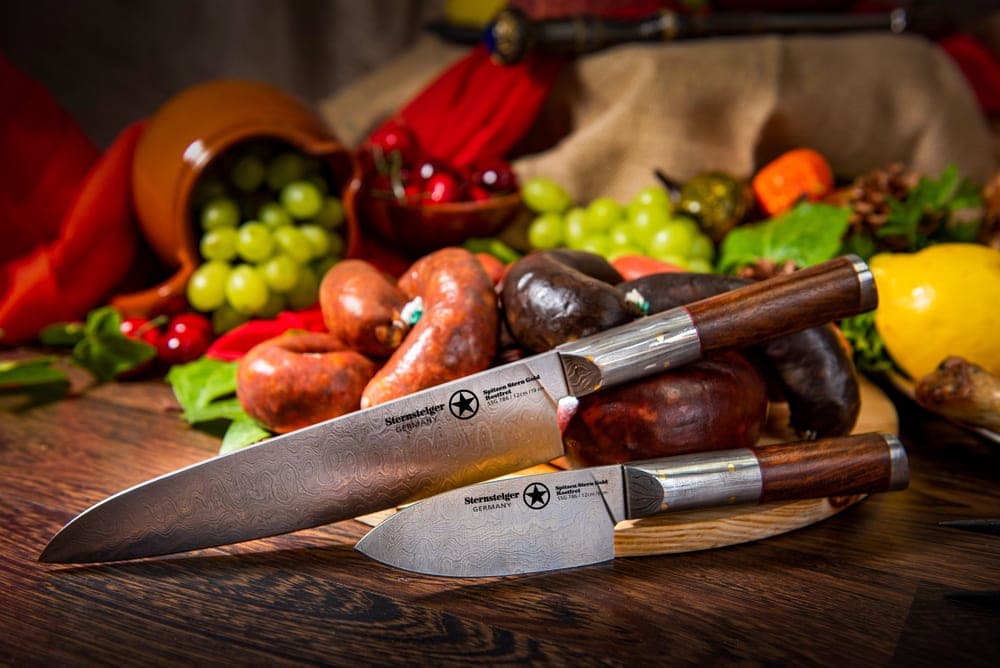
What this is based on: published manufacturer specifications and retailer listings, cited on each product; the weight of professional and owner reviews across multiple retailers; and hands-on experience sharpening and cooking with knives of this type. We have not individually tested every model listed, we do not run instrumented sharpness testing, and we do not claim a test we did not run.
Quick picks
| # | Product | Best for | Score | Price |
|---|---|---|---|---|
| 1 | 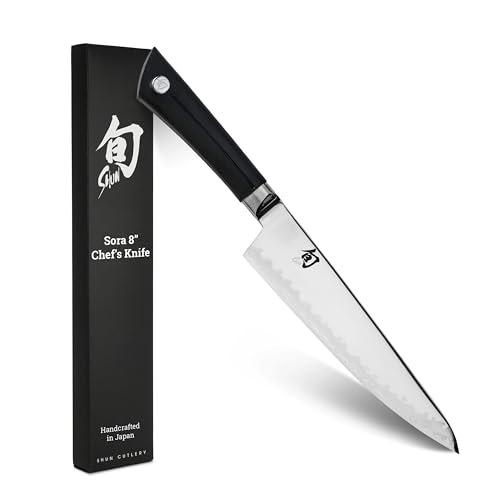 Shun Sora 8" Chef's Knife (VB0706) | A real Japanese edge under $100 | 8.0 | |
| 2 | 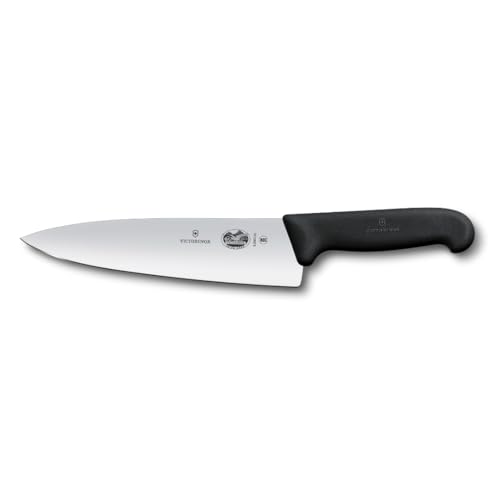 Victorinox Fibrox Pro 8" Chef's Knife | A beater, or a sanity check before you spend more | 7.0 | |
| 3 | 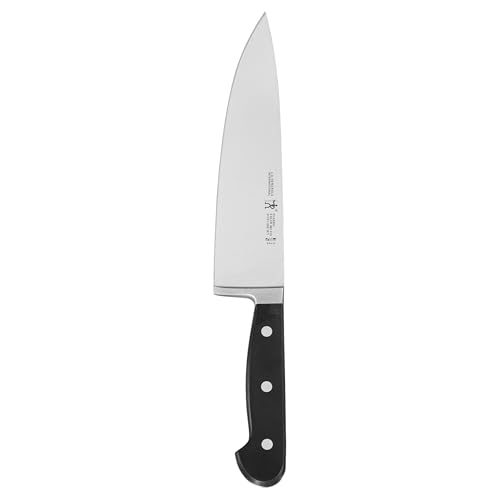 Henckels Classic 8" Chef's Knife (31161-201) | A forged, bolstered knife on a small budget | 6.4 |
This band is mostly noise. Search it and you get knife sets, no-name Damascus, and the same four marketing words on fifty listings. Once you insist that a knife be currently purchasable, be an 8-inch Western chef's profile, and have at least something published about it, the field collapses to a handful - and the three below are the ones worth owning.
How we picked
- Actually under $100, at a price we checked. Every knife here was verified as currently sold and in stock when this page was written. We do not print a number in the prose - prices move - but nothing made the list on an MSRP or a lapsed deal.
- An 8-inch Western chef's profile. That is what this query means. Santoku, nakiri and petty are different tools and they have their own pages.
- Something published you can check. A steel grade, a hardness, an edge angle, a weight - at least some of them, from the maker or a specialist retailer. Where a figure is missing we say so rather than estimating it, and one pick on this page is here despite publishing almost nothing.
- Worth sharpening. A knife is only as good as its tenth sharpening. That rules out hardened-edge blades you cannot regrind and anything with a bolster arrangement that blocks the heel - and it is the reason we rank on steel rather than on how sharp something arrives.
- A handle that survives a real kitchen. Wet hands, a dish rack, a housemate. At this price nothing has a beautiful handle, so we are judging grip and durability rather than looks.
- No sets. A sub-$100 set spends its budget on a block. We are looking for one knife you reach for daily.
The three compared
| Steel | Hardness | Factory edge | Build | |
|---|---|---|---|---|
| Shun Sora 8" | VG10 san mai core, 420J blade upper | Not published | 16° per side, hand sharpened | Composite, braze welded; Japan |
| Victorinox Fibrox Pro 8" | X55CrMo14 high-carbon stainless | 56 HRC | 18° | Stamped, no bolster; Switzerland |
| Henckels Classic 8" | "German stainless steel" - no grade published | Not published | Not published | Fully forged, bolster; Spain |
Three knives, and between them one published hardness figure and two published edge angles. That is the sub-$100 band being honest with you: the cheapest knife here is also the best documented, and the only one whose steel grade and hardness you can actually look up.
Best under $100: Shun Sora 8"
The Sora is the only knife in this band with a cutting core you would find in a knife at three times the price. Kai builds it as a composite blade: a VG10 san mai edge section, clad with one layer of stainless each side, laser cut and braze welded to a plain 420J stainless upper. You are buying a premium edge bolted to a budget blade body, which is a far better trade than the reverse.
The edge is hand-sharpened to 16 degrees per side - the same angle as the Shun Classic, which costs well over twice as much. That matters more than any other number on this page, because an acute angle on a hard core is the whole reason a Japanese knife feels different from a block-set knife.
Anyone buying a Shun for how a Shun looks. There is no Damascus here, no pakkawood, and the braze-welded join between the two blade sections is visible along the blade - some people never notice it and some people cannot unsee it. Shun also publishes no hardness figure and no weight for the Sora, so you cannot check it against the Classic on either.
The handle is textured PP/TPE polymer. It is grippier wet than the Classic's pakkawood and has none of the warmth. It is symmetrical, so unlike the Classic's D-shape it has no handedness - worth knowing if you are left handed and have been reading our left-handed guide.
Best budget pick: Victorinox Fibrox Pro 8"
The Fibrox Pro costs about half of anything else here and it is not a compromise pick - it is professional catering equipment sold at a catering price. X55CrMo14 at a published 56 HRC, an 18-degree factory edge, 5.6 oz, a stamped blade with no bolster, and the best wet-hand grip at any price. It is also the best-documented knife on this page, which is a strange thing to say about the cheapest one.
Two of its weaknesses are really strengths in disguise. The soft steel means frequent honing - and it also means the knife grinds fast, raises a burr almost immediately and forgives a wandering angle, which makes it the best thing in this band to learn freehand sharpening on. No bolster means no heft - and it also means the whole edge reaches a stone from day one, which the Henckels cannot manage.
The honest cons: 56 HRC gives up real edge retention to the Sora's VG10 core, an 18-degree edge is blunt by Japanese standards, and nothing about the knife is pleasant to look at. If you want one knife and you want it to feel like an upgrade, this is not it. If you want the most capable blade per dollar in existence, it has been that for twenty years. The full account is in our Victorinox Fibrox Pro review.
Best forged option: Henckels Classic 8"
If what you want from a chef's knife is weight, a bolster and a traditional triple-rivet handle, the Henckels Classic is the cheapest honest route to it. It is fully forged with a lifetime warranty at a price where most of the competition is stamped sheet steel, and the handle shape is the one a great many cooks learned on.
The caveat is unusual enough to be the main thing to say about this knife: Henckels publishes no hardness, no edge angle and no weight for it. Its own page gives a blade length, "high-quality, German stainless steel" with no grade, a triple-rivet handle, a lifetime warranty and "Made in Spain" - while the surrounding copy leans on German engineering. None of that is untrue and none of it tells you how the knife performs. We work through what that means in Victorinox against Henckels.
Anyone who sharpens their own knives. The full bolster runs down to the heel, so the last half inch of edge cannot reach a stone, and over years that leaves a permanently dull stub where you do most of your rocking cuts. Anyone whose hands hurt after prep should also skip it - forged means heavy, and Henckels does not publish how heavy.
What $100 buys, and what it does not
It buys a hard cutting core, or a forged build, or a professional-grade grip. It does not buy all three, and it does not buy fit and finish. Every knife in this band has a resin, polymer or composite handle; none has a rounded spine or a hand-finished bevel; none comes with a sheath.
What the band genuinely does not contain is thin geometry on a hard blade. The step that changes how food falls off the knife is a spine under 2 mm behind a 60 HRC core, and the cheapest honest version of that is a Tojiro DP gyuto a little way above this ceiling - best Japanese knives under $100 is the Japanese-steel version of this page and pushes right up against it, and best gyuto under $200 is where the geometry actually arrives.
A $60 knife plus a 1000-grit whetstone will out-cut a $100 knife that nobody maintains, every week of the year. All three picks here are soft enough or accessible enough to be good first stone projects, and the stone outlives every knife you will ever buy. Our whetstone roundup has the picks and how to use a whetstone is the starting point.
What we left out, and why
- Every knife set. A sub-$100 set has to pay for a block and five blades you will not use. Are knife sets worth it runs the numbers.
- No-name Damascus. Listings in this band advertise layer counts and publish nothing about the core steel, the hardness or the angle. A layer count is not a specification - is Damascus steel worth it explains why, and our Damascus roundup covers the ones that do publish.
- Knives that sit just over the line. The cheapest Damascus-clad blade we track and the Tojiro DP gyuto both land above this ceiling at current prices, so neither is on this page. If your budget is soft, they are the first two things to look at.
- Santoku and nakiri. Different profiles, different pages - best santoku knives and best nakiri knives.
The verdict
Buy the Shun Sora if you want this to feel like a step up: a VG10 core at 16 degrees per side is the only thing in the band that cuts like a Japanese knife, and it is made in Japan. Buy the Victorinox Fibrox Pro if you want the most knife per dollar, or a second blade you will never worry about, or a knife to learn sharpening on - it is the best-documented and the hardest to regret. Buy the Henckels Classic only if a forged bolstered blade is specifically what you came for.
And if you can stretch, stretch. The gap between this band and the next one is the largest in the whole category - how much to spend on a chef's knife sets out where the curve flattens, and best 8-inch chef knives is the no-ceiling version of this list.
If the budget is soft, the next band up is where the Japanese shapes arrive: best Japanese knives under $150 covers the best gyuto, santoku, nakiri and petty under that ceiling, all on named VG-10 or VG-MAX cores.
The picks in detail
#1 · A real Japanese edge under $100
Shun Sora 8" Chef's Knife (VB0706)
The cheapest genuine VG10 edge we can find, at the same hand-sharpened 16 degrees as a Shun Classic. The saving comes from a braze-welded 420J blade upper and a polymer handle, not from the part that cuts.
What it does well
- A VG10 san mai cutting core at the same hand-sharpened 16 degrees per side as the Shun Classic, for well under half the money
- Made in Japan, and the part of the blade that touches food is the same idea as the premium lines
- The polymer handle is textured and grippy wet, which the Classic's pakkawood is not
Where it gives way
- Shun publishes no hardness figure and no weight for the Sora, so you cannot check it against the Classic on either
- The braze-welded join between the VG10 edge section and the 420J upper is visible and is the thing people either ignore or dislike
- Textured polymer handle - durable and entirely charmless next to a pakkawood or an octagonal wa handle
Skip it if: Anyone buying a Shun for the look. The handle is textured polymer, the blade upper is plain 420J, and the join between the two sections is visible.
| Blade length | 8 in (20.3 cm) |
|---|---|
| Cutting edge | VG10 san mai core, one layer of stainless cladding each side |
| Blade upper | Japanese 420J stainless |
| Construction | Composite Blade - the two sections are laser cut, fitted and braze welded |
| Factory edge | 16 degrees per side (32 degrees inclusive), hand sharpened |
| Hardness | Not published |
| Weight | Not published |
| Handle | Textured PP/TPE polymer blend |
| Origin | Handcrafted in Japan |
#2 · A beater, or a sanity check before you spend more
Victorinox Fibrox Pro 8" Chef's Knife
Not a Japanese knife and not pretending to be. It is the control sample: if your cooking does not improve after upgrading from this, the knife was never the problem.
What it does well
- Stamped, light and genuinely non-slip when wet
- Soft enough that a pull-through sharpener will not destroy it
- Costs a fraction of everything else here
Where it gives way
- 56 HRC means frequent honing and frequent sharpening
- 18-degree edge is blunt by Japanese standards
- No bolster, no heft, no presence — it feels like a tool because it is one
Skip it if: This site's usual reader. At 56 HRC with an 18-degree edge it is a softer, blunter tool than anything else on this page.
| Blade length | 8 in |
|---|---|
| Steel | X55CrMo14 high-carbon stainless |
| Hardness | 56 HRC |
| Edge angle | 18 degrees |
| Weight | 5.6 oz |
| Handle | Fibrox Pro thermoplastic elastomer, no bolster |
#3 · A forged, bolstered knife on a small budget
Henckels Classic 8" Chef's Knife (31161-201)
A fully forged knife at a price where almost everything else is stamped, carrying the triple-rivet shape most cooks already know. Henckels publishes no hardness, no edge angle and no weight for it, and its own page says it is made in Spain.
What it does well
- Fully forged with a bolster at a price where the competition is stamped
- The triple-rivet Henckels handle is the shape a lot of cooks learned on, and it is comfortable
- Lifetime warranty, and cheap enough to own as the knife you do not worry about
Where it gives way
- No published hardness, no published edge angle and no published weight - there is no number on this knife to compare against anything
- Henckels' own page says made in Spain while the marketing copy leans on "German engineered"; both are true and only one is on the box
- Listed as dishwasher safe, which is guidance we would not follow on any thin edge
- The Victorinox Fibrox Pro costs less and publishes its steel grade, its hardness and its edge angle
Skip it if: Anyone who wants to compare it on numbers. There is not a single performance figure on the manufacturer's page for this knife.
| Blade length | 8.00 in |
|---|---|
| Steel | "High-quality, German stainless steel" - no grade published |
| Hardness | Not published |
| Factory edge | Not published ("finely honed") |
| Construction | Fully forged |
| Handle | Traditional triple-rivet |
| Weight | Not published |
| Origin | Made in Spain |
| Care | Listed as dishwasher safe |
| Warranty | Lifetime |
Common questions
Can you get a good chef's knife for under $100?
Is a $100 knife noticeably better than a $30 one?
Should I buy a knife set under $100 instead?
Does a knife under $100 need a whetstone?
Is the Shun Sora a real Shun?
Sources
Read next
Japanese Knives
Best Japanese Knives Under $100
Japanese Knives
Best 8-Inch Chef Knives
Japanese Knives
How Much Should You Spend on a Chef Knife?
Brands
Victorinox vs Henckels
Whetstones & Skill