Japanese Knives
Best Japanese Knives Under $150
What this is based on: published manufacturer specifications and retailer listings, cited on each product; the weight of professional and owner reviews across multiple retailers; and hands-on experience sharpening and cooking with knives of this type. We have not individually tested every model listed, we do not run instrumented sharpness testing, and we do not claim a test we did not run.
Quick picks
| # | Product | Best for | Score | Price |
|---|---|---|---|---|
| 1 | 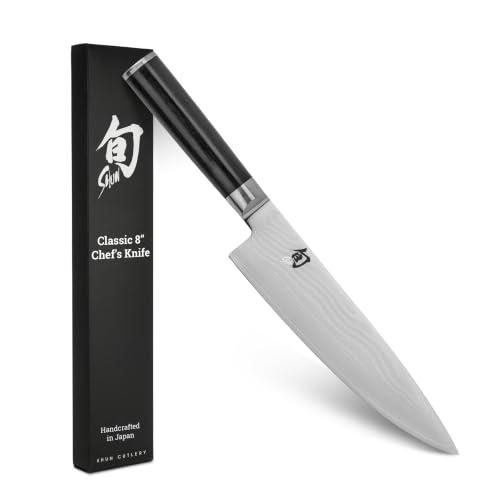 Shun Classic 8" Chef's Knife (DM0706) | A knife you want to look at | 8.3 | |
| 2 | 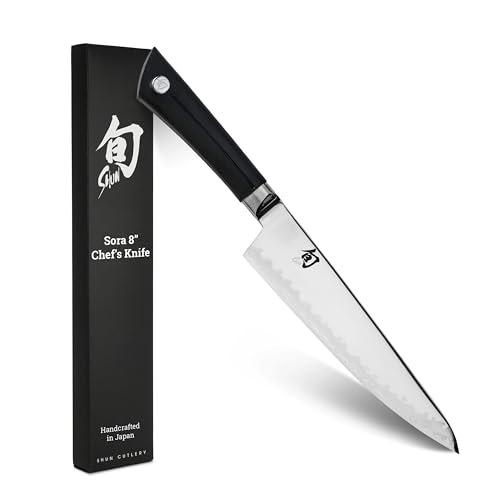 Shun Sora 8" Chef's Knife (VB0706) | A real Japanese edge under $100 | 8.0 | |
| 3 | 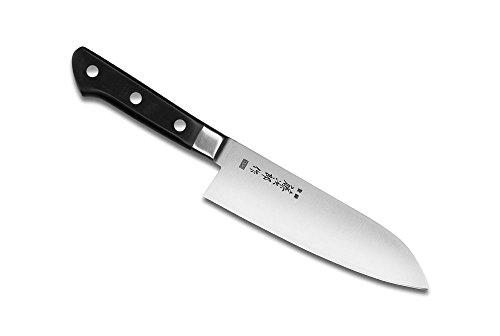 Tojiro DP Santoku 170mm (F-503) | A second Japanese knife on a budget | 8.4 | |
| 4 | 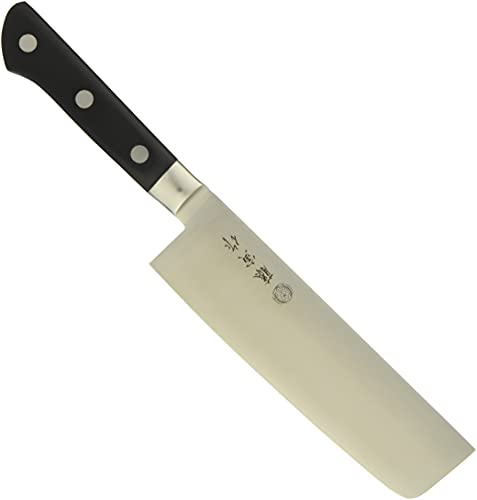 Tojiro DP Nakiri 165mm (F-502) | First nakiri | 8.7 | |
| 5 | 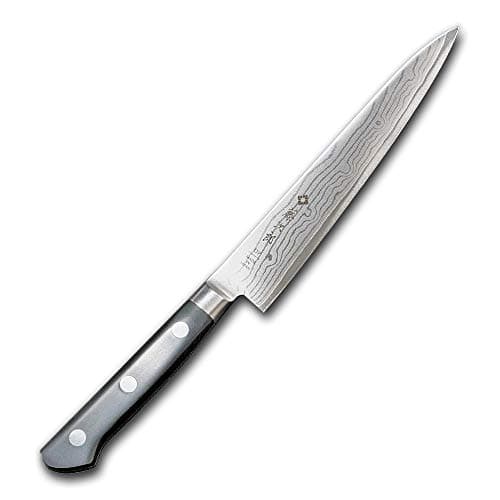 Tojiro DP Petty / Utility 150mm (F-802) | The second knife after a gyuto | 8.5 |
That is the argument this page is built around, and it is the reason the picks below are organized by profile rather than ranked one to five. At $100 you are buying your first real Japanese blade. At $200 and up you are buying metallurgy and finish. At $150 you are at the only point on the curve where the sensible question is "which shape am I missing".
How we picked
- Actually under $150, at a price we checked. Every knife here was verified as currently sold and in stock when this page was written. We do not print numbers in the prose because prices move, and nothing made the list on an MSRP or a lapsed deal.
- A named core steel at 59 HRC or above. This is the filter that does the most work. VG-10, VG-MAX - an alloy with a name and a published hardness. It rules out the large no-name segment of this price band, which advertises layer counts and publishes nothing about the steel underneath.
- Published geometry where it exists. Spine thickness, heel height and weight decide how a blade moves through food, and they are the figures most makers skip. Where a maker publishes them we use them; where it does not, we say so rather than estimating.
- One pick per profile. The point of this band is coverage. A page with five gyutos on it would be less useful than one with a gyuto, a santoku, a nakiri and a petty, so that is what this is.
- Sharpenable with ordinary gear. Everything here is a double-bevel stainless blade that a 1000-grit stone will bring back. No single-bevel knives, nothing that needs a specialist to maintain.
- No sets. A set at this price has to pay for a block and for blades you will not use.
The five compared
| Profile | Core steel | Hardness | Spine | |
|---|---|---|---|---|
| Shun Classic 8" | Chef's knife / gyuto, 8 in | VG-MAX, Damascus clad | 61 HRC | Not published |
| Shun Sora 8" | Chef's knife, 8 in | VG10 san mai core, 420J upper | Not published | Not published |
| Tojiro DP Santoku | Santoku, 170 mm | VG-10, three-layer clad | 59-61 HRC | Not published |
| Tojiro DP Nakiri | Nakiri, 165-170 mm | Takefu VG-10, three-layer | 59-61 HRC | 1.8 mm |
| Tojiro DP Petty | Petty / utility, 150 mm | VG-10 san mai | 59-61 HRC | 1.7 mm |
Two makers cover the whole band, which is not an editorial preference - it is what the market looks like under $150. Tojiro publishes the geometry and skimps on the handle; Shun publishes the hardness and the angle and charges for the finish. In-band alternatives we also track and did not rank: the Global G-2, the Dalstrong Shogun and the Cangshan KITA all land under the line too, and all three are covered in best Damascus chef knives and best Japanese chef knives.
Best under $150: Shun Classic 8"
If you are buying one knife and you want it to be the one you reach for every day, this is it. VG-MAX at a flat published 61 HRC - not a tolerance band - behind a published 16 degrees per side, under 34 Damascus layers each side, made in Seki under a limited lifetime warranty. 16 degrees is the right factory angle for a home kitchen: acute enough to feel Japanese, not so thin that it chips on a carrot.
The honest cons. You pay a clear premium over a Tojiro for cladding that does nothing for cutting. The D-shaped pakkawood handle is oriented for right-handed use, so left-handed cooks should read our left-handed guide first. The thin tip will snap if you twist it in a squash. And Shun does not publish a spine thickness or a weight for the Classic chef's knife, which is why that cell is blank above - if wedging is your complaint, the Tojiro DP line is the one you can check. Our Shun Classic review is the full account.
Best budget pick: Shun Sora 8"
The cheapest knife on this page by a wide margin, and it is genuinely Japanese rather than Japanese-styled. Kai builds it as a composite blade: a VG10 san mai cutting core, clad with one layer of stainless each side, laser cut and braze welded to a plain 420J stainless upper - and hand-sharpened to the same 16 degrees per side as the Classic above it. You are buying a premium edge on a budget blade body, which is the right way round.
The cons are all about what the saving bought. Shun publishes no hardness figure and no weight for the Sora, so you cannot check it against the Classic on either. The braze- welded join between the two blade sections is visible along the blade and some people cannot unsee it. And the handle is textured polymer - grippier wet than pakkawood and entirely charmless. It is the top pick in best chef knives under $100 for the same reasons.
Best santoku under $150: Tojiro DP Santoku 170 mm
A VG-10 core at a published 59-61 HRC in a three-layer clad build, at 170 mm - which is the santoku length that actually works on a home board. If you find a 210 mm gyuto unwieldy or your board is small, this is the shape to buy, and the DP line is the cheapest honest route to it. The MAC Professional MSK-65 santoku also lands under the ceiling and is the better-finished knife of the two - it costs more, and whether that is worth it is the same question as Tojiro against MAC settles for the chef's knives.
The cons are the line's cons. The handle is a Western composite with a bolster and nothing attractive about it; the soft cladding scratches readily; Tojiro does not publish a spine thickness or weight for this particular model, unlike the nakiri and petty; and there is no maker sharpening service or premium warranty behind it. A santoku is also a compromise by design - shorter tip work than a gyuto, less board clearance than a nakiri. Santoku against nakiri is the shape decision if you are choosing between those two.
Best nakiri under $150: Tojiro DP Nakiri 165 mm
The best-documented knife on this page: Takefu VG-10 at 59-61 HRC, 45 mm of heel height, 1.8 mm at the spine and about 207 g. That flat profile and tall face is the point - the whole edge meets the board at once, so you push straight down through an onion instead of rocking, and the height keeps your knuckles clear.
The honest cons: at 207 g it is the heaviest blade on this page, which surprises people who expect a vegetable knife to be light. A nakiri has no tip worth speaking of, so it cannot do the fine work a petty or a gyuto does - it is a second knife, not a only knife. And the handle and cladding are the same workmanlike DP parts as the santoku. Best nakiri knives is the roundup with no ceiling and what a nakiri is used for covers the shape.
Best petty under $150: Tojiro DP Petty 150 mm
The small knife a Japanese-knife kitchen is usually missing. 92 g, 1.7 mm at the spine, 1.0 mm a centimeter from the tip, and the same VG-10 san mai core as the gyuto - so it sharpens on the same stone at the same angle. At 150 mm it covers both paring and the small slicing jobs a 210 mm gyuto is clumsy at.
The cons: only 31 mm of heel height, so it is useless for chopping on a board - this is a companion blade and nothing else. The Amazon listing titles it Damascus when the DP build is a plain stainless-clad san mai with no pattern. And the soft cladding scratches like the rest of the line. Petty against paring knife explains what it replaces and our petty size guide covers the lengths.
What $150 buys, and what it does not
It buys a named core steel at 59 HRC or better, a thin grind, and - on the Tojiro line - published geometry you can hold a caliper against. It does not buy fit and finish. Expect composite or polymer handles, machine-finished bevels, spines that have not been rounded off, and no saya in the box. Budget for a sheath or a magnetic strip separately - loose drawer storage is the commonest way a thin hard edge gets chipped.
If you already own a working chef's knife, the honest advice at this budget is not to replace it. A nakiri or a petty gives you a shape you did not have, and that changes how prep feels far more than another two points of Rockwell hardness. How many kitchen knives do you need works through the honest minimum, and Japanese knife types maps the shapes.
What we left out, and why
- Anything that would not name its core steel. This is most of the band on the big marketplaces. A layer count and a price are not a specification.
- Single-bevel knives. Yanagiba, usuba and deba at this price are tempting and they need a different sharpening skill set - single bevel against double bevel explains why that is a bigger commitment than it looks.
- Knives sitting on or just over the line. The Tojiro DP gyuto sat exactly on the $150 ceiling when we checked and the MAC Professional MTH-80 sat just above it, so neither takes the chef's-knife slot here. If your budget is soft, the Tojiro DP gyuto at 1.9 mm behind the spine is the first thing to look at - best gyuto under $200 covers the next band up.
- Sets. Covered honestly in are knife sets worth it.
The verdict
Buying one knife: the Shun Classic 8 inch, for the flat 61 HRC, the published angle and the sharpening service. Buying on a budget: the Shun Sora, which puts the same 16-degree VG10 edge in a plainer package for a lot less. Already own a chef's knife: skip both and buy a shape instead - the Tojiro DP nakiri if you prep vegetables, the petty if small jobs are the annoyance, the santoku if you want one blade that does a bit of each.
And if $150 is a stretch, best Japanese knives under $100 is the band below this one and loses less than you would expect. How much to spend on a chef's knife sets out where the curve flattens out for good.
One last thing worth budgeting for alongside the knife. Every blade here is a double-bevel stainless edge that a 1000-grit stone will bring back, and if you would rather a jig held the angle for you, HORL alternatives compares the rolling and guided options against the stone route on price and on what each can actually repair. And if you are crossing over from a German knife, Wusthof alternatives is the page that maps the reasons.
The picks in detail
#1 · A knife you want to look at
Shun Classic 8" Chef's Knife (DM0706)
The Damascus-clad knife people actually buy. A 16-degree-per-side VG-MAX edge at 61 HRC, a D-shaped pakkawood handle, and a look that sells itself.
What it does well
- 16 degrees per side is a sensible factory angle — acute, but not so thin it chips on a carrot
- Handle geometry is genuinely comfortable in a pinch grip
- Kai's warranty and free sharpening service are real, useful things
Where it gives way
- You pay a significant premium over a MAC or Tojiro for the Damascus cladding
- The D-shaped handle is oriented for right-handed use
- Thin tip is easy to snap if you twist it in a squash
Skip it if: Left-handed cooks who dislike a D-shaped handle, and anyone who resents paying for 68 layers of cladding that do nothing for cutting.
| Blade length | 8 in |
|---|---|
| Steel | VG-MAX core, 34 layers Damascus cladding each side |
| Hardness | 61 HRC |
| Edge angle | 16 degrees per side |
| Handle | D-shaped pakkawood with stainless bolster and end cap |
| Warranty | Limited lifetime |
#2 · A real Japanese edge under $100
Shun Sora 8" Chef's Knife (VB0706)
The cheapest genuine VG10 edge we can find, at the same hand-sharpened 16 degrees as a Shun Classic. The saving comes from a braze-welded 420J blade upper and a polymer handle, not from the part that cuts.
What it does well
- A VG10 san mai cutting core at the same hand-sharpened 16 degrees per side as the Shun Classic, for well under half the money
- Made in Japan, and the part of the blade that touches food is the same idea as the premium lines
- The polymer handle is textured and grippy wet, which the Classic's pakkawood is not
Where it gives way
- Shun publishes no hardness figure and no weight for the Sora, so you cannot check it against the Classic on either
- The braze-welded join between the VG10 edge section and the 420J upper is visible and is the thing people either ignore or dislike
- Textured polymer handle - durable and entirely charmless next to a pakkawood or an octagonal wa handle
Skip it if: Anyone buying a Shun for the look. The handle is textured polymer, the blade upper is plain 420J, and the join between the two sections is visible.
| Blade length | 8 in (20.3 cm) |
|---|---|
| Cutting edge | VG10 san mai core, one layer of stainless cladding each side |
| Blade upper | Japanese 420J stainless |
| Construction | Composite Blade - the two sections are laser cut, fitted and braze welded |
| Factory edge | 16 degrees per side (32 degrees inclusive), hand sharpened |
| Hardness | Not published |
| Weight | Not published |
| Handle | Textured PP/TPE polymer blend |
| Origin | Handcrafted in Japan |
#3 · A second Japanese knife on a budget
Tojiro DP Santoku 170mm (F-503)
The gyuto's sibling: same VG-10 san mai, same price bracket, shorter and flatter. The cheapest honest route into a Japanese santoku.
What it does well
- Same steel and geometry philosophy as the F-808 gyuto
- Light and easy to control for shorter cooks
- Inexpensive enough to learn stone work on
Where it gives way
- Plain finish, same as the rest of the DP line
- 170 mm limits you on anything large
- Soft cladding scratches quickly
Skip it if: Anyone who already has a 210 mm gyuto and a small board — the overlap is large.
| Blade length | 170 mm |
|---|---|
| Steel | VG-10 core, three-layer stainless cladding |
| Hardness | 59-61 HRC |
| Handle | Western composite wood with bolster |
#4 · First nakiri
Tojiro DP Nakiri 165mm (F-502)
A flat 165 mm edge in VG-10 at 59-61 HRC for the price of a mid-range German paring knife. The obvious first nakiri.
What it does well
- 45 mm of blade height means your knuckles clear the board
- Genuinely flat edge — full contact, no accordion slices
- 1.8 mm spine falls through vegetables rather than wedging
Where it gives way
- No tip, so it cannot do fine tip work at all
- 207 g is heavier than the profile suggests
- Western handle and bolster feel dense for such a light job
Skip it if: Anyone expecting it to replace a chef's knife. A nakiri does not have a tip and cannot break down a chicken.
| Blade length | 165-170 mm |
|---|---|
| Steel | Takefu VG-10 core, three-layer |
| Hardness | 59-61 HRC |
| Heel height | 45 mm |
| Spine | 1.8 mm, consistent |
| Weight | approx. 207 g |
#5 · The second knife after a gyuto
Tojiro DP Petty / Utility 150mm (F-802)
The small knife a Japanese-knife kitchen is actually missing. 92 g, a 1.7 mm spine and the same VG-10 core as the DP gyuto, at a 150 mm length that does in-hand work a chef's knife cannot.
What it does well
- 92 g and 1.7 mm at the spine - light enough for in-hand work, thin enough to peel and segment cleanly
- Same VG-10 san mai core as the DP gyuto, so it sharpens on the same stone at the same angle
- 150 mm is the length that covers both paring and the small slicing jobs a 210 mm gyuto is clumsy at
Where it gives way
- Only 31 mm of heel height, so it is useless for chopping on a board
- The Amazon listing titles it Damascus; the DP build is a plain stainless-clad san mai with no pattern
- Soft 13-chrome cladding scratches readily, as on the rest of the DP line
Skip it if: Anyone who wants one knife. A petty is a companion blade - 31 mm of heel height means your knuckles hit the board on anything you try to chop with it.
| Edge length | 153 mm (6 1/32 in) |
|---|---|
| Steel | VG-10 core, san mai, 13-chrome stainless clad |
| Hardness | 59-61 HRC |
| Heel height | 31 mm |
| Spine at heel | 1.7 mm |
| Spine 1 cm from tip | 1.0 mm |
| Weight | 92 g (3.2 oz) |
| Handle | Western pakkawood with stainless bolster |
| Edge grind | Even double bevel |
Common questions
What is the best Japanese knife under $150?
Is $150 enough for a real Japanese knife?
Should I buy one knife at $150 or two at $75?
Tojiro or Shun under $150?
Which Japanese knife shape should I add first?
Sources
- Cutlery and More - Shun Classic Chef's Knife DM0706 specifications
- DLT Trading - Shun Sora 8" Chef's Knife (VB0706) specifications
- Knifewear - TOJIRO Santoku 170mm F-503 specifications
- Knivesandstones - Tojiro DP Nakiri 165mm F-502 specifications
- Knivesandstones - Tojiro DP3 Petty 150mm F-802 specifications
Read next
Japanese Knives
Best Japanese Knives Under $100
Japanese Knives
Best Chef Knives Under $100

Japanese Knives
Best Gyuto Under $200
Japanese Knives
Japanese Knife Types
Japanese Knives
How Many Kitchen Knives Do You Need?
Japanese Knives