Japanese Knives
Petty vs Paring Knife
What this is based on: published manufacturer specifications and retailer listings, cited on each product; the weight of professional and owner reviews across multiple retailers; and hands-on experience sharpening and cooking with knives of this type. We have not individually tested every model listed, we do not run instrumented sharpness testing, and we do not claim a test we did not run.
Quick picks
| # | Product | Best for | Score | Price |
|---|---|---|---|---|
| 1 | Tojiro DP Santoku 170mm (F-503) | A second Japanese knife on a budget | 8.4 | |
| 2 | 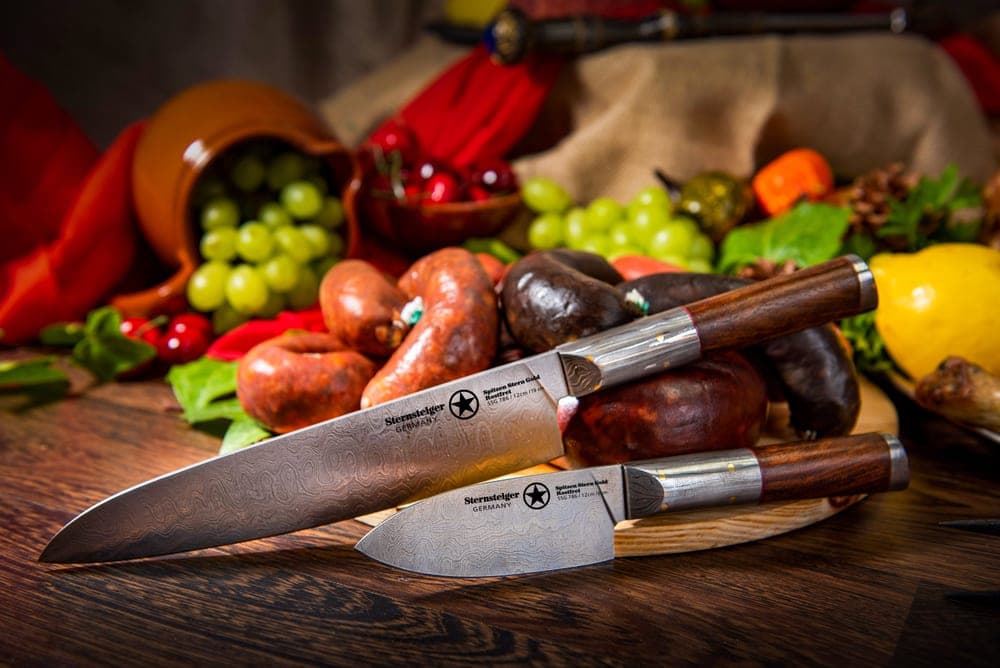 Victorinox Fibrox Pro 8" Chef's Knife | A beater, or a sanity check before you spend more | 7.0 | |
| 3 | 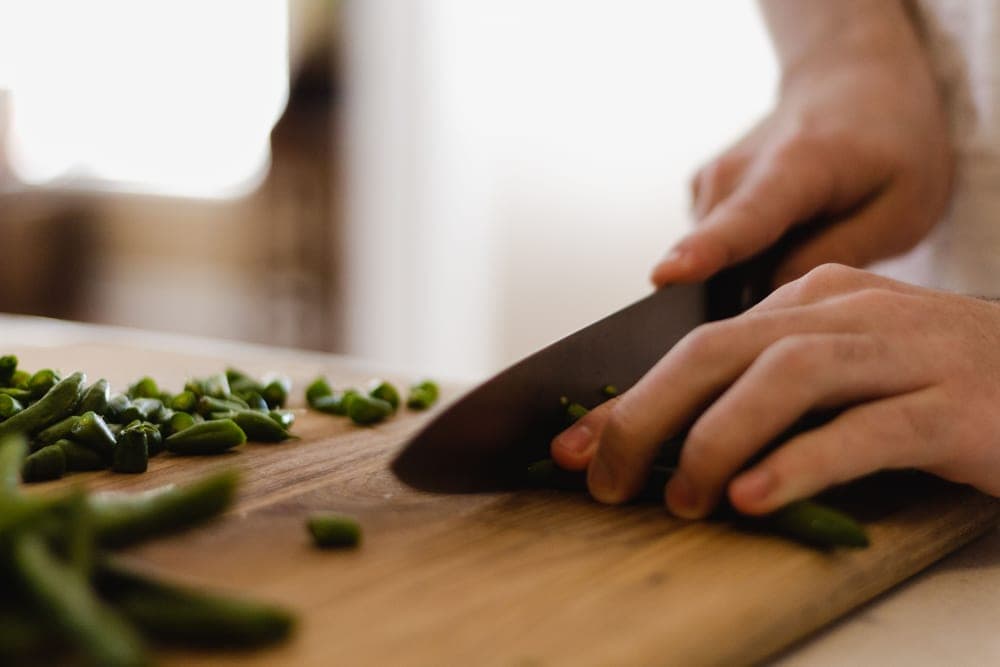 MAC Professional 6.5" Santoku (MSK-65) | Precision vegetable work | 8.5 |
| Paring knife | Petty | |
|---|---|---|
| Length | 75–100mm | 120–150mm |
| Used | In the hand, off the board | On the board |
| Typical tasks | Peeling, hulling, coring, deveining | Trimming, segmenting, slicing shallots, portioning |
| Blade height | Low — around 20mm | Higher — around 25–30mm |
| Knuckle clearance | None needed | Marginal, so keep a pinch grip |
Which one is your kitchen missing?
Two diagnostic questions:
- Do you peel apples in your hand? If yes and you are using a 120mm blade to do it, you want a shorter paring knife. Long blades are awkward and unsafe for in-hand work.
- Do you reach for your chef's knife to slice one shallot? If yes, you want a petty. A 210mm gyuto for one shallot is a lot of knife to wash.
The case for a petty
The petty is the knife most home cooks do not know they want. It handles every small board job — trimming fat, segmenting an orange, splitting a chili, slicing garlic — without the bulk of a chef's knife and with far more control than a paring knife on a board.
It is also a low-stakes purchase. A petty does light work, which means the steel matters less, the edge lasts longer between sharpenings, and you do not need to spend much.
The case for a paring knife
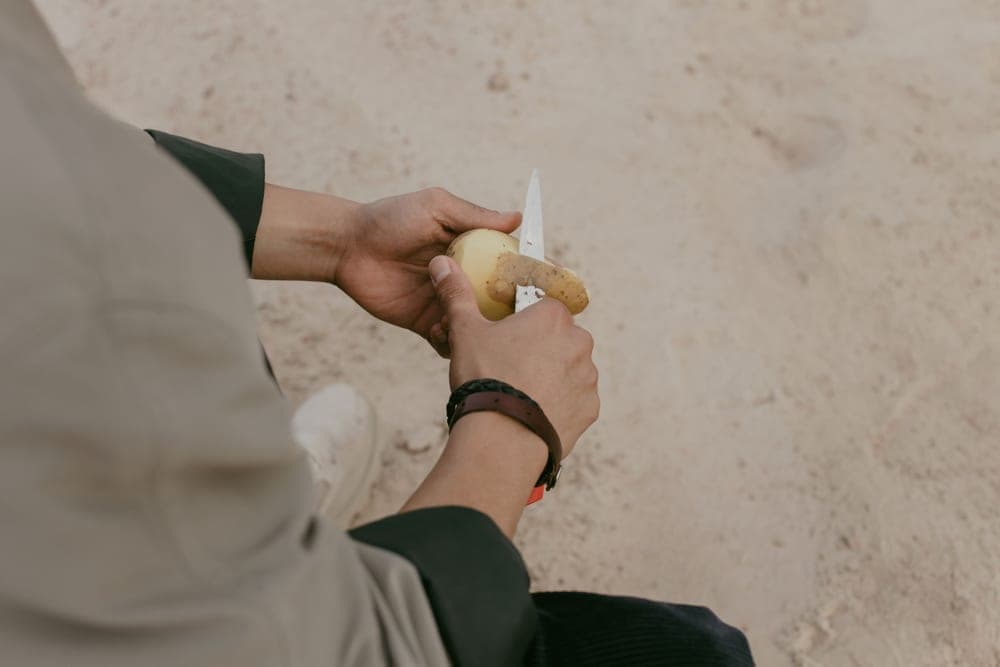
Nothing else does in-hand work. Hulling strawberries, coring a tomato, peeling a stubborn potato that the peeler cannot handle, deveining a shrimp — these want a short blade you can control with your thumb close to the edge. A 150mm petty is genuinely dangerous for that.
Buy the cheap one. A paring knife gets lost, gets thrown in the dishwasher by somebody, and gets used to open packaging. It is not the place for good steel.
The verdict
Own a cheap paring knife and, if you cook most days, add a petty. The picks below are the closest widely available Japanese blades in and around the small-knife size class — a 170mm Tojiro DP santoku and a 6.5-inch MAC santoku both work on a small board where a 210mm gyuto is clumsy. We have not listed a specific petty model because the mainstream US stock in that size shifts frequently and we will not name a product we cannot confirm is currently sold. Buy the shape from a retailer who lists the steel and the hardness.
The picks in detail
#1 · A second Japanese knife on a budget
Tojiro DP Santoku 170mm (F-503)
The gyuto's sibling: same VG-10 san mai, same price bracket, shorter and flatter. The cheapest honest route into a Japanese santoku.
What it does well
- Same steel and geometry philosophy as the F-808 gyuto
- Light and easy to control for shorter cooks
- Inexpensive enough to learn stone work on
Where it gives way
- Plain finish, same as the rest of the DP line
- 170 mm limits you on anything large
- Soft cladding scratches quickly
Skip it if: Anyone who already has a 210 mm gyuto and a small board — the overlap is large.
| Blade length | 170 mm |
|---|---|
| Steel | VG-10 core, three-layer stainless cladding |
| Hardness | 59-61 HRC |
| Handle | Western composite wood with bolster |
#2 · A beater, or a sanity check before you spend more
Victorinox Fibrox Pro 8" Chef's Knife
Not a Japanese knife and not pretending to be. It is the control sample: if your cooking does not improve after upgrading from this, the knife was never the problem.
What it does well
- Stamped, light and genuinely non-slip when wet
- Soft enough that a pull-through sharpener will not destroy it
- Costs a fraction of everything else here
Where it gives way
- 56 HRC means frequent honing and frequent sharpening
- 18-degree edge is blunt by Japanese standards
- No bolster, no heft, no presence — it feels like a tool because it is one
Skip it if: This site's usual reader. At 56 HRC with an 18-degree edge it is a softer, blunter tool than anything else on this page.
| Blade length | 8 in |
|---|---|
| Steel | X55CrMo14 high-carbon stainless |
| Hardness | 56 HRC |
| Edge angle | 18 degrees |
| Weight | 5.6 oz |
| Handle | Fibrox Pro thermoplastic elastomer, no bolster |
#3 · Precision vegetable work
MAC Professional 6.5" Santoku (MSK-65)
The MTH-80's logic in a santoku: thin, light, 15 degrees per side, and consistent from unit to unit.
What it does well
- Extremely thin behind the edge for its price
- Same 15-degree factory geometry as the rest of the Professional line
- Light and neutral in the hand
Where it gives way
- Thin tip is easy to damage
- No bolster to protect your knuckles in a heavy grip
- Costs more than the Tojiro equivalent
Skip it if: Heavy jobs. It is thin, and thin blades dislike bone and frozen food.
| Blade length | 6.5 in |
|---|---|
| Steel | Sub-zero tempered high-carbon molybdenum vanadium alloy |
| Hardness | approx. 61 HRC (MAC Professional line) |
| Edge angle | 15 degrees per side |
Common questions
What is a petty knife used for?
What is the difference between a petty and a paring knife?
Which one should I buy first?
Should a petty knife be expensive?
Sources
Read next
Japanese Knives
Japanese Knife Types
Japanese Knives
Best Knives for Home Cooks

Japanese Knives
Japanese Knife Sizes
Japanese Knives
Best Santoku Knives
Japanese Knives
Your First Japanese Knife
Steel & Care