Steel & Care
Knife Storage Guide
What this is based on: published manufacturer specifications and retailer listings, cited on each product; the weight of professional and owner reviews across multiple retailers; and hands-on experience sharpening and cooking with knives of this type. We have not individually tested every model listed, we do not run instrumented sharpness testing, and we do not claim a test we did not run.
Quick picks
| # | Product | Best for | Score | Price |
|---|---|---|---|---|
| 1 | Saya / Magnetic Blade Guard | Anyone whose knives live in a drawer | 8.9 | |
| 2 | 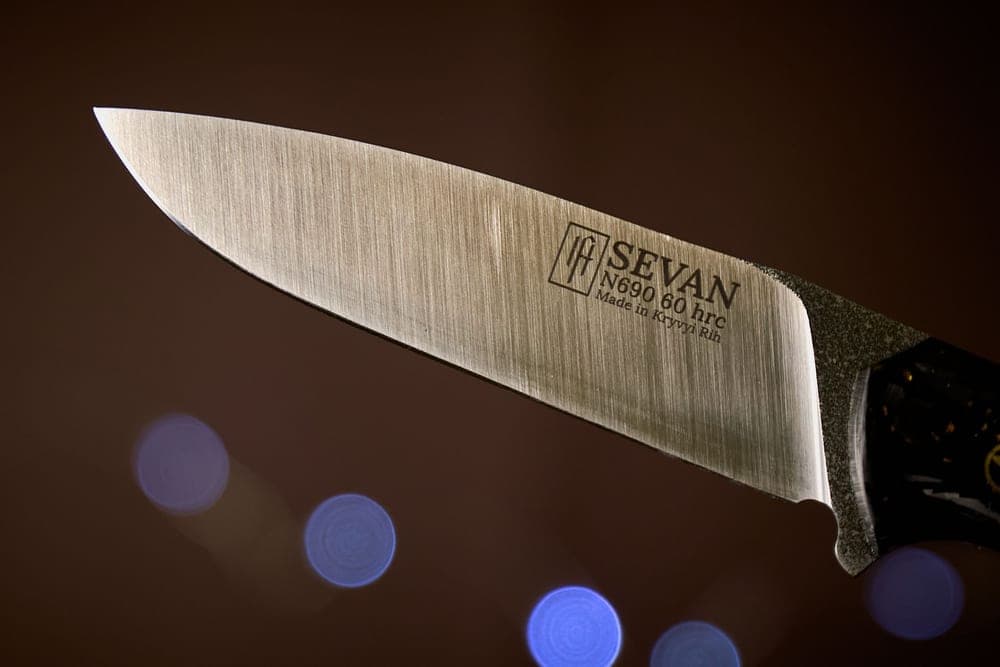 Tsubaki (Camellia) Blade Oil | Anyone who owns carbon steel | 8.6 | |
| 3 | Asahi Cookin' Cut Rubber Cutting Board | Edge friendliness per dollar | 8.5 |
A knife lying loose in a drawer moves every time the drawer opens. Over a year that is a few thousand small collisions with a peeler, a can opener, a measuring spoon and the drawer runner. The tip, being the thinnest and least supported part of the blade, takes most of it.
Four options compared
| Method | Edge safety | Hygiene | Cost | Catch |
|---|---|---|---|---|
| Sheath (saya) in a drawer | Excellent | Good, if dry | Very low | A wet knife in a wooden sheath will corrode |
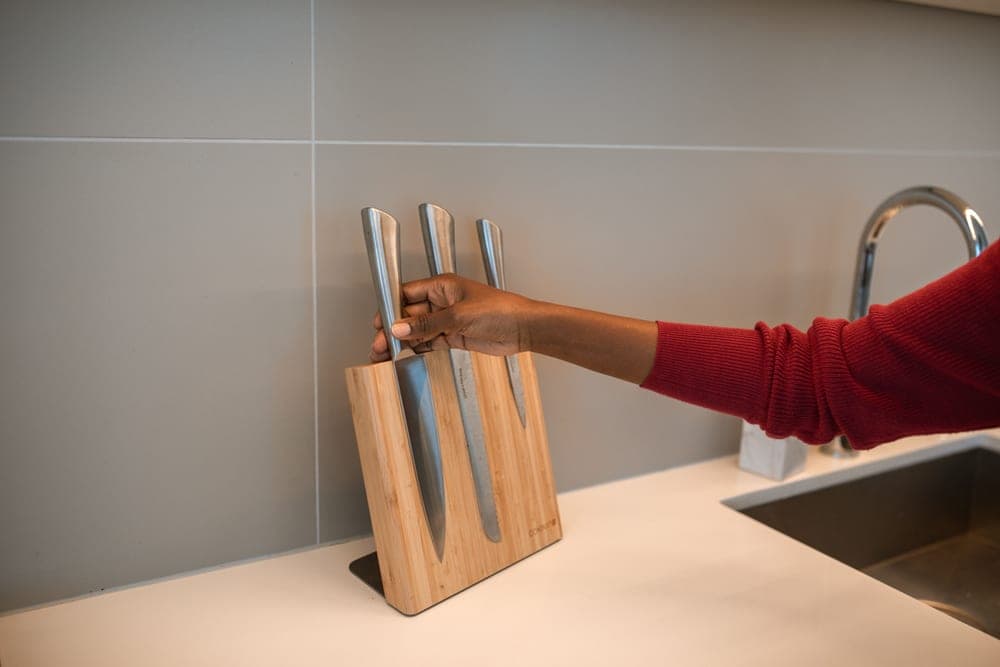
| Magnetic rack | Excellent, used properly | Excellent — full airflow | Low to medium | Needs wall space; slapping the edge on damages it |
| In-drawer slotted tray | Excellent | Good | Medium | Takes a whole drawer |
| Countertop block | Good | Moderate — slots trap moisture | Medium to high | Hard to clean; fixed slot sizes |
| Loose in a drawer | Poor | Poor | Free | This is the problem |
The cheapest fix
A sheath per knife. A saya, a plastic edge guard or a magnet-lined guard all work, and they cost a few dollars each. Keep the knives in the drawer if that is what suits your kitchen — just sheathed.
The one rule: dry the knife completely before sheathing it. A damp blade sealed inside wood or plastic has nowhere for the moisture to go, and that is a reliable way to produce rust. Why knives rust.
Using a magnetic rack properly
- Place the spine on the magnet first, then roll the blade down flat. Never present the edge to the strip.
- Remove by rolling off the same way, pivoting on the spine.
- Prefer a wood-faced rack over bare steel — the blade never contacts metal.
- Mount it where you will not walk into it. A rack at shoulder height beside a doorway is a bad idea.
Magnetic racks have the best hygiene of any option because the whole blade is exposed to air and dries completely.
Blocks, and the slot problem
A traditional block is convenient and its slots are hard to clean, absorb moisture and trap crumbs. Two improvements:
- Store knives edge-up if the slot geometry allows, so the edge never rests against wood.
- Choose a block with universal bristle-filled slots rather than fixed wooden ones — easier to clean and it accommodates any blade shape, including a nakiri.
And do not put a knife away damp. A wooden slot is a sealed humid space.
The verdict
A sheath per knife is the highest-return few dollars you can spend on knife care, full stop. If you have wall space, a wood-faced magnetic rack is the best combination of edge safety and hygiene available.
Whatever you choose, the point is the same: the edge should never touch anything hard except the food and the board. Get that and the board right, and most knife problems stop happening.
The picks in detail
#1 · Anyone whose knives live in a drawer
Saya / Magnetic Blade Guard
The cheapest way to stop a drawer from ruining a good edge. A sheath costs a few dollars; re-profiling a chipped tip costs an evening.
What it does well
- Stops the single most common cause of chipped tips: loose drawer storage
- Cheap enough to buy one per knife
- Makes it safe to reach into a drawer
Where it gives way
- A wet knife sheathed in wood will corrode — dry it properly first
- Sizes are fussy; a loose saya is worse than none
- Adds a step to putting the knife away
Skip it if: Nobody, really — but if you already have a magnetic rack or a proper block, you do not need one too.
| Function | Edge protection in storage and transit |
|---|---|
| Materials | Wood (saya), plastic, or magnet-lined guards |
#2 · Anyone who owns carbon steel
Tsubaki (Camellia) Blade Oil
Food-safe, non-drying oil traditionally used on Japanese blades. A few drops after washing is what stands between a carbon-steel knife and a rust bloom.
What it does well
- Genuinely prevents flash rust on carbon steel between uses
- Food safe and effectively odorless
- One small bottle lasts years
Where it gives way
- Unnecessary for most stainless knives
- Needs reapplying after every wash to actually work
- Does nothing for rust that has already started
Skip it if: Stainless owners, mostly. If your knife is VG-10 or CROMOVA and you dry it, you do not need this.
| Type | Non-drying, food-safe plant oil |
|---|---|
| Use | Wipe a thin film on a clean, dry blade |
| Applies to | Carbon steel and clad carbon core blades |
#3 · Edge friendliness per dollar
Asahi Cookin' Cut Rubber Cutting Board
Synthetic rubber that cushions the edge on every cut, does not absorb juice, does not warp, and shrugs off turmeric and beets. The value answer in this category.
What it does well
- Soft surface cushions the blade on every cut
- Does not absorb juice, warp, or need oiling
- Resists staining from turmeric, beets and tomato
Where it gives way
- Not dishwasher safe
- Heavier than it looks for its size
- Rubber smell on a new board takes a few washes to fade
Skip it if: The dishwasher. Asahi boards are not dishwasher safe; Hasegawa boards are.
| Material | Synthetic rubber |
|---|---|
| Typical thickness | 5-10 mm |
| Dishwasher | No |
| Service life | 10+ years in professional use before re-planing |
Common questions
What is the best way to store kitchen knives?
Are magnetic knife racks bad for knives?
Are knife blocks unhygienic?
What is a saya?
Sources
Read next

Steel & Care
Japanese Knife Care Guide
Steel & Care
Why Is My Knife Chipping?
Steel & Care
Why Is My Knife Rusting?

Steel & Care
Best Cutting Boards for Japanese Knives
Japanese Knives
Best Knives for Home Cooks
Steel & Care