Steel & Care
Japanese Knife Care Kit
What this is based on: published manufacturer specifications and retailer listings, cited on each product; the weight of professional and owner reviews across multiple retailers; and hands-on experience sharpening and cooking with knives of this type. We have not individually tested every model listed, we do not run instrumented sharpness testing, and we do not claim a test we did not run.
Quick picks
| # | Product | Best for | Score | Price |
|---|---|---|---|---|
| 1 | Saya / Magnetic Blade Guard | Anyone whose knives live in a drawer | 8.9 | |
| 2 | Asahi Cookin' Cut Rubber Cutting Board | Edge friendliness per dollar | 8.5 | |
| 3 | 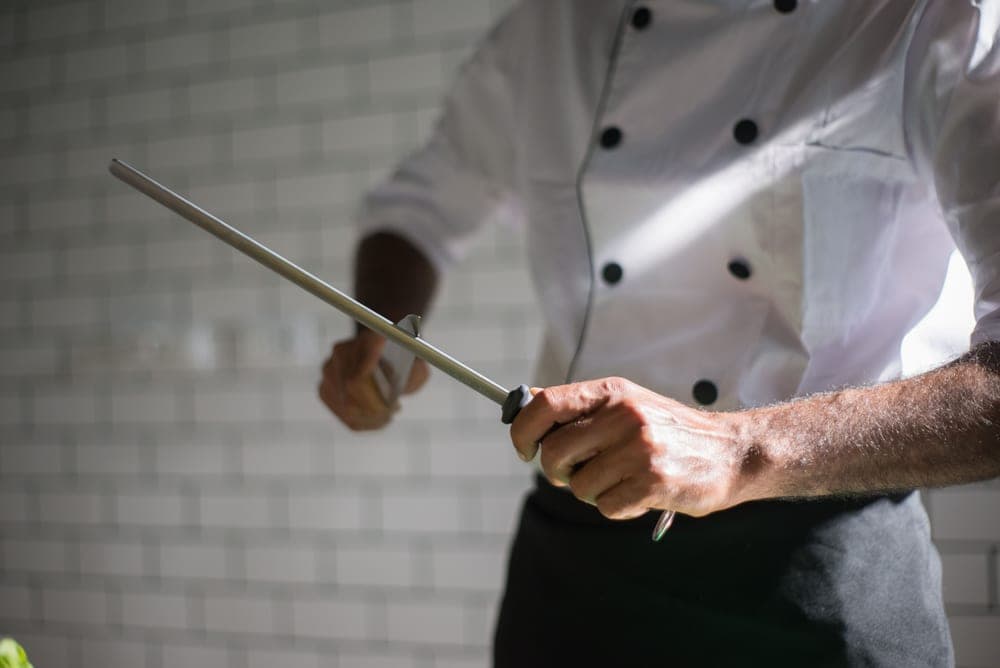 Idahone Fine Ceramic Honing Rod, 12" | Maintaining a hard Japanese edge between sharpenings | 8.8 | |
| 4 |  Tsubaki (Camellia) Blade Oil | Anyone who owns carbon steel | 8.6 |
Pre-packaged "knife care kits" mostly get this wrong. They bundle oil, a cloth and a ribbed steel honing rod, and the rod is the weak link: a ribbed steel is frequently no harder than a 61 HRC Japanese blade, so instead of realigning the apex it can take small bites out of it. Assembling the four parts yourself costs about the same and protects your knives rather than wearing them.
The four items, in order of what they prevent
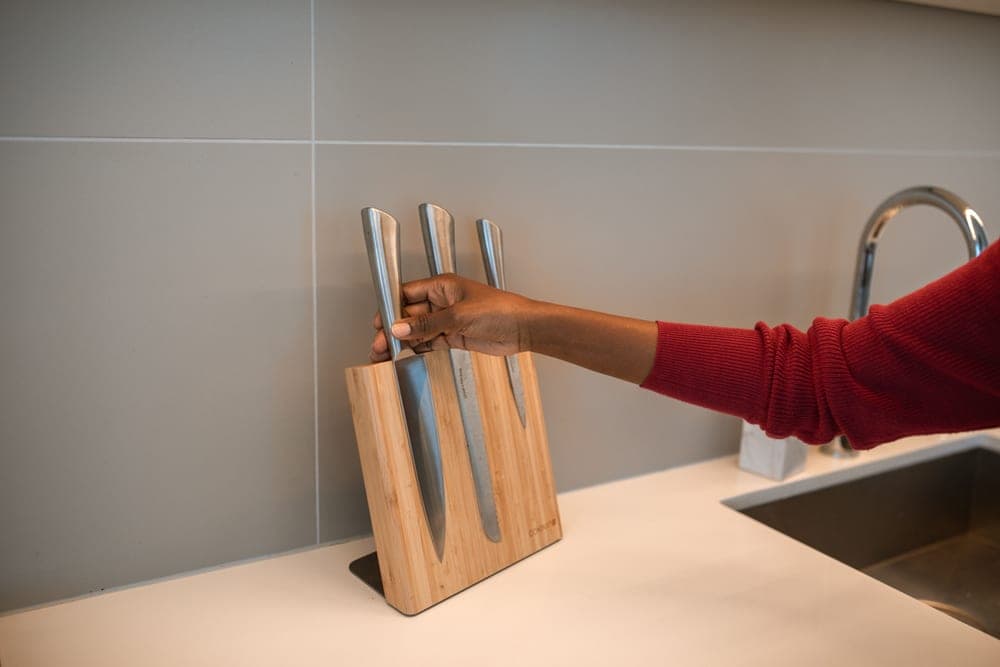
- A saya or blade guard — stops chipped tips. Loose drawer storage is the single most common cause of a damaged tip, and a sheath costs a few dollars against an evening of reprofiling. If your knives live in a drawer, this is the first purchase, not the last.
- A soft board — stops the slow blunting nobody notices. A knife on glass, stone, bamboo or hard polyethylene loses its edge from the board, not from the food. Soft synthetic rubber cushions every cut. This is the expensive item and the one that changes how long an edge lasts.
- A fine ceramic rod — stops the mid-week dullness. Most knives that feel dull have simply rolled over at the apex. Thirty seconds on a 1200 ANSI alumina rod puts it back and roughly doubles how long a sharpening feels fresh.
- Camellia oil — stops rust, on carbon steel only. A non-drying food-safe plant oil, wiped thin on a clean dry blade. Essential if you own carbon steel or a clad knife with an exposed carbon core; unnecessary on stainless you dry properly.
The kit at a glance
| Item | Prevents | How often | Will not |
|---|---|---|---|
| Saya / blade guard | Chipped tips, cut fingers in the drawer | Every time you put the knife away | Help if you sheath a wet blade |
| Asahi rubber board | Edge blunting and micro-chipping | Every cut | Go in the dishwasher |
| Idahone fine ceramic rod, 12 in | A rolled, mid-week dull edge | Every few uses, 30 seconds | Rescue a genuinely dull knife |
| Camellia (tsubaki) oil | Flash rust on carbon steel | After every wash, on carbon only | Remove rust that has started |
Note the dishwasher row. The Asahi rubber board is the value answer in this category but it is not dishwasher safe; a Hasegawa wood-core board is, which is the main reason to pay the considerable premium. Both are kind to an edge. Our cutting board roundup works through the full comparison, including hinoki.
What to buy, by what you own
- One Japanese knife, kept in a drawer. Blade guard and a rubber board. Those two purchases remove the two mechanisms that will otherwise damage the knife. Add the rod next month.
- Several knives, all stainless. Rubber board, 12 inch ceramic rod, guards for whatever is not on a rack. Skip the oil — if it is VG-10 or CROMOVA and you dry it, oil does nothing.
- Any carbon steel in the house. Camellia oil, immediately, plus the habit of washing and drying the knife the moment you finish with it. Carbon can bloom orange in under an hour on a wet board. See why is my knife rusting and patina versus rust.
- Knives on a magnetic rack or in a block already. Board and rod. You do not need guards too; the storage question is covered in the storage guide.
What to skip
The ribbed steel honing rod that came with your block set. On 56 to 58 HRC German steel it realigns properly and is genuinely useful; on a 61 HRC Japanese blade with a 15-degree bevel it often is not harder than the knife, and the ribs can chip the apex. A fine ceramic rod is the right material. The full argument is in our honing rod roundup, and the related comparison is honing rod versus strop.
Also skip: knife-block sets sold as care kits, mineral oil marketed as blade oil at four times the price of camellia, and any "sharpener" included free in a care bundle — those are invariably pull-throughs, and we explain at length why they do not belong near a Japanese knife in pull-through sharpener versus whetstone.
A wooden saya holds moisture against the blade, and a knife put away damp will come out stained or rusted, carbon or not. Dry the blade fully — including the spine and the area where the blade meets the handle, which is where moisture hides — before it goes anywhere. The same rule applies to a knife block.
The verdict
Blade guard first, because it is cheap and prevents the most common damage. Asahi rubber board second, because the board does more to keep an edge sharp than anything except sharpening it. Idahone 12 inch ceramic rod third, for the thirty seconds that keeps a week-old edge feeling new. Camellia oil only if you own carbon steel. The one thing a care kit cannot do is sharpen — for that, see the beginner whetstone picks, and the full care guide for the habits that go with the gear.
The picks in detail
#1 · Anyone whose knives live in a drawer
Saya / Magnetic Blade Guard
The cheapest way to stop a drawer from ruining a good edge. A sheath costs a few dollars; re-profiling a chipped tip costs an evening.
What it does well
- Stops the single most common cause of chipped tips: loose drawer storage
- Cheap enough to buy one per knife
- Makes it safe to reach into a drawer
Where it gives way
- A wet knife sheathed in wood will corrode — dry it properly first
- Sizes are fussy; a loose saya is worse than none
- Adds a step to putting the knife away
Skip it if: Nobody, really — but if you already have a magnetic rack or a proper block, you do not need one too.
| Function | Edge protection in storage and transit |
|---|---|
| Materials | Wood (saya), plastic, or magnet-lined guards |
#2 · Edge friendliness per dollar
Asahi Cookin' Cut Rubber Cutting Board
Synthetic rubber that cushions the edge on every cut, does not absorb juice, does not warp, and shrugs off turmeric and beets. The value answer in this category.
What it does well
- Soft surface cushions the blade on every cut
- Does not absorb juice, warp, or need oiling
- Resists staining from turmeric, beets and tomato
Where it gives way
- Not dishwasher safe
- Heavier than it looks for its size
- Rubber smell on a new board takes a few washes to fade
Skip it if: The dishwasher. Asahi boards are not dishwasher safe; Hasegawa boards are.
| Material | Synthetic rubber |
|---|---|
| Typical thickness | 5-10 mm |
| Dishwasher | No |
| Service life | 10+ years in professional use before re-planing |
#3 · Maintaining a hard Japanese edge between sharpenings
Idahone Fine Ceramic Honing Rod, 12"
The honing rod that is actually harder than your knife. 1200 ANSI alumina ceramic, which is roughly 3000-3500 on the Japanese scale.
What it does well
- Ceramic is harder than the steel in a 60+ HRC Japanese knife; a steel rod often is not
- 1200 ANSI realigns without removing meaningful steel
- High-alumina body resists the grooving that ruins cheaper rods
Where it gives way
- Ceramic is brittle — one hard knock on a stone counter and it is done
- Removes so little steel that it cannot rescue a truly dull knife
- 12 in is longer than some drawers
Skip it if: Anyone who bangs the rod on the counter. Ceramic chips; steel does not.
| Rod length | 12 in (30.5 cm) |
|---|---|
| Rod diameter | 1/2 in (12.7 mm) |
| Overall length | 17.5 in (44.5 cm) |
| Grit | Fine, 1200 ANSI (approx. 3500 JIS) |
| Material | High-alumina ceramic |
| Handle | Hard rock maple, 5.25 in |
| Origin | Made in the USA |
#4 · Anyone who owns carbon steel
Tsubaki (Camellia) Blade Oil
Food-safe, non-drying oil traditionally used on Japanese blades. A few drops after washing is what stands between a carbon-steel knife and a rust bloom.
What it does well
- Genuinely prevents flash rust on carbon steel between uses
- Food safe and effectively odorless
- One small bottle lasts years
Where it gives way
- Unnecessary for most stainless knives
- Needs reapplying after every wash to actually work
- Does nothing for rust that has already started
Skip it if: Stainless owners, mostly. If your knife is VG-10 or CROMOVA and you dry it, you do not need this.
| Type | Non-drying, food-safe plant oil |
|---|---|
| Use | Wipe a thin film on a clean, dry blade |
| Applies to | Carbon steel and clad carbon core blades |
Common questions
What do I need in a Japanese knife care kit?
Do pre-packaged knife care kits work?
What cutting board is best for Japanese knives?
Do I need camellia oil for a stainless Japanese knife?
Sources
Read next
Steel & Care
Japanese Knife Care Guide
Steel & Care
Best Cutting Boards for Japanese Knives
Steel & Care
Knife Storage Guide
Steel & Care
Why Is My Knife Rusting?
Steel & Care
Why Is My Knife Chipping?
Sharpeners