Sharpeners
Pull-Through Sharpener vs Whetstone
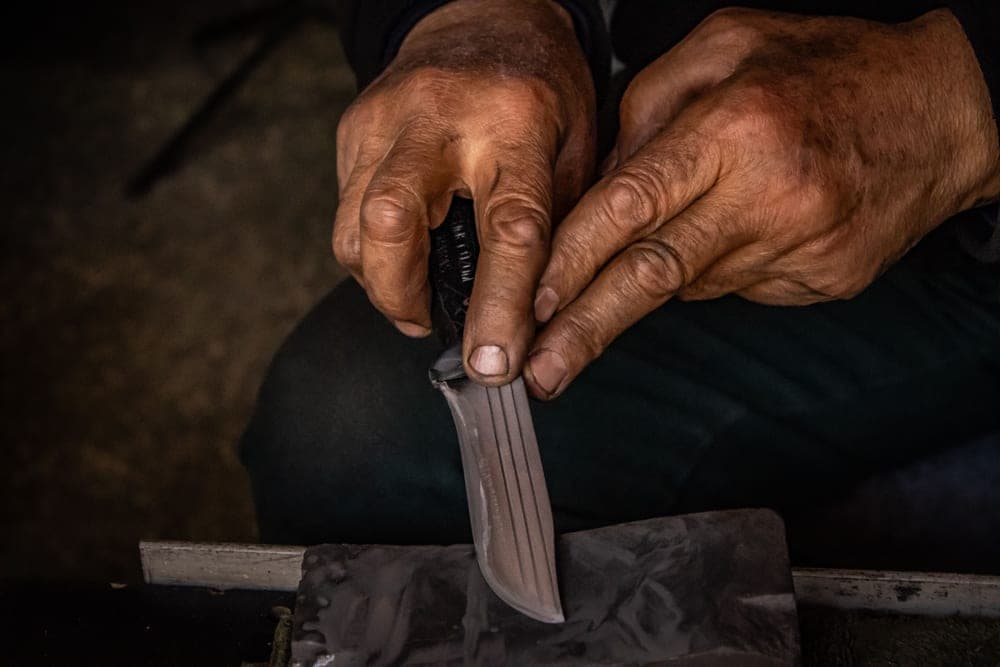
What this is based on: published manufacturer specifications and retailer listings, cited on each product; the weight of professional and owner reviews across multiple retailers; and hands-on experience sharpening and cooking with knives of this type. We have not individually tested every model listed, we do not run instrumented sharpness testing, and we do not claim a test we did not run.
Quick picks
| # | Product | Best for | Score | Price |
|---|---|---|---|---|
| 1 |  Naniwa Professional (Chosera) 1000 | The one stone to own if you only own one | 8.6 | |
| 2 |  King KDS Combination Whetstone #1000/#6000 | Your first stone | 8.4 | |
| 3 |  Tumbler Rolling Knife Sharpener | People who want a fixed angle and hate gear | 8.0 | |
| 4 | 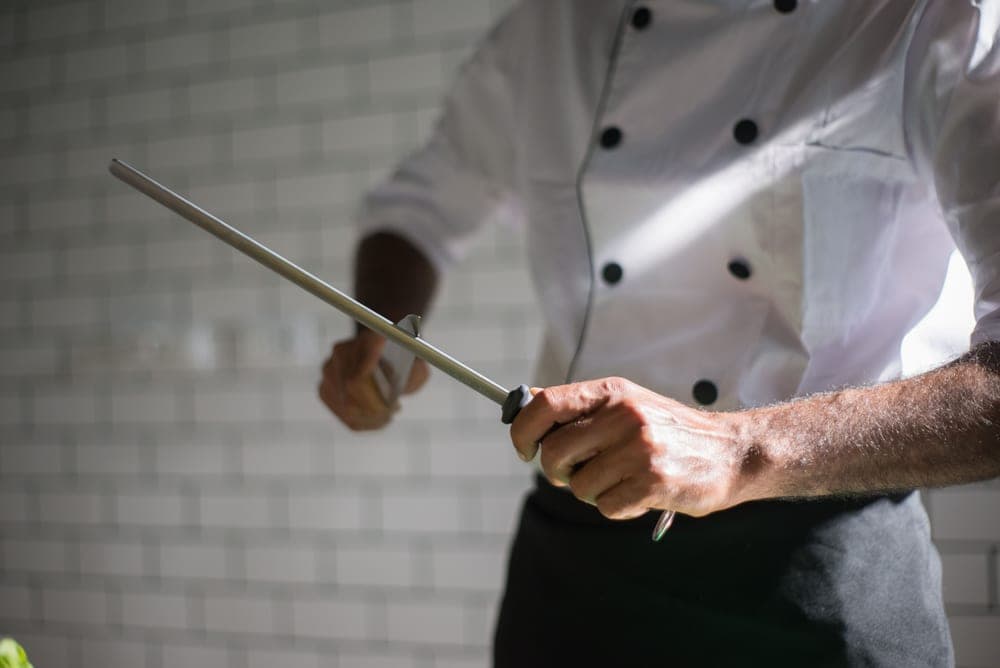 Idahone Fine Ceramic Honing Rod, 12" | Maintaining a hard Japanese edge between sharpenings | 8.8 |
This is not a close comparison on edge quality and it is not meant to be. It is worth writing out anyway, because pull-throughs outsell every other sharpening tool combined, and the reason is legitimate: they work in ten seconds with no skill at all. Knowing exactly what you are trading for those ten seconds is the useful part.
Two different mechanisms, not two speeds
- A pull-through shears. Two tungsten carbide blades or ceramic rods are set in a V in a plastic body. Dragging the knife through forces the edge between them and they cut a sliver of steel away. That is a scraping action, not an abrasive one, and on hard steel it leaves a torn edge with micro-chipping rather than a clean bevel.
- A stone abrades. Thousands of grit particles each remove a tiny amount of metal as the bevel slides across them. The result is a flat, polished bevel whose angle is whatever you held. More work, better edge, less steel gone.
- The angle is the real issue. The V in a pull-through is moulded in. Most are 20 degrees per side, some 17, a few offer two slots. A Japanese kitchen knife arrives at 15 to 16 degrees per side. Running it through a 20-degree slot grinds a wider, blunter edge onto a knife whose entire selling point was the acuteness of its edge.
Side by side
| Pull-through | Whetstone | |
|---|---|---|
| Action | Shears steel between fixed carbides | Abrades a bevel with loose and bonded grit |
| Angle | Fixed by the housing, usually 20 degrees | Whatever you hold — commonly 15 degrees |
| Follows an existing grind | No | Yes, including asymmetric bevels |
| Steel removed per session | High for the result | Low |
| Edge finish | Coarse, often micro-chipped on hard steel | Clean; refinable to 6000 grit and beyond |
| Time per knife | 10-20 seconds | 10-20 minutes |
| Skill required | None | Real; a few sessions to be competent |
Two rows in that table pull in opposite directions, and which one you weight decides the whole question: time per knife, and steel removed per session. A pull-through is sixty times faster and costs your knife far more metal over its life.
When a pull-through is actually the right call
- Soft stamped stainless you do not care about. A 56 HRC supermarket knife has no fine geometry to protect and a short expected life. A pull-through is proportionate.
- A holiday rental, a boat, a work kitchen you do not own. Anywhere the realistic alternative is a knife nobody sharpens at all.
- Serrated edges, on models that support them. Stones cannot easily do serrations. A dedicated serrated slot, or an electric machine with one, can.
Note what is not on that list: any knife above about eighty dollars, anything at 60 HRC or harder, anything with an asymmetric or single-bevel grind, and anything you intend to keep. Our longer treatment of the device category is at pull-through sharpeners.
What to buy
- One stone, for everything. Naniwa Professional 1000. Splash and go, 20 mm of abrasive, hard enough to stay flat and soft enough to tell you what the edge is doing.
- Learning, on a budget. King KDS #1000/#6000. Soft, cheap, two grits, and the most forgiving stone to be bad on.
- You want pull-through convenience without the damage. Tumbler rolling sharpener. A magnet holds the blade, the roller sets 15 or 20 degrees, and the abrasive abrades instead of shearing. Three minutes, not ten seconds, but it is the honest version of what a pull-through promises.
- Between sharpenings. Idahone 12 inch fine ceramic rod. Most knives that feel dull have simply rolled over, and thirty seconds on a ceramic rod fixes that without removing meaningful steel.
Keep it for the cheap knives and stop running the good one through it. The damage is not permanent: a 1000-grit stone will re-establish a 15-degree bevel over two or three patient sessions, because what the pull-through left is a wide edge, not a ruined blade. Start with the whetstone walkthrough and expect the first session to take a while.
The verdict
Whetstone, for any knife worth owning. Rolling sharpener if ten minutes a knife is more than you will ever spend. Pull-through only for soft knives whose life you are not trying to extend. The thing a pull-through genuinely cannot do is follow the geometry you paid for, and on a Japanese knife that geometry is the product.
The picks in detail
#1 · The one stone to own if you only own one
Naniwa Professional (Chosera) 1000
The stone that does the most with one grit. Hard enough to dish slowly, soft enough to raise a slurry that tells you what the edge is doing.
What it does well
- Splash and go, but still builds a rich, informative slurry
- Fast enough to reset a dull edge, refined enough to finish on
- 20 mm of abrasive — years of use before it is spent
Where it gives way
- Expensive for a single grit
- Magnesia binder does not like being stored wet
- You will still want a finishing stone eventually
Skip it if: A tight budget. It costs more than a combination stone and gives you one grit.
| Grit | 1000 |
|---|---|
| Size | 210 x 70 x 20 mm |
| Soaking | Splash and go |
| Binder | Magnesia |
#2 · Your first stone
King KDS Combination Whetstone #1000/#6000
The stone almost everyone learns on. Soft, forgiving, cheap, and it tells you loudly when your angle wanders.
What it does well
- Two useful grits in one block for the price of half a premium stone
- Soft binder builds slurry readily, which gives beginners real feedback
- Almost impossible to damage a knife on it
Where it gives way
- Dishes quickly and needs flattening often
- The soak is a real commitment — you cannot sharpen on a whim
- Slow on hard powder steels like SG2
Skip it if: Impatient people. The 1000 side wants a 10-15 minute soak before every session and the clay binder dishes fast.
| Grits | #1000 / #6000, combination |
|---|---|
| Binder | Clay |
| Soaking | #1000 side: 10-15 minutes. #6000 side: splash only |
| Size | 207 x 66 x 36 mm |
| Weight | approx. 956 g |
#3 · People who want a fixed angle and hate gear
Tumbler Rolling Knife Sharpener
A magnetic holder and a rolling abrasive disc that fixes your angle at 15 or 20 degrees. Two pieces, almost no learning curve.
What it does well
- Two pieces, nothing to assemble, nothing to set
- 15-degree setting is the correct angle for most Japanese kitchen knives
- Cheaper than the German alternative and, in side-by-side comparisons, as sharp
Where it gives way
- Magnetic holder limits you to the angles it offers
- Rolls less smoothly than the Horl 2
- Does nothing for a chipped or badly reprofiled edge
Skip it if: Anyone who wants to learn to sharpen. It works by removing the skill, which means you never acquire it.
| Angles | 15 degrees and 20 degrees |
|---|---|
| Components | Sharpening roller + magnetic knife holder |
| Origin | Made in China |
#4 · Maintaining a hard Japanese edge between sharpenings
Idahone Fine Ceramic Honing Rod, 12"
The honing rod that is actually harder than your knife. 1200 ANSI alumina ceramic, which is roughly 3000-3500 on the Japanese scale.
What it does well
- Ceramic is harder than the steel in a 60+ HRC Japanese knife; a steel rod often is not
- 1200 ANSI realigns without removing meaningful steel
- High-alumina body resists the grooving that ruins cheaper rods
Where it gives way
- Ceramic is brittle — one hard knock on a stone counter and it is done
- Removes so little steel that it cannot rescue a truly dull knife
- 12 in is longer than some drawers
Skip it if: Anyone who bangs the rod on the counter. Ceramic chips; steel does not.
| Rod length | 12 in (30.5 cm) |
|---|---|
| Rod diameter | 1/2 in (12.7 mm) |
| Overall length | 17.5 in (44.5 cm) |
| Grit | Fine, 1200 ANSI (approx. 3500 JIS) |
| Material | High-alumina ceramic |
| Handle | Hard rock maple, 5.25 in |
| Origin | Made in the USA |
Common questions
Is a pull-through sharpener better than a whetstone?
Will a pull-through sharpener ruin a Japanese knife?
Can a pull-through sharpener make a knife sharp?
What should I use instead of a pull-through sharpener?
Sources
Read next
Sharpeners
Pull-Through Knife Sharpeners
Sharpeners
Whetstone vs Rolling Sharpener
Sharpeners
Electric Sharpener vs Whetstone
Whetstones & Skill
Best Whetstone for Beginners
Sharpeners
Best Knife Sharpeners for Beginners
Whetstones & Skill