Sharpeners
Whetstone vs Rolling Sharpener
What this is based on: published manufacturer specifications and retailer listings, cited on each product; the weight of professional and owner reviews across multiple retailers; and hands-on experience sharpening and cooking with knives of this type. We have not individually tested every model listed, we do not run instrumented sharpness testing, and we do not claim a test we did not run.
Quick picks
| # | Product | Best for | Score | Price |
|---|---|---|---|---|
| 1 | 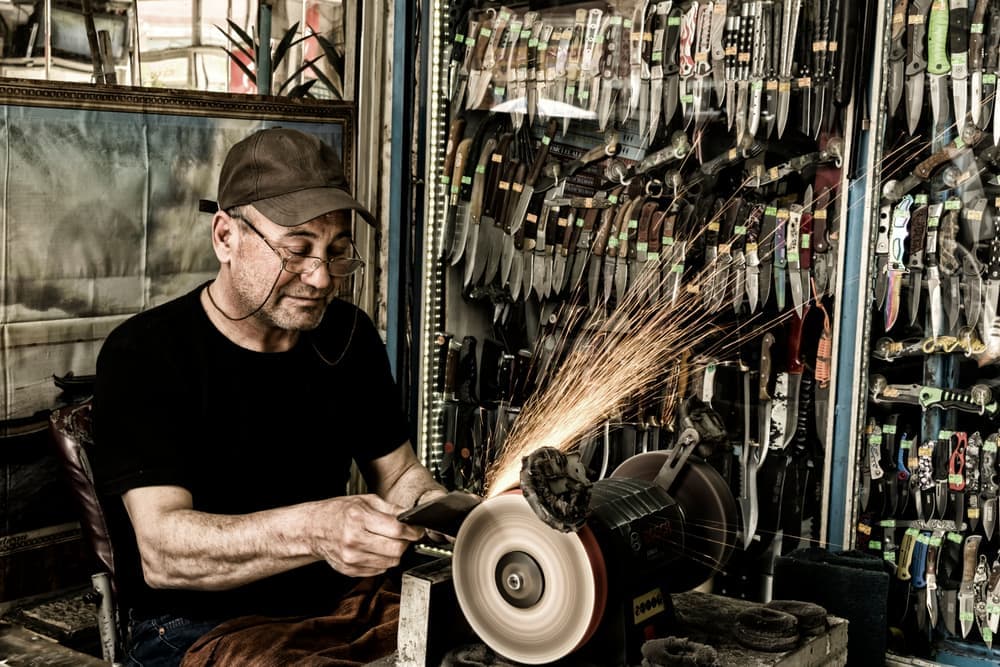 King KDS Combination Whetstone #1000/#6000 | Your first stone | 8.4 | |
| 2 | 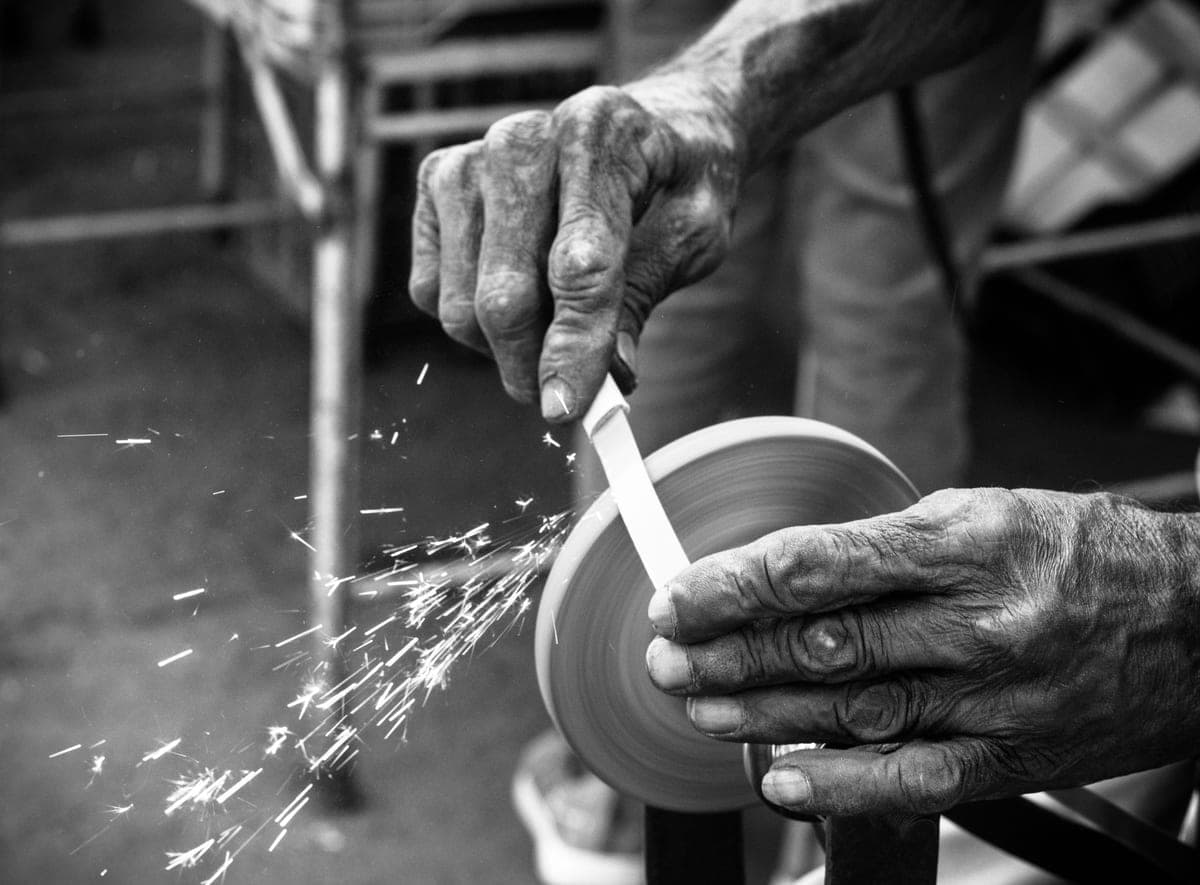 Horl 2 Rolling Knife Sharpener | Someone who will leave it on the counter | 7.9 | |
| 3 | Tumbler Rolling Knife Sharpener | People who want a fixed angle and hate gear | 8.0 | |
| 4 |  Naniwa Professional (Chosera) 1000 | The one stone to own if you only own one | 8.6 |
The honest framing is this: a whetstone is an abrasive and nothing else, so every bit of the result depends on you. A rolling sharpener is an abrasive bolted to an angle jig, so it trades capability for consistency. Which trade is right depends on how much you cook and how much you want to learn.
Side by side
| Whetstone | Rolling sharpener | |
|---|---|---|
| Angle control | Yours to hold, every stroke | Fixed at 15 or 20 degrees |
| Time per knife | 10-20 minutes including setup and cleanup | About a minute |
| Learning curve | Weeks to be reliable | One knife |
| Can it grind out a chip? | Yes | Slowly, and not a large one |
| Can it reprofile a 20-degree knife to 15? | Yes | Yes, but it takes many sessions |
| Single-bevel knives | Yes | No |
| Blade length limit | None in practice | Set by the magnetic support, 4.5 in on the Horl 2 |
| Maintenance of the tool itself | Needs flattening periodically | Abrasive discs wear and are replaced |
| Mess | Water, slurry, a towel | Almost none |
The case for the whetstone
- It can do everything. Chips, reprofiles, tip repairs, single bevels, thinning behind the edge. A rolling sharpener maintains; a stone repairs.
- It is cheaper, and lasts longer. A King KDS 1000/6000 is the cheapest competent setup available and gives you two grits in one block. Its only consumable is itself, slowly.
- Feedback. You can feel the burr form, feel when the bevel is flat on the stone, and see the scratch pattern. That feedback is how you get better, and it is exactly what a jig removes.
- No length limit. A 240 mm gyuto or a 270 mm sujihiki is the same job as a paring knife.
The case for the rolling sharpener
- The angle is not your problem any more. Inconsistent angle is the single reason most home sharpening fails — see why a freshly sharpened knife can still be dull. A jig makes that failure impossible.
- It takes a minute, so it actually gets done. A sharpening method you use weekly beats a better method you use annually. This is the whole argument, and it is a strong one.
- It lives on the counter. No soaking, no sink, no towel. The Horl 2 is designed to be left out, which is why it gets picked up.
- It is kind to a 15-degree edge. Set to 15 degrees it tracks the factory bevel rather than cutting a new one, which is more than can be said for a pull-through sharpener.
Which to buy
- You have never sharpened and want a sharp knife this week. Rolling sharpener. The Tumbler if budget matters, the Horl 2 if you want the longer 4.5 inch magnetic support and the better build.
- You want to learn properly and spend the least. King KDS 1000/6000. Soak it fifteen minutes, follow the walkthrough, accept that your first two knives will be mediocre.
- You own Japanese knives at 60 HRC and above. A stone, and ideally a harder one like the Naniwa Professional 1000, which cuts hard steel faster and stays flatter than a clay stone.
- You own a chipped knife or a German knife at 20 degrees. A stone. A roller will get there eventually but it is the wrong tool for bulk steel removal.
A rolling sharpener for the weekly minute and a 1000 grit stone for the occasional real session. Total cost is less than one premium knife, and between them they cover every sharpening job a home kitchen generates.
The verdict
Rolling sharpener if consistency is what you lack; whetstone if capability is what you want. The rolling sharpener wins on getting done, which matters more than most people admit, and the stone wins on everything it can do. Neither is a mistake. The only genuinely bad option in this category is a cheap pull-through, which grinds a coarse wide bevel onto a knife that arrived with a fine one. Electric sharpener versus whetstone is the other comparison worth reading before you spend.
The picks in detail
#1 · Your first stone
King KDS Combination Whetstone #1000/#6000
The stone almost everyone learns on. Soft, forgiving, cheap, and it tells you loudly when your angle wanders.
What it does well
- Two useful grits in one block for the price of half a premium stone
- Soft binder builds slurry readily, which gives beginners real feedback
- Almost impossible to damage a knife on it
Where it gives way
- Dishes quickly and needs flattening often
- The soak is a real commitment — you cannot sharpen on a whim
- Slow on hard powder steels like SG2
Skip it if: Impatient people. The 1000 side wants a 10-15 minute soak before every session and the clay binder dishes fast.
| Grits | #1000 / #6000, combination |
|---|---|
| Binder | Clay |
| Soaking | #1000 side: 10-15 minutes. #6000 side: splash only |
| Size | 207 x 66 x 36 mm |
| Weight | approx. 956 g |
#2 · Someone who will leave it on the counter
Horl 2 Rolling Knife Sharpener
The original of the type, made in Germany, with the longest magnetic angle support of the group and the smoothest roll. It is also the most expensive by a wide margin.
What it does well
- 4.5 in magnetic support gives the most stable blade hold
- Rolls the smoothest of the rolling sharpeners, which makes control easier
- Removable abrasive discs mean it is serviceable rather than disposable
Where it gives way
- The most expensive rolling sharpener by a large margin
- Same 15 / 20 degree limitation as the cheaper alternatives
- Four pieces to keep track of instead of two
Skip it if: A tight budget. The performance gap over the Tumbler is smaller than the price gap.
| Angles | 15 degrees and 20 degrees |
|---|---|
| Magnetic support | 4.5 in — the longest of the rolling sharpeners |
| Components | 4 pieces, both abrasive surfaces removable |
| Origin | Made in Germany |
#3 · People who want a fixed angle and hate gear
Tumbler Rolling Knife Sharpener
A magnetic holder and a rolling abrasive disc that fixes your angle at 15 or 20 degrees. Two pieces, almost no learning curve.
What it does well
- Two pieces, nothing to assemble, nothing to set
- 15-degree setting is the correct angle for most Japanese kitchen knives
- Cheaper than the German alternative and, in side-by-side comparisons, as sharp
Where it gives way
- Magnetic holder limits you to the angles it offers
- Rolls less smoothly than the Horl 2
- Does nothing for a chipped or badly reprofiled edge
Skip it if: Anyone who wants to learn to sharpen. It works by removing the skill, which means you never acquire it.
| Angles | 15 degrees and 20 degrees |
|---|---|
| Components | Sharpening roller + magnetic knife holder |
| Origin | Made in China |
#4 · The one stone to own if you only own one
Naniwa Professional (Chosera) 1000
The stone that does the most with one grit. Hard enough to dish slowly, soft enough to raise a slurry that tells you what the edge is doing.
What it does well
- Splash and go, but still builds a rich, informative slurry
- Fast enough to reset a dull edge, refined enough to finish on
- 20 mm of abrasive — years of use before it is spent
Where it gives way
- Expensive for a single grit
- Magnesia binder does not like being stored wet
- You will still want a finishing stone eventually
Skip it if: A tight budget. It costs more than a combination stone and gives you one grit.
| Grit | 1000 |
|---|---|
| Size | 210 x 70 x 20 mm |
| Soaking | Splash and go |
| Binder | Magnesia |
Common questions
Is a rolling sharpener as good as a whetstone?
Do rolling sharpeners damage Japanese knives?
Which is cheaper, a whetstone or a rolling sharpener?
Can I use both?
Sources
Read next
Sharpeners
Best Rolling Knife Sharpeners
Sharpeners
Electric Sharpener vs Whetstone
Whetstones & Skill
How to Use a Whetstone
Whetstones & Skill
Best Whetstones for Kitchen Knives
Sharpeners
Best Knife Sharpeners for the Money
Whetstones & Skill