Sharpeners
Are Rolling Knife Sharpeners Worth It?
What this is based on: published manufacturer specifications and retailer listings, cited on each product; the weight of professional and owner reviews across multiple retailers; and hands-on experience sharpening and cooking with knives of this type. We have not individually tested every model listed, we do not run instrumented sharpness testing, and we do not claim a test we did not run.
Quick picks
| # | Product | Best for | Score | Price |
|---|---|---|---|---|
| 1 | 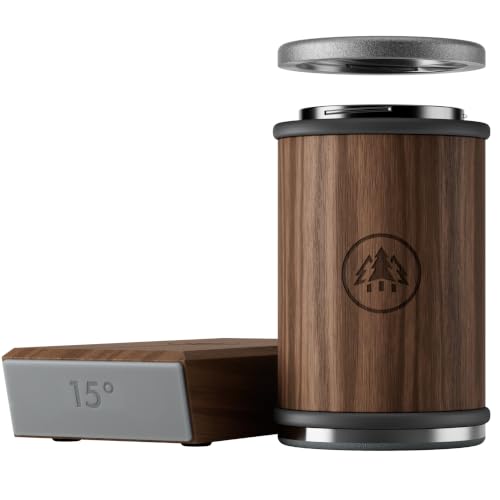 HORL 3 Rolling Knife Sharpener | A 15-degree Japanese edge you want kept sharp without learning to sharpen | 8.1 | |
| 2 | 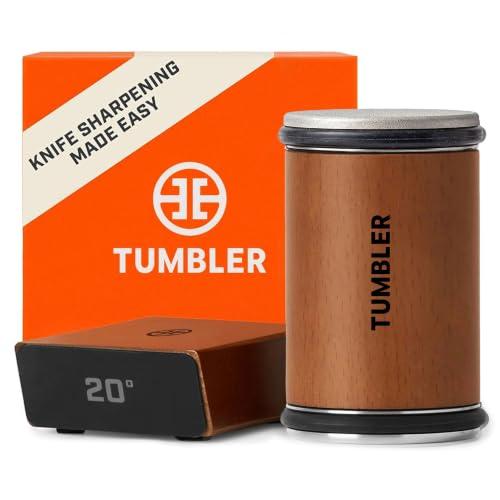 Tumbler Rolling Knife Sharpener | People who want a fixed angle and hate gear | 8.0 | |
| 3 | 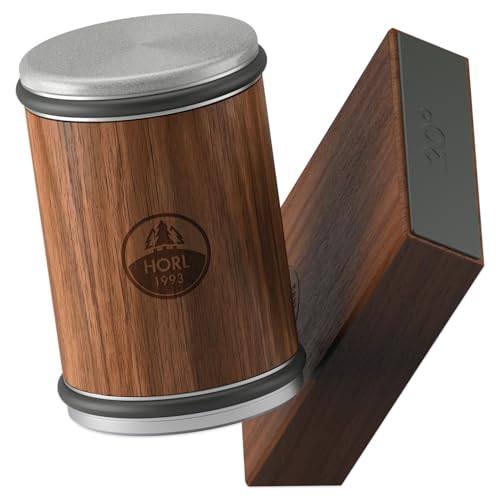 Horl 2 Rolling Knife Sharpener | Someone who will leave it on the counter | 7.9 |
The mechanism is simple enough to explain in one sentence: a magnetic block holds the blade at a set angle while a wheel with an abrasive face rolls along the edge, so the geometry comes from the tool rather than from your wrist. That is the entire value proposition, and whether it is worth the money depends on whether your wrist was ever going to learn.
What they genuinely fix
- Angle consistency. The one thing that separates a sharp edge from a nearly-sharp one. Nearly everybody learning freehand rounds the bevel over by rocking a degree or two per stroke, and this removes that variable entirely.
- Time. Two minutes per knife rather than fifteen, with no setup, no soaking, no flattening.
- The habit problem. A sharpener that lives on the counter gets used. A stone in a cupboard does not. That is not a technical argument but it is the one that decides how sharp your knives actually are.
- Fear. People are nervous about grinding an expensive knife wrong. A fixed angle removes the anxiety, and a used sharpener beats an unused one every time.
What they cannot do
- Repair. A chipped edge, a snapped tip or a blade that needs thinning behind the edge all need a coarse stone and real material removal.
- Respect an unusual angle. The discs are 15 and 20 degrees. A sub-12-degree powder-steel knife will be widened by a 15-degree disc, which partly defeats the point of owning it.
- Single bevels. A yanagiba or usuba is out of scope entirely.
- Finish high. You get the grit the disc provides. A stone progression to 6000 and a strop produces a keener, more refined edge.
The three worth considering
| Angles | Abrasives | Notes | |
|---|---|---|---|
| HORL 3 | 15° and 20° | Block-diamond + ceramic honing, interchangeable | Quick Lock disc swap; 80% more abrasion than HORL 2 |
| HORL 2 | 15° and 20° | Both surfaces removable, 4 pieces | 4.5 in magnetic support, the longest of the three |
| Tumbler | 15° and 20° | Roller + magnetic holder | The value option; fewer parts |
All three hold 15 degrees, which is the right figure for the Japanese knives this site is about. The HORL 3's higher abrasion rate is the practical difference: it brings a genuinely dull knife back faster, where the HORL 2 is better suited to regular light upkeep. The full head-to-head is in the rolling sharpener roundup, and the HORL 3 has its own review.
Who should buy one
Buy one if you own two or more knives worth more than a hundred dollars, you have not sharpened them in a year, and you know yourself well enough to admit a stone would sit unused. That describes a very large number of people and there is nothing wrong with it.
Do not buy one if you already own a whetstone and use it, if your knives are soft German blades that a ceramic rod would keep going, or if what you actually need is to fix a chip. The direct comparison is in whetstone against rolling sharpener.
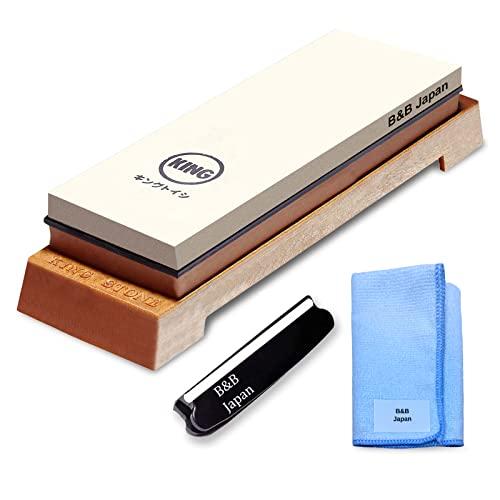
A 1000-grit stone costs a fraction of a rolling sharpener. If you are undecided, buy the stone first and find out in one evening whether you enjoy it. If you do, you have saved real money. If you do not, you have lost very little and you now know the rolling sharpener is the right purchase.
What using one is actually like
The sequence is short. The blade goes spine-down against the magnetic face, which sets the angle for you. You roll the disc along the edge from heel to tip in slow passes, a dozen or so per side, then flip the blade and repeat. On the HORL 3 you twist the disc over to the ceramic honing face and finish. Two minutes, no water, no mess, nothing to flatten.
Two practical notes. The magnet needs a clean, dry spine to hold properly — a wet blade slips and the angle goes with it. And the first pass on a genuinely dull knife takes longer than you expect, because these tools are built for maintenance rather than recovery; plan on several minutes, not one.
How the result compares to a stone
A rolling sharpener produces an edge that is consistently sharp and slightly less refined than a good stone progression. The disc grit is what it is, so you cannot finish at 6000 and strop — and for kitchen work that difference is smaller than enthusiasts imply. A consistent 15-degree edge off a roller out-cuts a rounded freehand bevel from a beginner on a stone, every time.
Where the stone wins outright is capability. It can thin a blade behind the edge, take a chip out, reshape a broken tip, and finish at any grit you like. Those are the jobs a rolling sharpener simply cannot attempt, and sooner or later a knife needs one of them. The full comparison is in whetstone against rolling sharpener.
The verdict
Worth it, for the right buyer, with clear eyes about what you are paying for: not a better edge than a stone produces, but a repeatable one you will actually maintain. The HORL 3 is the best of them, the Tumbler is the sensible-money version, and the HORL 2 suits regular light upkeep.
If the honest answer is that you would enjoy learning, read are whetstones worth it and buy a stone instead.
If the answer for you is yes, Tumbler against HORL is the buying decision that follows.
The picks in detail
#1 · A 15-degree Japanese edge you want kept sharp without learning to sharpen
HORL 3 Rolling Knife Sharpener
The third generation of the sharpener everyone copies. Block diamonds remove 80 percent more steel than the HORL 2, the magnetic grip pad holds 70 percent harder, and the discs now swap with a twist. Still only two angles.
What it does well
- 15-degree setting matches the factory grind on most Japanese kitchen knives
- Interchangeable diamond and ceramic discs, so it is serviceable rather than disposable
- The stronger magnetic grip pad holds small knives that the HORL 2 struggled with
Where it gives way
- Two angles only — the six-angle range is reserved for the much pricier Pro
- Sits at the premium end of the rolling-sharpener bracket; the Tumbler does the same job for far less
- Cannot repair a chip, flatten a warped bevel or thin a blade behind the edge
Skip it if: Anyone whose knives are not ground near 15 or 20 degrees, and anyone with a chipped or badly reprofiled edge — this is maintenance, not repair.
| Angles | 15 degrees and 20 degrees |
|---|---|
| Discs | Block-diamond sharpening + ceramic honing, interchangeable |
| Disc exchange | Quick Lock — swap with a twist |
| Magnetic support | Grip Pad, 70% more grip than the HORL 2 |
| Abrasion | 80% more material removal than the HORL 2 |
| Body | Solid oak or walnut |
| Origin | Engineered in Germany |
#2 · People who want a fixed angle and hate gear
Tumbler Rolling Knife Sharpener
A magnetic holder and a rolling abrasive disc that fixes your angle at 15 or 20 degrees. Two pieces, almost no learning curve.
What it does well
- Two pieces, nothing to assemble, nothing to set
- 15-degree setting is the correct angle for most Japanese kitchen knives
- Cheaper than the German alternative and, in side-by-side comparisons, as sharp
Where it gives way
- Magnetic holder limits you to the angles it offers
- Rolls less smoothly than the Horl 2
- Does nothing for a chipped or badly reprofiled edge
Skip it if: Anyone who wants to learn to sharpen. It works by removing the skill, which means you never acquire it.
| Angles | 15 degrees and 20 degrees |
|---|---|
| Components | Sharpening roller + magnetic knife holder |
| Origin | Made in China |
#3 · Someone who will leave it on the counter
Horl 2 Rolling Knife Sharpener
The original of the type, made in Germany, with a long magnetic angle support and a very smooth roll. It is also the outgoing generation — HORL has replaced it with the HORL 3 line, so stock is whatever retailers have left.
What it does well
- 4.5 in magnetic support gives the most stable blade hold
- Rolls the smoothest of the rolling sharpeners, which makes control easier
- Removable abrasive discs mean it is serviceable rather than disposable
Where it gives way
- Superseded by the HORL 3, which removes more steel and grips harder — buy the 2 only if it is discounted
- Same 15 / 20 degree limitation as the cheaper alternatives
- Four pieces to keep track of instead of two
Skip it if: A tight budget. The performance gap over the Tumbler is smaller than the price gap.
| Angles | 15 degrees and 20 degrees |
|---|---|
| Magnetic support | 4.5 in — the longest of the rolling sharpeners |
| Components | 4 pieces, both abrasive surfaces removable |
| Origin | Made in Germany |
Common questions
Are rolling knife sharpeners worth it?
Do rolling sharpeners actually work?
Are rolling sharpeners better than a whetstone?
Will a rolling sharpener damage my knife?
Sources
Read next
Sharpeners
Best Rolling Knife Sharpeners
Sharpeners
Whetstone vs Rolling Sharpener
Sharpeners
HORL 3 Rolling Knife Sharpener Review
Sharpeners
Guided Sharpening Systems
Whetstones & Skill
Are Whetstones Worth It?
Sharpeners