Sharpeners
Tumbler vs HORL
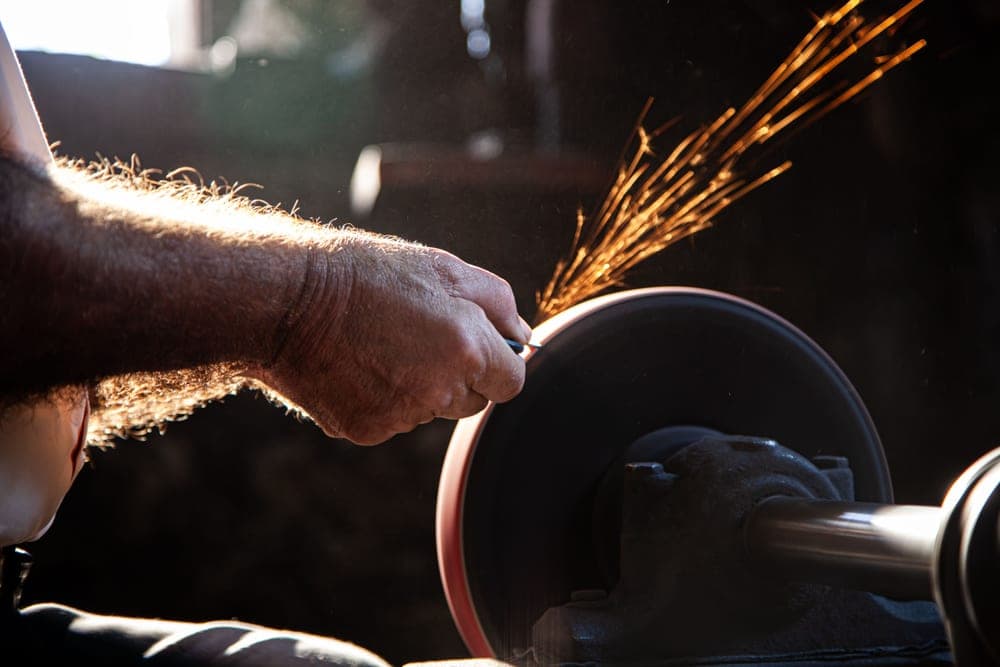
What this is based on: published manufacturer specifications and retailer listings, cited on each product; the weight of professional and owner reviews across multiple retailers; and hands-on experience sharpening and cooking with knives of this type. We have not individually tested every model listed, we do not run instrumented sharpness testing, and we do not claim a test we did not run.
Quick picks
| # | Product | Best for | Score | Price |
|---|---|---|---|---|
| 1 | 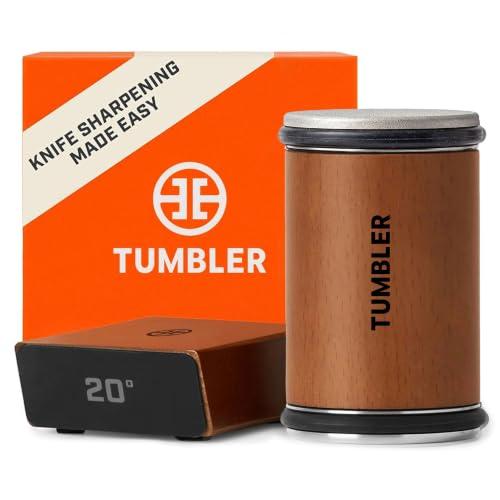 Tumbler Rolling Knife Sharpener | People who want a fixed angle and hate gear | 8.0 | |
| 2 | 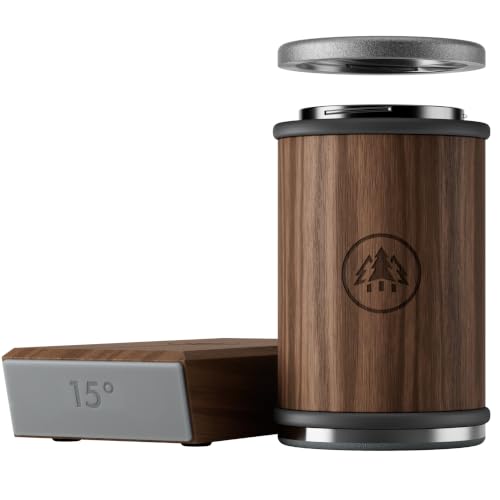 HORL 3 Rolling Knife Sharpener | A 15-degree Japanese edge you want kept sharp without learning to sharpen | 8.1 | |
| 3 | 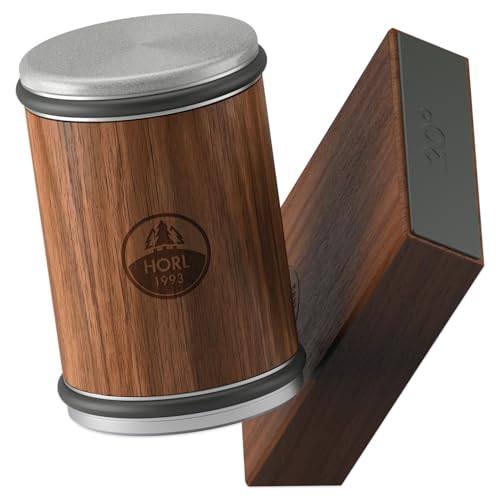 Horl 2 Rolling Knife Sharpener | Someone who will leave it on the counter | 7.9 |
Rolling sharpeners all work the same way. A magnetic block holds the blade at a set angle, a weighted abrasive roller runs along the edge, and because the geometry is fixed you cannot hold the wrong angle. That is the entire value proposition, and it is why the category appeals to people who have tried a whetstone and produced a duller knife.
What you get for the money
| Tumbler | HORL 2 | HORL 3 | |
|---|---|---|---|
| Angles | 15° / 20° | 15° / 20° | 15° / 20° |
| Components | Roller + magnetic holder (2) | 4 pieces, removable abrasives | 2 units, twist-exchange discs |
| Magnetic hold | Magnetic knife holder | 4.5 in support | Grip Pad, approx. +70% vs HORL 2 |
| Abrasives | Rolling abrasive disc | Diamond + ceramic | Block-diamond + ceramic honing |
| Material removal | Moderate | Baseline | approx. +80% vs HORL 2 |
| Origin | Made in China | Made in Germany | Engineered in Germany |
The roll is the honest difference
Everything these tools do depends on even pressure through the pass, and that depends on how smoothly the roller turns. The HORL rolls better. It is not a marketing claim you can dismiss - a roller that catches makes you push, and pushing on a fixed-angle abrasive is how you end up with an uneven bevel along the length of the blade.
The Tumbler's roll is adequate rather than lovely. On an 8 inch chef's knife the difference is small. On a 240 mm gyuto, where you are managing a long edge in two or three passes, the HORL is easier to keep consistent. If you are mainly maintaining one or two knives, that is not worth several times the price; if you are maintaining eight, it might be.
Blade registration, and why small knives expose it
The HORL 2's 4.5 inch magnetic support is the longest here, which is why it feels planted. The Tumbler's holder is shorter and relies on the magnet alone, so a short, light blade - a petty, a paring knife - has less to hold it square and can shift. HORL's answer on the 3 is the Grip Pad, published at roughly 70 percent more grip than the 2, which is aimed at exactly that failure.
None of them do anything useful on a serrated edge, a single bevel, or a knife whose bevel is nowhere near 15 or 20 degrees. That is a property of the category, not a weakness of one model, and it is why our page on whether rolling sharpeners are worth it spends most of its length on who should not buy one.
A rolling sharpener either fits how you cook or it sits in a drawer. Finding out with the Tumbler costs a fraction of finding out with a HORL, and if you love it the HORL 3 is still there. The reverse experiment is much more expensive.
Both of them are maintenance, not sharpening
Neither tool repairs anything. A chipped edge, a bevel that someone put through a pull-through sharpener, or a blade that has become thick behind the edge after years of sharpening only the apex - all of that is stone work. A rolling sharpener keeps a good edge good; it cannot make a bad edge good. If your knife has a visible chip or will not take an edge at all, start with whether a whetstone is worth it instead.
Used as intended, though, both do something a beginner genuinely cannot: produce the same angle every time. That is why these appear in our beginner sharpener picks and why we keep recommending them to people whose freehand attempts made things worse.
Which one to buy
- First rolling sharpener, sensible budget. Tumbler. Same two angles, two pieces, a fraction of the money.
- You maintain a drawer full of knives every week. HORL 3. The smoother roll and the stronger grip pay for themselves in consistency.
- Mostly long blades, 240 mm gyuto and up. HORL - either generation. Magnetic support length is what keeps a long edge square.
- Mostly small knives. HORL 3 specifically, for the Grip Pad.
What to expect in the first session
Both tools are almost impossible to use badly, which is the point, but the first session surprises people in the same two ways. First, it is quick: a dull-ish kitchen knife takes ten to twenty passes rather than the twenty minutes a stone would. Second, it does not feel like sharpening - there is no slurry, no burr to find with a thumb, no feedback. You judge the result by cutting paper rather than by feel.
Set up on a flat surface, wipe the blade first so grit does not go under the magnet, and do the full length of the edge rather than the middle third - the heel and the last inch are where people leave dull patches. Finish on the ceramic or fine face if your model has one. Then test properly, which our sharpness test page covers in more detail than the paper trick alone.
The verdict
The HORL is the better tool and the Tumbler is the better buy. That is an unsatisfying answer, but the two offer the same angles, do the same job and produce comparable edges, so most of the premium goes on roll quality, magnetic hold and German manufacture. Those are real; they are not several-times-the-price real for a two-knife kitchen. Start with the Tumbler, and read HORL 2 against HORL 3 if you decide to spend properly.
The Tumbler is not the only alternative worth weighing. HORL alternatives adds the guided system that covers 15 to 30 degrees instead of two fixed angles, and the stone route that costs a fraction of either roller.
The picks in detail
#1 · People who want a fixed angle and hate gear
Tumbler Rolling Knife Sharpener
A magnetic holder and a rolling abrasive disc that fixes your angle at 15 or 20 degrees. Two pieces, almost no learning curve.
What it does well
- Two pieces, nothing to assemble, nothing to set
- 15-degree setting is the correct angle for most Japanese kitchen knives
- Cheaper than the German alternative and, in side-by-side comparisons, as sharp
Where it gives way
- Magnetic holder limits you to the angles it offers
- Rolls less smoothly than the Horl 2
- Does nothing for a chipped or badly reprofiled edge
Skip it if: Anyone who wants to learn to sharpen. It works by removing the skill, which means you never acquire it.
| Angles | 15 degrees and 20 degrees |
|---|---|
| Components | Sharpening roller + magnetic knife holder |
| Origin | Made in China |
#2 · A 15-degree Japanese edge you want kept sharp without learning to sharpen
HORL 3 Rolling Knife Sharpener
The third generation of the sharpener everyone copies. Block diamonds remove 80 percent more steel than the HORL 2, the magnetic grip pad holds 70 percent harder, and the discs now swap with a twist. Still only two angles.
What it does well
- 15-degree setting matches the factory grind on most Japanese kitchen knives
- Interchangeable diamond and ceramic discs, so it is serviceable rather than disposable
- The stronger magnetic grip pad holds small knives that the HORL 2 struggled with
Where it gives way
- Two angles only — the six-angle range is reserved for the much pricier Pro
- Sits at the premium end of the rolling-sharpener bracket; the Tumbler does the same job for far less
- Cannot repair a chip, flatten a warped bevel or thin a blade behind the edge
Skip it if: Anyone whose knives are not ground near 15 or 20 degrees, and anyone with a chipped or badly reprofiled edge — this is maintenance, not repair.
| Angles | 15 degrees and 20 degrees |
|---|---|
| Discs | Block-diamond sharpening + ceramic honing, interchangeable |
| Disc exchange | Quick Lock — swap with a twist |
| Magnetic support | Grip Pad, 70% more grip than the HORL 2 |
| Abrasion | 80% more material removal than the HORL 2 |
| Body | Solid oak or walnut |
| Origin | Engineered in Germany |
#3 · Someone who will leave it on the counter
Horl 2 Rolling Knife Sharpener
The original of the type, made in Germany, with a long magnetic angle support and a very smooth roll. It is also the outgoing generation — HORL has replaced it with the HORL 3 line, so stock is whatever retailers have left.
What it does well
- 4.5 in magnetic support gives the most stable blade hold
- Rolls the smoothest of the rolling sharpeners, which makes control easier
- Removable abrasive discs mean it is serviceable rather than disposable
Where it gives way
- Superseded by the HORL 3, which removes more steel and grips harder — buy the 2 only if it is discounted
- Same 15 / 20 degree limitation as the cheaper alternatives
- Four pieces to keep track of instead of two
Skip it if: A tight budget. The performance gap over the Tumbler is smaller than the price gap.
| Angles | 15 degrees and 20 degrees |
|---|---|
| Magnetic support | 4.5 in — the longest of the rolling sharpeners |
| Components | 4 pieces, both abrasive surfaces removable |
| Origin | Made in Germany |
Common questions
Is the Tumbler as good as the HORL?
Which has the better magnetic hold?
Do both work on Japanese knives?
Which should I buy first?
Sources
Read next
Sharpeners
Best Rolling Knife Sharpeners
Sharpeners
HORL 2 vs HORL 3
Sharpeners
HORL 3 Rolling Knife Sharpener Review
Sharpeners
Are Rolling Knife Sharpeners Worth It?
Sharpeners
Best Knife Sharpeners for the Money
Sharpeners