Sharpeners
HORL 2 vs HORL 3
What this is based on: published manufacturer specifications and retailer listings, cited on each product; the weight of professional and owner reviews across multiple retailers; and hands-on experience sharpening and cooking with knives of this type. We have not individually tested every model listed, we do not run instrumented sharpness testing, and we do not claim a test we did not run.
Quick picks
| # | Product | Best for | Score | Price |
|---|---|---|---|---|
| 1 | 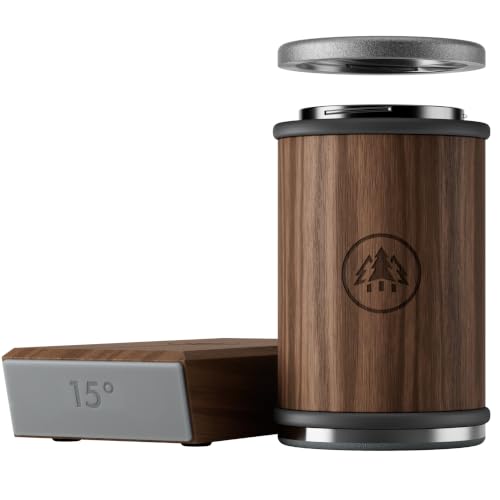 HORL 3 Rolling Knife Sharpener | A 15-degree Japanese edge you want kept sharp without learning to sharpen | 8.1 | |
| 2 | 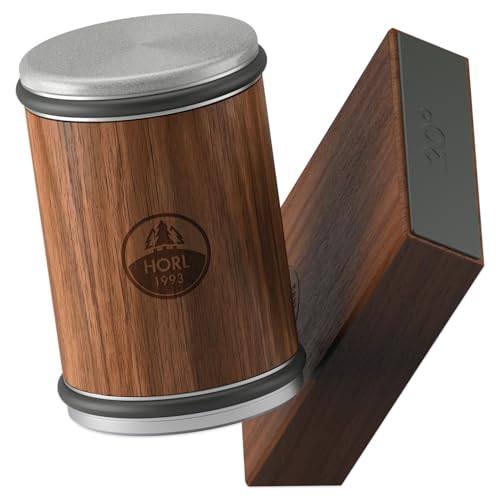 Horl 2 Rolling Knife Sharpener | Someone who will leave it on the counter | 7.9 | |
| 3 | 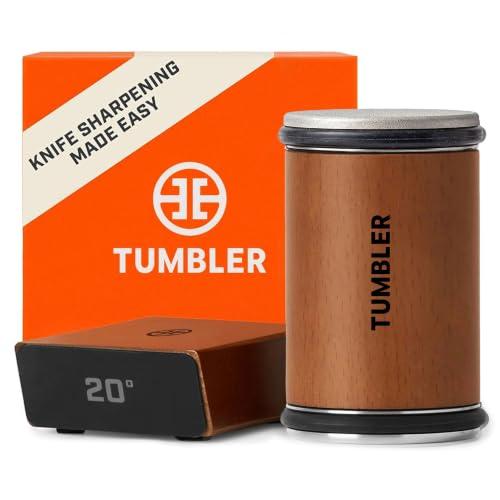 Tumbler Rolling Knife Sharpener | People who want a fixed angle and hate gear | 8.0 |
The rolling sharpener exists to remove the one variable most people cannot control: holding a constant angle. A magnetic block clamps the blade, a weighted abrasive roller runs along it, and the geometry does the thinking. HORL built the original and the HORL 3 is the current generation, so the live question for anyone shopping now is whether the remaining HORL 2 stock is a bargain or a trap.
What changed, in the published figures
| HORL 2 | HORL 3 | |
|---|---|---|
| Angles | 15° and 20° | 15° and 20° |
| Abrasives | Diamond + ceramic, removable | Block-diamond + ceramic honing, interchangeable |
| Material removal | Baseline | approx. 80% more than the HORL 2 |
| Magnetic hold | 4.5 in magnetic support | Grip Pad, approx. 70% more grip |
| Disc exchange | Removable abrasive surfaces | Quick Lock - swap with a twist |
| Body | Wood, made in Germany | Solid oak or walnut, engineered in Germany |
| Pieces | 4 | 2 main units, twist-exchange discs |
Eighty percent more abrasion is the real upgrade
The HORL 2's honest weakness was speed. A rolling sharpener only touches the bevel for the fraction of a second the roller is passing the edge, so a mild abrasive means a lot of passes - and on a 61 HRC Japanese knife that had gone properly dull, many owners gave up and went to a stone. Block diamonds and the claimed 80 percent increase in removal address exactly that complaint.
It also changes what the tool is for. The HORL 2 was a maintenance device that struggled with recovery; the HORL 3 will bring back an edge that has been neglected for a few months, provided the bevel is still near 15 or 20 degrees. Neither will repair damage - for that, read why your knife is still not sharp.
The grip change matters most on small knives
The HORL 2 held the blade against a 4.5 inch magnetic support, the longest in the category and the reason it feels so stable with a 210 mm gyuto. Its problem was at the other end: a petty knife or a 130 mm paring blade has little steel to magnetise and could shift mid-stroke. HORL's Grip Pad on the 3 is published at roughly 70 percent more grip, and that is squarely aimed at the small-knife complaint.
Disc exchange is the quieter improvement. On the 2 the abrasives came off, which made the tool serviceable rather than disposable; on the 3 they come off with a twist, which means you will actually switch from diamond to ceramic between sharpening and finishing instead of leaving it on whichever face is fitted.
Both models offer 15 and 20 degrees and nothing in between. If your knives are ground at 16 degrees, like the Shun Classic line, the 15-degree setting will work and will very slightly thin the bevel over years. If you own a single-bevel knife or anything ground outside that window, a rolling sharpener is the wrong tool - see sharpeners for Japanese knives.
Where the Tumbler sits
The awkward fact for both HORLs is that the Tumbler does the same thing at the same two angles for a fraction of the price, and in published side-by-side comparisons produces a comparable edge. What you give up is the roll quality and the length of the magnetic support: the HORL rolls more smoothly, which makes it easier to keep even pressure, and that is a genuine ergonomic difference rather than marketing.
So the ladder is simple. Tumbler if the budget matters. HORL 3 if it does not. HORL 2 only when a retailer is clearing old stock at a price below the Tumbler's neighbourhood, which does happen. Our rolling sharpener roundup ranks all three, and Tumbler against HORL takes that comparison apart on its own.
Which one to buy
- You want the best rolling sharpener made. HORL 3. More abrasion, better grip, twist-swap discs.
- You mostly sharpen small knives. HORL 3. The Grip Pad is the change that fixes the HORL 2's one real failure.
- You found a HORL 2 on clearance. Buy it. German-made, the longest magnetic support here, and the smoothest roll of the three.
- You want the same result for much less. Tumbler Rolling Knife Sharpener - 15 and 20 degrees, two pieces, nothing to set.
What neither generation will do
Worth saying plainly, because the marketing does not: a rolling sharpener maintains a bevel, it does not build one. It cannot repair a chip, cannot flatten a bevel that someone put through a carbide pull-through, cannot thin a blade that has grown thick behind the edge after years of apex-only sharpening, and cannot do anything at all with a serrated or single-bevel knife.
It also cannot change the angle your knife is ground at. Both generations offer 15 and 20 degrees, so a knife ground at 25 degrees will be slowly reprofiled to 20 whether you intended that or not - which is fine, but it takes several sessions and the knife will feel inconsistent in the meantime. If any of that describes your situation, the honest first purchase is a stone, and our beginner stone picks are the place to start.
The verdict
The HORL 3 is a real generational change rather than a refresh: it removes more steel, holds the blade harder and makes swapping abrasives trivial. It does not solve the limitation that defines the whole category, which is two fixed angles, and it does not replace a stone. If you want the tool that keeps a 15-degree Japanese edge sharp with no skill required, buy the 3. If you want to learn to sharpen, read whetstone against rolling sharpener first, and our HORL 3 review covers the current model in detail.
Both generations run diamond abrasive, and so do two other sharpeners here. The best diamond knife sharpeners ranks the whole diamond field on control rather than cutting speed, and says plainly where diamond is the wrong tool.
The picks in detail
#1 · A 15-degree Japanese edge you want kept sharp without learning to sharpen
HORL 3 Rolling Knife Sharpener
The third generation of the sharpener everyone copies. Block diamonds remove 80 percent more steel than the HORL 2, the magnetic grip pad holds 70 percent harder, and the discs now swap with a twist. Still only two angles.
What it does well
- 15-degree setting matches the factory grind on most Japanese kitchen knives
- Interchangeable diamond and ceramic discs, so it is serviceable rather than disposable
- The stronger magnetic grip pad holds small knives that the HORL 2 struggled with
Where it gives way
- Two angles only — the six-angle range is reserved for the much pricier Pro
- Sits at the premium end of the rolling-sharpener bracket; the Tumbler does the same job for far less
- Cannot repair a chip, flatten a warped bevel or thin a blade behind the edge
Skip it if: Anyone whose knives are not ground near 15 or 20 degrees, and anyone with a chipped or badly reprofiled edge — this is maintenance, not repair.
| Angles | 15 degrees and 20 degrees |
|---|---|
| Discs | Block-diamond sharpening + ceramic honing, interchangeable |
| Disc exchange | Quick Lock — swap with a twist |
| Magnetic support | Grip Pad, 70% more grip than the HORL 2 |
| Abrasion | 80% more material removal than the HORL 2 |
| Body | Solid oak or walnut |
| Origin | Engineered in Germany |
#2 · Someone who will leave it on the counter
Horl 2 Rolling Knife Sharpener
The original of the type, made in Germany, with a long magnetic angle support and a very smooth roll. It is also the outgoing generation — HORL has replaced it with the HORL 3 line, so stock is whatever retailers have left.
What it does well
- 4.5 in magnetic support gives the most stable blade hold
- Rolls the smoothest of the rolling sharpeners, which makes control easier
- Removable abrasive discs mean it is serviceable rather than disposable
Where it gives way
- Superseded by the HORL 3, which removes more steel and grips harder — buy the 2 only if it is discounted
- Same 15 / 20 degree limitation as the cheaper alternatives
- Four pieces to keep track of instead of two
Skip it if: A tight budget. The performance gap over the Tumbler is smaller than the price gap.
| Angles | 15 degrees and 20 degrees |
|---|---|
| Magnetic support | 4.5 in — the longest of the rolling sharpeners |
| Components | 4 pieces, both abrasive surfaces removable |
| Origin | Made in Germany |
#3 · People who want a fixed angle and hate gear
Tumbler Rolling Knife Sharpener
A magnetic holder and a rolling abrasive disc that fixes your angle at 15 or 20 degrees. Two pieces, almost no learning curve.
What it does well
- Two pieces, nothing to assemble, nothing to set
- 15-degree setting is the correct angle for most Japanese kitchen knives
- Cheaper than the German alternative and, in side-by-side comparisons, as sharp
Where it gives way
- Magnetic holder limits you to the angles it offers
- Rolls less smoothly than the Horl 2
- Does nothing for a chipped or badly reprofiled edge
Skip it if: Anyone who wants to learn to sharpen. It works by removing the skill, which means you never acquire it.
| Angles | 15 degrees and 20 degrees |
|---|---|
| Components | Sharpening roller + magnetic knife holder |
| Origin | Made in China |
Common questions
Is the HORL 3 better than the HORL 2?
Is a discounted HORL 2 still worth buying?
Do the HORL 2 discs fit the HORL 3?
Can either one fix a chipped knife?
Sources
Read next
Sharpeners
HORL 3 Rolling Knife Sharpener Review
Sharpeners
Best Rolling Knife Sharpeners
Sharpeners
Tumbler vs HORL
Sharpeners
Are Rolling Knife Sharpeners Worth It?
Sharpeners
Whetstone vs Rolling Sharpener