Whetstones & Skill
How to Tell if a Knife Is Sharp
What this is based on: published manufacturer specifications and retailer listings, cited on each product; the weight of professional and owner reviews across multiple retailers; and hands-on experience sharpening and cooking with knives of this type. We have not individually tested every model listed, we do not run instrumented sharpness testing, and we do not claim a test we did not run.
Quick picks
| # | Product | Best for | Score | Price |
|---|---|---|---|---|
| 1 |  Naniwa Professional (Chosera) 1000 | The one stone to own if you only own one | 8.6 | |
| 2 | 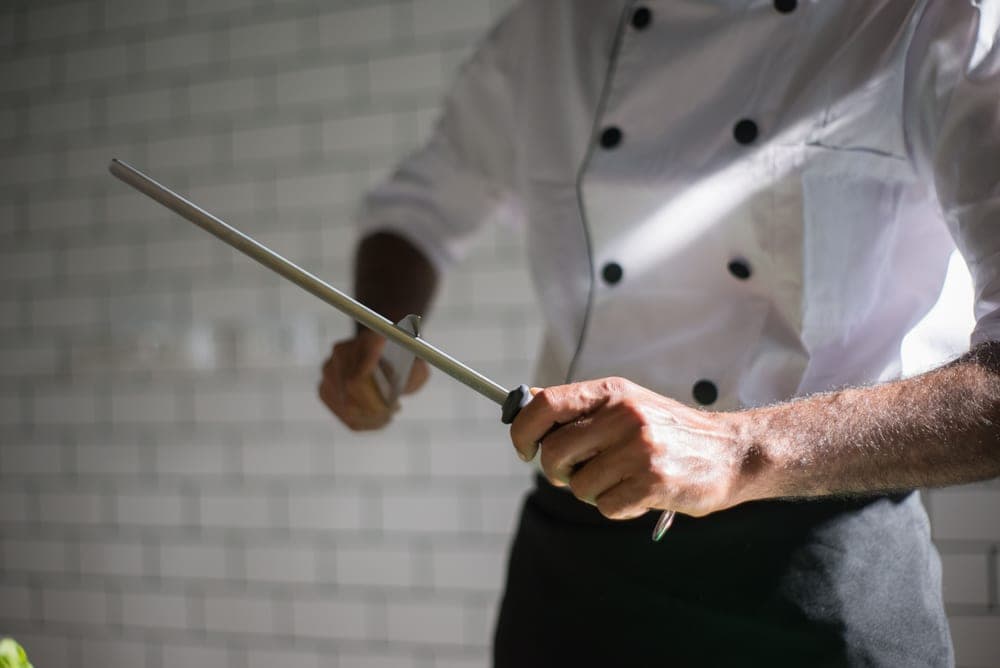 Idahone Fine Ceramic Honing Rod, 12" | Maintaining a hard Japanese edge between sharpenings | 8.8 | |
| 3 | 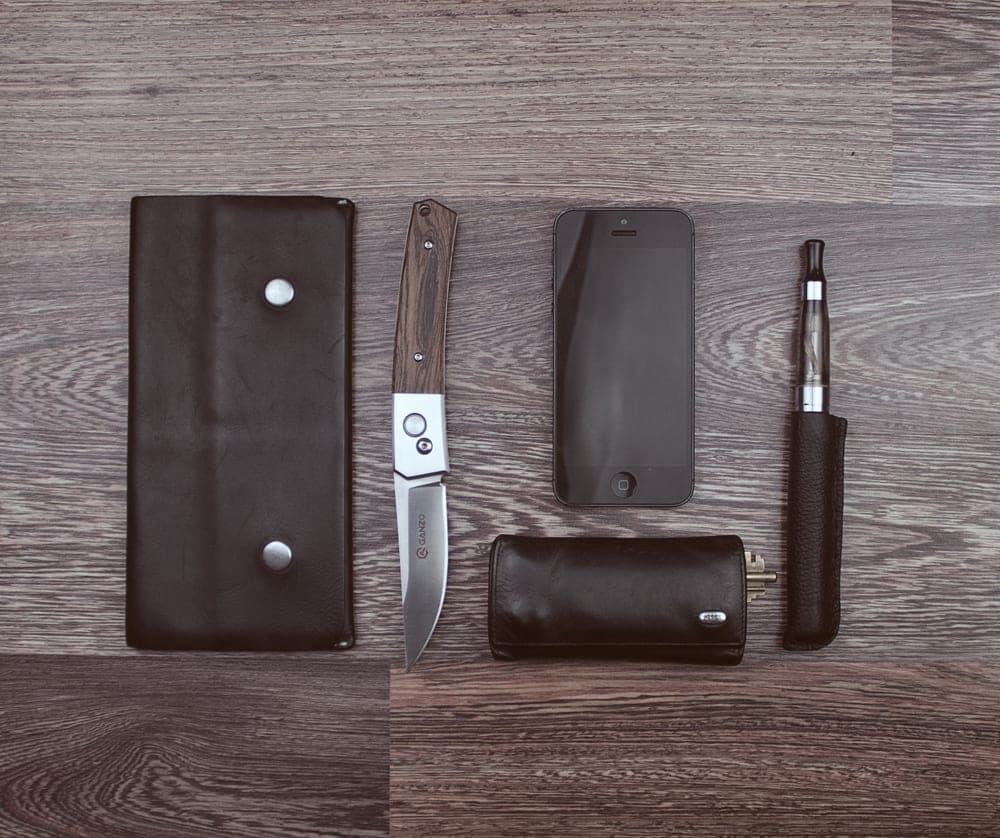 Leather Bench Strop with Stropping Compound | Finishing after the stones | 8.0 |
Everyone has a favorite test and most of them are fine. The problem is that each one is sensitive to a different kind of failure, so a knife can pass the test you happen to use and still be unusable for the job you are about to do. Run two, not one, and pick two that fail differently.
The six tests
| Test | What it proves | What it misses |
|---|---|---|
| Light on the edge | Flats, rolls and chips, located precisely along the blade | Nothing about how the edge behaves under load |
| Thumb across the bevel | Bite — whether the apex grabs skin ridges | Burrs, which also feel aggressive |
| Printer paper, held at a corner | A clean, continuous apex | A wire edge passes this easily |
| Tomato skin, no downward pressure | Real-world initiation on a tough, slippery skin | Ripeness changes the result |
| Onion skin / paper-thin slice | Whether the whole edge length is working | Says little about the tip |
| Receipt paper or newsprint | A genuinely fine, deburred finish | Overkill for kitchen work |
How to run the two that matter
- The light test. Point the edge at a ceiling light or a window and sight along it from heel to tip, tilting slowly. You are looking for any point that returns light. Work in sections — a knife is rarely uniformly dull, and the heel and the last 20 mm before the tip are where the problems usually are.
- The tomato test. Set the edge on the skin of a ripe tomato and draw it back with zero downward force. A sharp knife starts the cut on its own. A dull one skates, then bursts through and crushes the flesh. This is the test that matches what you actually do in the kitchen, and the one most people fail after a few weeks of use.
If the light test is clean and the tomato test fails, the edge is almost certainly burred or rolled rather than worn. That exact symptom has a short list of causes.
What to do with the answer
- Bright line along the whole edge. Worn. It needs a stone — a 1,000-grit session, not a rod. The eight-step walkthrough is the routine.
- Cuts paper, fails on tomato. Burr or wire edge. Strop it on leather with compound, or make three or four feather-light alternating passes on your finishing stone.
- Was sharp yesterday, feels blunt today. Rolled, not worn. Thirty seconds on a fine ceramic rod. Why those are two different jobs.
- Bright dots in the line. Chips. You will need to grind back past them, which is a longer session on a coarser stone than you probably want to do today.
Shaving arm hair proves an edge is very fine but tells you nothing about whether it will survive a board, and people cut themselves doing it. Running a thumb lengthwise along the edge is worse — it is the single most common way home cooks injure themselves while checking a knife. Move across the bevel, never along it.
Check before you cook, not after
The light test costs two seconds and it is worth doing as you take the knife out of its block or saya. Catching a rolled edge before a prep session means a rod fixes it; catching it afterwards usually means a stone does. How often a kitchen knife actually needs sharpening sets out the interval for most home kitchens, and the usual sharpening mistakes explain why a knife that was sharpened recently can still fail every test on this page.
The picks in detail
#1 · The one stone to own if you only own one
Naniwa Professional (Chosera) 1000
The stone that does the most with one grit. Hard enough to dish slowly, soft enough to raise a slurry that tells you what the edge is doing.
What it does well
- Splash and go, but still builds a rich, informative slurry
- Fast enough to reset a dull edge, refined enough to finish on
- 20 mm of abrasive — years of use before it is spent
Where it gives way
- Expensive for a single grit
- Magnesia binder does not like being stored wet
- You will still want a finishing stone eventually
Skip it if: A tight budget. It costs more than a combination stone and gives you one grit.
| Grit | 1000 |
|---|---|
| Size | 210 x 70 x 20 mm |
| Soaking | Splash and go |
| Binder | Magnesia |
#2 · Maintaining a hard Japanese edge between sharpenings
Idahone Fine Ceramic Honing Rod, 12"
The honing rod that is actually harder than your knife. 1200 ANSI alumina ceramic, which is roughly 3000-3500 on the Japanese scale.
What it does well
- Ceramic is harder than the steel in a 60+ HRC Japanese knife; a steel rod often is not
- 1200 ANSI realigns without removing meaningful steel
- High-alumina body resists the grooving that ruins cheaper rods
Where it gives way
- Ceramic is brittle — one hard knock on a stone counter and it is done
- Removes so little steel that it cannot rescue a truly dull knife
- 12 in is longer than some drawers
Skip it if: Anyone who bangs the rod on the counter. Ceramic chips; steel does not.
| Rod length | 12 in (30.5 cm) |
|---|---|
| Rod diameter | 1/2 in (12.7 mm) |
| Overall length | 17.5 in (44.5 cm) |
| Grit | Fine, 1200 ANSI (approx. 3500 JIS) |
| Material | High-alumina ceramic |
| Handle | Hard rock maple, 5.25 in |
| Origin | Made in the USA |
#3 · Finishing after the stones
Leather Bench Strop with Stropping Compound
Ten dollars of leather and abrasive that removes the burr your finishing stone left behind. The cheapest real improvement in this whole category.
What it does well
- Turns a good stone edge into a noticeably better one in two minutes
- Extends the interval between full sharpenings
- Costs less than almost anything else in the kitchen
Where it gives way
- Easy to round the edge over if you lift the spine
- Does nothing for a genuinely dull knife
- Leather needs re-charging with compound periodically
Skip it if: Sharpening. A strop refines and deburrs; it removes almost no steel and will not fix a dull knife.
| Function | Burr removal and edge refinement |
|---|---|
| Compound | Typically chromium oxide, roughly 0.5 micron |
| Direction | Edge-trailing strokes only |
Common questions
How do you tell if a knife is sharp?
Is the paper test reliable?
Should I test a knife on my thumb?
Why does my knife cut paper but not tomatoes?
Sources
Read next
Whetstones & Skill
Why Your Knife Still Isn't Sharp
Whetstones & Skill
How to Sharpen a Japanese Knife
Whetstones & Skill
Sharpening vs Honing
Whetstones & Skill
How Often to Sharpen a Kitchen Knife
Whetstones & Skill
Common Knife Sharpening Mistakes