Sharpeners
HORL Alternatives
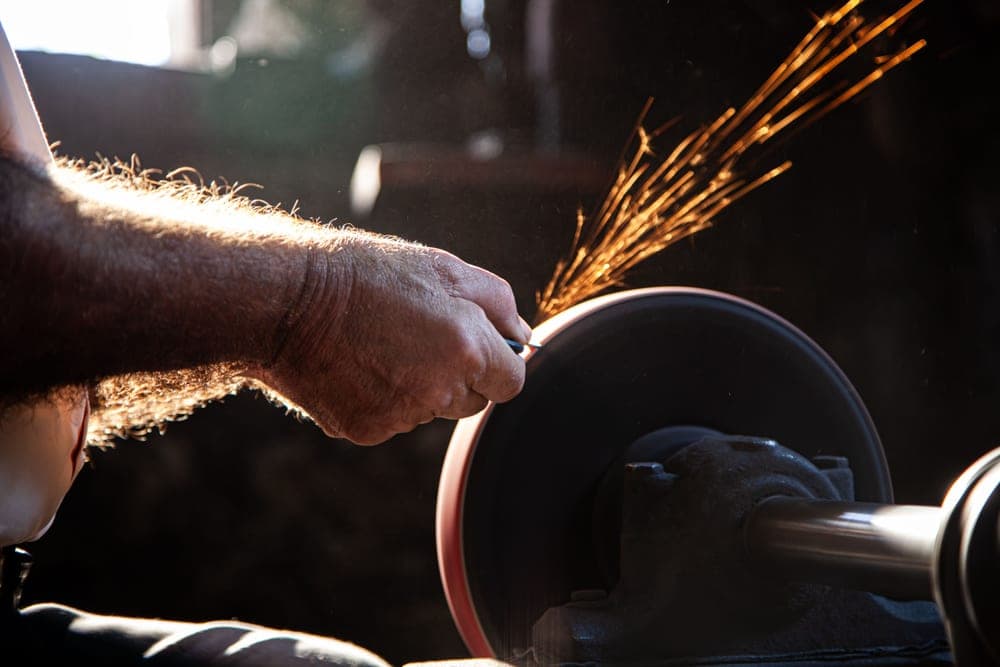
What this is based on: published manufacturer specifications and retailer listings, cited on each product; the weight of professional and owner reviews across multiple retailers; and hands-on experience sharpening and cooking with knives of this type. We have not individually tested every model listed, we do not run instrumented sharpness testing, and we do not claim a test we did not run.
Quick picks
| # | Product | Best for | Score | Price |
|---|---|---|---|---|
| 1 | 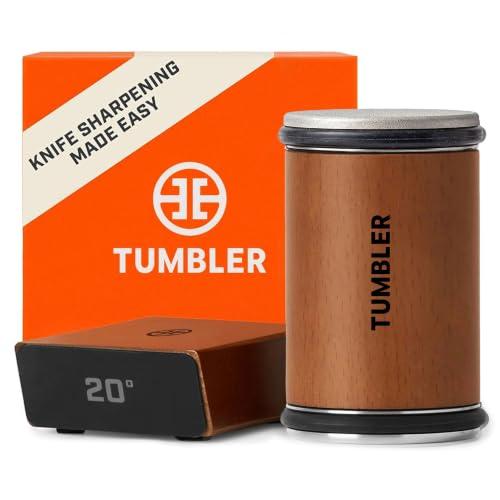 Tumbler Rolling Knife Sharpener | People who want a fixed angle and hate gear | 8.0 | |
| 2 | 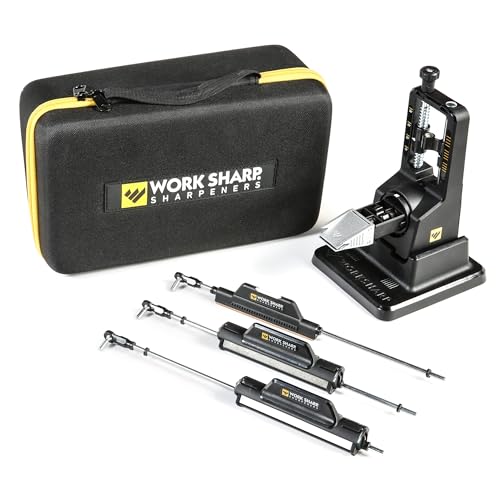 Work Sharp Precision Adjust Elite | Repeatable angles without years of practice | 8.2 | |
| 3 | 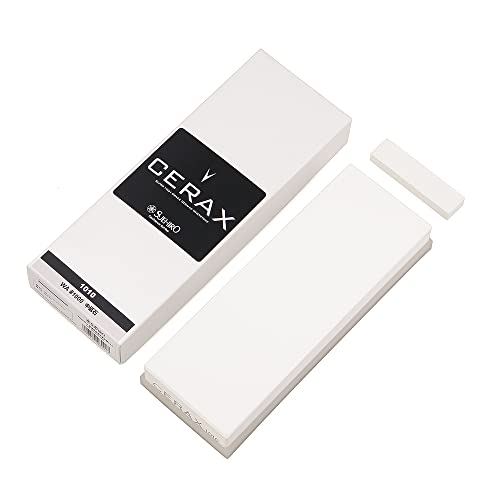 Suehiro Cerax 1010 (#1000) | SG2, HAP40 and other powder steels | 8.3 | |
| 4 | 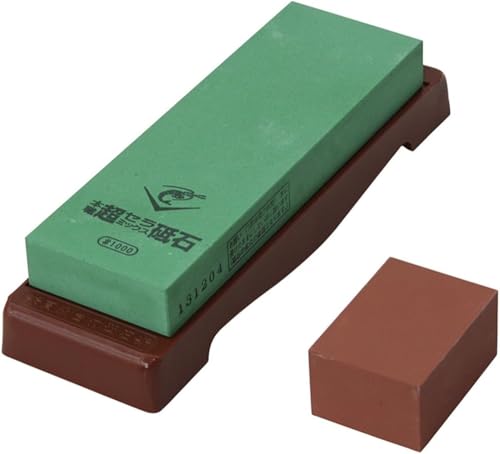 Naniwa Professional (Chosera) 1000 | The one stone to own if you only own one | 8.6 | |
| 5 | 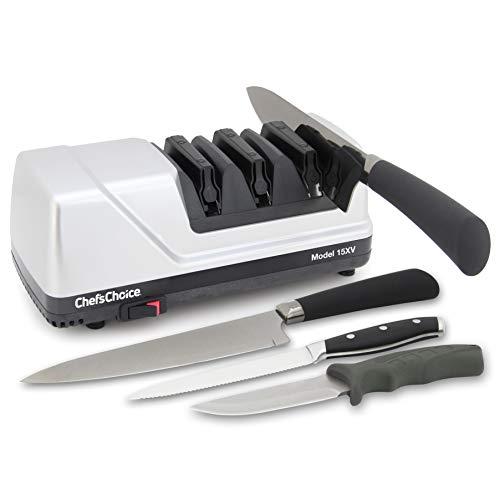 Chef'sChoice Trizor XV Model 15XV Electric Sharpener | A drawer of German knives you will never hand-sharpen | 7.6 |
Before the alternatives, what the HORL genuinely solves. It is a well-made object that removes the one thing people find hard about sharpening: holding a consistent angle. The magnetic support sets the blade, you roll, and the bevel comes out the same every time. That is a real product and the execution is good - the HORL 3 publishes a stronger grip pad than the HORL 2 and roughly 80 percent more material removal, with discs that swap by a twist. Our HORL 3 review is the full account.
The three reasons people look elsewhere
- The price. It is the most expensive rolling sharpener we track, and for the same money you can buy a full guided system with five abrasive grits, or three waterstones and a flattening plate.
- Two angles, and that is all. 15 degrees and 20 degrees. If your knife was ground at 12 degrees, the jig will not maintain it - it will grind a wider bevel the first time you use it, and that is not reversible.
- It refines; it does not repair. A rolling jig is excellent at taking a dull-but-intact edge back to sharp. A chipped tip, a rolled heel or a bevel someone has rounded over with a pull-through needs coarse abrasive and more control than a roller offers. Why is my knife chipping is the page people arrive at before they need this.
Each alternative below answers one of those. Match the tool to your reason rather than to the ranking.
The five alternatives compared
| Type | Angles | Abrasives | Repairs damage? | |
|---|---|---|---|---|
| HORL 3 (the original) | Magnetic rolling jig | 15° and 20° | Block-diamond + ceramic honing disc | No - refines an intact edge |
| Tumbler Rolling Sharpener | Magnetic rolling jig | 15° and 20° | Roller discs | No |
| Work Sharp Precision Adjust Elite | Clamped guided system | 15-30°, 1° increments | 220 / 320 / 400 / 600 / 800 diamond + fine ceramic | Yes - 220 grit rebuilds a bevel |
| Suehiro Cerax 1000 | Waterstone, freehand | Any | #1000 | Partly - one grit, so slow on real damage |
| Naniwa Professional 1000 | Waterstone, freehand | Any | #1000, magnesia binder, splash and go | Partly |
| Chef'sChoice Trizor XV 15XV | Electric, 3 stage | 15° (Trizor XV triple bevel) | 100% diamond stages 1-2, stropping stage 3 | Yes - and removes a lot of steel doing it |
Read the last column. It is the honest dividing line on this page: two of these tools maintain an edge and three of them can rebuild one, and the ones that can rebuild are the ones that remove real steel when you get it wrong.
Closest alternative: Tumbler Rolling Knife Sharpener
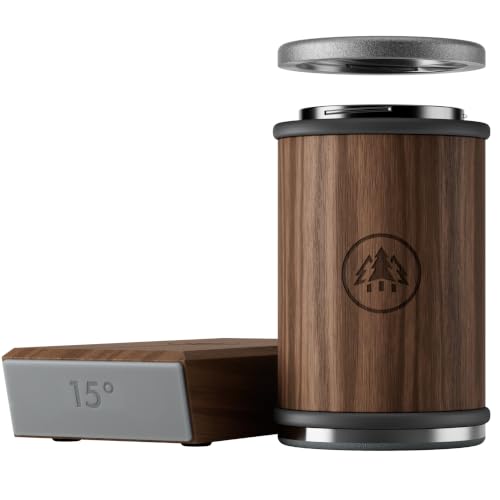
Same concept, fewer parts, lower price: a sharpening roller and a magnetic knife holder, with the same 15 and 20 degree options. If the HORL appealed to you and the price did not, this is the straightforward answer, and it is the pick we put in front of beginners for exactly that reason.
The honest cons: it is a simpler tool and it feels like one. The Tumbler is made in China against the HORL's German manufacture, the magnetic holder is shorter than the HORL 2's 4.5-inch support so long blades need more care, and there is no published material-removal figure to compare against the HORL 3's. It inherits both of the HORL's real limitations too - two fixed angles, and no ability to repair damage. Tumbler against HORL is the direct comparison.
Best if you want every angle: Work Sharp Precision Adjust Elite
This is the alternative that fixes the limitation rather than the price. 15 to 30 degrees in one-degree increments, five diamond plates from 220 to 800 plus a fine ceramic, a leather strop and a ceramic rod for serrations, in a carry case. The 220 plate is the thing no roller has: it rebuilds a bevel, so a chipped or badly rounded edge is recoverable.
Against that, it asks more of you than a roller does. You clamp the knife in a V-Block and work the abrasive across it, which is more setup, more parts to lose and more time per knife than rolling a disc down a blade. The clamp also means very tall or very short blades sit awkwardly. It is a system rather than a gadget - guided sharpening systems covers the category properly.
Best budget pick, and the one that does more: a 1000-grit waterstone
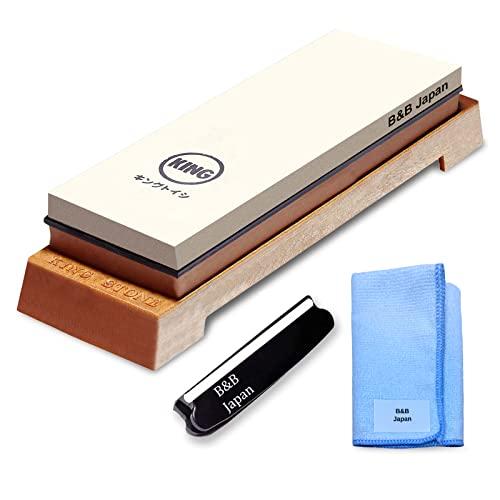
The cheapest thing on this page is a single waterstone, and it is also the only option with no angle limit at all. Any knife, any grind, any profile - including the single-bevel and narrow-angle Japanese knives that a 15-degree jig would quietly regrind.
Our budget pick is the Suehiro Cerax 1000: soft enough to build a slurry and give you real feedback, which is what teaches you the angle in the first place. It needs a short soak and it dishes faster than a hard stone, so you will be flattening it more often. The Naniwa Professional 1000 costs more and answers the soak - a magnesia binder, splash and go, 20 mm of material - and feels slightly harder under the blade.
It does not hold the angle for you, and that is the entire product the HORL sells. If you have tried freehand and could not get a knife sharp, buying a cheaper stone will not change that - buy the jig. If you have never tried, start here: it is the cheapest route and the only one that keeps improving as you do. How to use a whetstone is the starting point and whetstone against rolling sharpener is the full version of this trade.
If you want zero technique: Chef'sChoice Trizor XV 15XV
Three stages, 100 percent diamond abrasives in the first two, a stropping stage third, and a 15-degree Trizor XV triple bevel at the end of it. You pull the knife through and it comes out sharp with no skill and no setup, and it handles serrated knives, which nothing else here does.
Electric sharpeners remove far more steel than any other option on this page. That is how they work, and on a thin, hard Japanese blade it is a real cost - a knife you run through an electric every few months will visibly lose height over years. It also imposes its own 15-degree geometry on whatever you feed it. Our electric sharpener against whetstone comparison sets out the trade, and do electric sharpeners ruin knives answers the question directly.
Buy it if the knives in question are German stainless and the household will not maintain anything that needs technique. Do not buy it as the only sharpener for a 61 HRC Japanese blade.
Sometimes the answer is a different HORL
Worth saying, because one of the three reasons is solved inside the range. HORL sells more than one model, and the cheaper one in our registry is the outgoing HORL 2 - the same two angles and the same idea, with a shorter list of improvements. If the price is your only objection and you want the German-made tool, HORL 2 against HORL 3 sets out exactly what the newer model adds and whether it is worth the difference.
What staying in the range cannot fix is the other two. Every HORL offers 15 and 20 degrees and nothing in between, and no rolling jig repairs a chipped edge. Those need a guided system or a stone.
The verdict
Match the tool to your reason. The price is the problem - the Tumbler, same idea for less. The two fixed angles are the problem - the Work Sharp Precision Adjust Elite, 15 to 30 degrees in one-degree steps. You have a damaged edge - the Work Sharp, or an electric if the knife is cheap and German. You would rather not own a jig at all - the Suehiro Cerax 1000, which is the cheapest thing here and the only one with no limits.
And if none of those three is your reason, the HORL is a genuinely good tool and buying it is not a mistake. It is the most pleasant of these to use and the one most likely to actually get used, which matters more than any specification - best rolling knife sharpeners ranks the category and best knife sharpeners for Japanese knives is the version of this question aimed at hard steel.
The picks in detail
#1 · People who want a fixed angle and hate gear
Tumbler Rolling Knife Sharpener
A magnetic holder and a rolling abrasive disc that fixes your angle at 15 or 20 degrees. Two pieces, almost no learning curve.
What it does well
- Two pieces, nothing to assemble, nothing to set
- 15-degree setting is the correct angle for most Japanese kitchen knives
- Cheaper than the German alternative and, in side-by-side comparisons, as sharp
Where it gives way
- Magnetic holder limits you to the angles it offers
- Rolls less smoothly than the Horl 2
- Does nothing for a chipped or badly reprofiled edge
Skip it if: Anyone who wants to learn to sharpen. It works by removing the skill, which means you never acquire it.
| Angles | 15 degrees and 20 degrees |
|---|---|
| Components | Sharpening roller + magnetic knife holder |
| Origin | Made in China |
#2 · Repeatable angles without years of practice
Work Sharp Precision Adjust Elite
A clamped, angle-guided system adjustable from 15 to 30 degrees in one-degree steps, with five diamond plates, a ceramic and a strop. It removes the one variable beginners cannot control.
What it does well
- One-degree angle increments mean you can actually match a 15-degree Japanese factory edge
- Seven abrasive options covers repair through polish
- Angle repeatability is the thing beginners lack, and this supplies it
Where it gives way
- Clamp limits blade length and height
- Slower per knife than a competent freehand session
- A lot of parts to store and lose
Skip it if: Long or very tall blades. A clamp-and-rod system fights a 240 mm gyuto, and it is slow compared to a stone once you can hold an angle.
| Angle range | 15-30 degrees, 1-degree increments |
|---|---|
| Abrasives | 220, 320, 400, 600, 800 diamond plates + fine ceramic |
| Also included | Leather strop and ceramic rod for serrations |
| Clamp | V-Block |
| Storage | Carry case and Tri-Brasive rack |
#3 · SG2, HAP40 and other powder steels
Suehiro Cerax 1010 (#1000)
High abrasive concentration, minimal binder. It bites hard, abrasion-resistant steels that politer stones skate over.
What it does well
- High abrasive concentration cuts hard steels quickly
- Builds slurry well and gives good tactile feedback
- Middle-of-the-road hardness suits most kitchen steels
Where it gives way
- Needs a soak, so it is not a five-minute job
- Slurry is messy
- Less widely stocked in the US than King or Shapton
Skip it if: Splash-and-go convenience. It wants a short soak first, every time.
| Grit | #1000 |
|---|---|
| Model | Cerax 1010 |
| Soaking | Short soak required |
| Hardness | Softer than a Shapton Pro, harder than a Naniwa Super Stone |
#4 · The one stone to own if you only own one
Naniwa Professional (Chosera) 1000
The stone that does the most with one grit. Hard enough to dish slowly, soft enough to raise a slurry that tells you what the edge is doing.
What it does well
- Splash and go, but still builds a rich, informative slurry
- Fast enough to reset a dull edge, refined enough to finish on
- 20 mm of abrasive — years of use before it is spent
Where it gives way
- Expensive for a single grit
- Magnesia binder does not like being stored wet
- You will still want a finishing stone eventually
Skip it if: A tight budget. It costs more than a combination stone and gives you one grit.
| Grit | 1000 |
|---|---|
| Size | 210 x 70 x 20 mm |
| Soaking | Splash and go |
| Binder | Magnesia |
#5 · A drawer of German knives you will never hand-sharpen
Chef'sChoice Trizor XV Model 15XV Electric Sharpener
A three-stage diamond machine that converts a 20-degree Western edge to a 15-degree triple bevel in about a minute. It works, and it removes a lot of steel doing it.
What it does well
- Genuinely converts a 20-degree factory edge to 15 degrees, which most people cannot do freehand
- About a minute per knife, repeatable, no skill required
- Handles serrated edges, which stones cannot
Where it gives way
- Removes far more steel than a stone; a knife has a finite number of passes in it
- Cannot follow an existing asymmetric or single-bevel grind
- Bulky and loud on a countertop
Skip it if: A thin, hard Japanese knife. It reprofiles rather than follows, and on a single-bevel or a 61+ HRC blade that is damage, not maintenance.
| Edge angle | 15 degrees (Trizor XV triple bevel) |
|---|---|
| Stages | 3 — diamond shaping, diamond sharpening, stropping/polishing |
| Abrasives | 100% diamond in stages 1 and 2 |
| Serrated | Yes, supported |
| Dimensions | 10 x 4.2 x 4.2 in, 4.2 lb |
Common questions
What is a cheaper alternative to a HORL?
Is the Tumbler as good as the HORL?
Why would I not buy a HORL?
Can a whetstone replace a HORL?
Does a rolling sharpener damage Japanese knives?
Sources
Read next
Sharpeners
HORL 3 Rolling Knife Sharpener Review
Sharpeners
Tumbler vs HORL
Sharpeners
Best Rolling Knife Sharpeners
Sharpeners
Guided Sharpening Systems
Sharpeners
Whetstone vs Rolling Sharpener