Japanese Knives
Are Knife Sets Worth It?
What this is based on: published manufacturer specifications and retailer listings, cited on each product; the weight of professional and owner reviews across multiple retailers; and hands-on experience sharpening and cooking with knives of this type. We have not individually tested every model listed, we do not run instrumented sharpness testing, and we do not claim a test we did not run.
Quick picks
| # | Product | Best for | Score | Price |
|---|---|---|---|---|
| 1 |  Tojiro DP Gyuto 210mm (F-808) | First Japanese knife | 8.6 | |
| 2 | 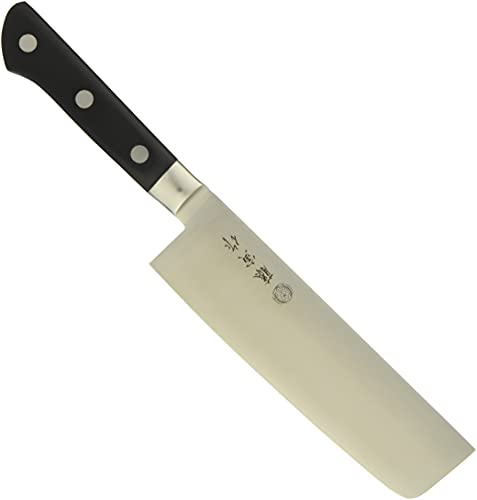 Tojiro DP Nakiri 165mm (F-502) | First nakiri | 8.7 | |
| 3 | 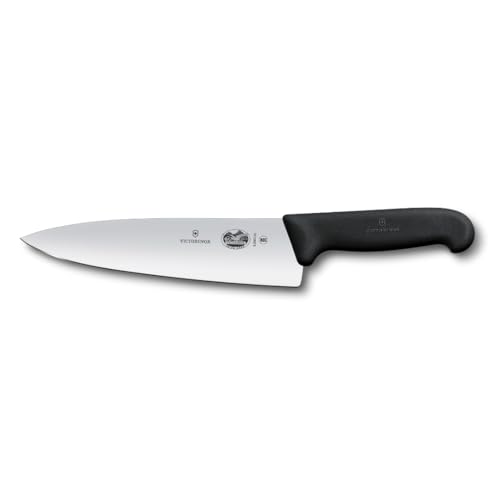 Victorinox Fibrox Pro 8" Chef's Knife | A beater, or a sanity check before you spend more | 7.0 | |
| 4 | 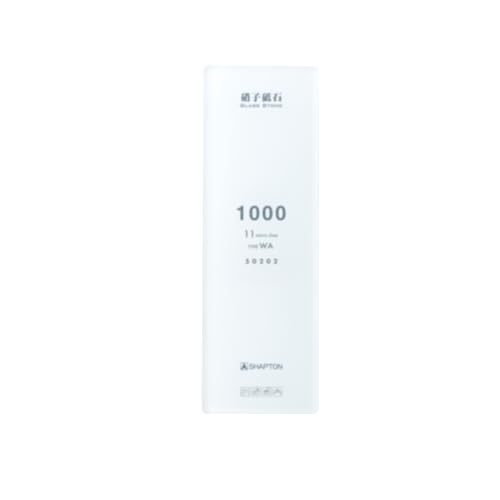 Shapton Glass Stone 1000 | Hard steels and no patience for soaking | 8.3 |
This is the most common way a new kitchen spends its knife budget badly, and it is not because set buyers are careless. A set looks like the sensible, complete, adult purchase. It arrives in a box with a block, nothing is missing, and the per-piece price is genuinely lower than buying the same count separately. The problem is that per-piece price is the wrong number.
Where the money in a set actually goes
Take a typical 15-piece block set. The contents are near-universal across brands: a chef's knife, a santoku or utility knife, a paring knife, a bread knife, a boning or carving knife, kitchen shears, a honing steel, six steak knives and the block itself. Fifteen items, and a manufacturer pricing that box has to put steel into all fifteen.
Now count what you used in the last month. For most home cooks the honest answer is the chef's knife, the paring knife, the shears occasionally, and the bread knife if you buy crusty loaves. That is three or four pieces doing essentially all of the work, in a box where they received roughly a quarter of the budget.
The consequence is specific and measurable. The chef's knife in a block set is nearly always thicker behind the edge, softer, and ground at a wider angle than a knife sold on its own at the same price as the whole box. It has to be: soft steel is cheaper to produce and more forgiving of the abuse a set buyer is statistically likely to inflict, and a thicker blade survives a dishwasher and a hard board. Those are rational manufacturing choices that happen to produce a mediocre knife.
The three real problems
1. Cost allocation
Six steak knives are six knives. They are also six knives that come out four times a year, and in a box priced as a unit they displace money that could have gone into the blade you hold every day. The same is true of a boning knife most cooks never learn to use and a carving knife that duplicates what a long chef's knife already does.
2. The compromised centerpiece
This is the part that actually matters. Upgrading from a block-set chef's knife to a thin, hard individual knife is the single most noticeable change most kitchens can make, and it is noticeable precisely because the set knife was built down to a number. A 1.9 mm spine parts a tomato; a 3 mm spine crushes the shoulder of it. That difference is the whole reason this site exists.
3. No upgrade path
A set is a single decision that forecloses later ones. When you discover that you want a flat-profile vegetable knife, or that you are left-handed and the handle fights you, or that you prefer a lighter blade, you cannot act on it without buying outside the set and leaving a gap in the block. Three knives bought one at a time can each be replaced, upgraded or given away on its own.
A self-sharpening block. Every time you sheathe the knife it is dragged past a fixed abrasive. You do not control the frequency, the angle or the amount of steel removed, and the knife can never be sharper than that mechanism allows. A plain block plus a sharpener you choose is better in every respect.
The honing steel in the box. It is usually a ribbed steel rod, which works on soft Western blades and does very little to a hard Japanese edge, because it is not harder than the blade. Ceramic against steel.
The sharpening question a set answers badly
Set manufacturers know that a dull knife is the main reason a customer stops liking their purchase, and they solve it in the box — a steel rod, a pull-through slot in the block, or a motorised element in a self-sharpening base. All three take the decision away from you, and it is a decision worth keeping.
The reason is that the right sharpener depends on two numbers the set does not know: how hard your knife is, and what angle it was ground to. A soft Western blade at 56 to 58 HRC and a wide factory bevel genuinely benefits from an aggressive machine that reprofiles it narrower, and a decent electric sharpener will make it cut better than it did new — our review of one that does exactly that works through the trade. A hard Japanese blade at 60 HRC, already ground at 15 degrees, gains nothing from the same device and risks a chipped edge.
A set that bundles one answer cannot serve both cases, and the one it bundles is almost always the cheapest. Buy the block empty, or buy no block, and choose the sharpener after you have chosen the knife.
Count your own pieces before you compare prices
This takes two minutes and it settles the question better than any argument here. Open the drawer and sort every knife into two piles: used in the last month, and not. Then look at the second pile and ask what you would have paid for it on its own.
Most people find two or three knives in the first pile. If a fifteen-piece set costs the same as three good individual knives, and you were only ever going to use three, the set is not a discount — it is the same money distributed across twelve things you will store, clean around and eventually give away. That is the whole case, and it is arithmetic rather than taste.
When a set genuinely is the right buy
There are two honest cases, and pretending otherwise would be dishonest.
- You are furnishing a kitchen from nothing, today. A rental, a first apartment, a holiday let, a kitchen for people who are not you. A set solves “there are no knives in this house” in one order, and a competent cheap set is far better than no knives and a lot better than one expensive knife and nothing else.
- You genuinely entertain and want matched steak knives. If six matching steak knives are something you actually want, buying them inside a set is usually cheaper than buying a set of six separately. Just be clear that you are buying steak knives with a chef's knife attached, not the other way round.
Outside those two cases, the set is a convenience purchase that you pay for in cutting performance. That may still be a trade you want to make, and there is nothing wrong with making it knowingly.
What to buy instead, in order
Buy one knife. Use it for a month. Then buy the thing that month proved you were missing. That sequence costs less than a set and ends with a kitchen you chose rather than one a box chose for you.
- An 8-inch chef's knife or a 210 mm gyuto. This is 80 percent of the purchase. The Tojiro DP gyuto is the default recommendation: VG-10 at 59-60 HRC with a 1.9 mm spine and a plain Western handle, in the mid-hundreds band where cutting performance stops improving with price. It is thinner than the chef's knife in almost any set at any price.
- A second shape, once you know which one. If you spend your time on vegetables, a 165 mm nakiri is transformative: flat profile, tall face, every millimeter of edge landing at once so slices separate cleanly instead of hinging. If you work on a small board, a santoku instead. Santoku against nakiri.
- A cheap third knife, deliberately. A Victorinox Fibrox Pro at 56 HRC and 18 degrees is the knife you hand to a guest, use on a frozen edge, or leave in the sink. Owning one is what keeps the good knife out of trouble, and it costs a fraction of a set. Full review.
- A stone, before a fourth knife. This is the step set buyers never reach, and it is worth more than any additional blade. A sharp mid-range knife beats a dull premium one every single week.
A paring knife and a serrated bread knife are worth adding when you miss them, and both are cheap. Neither needs to be good. Neither is a reason to buy a box of fifteen things.
The comparison that matters
Set the sticker prices aside and compare what each approach puts in your hand for the same money.
| 15-piece block set | Three knives plus a stone | |
|---|---|---|
| Pieces you use weekly | 2-4 of 15 | 2-3 of 3 |
| Spend on the knife you use most | Roughly a quarter of the box | Roughly half the budget |
| Typical chef's-knife spine | Around 3 mm, wedges in dense food | 1.9 mm, parts it |
| Typical hardness | 55-58 HRC | 59-60 HRC |
| Can you upgrade one piece? | Not without a gap in the block | Yes, independently |
| Way to keep it sharp | A steel rod that may be softer than the blade | A 1000-grit stone, included in the budget |
| Storage | Block included | Buy a guard, rail or empty block |
The one genuine advantage in that right-hand column is the storage row, and it is easily solved. A blade guard per knife costs very little, a magnetic rail costs about the same, and a universal empty block is sold on its own. Loose drawer storage chips more tips than cutting does, so do solve it — storage options.
If you already own a set
Nothing here says throw it out. A block set is a perfectly good supporting cast, and the upgrade path from one is short.
- Replace the chef's knife only. One good 8-inch knife next to the existing set is the cheapest large improvement available to you, and the set's chef's knife becomes the beater you no longer have to buy.
- Keep the shears, the bread knife and the paring knife. These are the set pieces that genuinely earn their place, because none of them benefits much from being expensive.
- Retire the honing steel if you buy a hard knife. A 60 HRC edge needs ceramic, not a ribbed steel rod.
- Check what you are cutting on. Glass, stone, ceramic and bamboo are harder than every steel in any set, and will undo a new knife in weeks. Board guide.
The verdict
Knife sets are worth it in two narrow situations: you need a whole kitchen immediately, or you specifically want matched steak knives. Everywhere else the arithmetic is against them, and the cost shows up in the one knife you use every day.
Buy the chef's knife first and buy it properly. Add the second shape when you know which one you want. Buy a stone before a fourth knife. That kitchen costs no more than a mid-range block set, cuts dramatically better, and can be improved one piece at a time for the rest of your life.
If you want the piece-by-piece version of this argument, read how many kitchen knives you actually need. If you have settled on buying individually and want to know what to spend, how much to spend on a chef knife sets out the bands.
The picks in detail
#1 · First Japanese knife
Tojiro DP Gyuto 210mm (F-808)
The default answer to 'my first real Japanese knife'. VG-10 at around 60 HRC in a plain three-layer build, at a price that makes the inevitable first chip survivable.
What it does well
- VG-10 at 59-60 HRC takes a genuinely fine edge and holds it far longer than a German knife at 56-58
- 1.9 mm spine and 43 mm heel make it thin behind the edge without being fragile
- Cheap enough that learning to sharpen on it is not frightening
Where it gives way
- Handle finish is functional and unlovely; some units need the bolster easing with sandpaper
- Stainless cladding is soft and scratches readily
- Nothing about the fit and finish will impress anyone
Skip it if: Anyone who wants the knife to be beautiful. The handle is a workmanlike composite with a stainless bolster and nothing about it is charming.
| Blade length | 210 mm (8.3 in) |
|---|---|
| Steel | VG-10 core, 13-chrome stainless cladding (san mai) |
| Hardness | 59-60 HRC |
| Heel height | 43 mm |
| Spine at heel | 1.9 mm |
| Weight | approx. 187 g |
| Handle | Western, laminated composite wood with stainless bolster |
#2 · First nakiri
Tojiro DP Nakiri 165mm (F-502)
A flat 165 mm edge in VG-10 at 59-61 HRC for the price of a mid-range German paring knife. The obvious first nakiri.
What it does well
- 45 mm of blade height means your knuckles clear the board
- Genuinely flat edge — full contact, no accordion slices
- 1.8 mm spine falls through vegetables rather than wedging
Where it gives way
- No tip, so it cannot do fine tip work at all
- 207 g is heavier than the profile suggests
- Western handle and bolster feel dense for such a light job
Skip it if: Anyone expecting it to replace a chef's knife. A nakiri does not have a tip and cannot break down a chicken.
| Blade length | 165-170 mm |
|---|---|
| Steel | Takefu VG-10 core, three-layer |
| Hardness | 59-61 HRC |
| Heel height | 45 mm |
| Spine | 1.8 mm, consistent |
| Weight | approx. 207 g |
#3 · A beater, or a sanity check before you spend more
Victorinox Fibrox Pro 8" Chef's Knife
Not a Japanese knife and not pretending to be. It is the control sample: if your cooking does not improve after upgrading from this, the knife was never the problem.
What it does well
- Stamped, light and genuinely non-slip when wet
- Soft enough that a pull-through sharpener will not destroy it
- Costs a fraction of everything else here
Where it gives way
- 56 HRC means frequent honing and frequent sharpening
- 18-degree edge is blunt by Japanese standards
- No bolster, no heft, no presence — it feels like a tool because it is one
Skip it if: This site's usual reader. At 56 HRC with an 18-degree edge it is a softer, blunter tool than anything else on this page.
| Blade length | 8 in |
|---|---|
| Steel | X55CrMo14 high-carbon stainless |
| Hardness | 56 HRC |
| Edge angle | 18 degrees |
| Weight | 5.6 oz |
| Handle | Fibrox Pro thermoplastic elastomer, no bolster |
#4 · Hard steels and no patience for soaking
Shapton Glass Stone 1000
5 mm of hard abrasive bonded to a glass plate. Splash and go, dishes slowly, and cuts hard steel that a King barely scratches.
What it does well
- Genuinely splash and go — water on, sharpen, done in five minutes
- Hard binder dishes far more slowly than a clay stone
- Cuts hard powder steels that soft stones struggle with
Where it gives way
- Only 5 mm of usable abrasive; the glass base is not a stone
- Hard and quiet, so it hides angle errors from a beginner
- Costs roughly what a full King combination stone does, for one grit
Skip it if: Learning on. It is hard and quiet — it gives far less feedback than a soft stone, which is exactly what a beginner needs.
| Grit | 1000 (Shapton scale) |
|---|---|
| Size | 210 x 70 mm, 5 mm abrasive on a 5 mm glass base |
| Soaking | None - splash and go; keep the surface wet with a squirt bottle |
| Binder | Non-absorbent ceramic |
Common questions
Are knife sets worth it?
Is it cheaper to buy a knife set or individual knives?
What knives do I actually need?
Are expensive knife sets worth it?
Are self-sharpening knife sets worth it?
Does a knife block protect the knives?
Sources
Read next
Japanese Knives
How Many Kitchen Knives Do You Need?
Japanese Knives
Best Knives for Home Cooks
Japanese Knives
Your First Japanese Knife
Japanese Knives
How Much Should You Spend on a Chef Knife?
Steel & Care