Sharpeners
Chef'sChoice Trizor XV Review
What this is based on: published manufacturer specifications and retailer listings, cited on each product; the weight of professional and owner reviews across multiple retailers; and hands-on experience sharpening and cooking with knives of this type. We have not individually tested every model listed, we do not run instrumented sharpness testing, and we do not claim a test we did not run.
Quick picks
| # | Product | Best for | Score | Price |
|---|---|---|---|---|
| 1 | 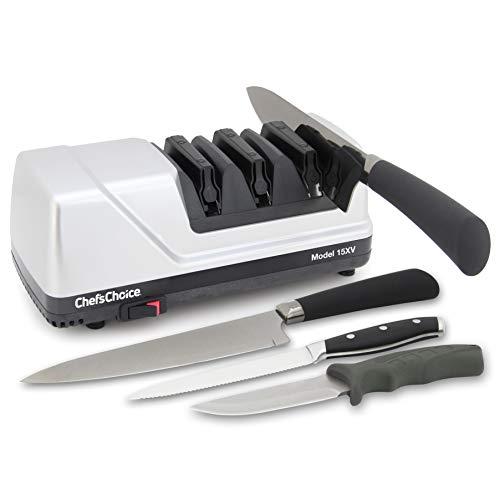 Chef'sChoice Trizor XV Model 15XV Electric Sharpener | A drawer of German knives you will never hand-sharpen | 7.6 | |
| 2 | 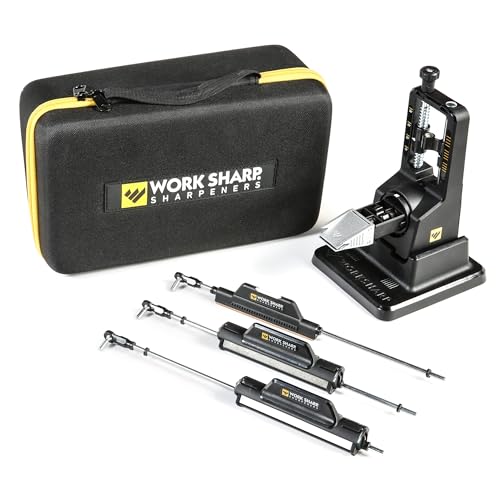 Work Sharp Precision Adjust Elite | Repeatable angles without years of practice | 8.2 | |
| 3 | 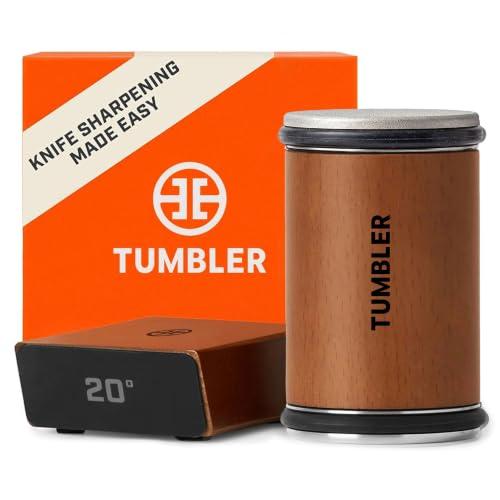 Tumbler Rolling Knife Sharpener | People who want a fixed angle and hate gear | 8.0 | |
| 4 | 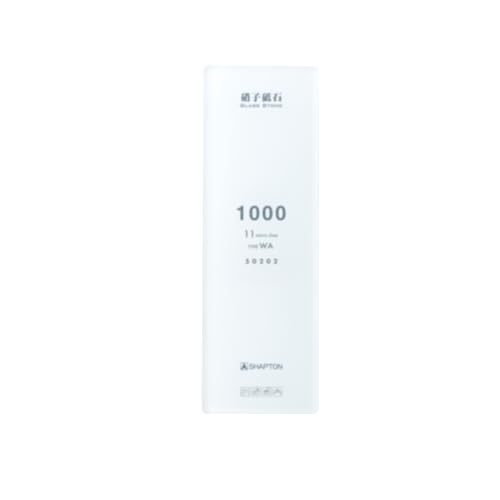 Shapton Glass Stone 1000 | Hard steels and no patience for soaking | 8.3 |
What it is
A three-stage countertop machine, roughly 10 inches long and a little over four pounds, with angled guide slots rather than a clamp. Stages one and two use 100 percent diamond abrasives — stage one shapes, stage two sharpens — and stage three is a stropping and polishing stage on a flexible abrasive disc. You draw the blade through each slot in turn, alternating sides, and the guides hold the contact angle for you.
The name is the specification. “Trizor” is the three-facet bevel the machine grinds; “XV” is the Roman numeral for fifteen, the angle in degrees per side. Chef'sChoice positions this explicitly as a conversion tool: take a Western knife ground at 20 degrees, which is where a great many German and American kitchen knives sit, and reprofile it to a narrower 15-degree edge that slices noticeably better.
| Trizor XV 15XV | |
|---|---|
| Edge angle | 15° per side, three-facet Trizor bevel |
| Stages | 3 — diamond shaping, diamond sharpening, stropping and polishing |
| Abrasives | 100% diamond in stages 1 and 2 |
| Serrated edges | Supported |
| Dimensions | 10 x 4.2 x 4.2 in |
| Weight | 4.2 lb |
| Angle adjustable? | No — fixed at 15° |
What it does well
It performs a conversion most people cannot do by hand. Taking a 20-degree bevel down to 15 degrees means grinding away the entire shoulder of the existing edge and re-establishing a new one. On a stone that is a long, patient job that beginners routinely give up on halfway, leaving a rounded bevel that cuts worse than when they started. The machine does it in a minute and gets the geometry right, because the geometry is built into the slot rather than into your wrist.
It is repeatable and requires nothing of you. There is no angle to hold, no burr to feel for, no stone to flatten, no water. That matters more than enthusiasts like to admit: the sharpener that gets used beats the stone that sits in a cupboard, and a dull knife is more dangerous than a machine-sharpened one because it requires force, and force is what makes a blade slip.
It sharpens serrated edges. A stone cannot do this at all. In most kitchens the bread knife is the one blade that has never been sharpened in its life, and this machine will bring it back.
The third stage is not marketing. Stropping and polishing after the diamond stages is what removes the wire edge the coarse stages raise. A machine that stopped at stage two would hand you a knife that felt sharp for one meal and then failed; this one does not, and that is a meaningful design choice.
What it costs you
Steel, and it does not come back. A 1000-grit stone takes a few microns off a bevel in a careful session. Powered diamond wheels take visibly more, and the first conversion pass takes more still, because it is supposed to. That is a reasonable one-time price for a better edge geometry. It is not reasonable every month for ten years: the blade loses height, the heel-to-tip profile changes, and eventually the knife sits differently on the board.
Your knife's angle is no longer yours. This is the failure mode that catches people out, and it is silent — nothing looks wrong afterwards. A Wüsthof Classic is published at 14 degrees per side. Run it through a 15-degree machine and you have widened the edge slightly, not improved it. A MAC at 15 degrees gains nothing. A Shun at 16 degrees gains almost nothing and risks a chip. Check your knife against the angle chart before you plug anything in, because “German knives are 20 degrees” is a generalization with real exceptions.
It cannot follow an asymmetric or single bevel. The slots grind both faces equally. A yanagiba, an usuba or any traditional single-bevel knife will be destroyed, quickly and permanently. Why that matters.
It is bulky and loud. Ten inches of countertop and a little over four pounds is not a drawer item, and a motor driving diamond wheels is not quiet. Trivial next to the other two points, but worth knowing before it arrives.
Any hard Japanese knife. VG-10, VG-MAX, SG2 and similar at 59 HRC and up, already ground at 15 or 16 degrees. Nothing to gain, a thin edge to lose.
Single-bevel knives. Yanagiba, usuba, deba. The machine cannot follow the grind.
Anything already at or under 15 degrees. You would be paying to remove steel for no change in how it cuts.
Who should buy it
Buy it if your kitchen contains three or more soft Western knives — German, Swiss or American stainless somewhere around 55 to 58 HRC — that are ground near 20 degrees and have not been properly sharpened in years, and if you know with honesty that you are not going to take up stone work. That kitchen is extremely common, and this machine will serve it well for a long time. A Victorinox Fibrox Pro at 56 HRC and 18 degrees is almost exactly the profile this machine was built around; the review of that knife explains why soft steel and an aggressive sharpener are a reasonable pairing.
Buy the Work Sharp Precision Adjust Elite instead if your knives have different factory angles, or if there is even one hard Japanese knife in the drawer. It clamps the blade and sets any angle from 15 to 30 degrees in one-degree steps across five diamond plates plus a ceramic and a strop, so it respects a 14-degree Wüsthof and a 16-degree Shun as different jobs. It is slower and it is the honest middle ground. Our review.
Buy a rolling sharpener instead if you want low effort with far less steel removal. The Tumbler holds a fixed 15 or 20 degrees with a magnetic holder and an abrasive roller, takes about a minute per knife, and is a maintenance tool rather than a reprofiling one — which for most knives is what was actually needed.
Buy a stone instead if you own good knives or want the skill. A 1000-grit Shapton Glass is splash-and-go after its first soak, cuts hard steel quickly, and will do everything this machine does except serrations, at a fraction of the steel cost and a fraction of the price.
Check this first
A large share of people reaching for an electric sharpener do not have a sharpening problem at all. They have a rolled edge — soft steel bends sideways under load rather than wearing away, which cuts badly while the edge itself is intact. Thirty seconds on a honing rod fixes that, and no steel is removed.
Try the rod first. If the knife comes back, you did not need a sharpener this month; if it does not, the edge is genuinely gone and this machine is one of the valid answers. The distinction is set out in sharpening against honing.
Check the angle too. If your knives came in a block set, a 20-degree grind is a fair assumption and this machine is a real upgrade for them; if you bought them individually, look the figure up rather than assuming. What a block set actually puts in your hand covers why set knives and individually-bought knives tend to differ here.
Using the three stages properly
The stages are a sequence, not a menu, and the most common complaint about this machine comes from people using stage one every time. Stage one is a shaping stage: it is for the initial 20-to-15 conversion and for a knife that is badly gone. Using it on a knife that only needed a touch-up is how a blade loses height faster than it should.
- First time on a 20-degree knife: stage one until the bevel is re-established, then stage two, then stage three. This is the conversion and it is the only time stage one is clearly right.
- Routine resharpening: stage two and stage three only. Skip stage one entirely unless the edge is visibly damaged.
- Between sharpenings: stage three alone, or better, a honing rod. Stage three strops and polishes without meaningful removal.
- Alternate sides evenly and let the guides do the work. Pushing down harder does not sharpen faster; it just loads the wheels and heats the edge.
The verdict
A good machine with a narrow and clearly-marked remit. Within it — soft Western steel, wide factory bevels, an owner who will not sharpen by hand — the Trizor XV does something genuinely useful that is hard to achieve any other way, and the serrated capability is a real bonus. Outside it, the fixed 15-degree bevel and the steel it removes turn a convenience into a slow, invisible cost.
Know which kitchen you have before you buy. If you are not sure, read do electric knife sharpeners ruin knives — it sets out the two numbers, hardness and factory angle, that decide the answer.
The picks in detail
#1 · A drawer of German knives you will never hand-sharpen
Chef'sChoice Trizor XV Model 15XV Electric Sharpener
A three-stage diamond machine that converts a 20-degree Western edge to a 15-degree triple bevel in about a minute. It works, and it removes a lot of steel doing it.
What it does well
- Genuinely converts a 20-degree factory edge to 15 degrees, which most people cannot do freehand
- About a minute per knife, repeatable, no skill required
- Handles serrated edges, which stones cannot
Where it gives way
- Removes far more steel than a stone; a knife has a finite number of passes in it
- Cannot follow an existing asymmetric or single-bevel grind
- Bulky and loud on a countertop
Skip it if: A thin, hard Japanese knife. It reprofiles rather than follows, and on a single-bevel or a 61+ HRC blade that is damage, not maintenance.
| Edge angle | 15 degrees (Trizor XV triple bevel) |
|---|---|
| Stages | 3 — diamond shaping, diamond sharpening, stropping/polishing |
| Abrasives | 100% diamond in stages 1 and 2 |
| Serrated | Yes, supported |
| Dimensions | 10 x 4.2 x 4.2 in, 4.2 lb |
#2 · Repeatable angles without years of practice
Work Sharp Precision Adjust Elite
A clamped, angle-guided system adjustable from 15 to 30 degrees in one-degree steps, with five diamond plates, a ceramic and a strop. It removes the one variable beginners cannot control.
What it does well
- One-degree angle increments mean you can actually match a 15-degree Japanese factory edge
- Seven abrasive options covers repair through polish
- Angle repeatability is the thing beginners lack, and this supplies it
Where it gives way
- Clamp limits blade length and height
- Slower per knife than a competent freehand session
- A lot of parts to store and lose
Skip it if: Long or very tall blades. A clamp-and-rod system fights a 240 mm gyuto, and it is slow compared to a stone once you can hold an angle.
| Angle range | 15-30 degrees, 1-degree increments |
|---|---|
| Abrasives | 220, 320, 400, 600, 800 diamond plates + fine ceramic |
| Also included | Leather strop and ceramic rod for serrations |
| Clamp | V-Block |
| Storage | Carry case and Tri-Brasive rack |
#3 · People who want a fixed angle and hate gear
Tumbler Rolling Knife Sharpener
A magnetic holder and a rolling abrasive disc that fixes your angle at 15 or 20 degrees. Two pieces, almost no learning curve.
What it does well
- Two pieces, nothing to assemble, nothing to set
- 15-degree setting is the correct angle for most Japanese kitchen knives
- Cheaper than the German alternative and, in side-by-side comparisons, as sharp
Where it gives way
- Magnetic holder limits you to the angles it offers
- Rolls less smoothly than the Horl 2
- Does nothing for a chipped or badly reprofiled edge
Skip it if: Anyone who wants to learn to sharpen. It works by removing the skill, which means you never acquire it.
| Angles | 15 degrees and 20 degrees |
|---|---|
| Components | Sharpening roller + magnetic knife holder |
| Origin | Made in China |
#4 · Hard steels and no patience for soaking
Shapton Glass Stone 1000
5 mm of hard abrasive bonded to a glass plate. Splash and go, dishes slowly, and cuts hard steel that a King barely scratches.
What it does well
- Genuinely splash and go — water on, sharpen, done in five minutes
- Hard binder dishes far more slowly than a clay stone
- Cuts hard powder steels that soft stones struggle with
Where it gives way
- Only 5 mm of usable abrasive; the glass base is not a stone
- Hard and quiet, so it hides angle errors from a beginner
- Costs roughly what a full King combination stone does, for one grit
Skip it if: Learning on. It is hard and quiet — it gives far less feedback than a soft stone, which is exactly what a beginner needs.
| Grit | 1000 (Shapton scale) |
|---|---|
| Size | 210 x 70 mm, 5 mm abrasive on a 5 mm glass base |
| Soaking | None - splash and go; keep the surface wet with a squirt bottle |
| Binder | Non-absorbent ceramic |
Common questions
Is the Chef'sChoice Trizor XV worth it?
What angle does the Trizor XV sharpen to?
Can you use the Trizor XV on Japanese knives?
Does the Trizor XV remove a lot of steel?
Does it sharpen serrated knives?
Trizor XV or a whetstone?
Sources
Read next
Sharpeners
Best Electric Knife Sharpeners
Sharpeners
Electric Sharpener vs Whetstone
Sharpeners
Best Knife Sharpeners for German Knives
Sharpeners
Work Sharp Precision Adjust Elite Review
Whetstones & Skill