Brands
Tojiro vs MAC
What this is based on: published manufacturer specifications and retailer listings, cited on each product; the weight of professional and owner reviews across multiple retailers; and hands-on experience sharpening and cooking with knives of this type. We have not individually tested every model listed, we do not run instrumented sharpness testing, and we do not claim a test we did not run.
Quick picks
| # | Product | Best for | Score | Price |
|---|---|---|---|---|
| 1 | Tojiro DP Gyuto 210mm (F-808) | First Japanese knife | 8.6 | |
| 2 |  MAC Professional 8" Chef's Knife with Dimples (MTH-80) | The one-knife kitchen | 8.8 | |
| 3 | 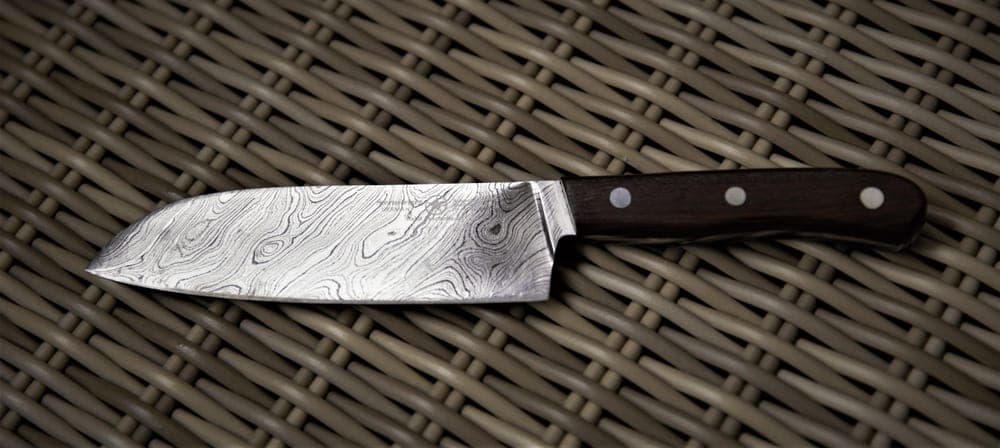 Shun Classic 8" Chef's Knife (DM0706) | A knife you want to look at | 8.3 |
| Tojiro DP F-808 | MAC MTH-80 | |
|---|---|---|
| Steel | VG-10 core, 13-chrome clad | Sub-zero tempered high-carbon Mo-V, mono |
| Hardness | 59–60 HRC | 61 HRC |
| Spine at heel | 1.9mm | 2.5mm |
| Heel height | 43mm | 1 7/8 in (approx. 48mm) |
| Weight | approx. 187g | 6.8 oz (approx. 193g) |
| Factory edge | approx. 15° per side | 15° per side |
| Handle | Laminated composite, stainless bolster | Riveted Pakkawood, integrated bolster |
| Warranty | Standard | 25 years |
The cutting is closer than the price
The Tojiro is actually the thinner knife — 1.9mm at the spine against 2.5mm. Thinness behind the edge is what determines whether a blade separates a butternut squash or splits it, so on the single most important geometric measure the cheaper knife wins.
The MAC is a point harder and slightly taller at the heel, which buys a marginally longer interval between sharpenings and a little more knuckle clearance. Neither difference is dramatic.
The finish is not close
The MAC is a properly finished object: an integrated bolster, riveted Pakkawood, consistent grinds between units, and a 25-year warranty behind it. The Tojiro is functional. Some units arrive with a slightly sharp edge where the bolster meets the handle, which ten minutes with 400-grit paper fixes permanently.
Consistency matters more than it sounds when you are buying online. MAC's reputation for unit-to-unit uniformity means you are unlikely to be the person who gets an unusually thick grind.
Which to buy
- Tojiro if this is your first Japanese knife, if you do not yet sharpen, or if the money saved would go toward a stone and a board. It is the right beginner answer and it is not a compromise on cutting.
- MAC if you cook most days, you already know how you treat a knife, and you want an object that is pleasant to pick up as well as effective. It is the better daily driver.
Both of these knives, kept sharp, will outperform almost any neglected knife at three times the price. If you are choosing between them and do not yet own a stone, buy the Tojiro and the stone — that combination beats either knife alone.
The verdict
Tojiro for the first Japanese knife. MAC for the one you settle on. The MAC is the better knife; the Tojiro is the better purchase for most people reading this.
The picks in detail
#1 · First Japanese knife
Tojiro DP Gyuto 210mm (F-808)
The default answer to 'my first real Japanese knife'. VG-10 at around 60 HRC in a plain three-layer build, at a price that makes the inevitable first chip survivable.
What it does well
- VG-10 at 59-60 HRC takes a genuinely fine edge and holds it far longer than a German knife at 56-58
- 1.9 mm spine and 43 mm heel make it thin behind the edge without being fragile
- Cheap enough that learning to sharpen on it is not frightening
Where it gives way
- Handle finish is functional and unlovely; some units need the bolster easing with sandpaper
- Stainless cladding is soft and scratches readily
- Nothing about the fit and finish will impress anyone
Skip it if: Anyone who wants the knife to be beautiful. The handle is a workmanlike composite with a stainless bolster and nothing about it is charming.
| Blade length | 210 mm (8.3 in) |
|---|---|
| Steel | VG-10 core, 13-chrome stainless cladding (san mai) |
| Hardness | 59-60 HRC |
| Heel height | 43 mm |
| Spine at heel | 1.9 mm |
| Weight | approx. 187 g |
| Handle | Western, laminated composite wood with stainless bolster |
#2 · The one-knife kitchen
MAC Professional 8" Chef's Knife with Dimples (MTH-80)
The knife that wins the most side-by-side tests and asks the least of you. Thin, light, 61 HRC, and forgiving enough that a mediocre sharpening job still cuts well.
What it does well
- 6.8 oz with a 2.5 mm spine — genuinely light in the hand over a long prep session
- 15 degrees per side from the factory, which is the angle you will maintain anyway
- 25-year warranty and a reputation for consistency unit to unit
Where it gives way
- Costs meaningfully more than a Tojiro DP for a similar hardness
- Mono-steel, so no cladding to protect the core if you drop it edge-first
- The dimples do less for release than the marketing implies
Skip it if: Anyone chasing maximum edge retention. At 61 HRC in a mono-steel it will not out-last a powder-steel blade, and the dimples are cosmetic more often than useful.
| Blade length | 8 in (approx. 200 mm) |
|---|---|
| Steel | Sub-zero tempered high-carbon molybdenum vanadium alloy |
| Hardness | 61 HRC |
| Edge angle | 15 degrees per side (double bevel) |
| Blade height | 1 7/8 in |
| Spine at heel | 2.5 mm |
| Weight | 6.8 oz |
| Handle | Riveted Pakkawood with integrated bolster |
#3 · A knife you want to look at
Shun Classic 8" Chef's Knife (DM0706)
The Damascus-clad knife people actually buy. A 16-degree-per-side VG-MAX edge at 61 HRC, a D-shaped pakkawood handle, and a look that sells itself.
What it does well
- 16 degrees per side is a sensible factory angle — acute, but not so thin it chips on a carrot
- Handle geometry is genuinely comfortable in a pinch grip
- Kai's warranty and free sharpening service are real, useful things
Where it gives way
- You pay a significant premium over a MAC or Tojiro for the Damascus cladding
- The D-shaped handle is oriented for right-handed use
- Thin tip is easy to snap if you twist it in a squash
Skip it if: Left-handed cooks who dislike a D-shaped handle, and anyone who resents paying for 68 layers of cladding that do nothing for cutting.
| Blade length | 8 in |
|---|---|
| Steel | VG-MAX core, 34 layers Damascus cladding each side |
| Hardness | 61 HRC |
| Edge angle | 16 degrees per side |
| Handle | D-shaped pakkawood with stainless bolster and end cap |
| Warranty | Limited lifetime |
Common questions
Are MAC knives worth more than Tojiro?
Which is thinner, Tojiro or MAC?
Which handle is better?
Which should a beginner buy?
Sources
Read next
Brands
MAC vs Shun
Brands
Tojiro vs Shun
Japanese Knives
Best Gyuto Knives
Japanese Knives