Whetstones & Skill
How to Hone a Japanese Knife
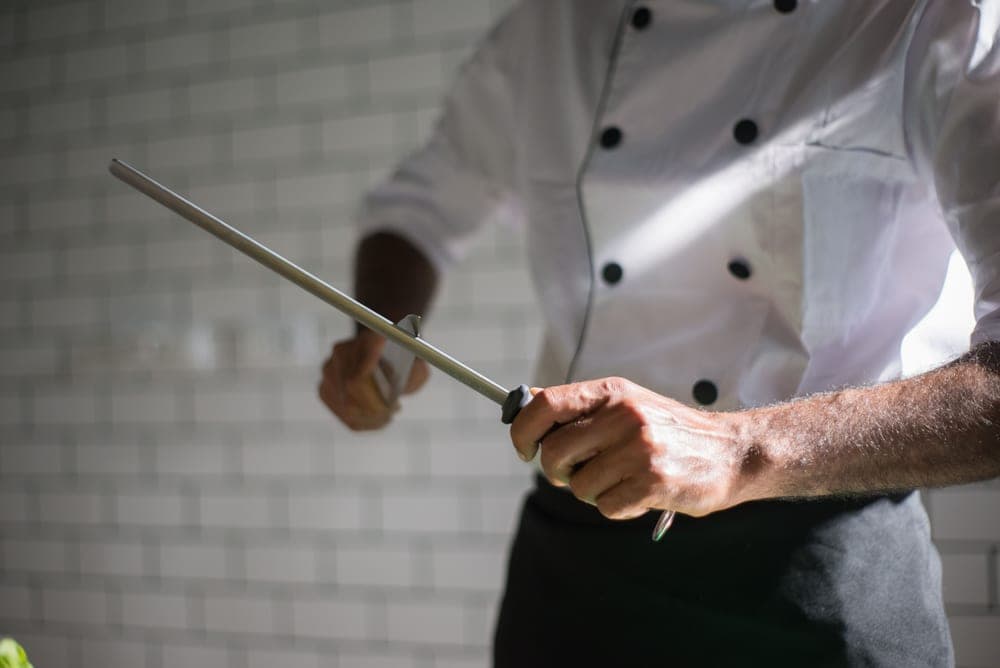
What this is based on: published manufacturer specifications and retailer listings, cited on each product; the weight of professional and owner reviews across multiple retailers; and hands-on experience sharpening and cooking with knives of this type. We have not individually tested every model listed, we do not run instrumented sharpness testing, and we do not claim a test we did not run.
Quick picks
| # | Product | Best for | Score | Price |
|---|---|---|---|---|
| 1 | 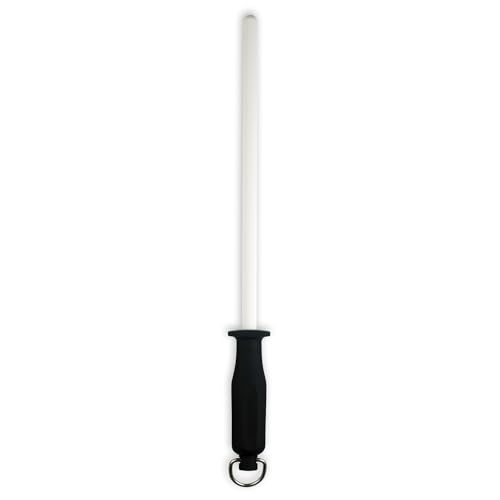 Messermeister 12" Fine Ceramic Sharpening Rod (CR-12F) | Maintaining a hard Japanese edge between sharpenings | 8.8 | |
| 2 | 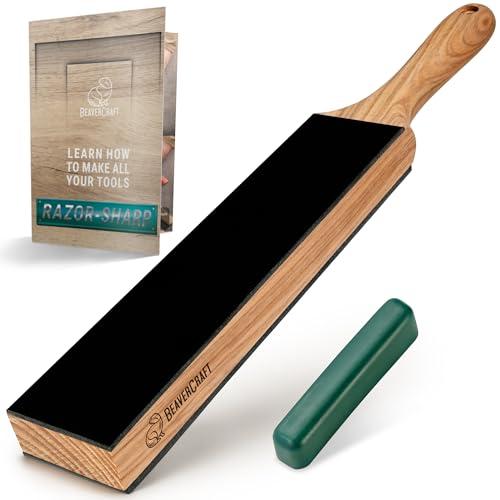 BeaverCraft LS6P1 Leather Strop & Compound Kit | Finishing after the stones | 8.0 | |
| 3 | 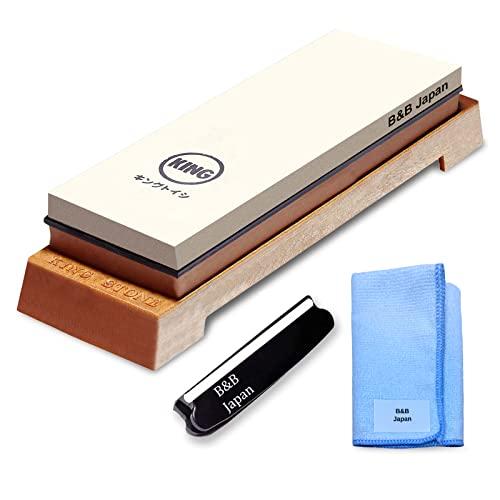 King 1000/6000 Combination Whetstone (Starter Set) | Your first stone | 8.4 |
Honing and sharpening are different jobs. A stone removes steel and creates a new edge; a rod pushes a rolled edge back into line so the apex meets the food square again. A Japanese knife at 60 to 64 HRC rolls more slowly than a German knife at 56 to 58, which is why the ritual is weekly rather than daily - but it still rolls, and a rod is the cheapest way to get the sharpness back.
Step one: get the right rod
The rod has to be harder than the knife. Published honing-rod guidance puts most steel rods at roughly 58 to 60 HRC, which is below a Japanese blade's 60 to 64, and alumina or zirconia ceramic above anything used in a kitchen knife. A softer rod skates - it feels like it is doing something, it is not - and if you lean on it to force a result, a hard thin edge micro-chips.
Buy a fine rod, not a coarse one. Maintenance rods are usually described as roughly 1000 to 1500 grit; the Messermeister CR-12F is a fine 1200 grit, which its specification puts at around 3500 on the Japanese scale, on 12 inches of rod. That grit removes just enough steel to tidy a rolled apex without touching the geometry behind it. Our ceramic against steel comparison goes through the materials properly.
Step two: the stroke
- Plant the rod tip-down on a towel. Vertical, point resting on a folded cloth on the worktop, your hand at the top of the handle. This is safer than the mid-air flourish and far easier to keep at a constant angle.
- Set 15 degrees. Lay the blade flat against the rod, then lift the spine until you have roughly the gap of two stacked coins at the heel. If you know your knife's factory angle, match it: 15 degrees for a MAC Professional, 16 for a Shun Classic.
- Start at the heel. Touch the heel of the edge to the top of the rod and draw the knife down and toward you so the contact point travels from heel to tip in one smooth motion.
- Use the weight of the knife and nothing more. No pressure. You are aligning steel, not removing it. If you can hear a scraping rasp you are pressing too hard.
- Alternate sides, five or six strokes each. Left, right, left, right. Finish with one very light stroke per side.
- Wipe the blade and test. A sheet of paper, held up, cut from the top. If it parts cleanly you are done. If it tears, stop honing - the knife needs a stone.
A rod realigns an edge that exists. If the apex is actually worn away, chipped or rounded over, no number of strokes will bring it back and the extra force people apply at that point is exactly what causes chips in hard steel. That is a sharpening job - our diagnostic page walks through telling the two apart.
Step three: how often, and what it buys you
Once or twice a week for a knife in daily use, or at the start of a session where you know you will be cutting for an hour. German knives want this daily because 58 HRC steel deflects quickly; a Japanese blade at 61 holds its line for longer, so the habit is lighter.
What it buys is time between sharpenings. A knife that is honed regularly reaches the stones far less often, which matters because every sharpening removes steel and a knife has a finite amount of it. Our page on how often to sharpen sets out the intervals, and sharpening against honing explains why neither replaces the other.
The finishing step most people skip
A leather strop with compound does something a rod cannot: it removes the burr and polishes the apex. After a rod, two minutes of edge-trailing strokes on leather makes a noticeable difference to how the knife feels going into a tomato, and it costs less than almost anything else in the kitchen. The one rule is that you pull the blade edge-trailing - spine first - and keep the spine down, because lifting it rounds the edge over.
Our stropping guide covers the motion properly, and rod against strop explains which tool owns which job.
What goes wrong
- Using a grooved steel rod. Softer than your blade. The grooves also catch a thin edge and can roll it further.
- Honing at 20 to 22 degrees. That is the German angle in the leaflet. On a 15-degree Japanese edge it blunts the apex you are trying to straighten.
- Pressure. The single most common cause of chips on hard steel. The weight of the knife is the whole force budget.
- Thirty strokes. More is not better. Six light strokes a side and then a test cut.
- Knocking the ceramic rod on the counter. Ceramic is brittle. Store it where it cannot be dropped and never tap it on a stone worktop.
The short version
Fine ceramic rod, planted vertically on a towel, 15 degrees, six light strokes per side, paper test. If the paper tears, put the rod away and get a stone out - a 1000/6000 combination stone is the next purchase and our Japanese knife sharpening guide takes it from there. Done weekly, this one habit keeps a good knife sharp for months at a time.
The picks in detail
#1 · Maintaining a hard Japanese edge between sharpenings
Messermeister 12" Fine Ceramic Sharpening Rod (CR-12F)
The honing rod that is actually harder than your knife. Fine 1200-grit ceramic, which is roughly 3000-3500 on the Japanese scale.
What it does well
- Ceramic is harder than the steel in a 60+ HRC Japanese knife; a steel rod often is not
- 1200 grit realigns without removing meaningful steel
- 12 in of rod handles a 240 mm gyuto in one pass
Where it gives way
- Ceramic is brittle — one hard knock on a stone counter and it is done
- Removes so little steel that it cannot rescue a truly dull knife
- 12 in is longer than some drawers
Skip it if: Anyone who bangs the rod on the counter. Ceramic chips; steel does not.
| Rod length | 12 in |
|---|---|
| Overall length | 18.25 in |
| Grit | Fine, 1200 grit (approx. 3500 JIS) |
| Material | Ceramic abrasive over a ceramic core |
| Handle | Soft-grip ABS with a metal hang ring |
| Weight | 8.2 oz (235 g) |
| Origin | Made in China |
#2 · Finishing after the stones
BeaverCraft LS6P1 Leather Strop & Compound Kit
Leather and abrasive that removes the burr your finishing stone left behind. The cheapest real improvement in this whole category.
What it does well
- Turns a good stone edge into a noticeably better one in two minutes
- Extends the interval between full sharpenings
- Costs less than almost anything else in the kitchen
Where it gives way
- Easy to round the edge over if you lift the spine
- Does nothing for a genuinely dull knife
- Leather needs re-charging with compound periodically
Skip it if: Sharpening. A strop refines and deburrs; it removes almost no steel and will not fix a dull knife.
| Function | Burr removal and edge refinement |
|---|---|
| Format | 14 in double-sided leather strop block, compound included |
| Direction | Edge-trailing strokes only |
#3 · Your first stone
King 1000/6000 Combination Whetstone (Starter Set)
The stone almost everyone learns on. Soft, forgiving, cheap, and it tells you loudly when your angle wanders.
What it does well
- Two useful grits in one block for the price of half a premium stone
- Soft binder builds slurry readily, which gives beginners real feedback
- Almost impossible to damage a knife on it
Where it gives way
- Dishes quickly and needs flattening often
- The soak is a real commitment — you cannot sharpen on a whim
- Slow on hard powder steels like SG2
Skip it if: Impatient people. The 1000 side wants a 10-15 minute soak before every session and the clay binder dishes fast.
| Grits | #1000 / #6000, combination |
|---|---|
| Binder | Clay |
| Soaking | #1000 side: 10-15 minutes. #6000 side: splash only |
| Size | 207 x 66 x 36 mm |
| Weight | approx. 956 g |
| In the box | Stone, plastic base, angle holder and wiping cloth |
Common questions
Can you hone a Japanese knife?
How many strokes should I use?
What angle do you hone a Japanese knife at?
How often should I hone?
Sources
Read next
Whetstones & Skill
Sharpening vs Honing
Sharpeners
Honing Steel vs Ceramic Rod
Sharpeners
Best Honing Rods
Whetstones & Skill
How Often to Sharpen a Kitchen Knife
Whetstones & Skill
How to Sharpen a Japanese Knife
Whetstones & Skill