Whetstones & Skill
Shapton Glass Stone 1000 Review
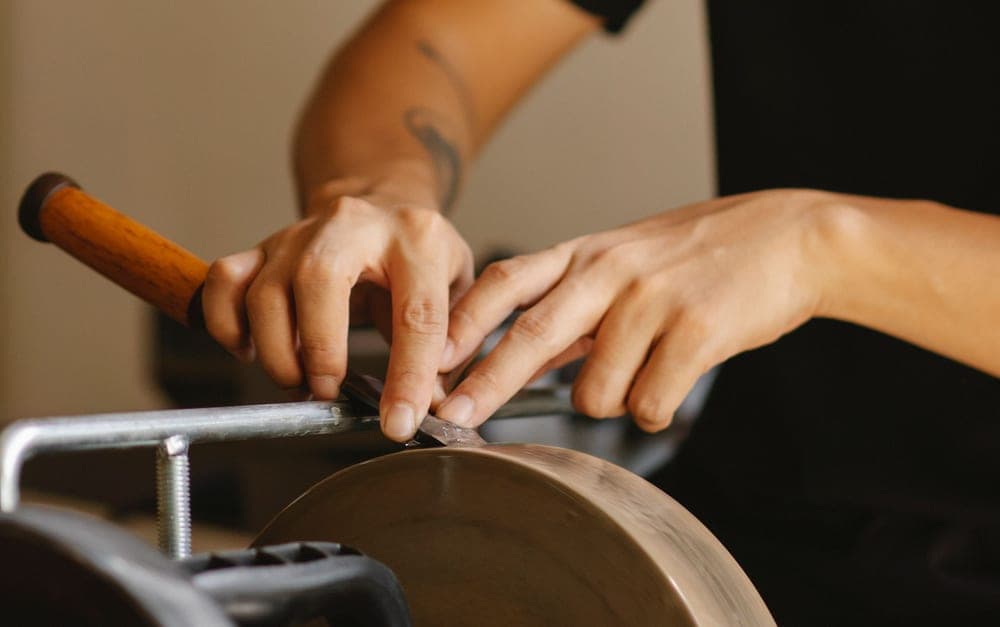
What this is based on: published manufacturer specifications and retailer listings, cited on each product; the weight of professional and owner reviews across multiple retailers; and hands-on experience sharpening and cooking with knives of this type. We have not individually tested every model listed, we do not run instrumented sharpness testing, and we do not claim a test we did not run.
Quick picks
| # | Product | Best for | Score | Price |
|---|---|---|---|---|
| 1 | 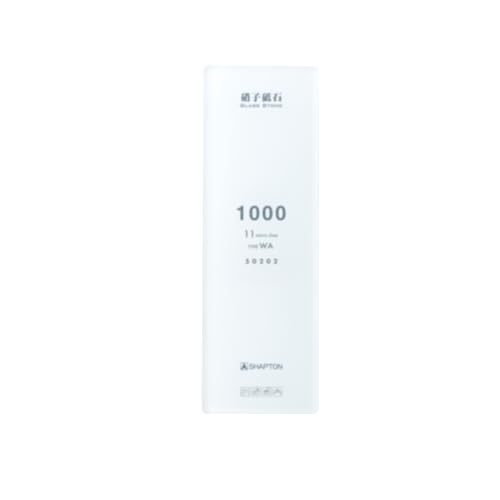 Shapton Glass Stone 1000 | Hard steels and no patience for soaking | 8.3 | |
| 2 | 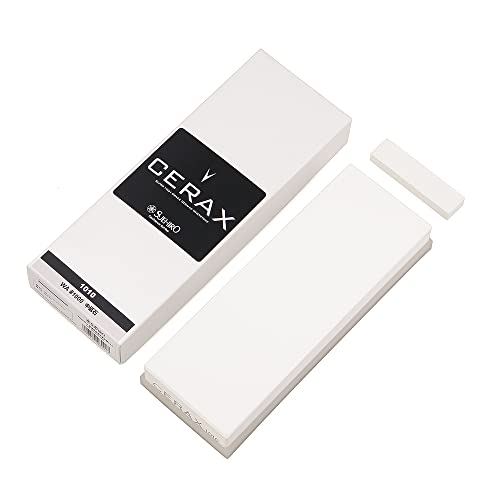 Suehiro Cerax 1010 (#1000) | SG2, HAP40 and other powder steels | 8.3 | |
| 3 | 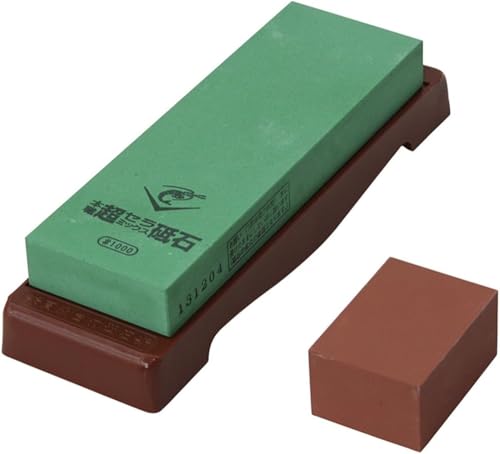 Naniwa Professional (Chosera) 1000 | The one stone to own if you only own one | 8.6 |
This is the site's first single-stone review, and the Glass 1000 is the right place to start because it is the stone most people graduate to and the stone most often bought too early.
The published numbers
| Specification | Figure |
|---|---|
| Grit | 1000 (Shapton scale) |
| Particle size | 14.7 microns |
| Part number | 50202 |
| Size | 210 x 70 x 10.5 mm (approx. 8 1/4 x 2 3/4 x 3/8 in) |
| Abrasive layer | 5 mm ceramic |
| Base | 5 mm glass |
| Binder | Non-absorbent; composition not published |
| Soaking | None - splash and go, kept wet with a squirt bottle |
| Intended steels | Harder steels, stainless and modern alloys (HR series) |
| Grits in the series | 120 to 30000, fourteen options |
| Weight | Not published |
| Flatness tolerance | Not published as a figure ("strictest tolerances") |
The specification that does the most work here is the particle size. Grit numbers are not standardized between makers - a Japanese 1000 and a American 1000 can be different stones - so 14.7 microns is the figure to compare across brands. Our grit guide has the full ladder and what each band is for.
Splash and go is not a convenience feature
Shapton's published guidance is that the Glass HR needs no soaking: wet the surface, sharpen, keep it wet with a squirt bottle. That sounds like a small thing and it changes the habit completely.
A soaking stone imposes a decision before you start. You have to want to sharpen ten or fifteen minutes before you sharpen, which in practice means you do it less often, which means every session starts from a duller knife and takes longer. A splash-and-go stone removes the decision - the knife feels off, you sharpen it, you are done before the soaking stone would have been ready. Over a year that is the difference between sharpening four times and sharpening whenever you notice. Do you need to soak a whetstone covers which stones need it and why.
There is a storage benefit too. A stone that does not absorb water does not sit damp in a cupboard, which is how soaking stones grow things and how they crack if they freeze. The Glass dries almost immediately because there is nothing in it to dry.
The thing it is bad at: feedback
A soft stone talks to you. You feel the abrasive giving way under the edge, you hear the pitch change when the bevel sits flat, and the slurry that builds up tells you the stone is cutting. That running commentary is how a beginner learns whether the angle is being held, because you cannot see a 15-degree bevel while you are standing over it.
The Glass 1000 is hard and quiet. It cuts quickly and it tells you very little. An experienced sharpener does not mind, because their hands already know what the angle feels like and they would rather have the speed. Someone on their second session is being deprived of the only sense that was going to teach them anything - they will round the bevel, wonder why the knife will not take an edge, and blame the stone.
If you have not raised a burr on purpose yet, buy a softer stone. A Suehiro Cerax 1000 gives you feedback and a slurry and will teach you more in two sessions than the Glass will in ten - it needs a short soak, which is the price of that. Our best whetstone for beginners makes the case properly, and why is my knife still not sharp is the page people land on after learning on a stone this quiet.
What it is genuinely excellent at
Hard steel. Shapton recommends the HR series specifically for harder steels, stainless and modern alloys, and that recommendation matches what the stone does. A soft clay binder glazes over against a 63 HRC powder-steel blade - the abrasive dulls and the stone stops cutting, and you end up pushing a knife across a polished brick. A hard ceramic binder keeps presenting fresh abrasive instead.
In practice that makes the Glass 1000 the right medium stone for the knives this site is mostly about: VG-10 and VG-MAX around 60 to 61 HRC, SG2 in the low 60s, and the AUS-10 class blades sold with hardness floors in the same bracket. If your knife collection is German stainless in the mid 50s, you do not need this stone and a softer one will serve you better. Best whetstone for Japanese knives is the roundup version of that decision.
Five millimeters, and how long that lasts
The stone is 10.5 mm thick and only the top 5 mm of it is stone. The rest is a glass plate that exists to keep the thin abrasive layer dead flat and to give you something to hold. A traditional 1000-grit stone of the same footprint - the Naniwa Chosera Pro, for instance - is 20 mm of usable material.
Read as a durability spec that looks alarming, and in use it is not, for two reasons. A hard binder dishes much more slowly than a soft one, so you lose less material per session and you flatten it less often. And a home cook sharpening a few knives several times a year is removing a vanishing amount of stone each time. The honest caveat is that it is 5 mm against 20 mm, flattening eats into that, and the glass base is not a reserve - when the ceramic is gone the stone is finished. How to flatten a whetstone covers doing it without wasting material.
Shapton does not publish a weight, a flatness tolerance in numbers, or an expected service life, so we are not going to put figures on any of those. Judge flatness by inspection - a pencil grid and a flattening plate - rather than by a schedule.
The two stones to weigh it against
Suehiro Cerax 1000. Softer, needs a short soak, and talks to you the whole time. It is the better teacher and the cheaper stone, and it is what we would put in a first-timer's hands. It dishes faster, which is the cost of the feedback.
Naniwa Chosera Pro 1000. Also splash and go, a magnesia binder, and 20 mm of material at 210 x 70 mm. It is the premium answer to the same problem: no soaking, but far more stone and a slightly softer feel than the Shapton. It costs more. If the 5 mm of abrasive is what gives you pause, this is the stone to look at instead.
All three are covered against each other in our whetstone roundup, and best whetstone brands explains where Shapton, Naniwa, Suehiro and King sit relative to one another as makers.
Who should buy it
- You already sharpen freehand and hold an angle reliably. This is the upgrade: same result, a fraction of the setup.
- Your knives are hard - 60 HRC and up. A hard binder is what keeps cutting where a clay stone glazes.
- Soaking is the reason you do not sharpen often enough. Removing that step is the single biggest change you can make to how sharp your knives actually are.
- You are short on space or storage is awkward. It dries instantly and stores dry.
Who should not
This would be your first stone, or your knives are all German stainless in the mid 50s. In the first case you need feedback more than speed; in the second you are paying for a hard binder that your soft steel does not require. Either way a Suehiro Cerax 1000 is the better buy, and are whetstones worth it is worth reading first if you have not committed to freehand sharpening at all.
The verdict
The Shapton Glass 1000 is the best medium stone on this site for the second half of a sharpening life. It is fast, it is flat, it bites into hard steel that softer stones slide over, and it turns sharpening from an occasion into a habit by deleting the one step that made it an occasion. The 5 mm abrasive layer is a real limitation and a mostly theoretical one at home.
What it will not do is teach you. Buy it when your hands already know the angle and what you want is to stop waiting for a bucket - and if you are not there yet, start with a softer stone, work through how to use a whetstone and how to sharpen a Japanese knife, and come back to this one when soaking has become the only part you dislike.
For worked examples of the knives this stone is aimed at, Shun against Cangshan compares two Damascus-clad blades published at 61 HRC and 61 plus or minus 2 - exactly the bracket where a hard binder earns its money.
The picks in detail
#1 · Hard steels and no patience for soaking
Shapton Glass Stone 1000
5 mm of hard abrasive bonded to a glass plate. Splash and go, dishes slowly, and cuts hard steel that a King barely scratches.
What it does well
- Genuinely splash and go — water on, sharpen, done in five minutes
- Hard binder dishes far more slowly than a clay stone
- Cuts hard powder steels that soft stones struggle with
Where it gives way
- Only 5 mm of usable abrasive; the glass base is not a stone
- Hard and quiet, so it hides angle errors from a beginner
- Costs roughly what a full King combination stone does, for one grit
Skip it if: Learning on. It is hard and quiet — it gives far less feedback than a soft stone, which is exactly what a beginner needs.
| Grit | 1000 (Shapton scale) |
|---|---|
| Size | 210 x 70 mm, 5 mm abrasive on a 5 mm glass base |
| Soaking | None - splash and go; keep the surface wet with a squirt bottle |
| Binder | Non-absorbent ceramic |
#2 · SG2, HAP40 and other powder steels
Suehiro Cerax 1010 (#1000)
High abrasive concentration, minimal binder. It bites hard, abrasion-resistant steels that politer stones skate over.
What it does well
- High abrasive concentration cuts hard steels quickly
- Builds slurry well and gives good tactile feedback
- Middle-of-the-road hardness suits most kitchen steels
Where it gives way
- Needs a soak, so it is not a five-minute job
- Slurry is messy
- Less widely stocked in the US than King or Shapton
Skip it if: Splash-and-go convenience. It wants a short soak first, every time.
| Grit | #1000 |
|---|---|
| Model | Cerax 1010 |
| Soaking | Short soak required |
| Hardness | Softer than a Shapton Pro, harder than a Naniwa Super Stone |
#3 · The one stone to own if you only own one
Naniwa Professional (Chosera) 1000
The stone that does the most with one grit. Hard enough to dish slowly, soft enough to raise a slurry that tells you what the edge is doing.
What it does well
- Splash and go, but still builds a rich, informative slurry
- Fast enough to reset a dull edge, refined enough to finish on
- 20 mm of abrasive — years of use before it is spent
Where it gives way
- Expensive for a single grit
- Magnesia binder does not like being stored wet
- You will still want a finishing stone eventually
Skip it if: A tight budget. It costs more than a combination stone and gives you one grit.
| Grit | 1000 |
|---|---|
| Size | 210 x 70 x 20 mm |
| Soaking | Splash and go |
| Binder | Magnesia |
Common questions
Do you need to soak a Shapton Glass stone?
What grit is the Shapton Glass 1000, really?
Is 5 mm of abrasive enough?
Will it sharpen hard Japanese steel?
Should this be my first whetstone?
Does it need flattening?
Sources
Read next
Whetstones & Skill
Best Whetstones for Kitchen Knives
Whetstones & Skill
Best Whetstone for Japanese Knives
Whetstones & Skill
Whetstone Grit Chart
Whetstones & Skill
Do You Need to Soak a Whetstone?
Whetstones & Skill
How to Flatten a Whetstone
Whetstones & Skill