Whetstones & Skill
Global Knife Sharpening Angle
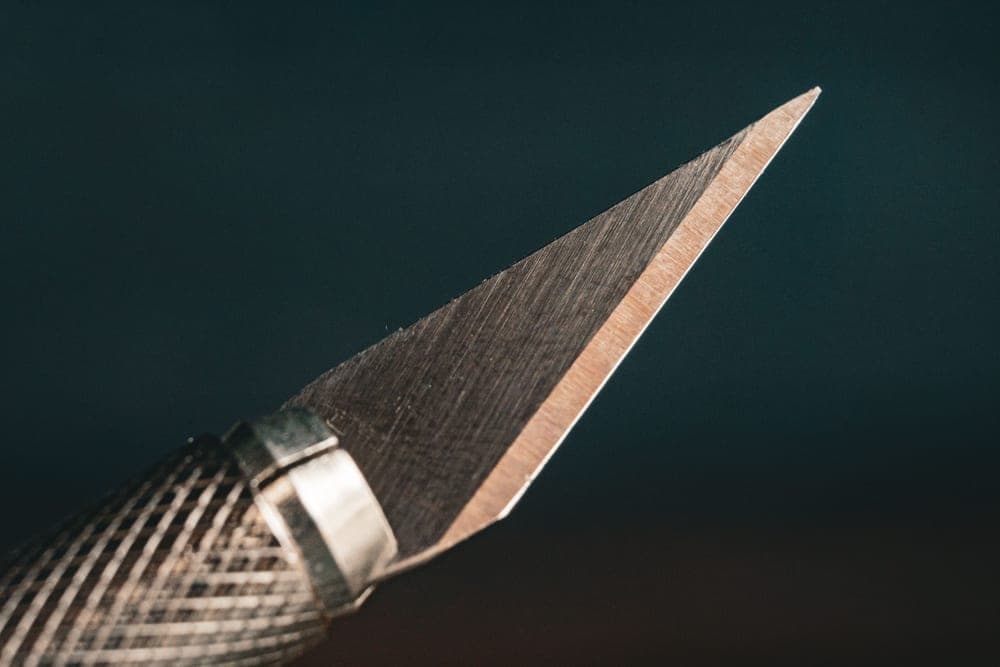
What this is based on: published manufacturer specifications and retailer listings, cited on each product; the weight of professional and owner reviews across multiple retailers; and hands-on experience sharpening and cooking with knives of this type. We have not individually tested every model listed, we do not run instrumented sharpness testing, and we do not claim a test we did not run.
Quick picks
| # | Product | Best for | Score | Price |
|---|---|---|---|---|
| 1 | 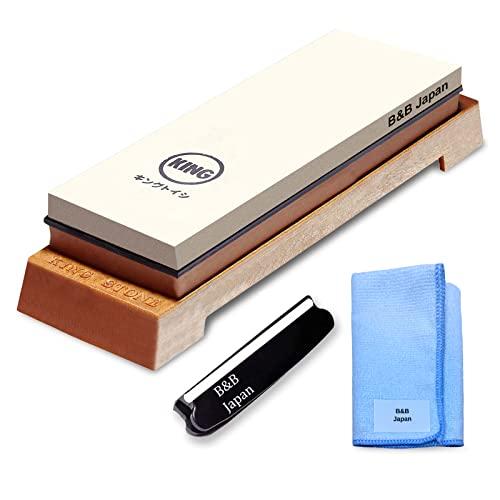 King 1000/6000 Combination Whetstone (Starter Set) | Your first stone | 8.4 | |
| 2 | 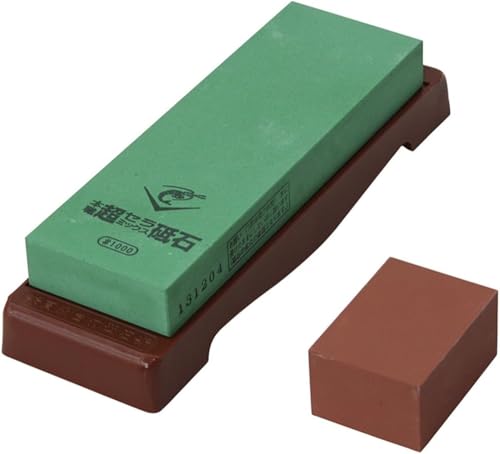 Naniwa Professional (Chosera) 1000 | The one stone to own if you only own one | 8.6 | |
| 3 | 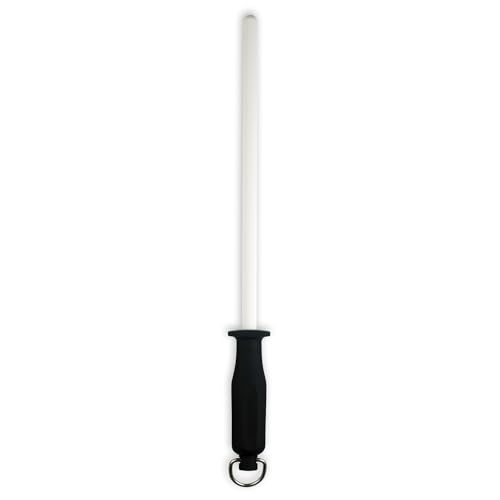 Messermeister 12" Fine Ceramic Sharpening Rod (CR-12F) | Maintaining a hard Japanese edge between sharpenings | 8.8 | |
| 4 | 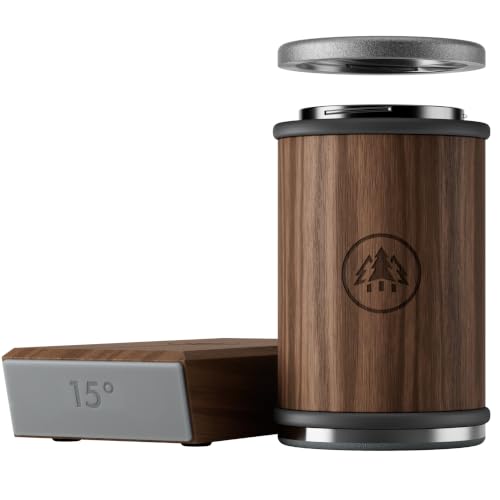 HORL 3 Rolling Knife Sharpener | A 15-degree Japanese edge you want kept sharp without learning to sharpen | 8.1 |
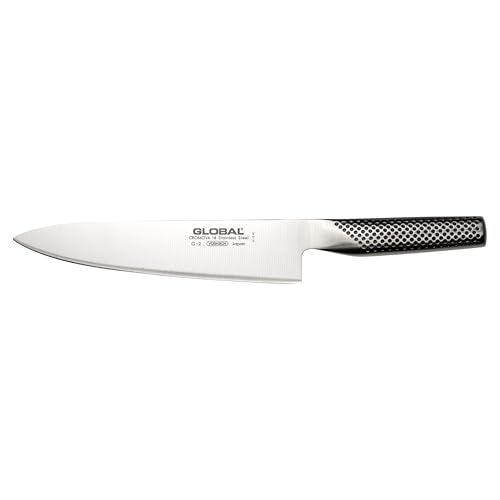
Global is a slightly awkward case. The blade is one piece of CROMOVA 18 stainless published at 56 to 58 HRC, which is soft for a Japanese knife, ground thin at 2 mm at the spine, and finished at an angle the maker states as a range rather than a number. That combination means the angle question matters more here than on a knife with a single published figure.
What to set, and why 15 rather than 10
| Published / recommended | |
|---|---|
| Factory edge | 10-15° per side, double bevel |
| Angle to sharpen at | 15° per side |
| Global's own sharpener result | 15° resulting angle (MinoSharp ceramic water stone) |
| Steel | CROMOVA 18 stainless |
| Hardness | 56-58 HRC |
| Spine | 2 mm |
| Maintenance between stones | Ceramic or diamond rod |
The temptation with a published range is to take the lower number, because a thinner angle cuts better. Resist it. At 56 to 58 HRC there is not much steel supporting the apex, and 10 degrees per side on soft steel rolls in days of ordinary use. 15 degrees keeps the thin-blade advantage - the 2 mm spine is doing most of that work anyway - with an apex that survives a week.
The routine
- Soak and set up. A King 1000/6000 combination stone wants 10 to 15 minutes on the 1000 side and a splash on the 6000. A Naniwa Professional 1000 is splash and go. Put the stone on a non-slip base at a height where your forearm is level.
- Find 15 degrees. Lay the blade flat, then lift the spine to about the thickness of two stacked coins at the heel. If you want certainty, use an angle guide - our angle guide page covers the methods.
- Raise a burr on the 1000. CROMOVA 18 grinds fast, so this takes less work than on a 61 HRC blade. Work in sections from heel to tip until you can feel a burr along the whole edge on the opposite side.
- Repeat on the other side. Same angle, same number of passes, until the burr flips.
- Finish at 6000. Light alternating strokes, four or five a side, which refines the apex and knocks the burr down.
- Deburr. Two minutes on a leather strop, or a few very light alternating passes on the fine stone. Then test on paper.
56 to 58 HRC means a Global comes back quickly and forgives a clumsy session - a genuinely good first knife to learn stone work on. It also means the edge rolls sooner than a VG-10 blade's would, so expect to use a rod more often. That is the steel, not your technique. See why your knife gets dull so fast.
Between sharpenings
Global's own guidance is periodic stone sharpening with a ceramic honing rod or diamond rod in between, and that is exactly right for this steel. A fine ceramic rod at around 1200 grit realigns a rolled edge in six light strokes a side at the same 15 degrees, and it will keep a Global usable for weeks between stone sessions.
A diamond rod is the faster option and the one to use sparingly, because it removes real steel rather than realigning it. The full breakdown is in honing steel against ceramic rod, and the step-by-step motion is in how to hone a Japanese knife.
If you will not use stones
Two honest options. Global's own MinoSharp ceramic water stone sharpener is built for these blades and produces a 15-degree resulting angle, which is the right number. Or a rolling sharpener set to 15 degrees does the same job on a wider range of knives - the HORL 3 is the pick, and our rolling sharpener roundup ranks the alternatives.
What not to use is an electric sharpener that reprofiles to a fixed Western angle, or a pull-through with carbide blades. On a 2 mm thin blade at 57 HRC those take out far more steel than the knife can afford, and the result is a scalloped edge. We cover why in do electric sharpeners ruin knives.
Why the range exists at all
A published figure of "10 to 15 degrees" looks like vagueness and is actually a description of a convex grind. Global thins its blades aggressively behind the edge and finishes them with a very acute apex, so the measured angle depends on how far back from the edge you measure. That is why the maker gives a window and why its own sharpener settles on 15 - that is the number that holds up in a kitchen.
It also explains something owners notice: a Global out of the box feels sharper than its hardness ought to allow, and loses that edge faster than a VG-10 knife would. The very fine factory apex is doing the work, and once it rolls you are into the 15-degree bevel behind it. Sharpening at 15 and honing often gets you most of that initial performance back indefinitely. If you want the longer-lasting edge instead, that is a steel question - see our edge retention roundup.
The short version
15 degrees per side, on a 1000-grit water stone, finished at 6000, deburred, and maintained with a fine ceramic rod. That is inside Global's published 10 to 15 degree window, it is what Global's own sharpener produces, and it is the angle that CROMOVA 18's hardness can actually hold. Our Global G-2 review covers the knife itself, and how to use a whetstone covers the motion in detail if this is your first stone.
The picks in detail
#1 · Your first stone
King 1000/6000 Combination Whetstone (Starter Set)
The stone almost everyone learns on. Soft, forgiving, cheap, and it tells you loudly when your angle wanders.
What it does well
- Two useful grits in one block for the price of half a premium stone
- Soft binder builds slurry readily, which gives beginners real feedback
- Almost impossible to damage a knife on it
Where it gives way
- Dishes quickly and needs flattening often
- The soak is a real commitment — you cannot sharpen on a whim
- Slow on hard powder steels like SG2
Skip it if: Impatient people. The 1000 side wants a 10-15 minute soak before every session and the clay binder dishes fast.
| Grits | #1000 / #6000, combination |
|---|---|
| Binder | Clay |
| Soaking | #1000 side: 10-15 minutes. #6000 side: splash only |
| Size | 207 x 66 x 36 mm |
| Weight | approx. 956 g |
| In the box | Stone, plastic base, angle holder and wiping cloth |
#2 · The one stone to own if you only own one
Naniwa Professional (Chosera) 1000
The stone that does the most with one grit. Hard enough to dish slowly, soft enough to raise a slurry that tells you what the edge is doing.
What it does well
- Splash and go, but still builds a rich, informative slurry
- Fast enough to reset a dull edge, refined enough to finish on
- 20 mm of abrasive — years of use before it is spent
Where it gives way
- Expensive for a single grit
- Magnesia binder does not like being stored wet
- You will still want a finishing stone eventually
Skip it if: A tight budget. It costs more than a combination stone and gives you one grit.
| Grit | 1000 |
|---|---|
| Size | 210 x 70 x 20 mm |
| Soaking | Splash and go |
| Binder | Magnesia |
#3 · Maintaining a hard Japanese edge between sharpenings
Messermeister 12" Fine Ceramic Sharpening Rod (CR-12F)
The honing rod that is actually harder than your knife. Fine 1200-grit ceramic, which is roughly 3000-3500 on the Japanese scale.
What it does well
- Ceramic is harder than the steel in a 60+ HRC Japanese knife; a steel rod often is not
- 1200 grit realigns without removing meaningful steel
- 12 in of rod handles a 240 mm gyuto in one pass
Where it gives way
- Ceramic is brittle — one hard knock on a stone counter and it is done
- Removes so little steel that it cannot rescue a truly dull knife
- 12 in is longer than some drawers
Skip it if: Anyone who bangs the rod on the counter. Ceramic chips; steel does not.
| Rod length | 12 in |
|---|---|
| Overall length | 18.25 in |
| Grit | Fine, 1200 grit (approx. 3500 JIS) |
| Material | Ceramic abrasive over a ceramic core |
| Handle | Soft-grip ABS with a metal hang ring |
| Weight | 8.2 oz (235 g) |
| Origin | Made in China |
#4 · A 15-degree Japanese edge you want kept sharp without learning to sharpen
HORL 3 Rolling Knife Sharpener
The third generation of the sharpener everyone copies. Block diamonds remove 80 percent more steel than the HORL 2, the magnetic grip pad holds 70 percent harder, and the discs now swap with a twist. Still only two angles.
What it does well
- 15-degree setting matches the factory grind on most Japanese kitchen knives
- Interchangeable diamond and ceramic discs, so it is serviceable rather than disposable
- The stronger magnetic grip pad holds small knives that the HORL 2 struggled with
Where it gives way
- Two angles only — the six-angle range is reserved for the much pricier Pro
- Sits at the premium end of the rolling-sharpener bracket; the Tumbler does the same job for far less
- Cannot repair a chip, flatten a warped bevel or thin a blade behind the edge
Skip it if: Anyone whose knives are not ground near 15 or 20 degrees, and anyone with a chipped or badly reprofiled edge — this is maintenance, not repair.
| Angles | 15 degrees and 20 degrees |
|---|---|
| Discs | Block-diamond sharpening + ceramic honing, interchangeable |
| Disc exchange | Quick Lock — swap with a twist |
| Magnetic support | Grip Pad, 70% more grip than the HORL 2 |
| Abrasion | 80% more material removal than the HORL 2 |
| Body | Solid oak or walnut |
| Origin | Engineered in Germany |
Common questions
What angle do you sharpen a Global knife at?
Can you sharpen Global knives on a whetstone?
Why does my Global knife go dull so fast?
Should I sharpen a Global at 10 degrees?
Sources
Read next
Whetstones & Skill
Knife Sharpening Angle Chart
Brands
Global G-2 Review
Whetstones & Skill
How to Use a Whetstone
Whetstones & Skill
Best Whetstone for Japanese Knives
Whetstones & Skill