Whetstones & Skill
Why Does My Knife Get Dull So Fast?
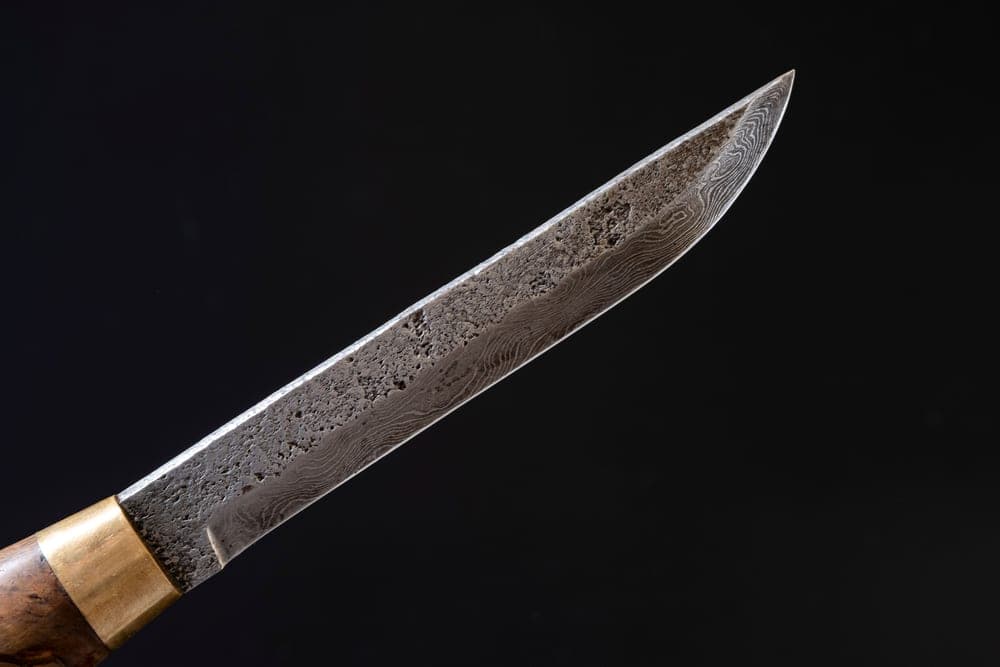
What this is based on: published manufacturer specifications and retailer listings, cited on each product; the weight of professional and owner reviews across multiple retailers; and hands-on experience sharpening and cooking with knives of this type. We have not individually tested every model listed, we do not run instrumented sharpness testing, and we do not claim a test we did not run.
Quick picks
| # | Product | Best for | Score | Price |
|---|---|---|---|---|
| 1 | 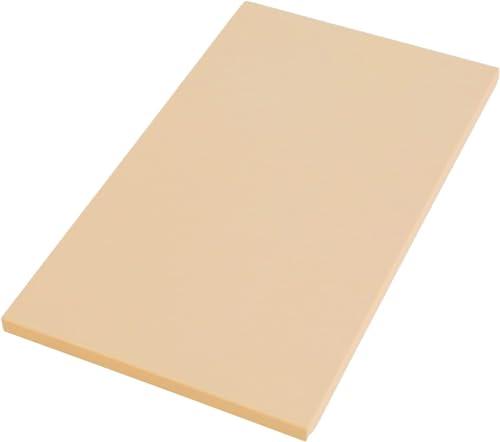 Asahi Cookin' Cut Rubber Cutting Board | Edge friendliness per dollar | 8.5 | |
| 2 | 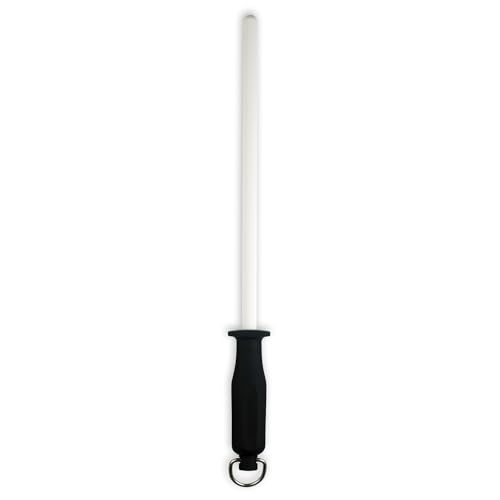 Messermeister 12" Fine Ceramic Sharpening Rod (CR-12F) | Maintaining a hard Japanese edge between sharpenings | 8.8 | |
| 3 | 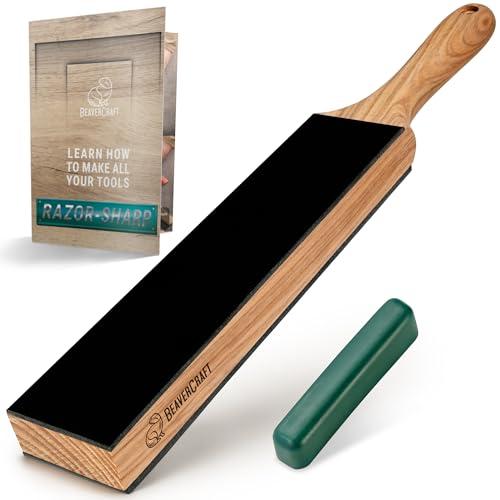 BeaverCraft LS6P1 Leather Strop & Compound Kit | Finishing after the stones | 8.0 | |
| 4 | 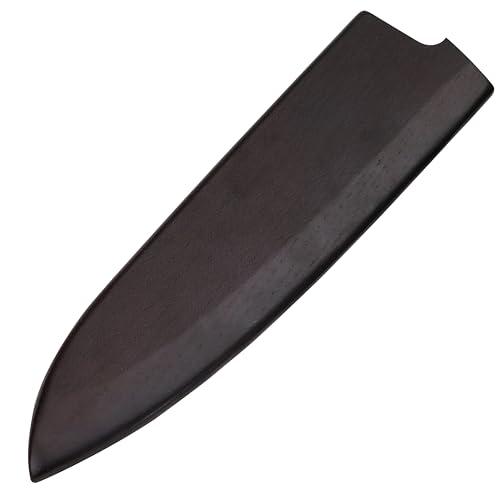 Magnetic Wood Saya Blade Guard, 210 mm | Anyone whose knives live in a drawer | 8.9 |
Steel wears slowly. An edge on a 60 HRC Japanese knife cutting vegetables on a soft board should stay usable for weeks. If yours is gone in three days, something is damaging it, and the six causes below are in rough order of how often they turn out to be the answer.
1. The board is harder than the steel
This is the one. Glass, stone, granite, ceramic tile and bamboo are all harder than kitchen knife steel, and every single cut lands the edge against that surface. Bamboo is the quiet offender because it looks like wood and reads as gentle — it is a grass with silica in it, assembled with adhesive, and it is abrasive in a way end-grain maple is not.
The fix is the highest-value change in this whole article. A soft synthetic rubber board cushions the edge on contact, does not absorb juice and does not warp. A wood-core board with soft polyethylene faces does the same and can be re-planed when it scars. Either one will visibly extend how long your edge lasts; the options are in the cutting board guide.
2. The burr was never removed
When you sharpen, the two bevels meet and form a thin wire of fatigued steel along the very apex — the burr. It feels extremely sharp. It is also structurally weak, and it folds or tears off within the first few cuts, at which point the knife feels like it lost its edge overnight.
This is the single most common reason a home-sharpened knife “dulls immediately”. The fix is to finish properly: light alternating edge-trailing passes on the stone, then a dozen strokes on a leather strop with compound to tear the wire off cleanly. Our stropping guide covers the stroke, and why your knife still is not sharp covers the rest of the diagnosis.
3. Storage and the dishwasher
A knife thrown loose into a drawer gets its edge knocked against every other piece of metal in there. A knife in a dishwasher gets rattled against racks for an hour in hot alkaline detergent. Both produce exactly the kind of micro-chipping that reads as rapid dulling, and neither has anything to do with how the knife is sharpened.
A blade guard costs a fraction of a knife and solves the drawer problem completely. The dishwasher problem is solved by not doing it — the full explanation if you need convincing.
4. The edge is rolled, not dull
Softer steel — anything around 56 to 58 HRC, which covers most German and Swiss knives — fails by bending sideways rather than wearing away. A rolled edge cuts terribly and is not dull at all: there is a perfectly good apex, pointing in the wrong direction.
A few passes on a ceramic rod before each use straightens it in seconds. A 1200-grit ceramic rod is harder than any kitchen steel, including a 61 HRC Japanese core, which is why it works where the steel rod from a block set does not. The distinction matters: sharpening against honing.
5. The bevel is too thin for the steel
If you sharpened a soft knife to 12 degrees per side because you read that Japanese knives like thin edges, you built an edge the steel cannot support. It will feel astonishing for one meal and collapse after it.
Match the angle to the hardness, not to an ideal. Roughly: 15 to 16 degrees per side for Japanese steel at 59 HRC and up, 18 to 20 for soft stainless at 56 to 58. Figures by knife type are in the angle chart.
6. You are using it more than you think
Worth ruling out honestly. A knife that prepares two meals a day genuinely needs attention monthly, not annually, and a knife cutting squash, root vegetables and crusty bread wears faster than one cutting tomatoes. Expectations are part of the diagnosis; how often to sharpen sets out realistic intervals.
1. Replace a glass, stone or bamboo board with soft rubber or a wood-core board. 2. Put a ceramic rod where you cook and use it weekly. 3. Strop after sharpening to remove the burr. 4. Sheath or rack the knife instead of drawering it loose.
That is four purchases totalling less than a mid-range knife, and together they will multiply how long your edge lasts.
Telling the three failures apart
Before you buy anything, work out which failure you have. The diagnosis takes a minute and it decides the fix.
| Symptom | Cause | Fix |
|---|---|---|
| Cuts badly but the edge looks clean | Rolled edge | Ceramic rod, 30 seconds |
| Visible bright nicks along the edge | Chipping — hard board, bone or frozen food | Stone, several sessions; change the board |
| Sharp for a day, then gone | Burr left on from sharpening | Deburr and strop properly |
| Gradually worse over weeks | Normal wear | Sharpen on a 1000-grit stone |
Hold the edge up to a light and look straight down at it. A sharp edge reflects nothing — there is no flat to catch the light. A bright line along part of the edge is a flat, which is wear. Bright points are chips. If it looks like none of those and still will not cut paper, it is rolled, and the sharpness tests will confirm it.
What normal actually looks like
Part of the problem is that nobody tells you what to expect. Rough guides for a knife on a soft board, cutting ordinary food:
- Japanese knife at 60 HRC: weeks of daily use between sharpenings, with a ceramic rod weekly.
- German knife at 58 HRC: a few months between sharpenings if you hone before each use; days if you do not.
- Soft stainless at 56 HRC: honing is the main maintenance, and sharpening three or four times a year.
If your intervals are dramatically shorter than those, something on this page is happening. If they roughly match, the knife is behaving normally and the answer is a routine rather than a purchase — how often to sharpen.
The short version
Check the board, then check your deburring, then buy a ceramic rod. In most kitchens one of those three is the whole answer, and none of them involves buying a better knife — a sharper knife on a glass board is just a knife that will be dull again next week.
If the edge is not dulling but actually breaking away in visible pieces, that is a different problem: why is my knife chipping.
The picks in detail
#1 · Edge friendliness per dollar
Asahi Cookin' Cut Rubber Cutting Board
Synthetic rubber that cushions the edge on every cut, does not absorb juice, does not warp, and shrugs off turmeric and beets. The value answer in this category.
What it does well
- Soft surface cushions the blade on every cut
- Does not absorb juice, warp, or need oiling
- Resists staining from turmeric, beets and tomato
Where it gives way
- Not dishwasher safe
- Heavier than it looks for its size
- Rubber smell on a new board takes a few washes to fade
Skip it if: The dishwasher. Asahi boards are not dishwasher safe; Hasegawa boards are.
| Material | Synthetic rubber |
|---|---|
| Size | 16.5 x 9.8 x 0.5 in (420 x 250 x 13 mm) |
| Dishwasher | No |
| Service life | 10+ years in professional use before re-planing |
#2 · Maintaining a hard Japanese edge between sharpenings
Messermeister 12" Fine Ceramic Sharpening Rod (CR-12F)
The honing rod that is actually harder than your knife. Fine 1200-grit ceramic, which is roughly 3000-3500 on the Japanese scale.
What it does well
- Ceramic is harder than the steel in a 60+ HRC Japanese knife; a steel rod often is not
- 1200 grit realigns without removing meaningful steel
- 12 in of rod handles a 240 mm gyuto in one pass
Where it gives way
- Ceramic is brittle — one hard knock on a stone counter and it is done
- Removes so little steel that it cannot rescue a truly dull knife
- 12 in is longer than some drawers
Skip it if: Anyone who bangs the rod on the counter. Ceramic chips; steel does not.
| Rod length | 12 in |
|---|---|
| Overall length | 18.25 in |
| Grit | Fine, 1200 grit (approx. 3500 JIS) |
| Material | Ceramic abrasive over a ceramic core |
| Handle | Soft-grip ABS with a metal hang ring |
| Weight | 8.2 oz (235 g) |
| Origin | Made in China |
#3 · Finishing after the stones
BeaverCraft LS6P1 Leather Strop & Compound Kit
Leather and abrasive that removes the burr your finishing stone left behind. The cheapest real improvement in this whole category.
What it does well
- Turns a good stone edge into a noticeably better one in two minutes
- Extends the interval between full sharpenings
- Costs less than almost anything else in the kitchen
Where it gives way
- Easy to round the edge over if you lift the spine
- Does nothing for a genuinely dull knife
- Leather needs re-charging with compound periodically
Skip it if: Sharpening. A strop refines and deburrs; it removes almost no steel and will not fix a dull knife.
| Function | Burr removal and edge refinement |
|---|---|
| Format | 14 in double-sided leather strop block, compound included |
| Direction | Edge-trailing strokes only |
#4 · Anyone whose knives live in a drawer
Magnetic Wood Saya Blade Guard, 210 mm
The cheapest way to stop a drawer from ruining a good edge. A sheath costs a fraction of the knife; re-profiling a chipped tip costs an evening.
What it does well
- Stops the single most common cause of chipped tips: loose drawer storage
- Cheap enough to buy one per knife
- Makes it safe to reach into a drawer
Where it gives way
- A wet knife sheathed in wood will corrode — dry it properly first
- Sizes are fussy; a loose saya is worse than none
- Adds a step to putting the knife away
Skip it if: Nobody, really — but if you already have a magnetic rack or a proper block, you do not need one too.
| Function | Edge protection in storage and transit |
|---|---|
| Material | Wood saya with a magnetic blade catch |
| Fits | 210 mm (8 in) gyuto and chef's knives |
Common questions
Why does my knife get dull so fast?
Can a cutting board dull a knife?
Does honing make a knife sharper?
Does the dishwasher dull knives?
Sources
Read next
Whetstones & Skill
Why Your Knife Still Isn't Sharp
Whetstones & Skill
How Often to Sharpen a Kitchen Knife
Whetstones & Skill
Sharpening vs Honing
Steel & Care
Best Cutting Boards for Japanese Knives
Steel & Care
Why Is My Knife Chipping?
Whetstones & Skill