Sharpeners
Best Waterproof Knife Sharpeners
What this is based on: published manufacturer specifications and retailer listings, cited on each product; the weight of professional and owner reviews across multiple retailers; and hands-on experience sharpening and cooking with knives of this type. We have not individually tested every model listed, we do not run instrumented sharpness testing, and we do not claim a test we did not run.
Quick picks
| # | Product | Best for | Score | Price |
|---|---|---|---|---|
| 1 | 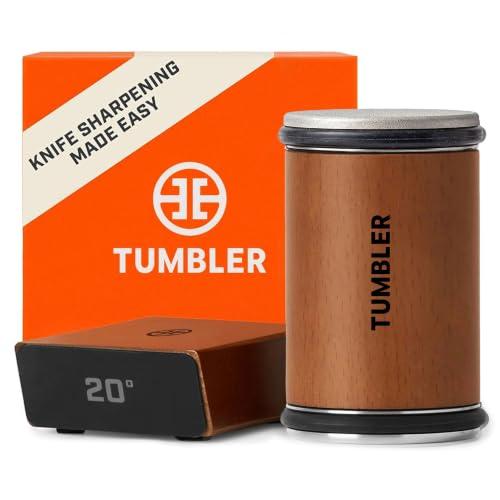 Tumbler Rolling Knife Sharpener | People who want a fixed angle and hate gear | 8.0 | |
| 2 | 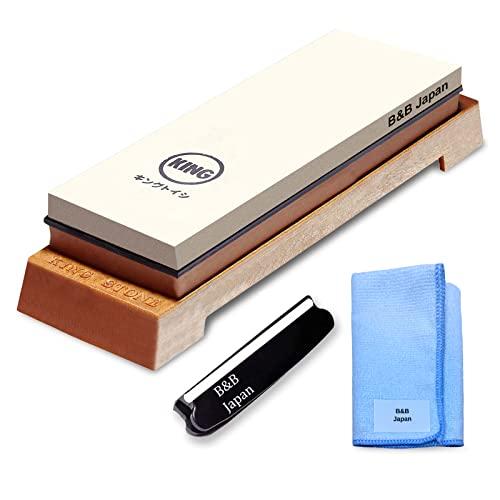 King 1000/6000 Combination Whetstone (Starter Set) | Your first stone | 8.4 | |
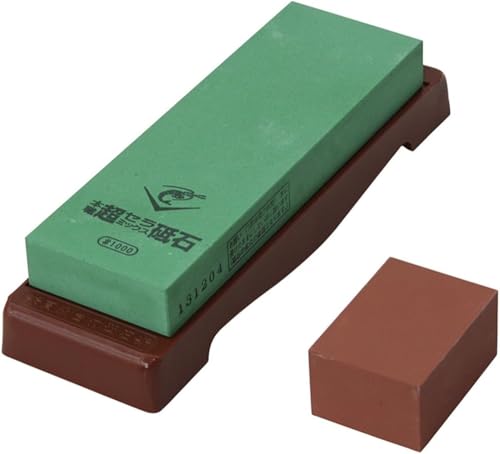
| 3 | 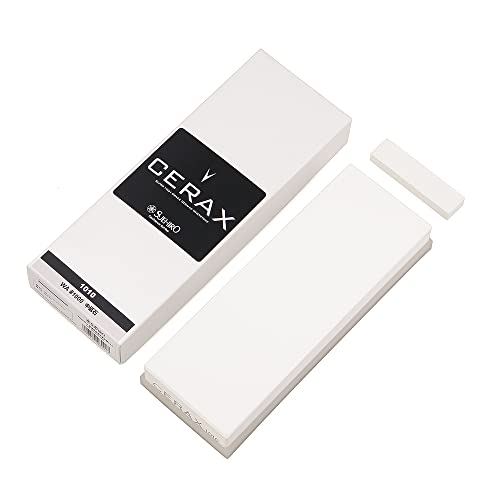 Suehiro Cerax 1010 (#1000) | SG2, HAP40 and other powder steels | 8.3 | |
| 4 | 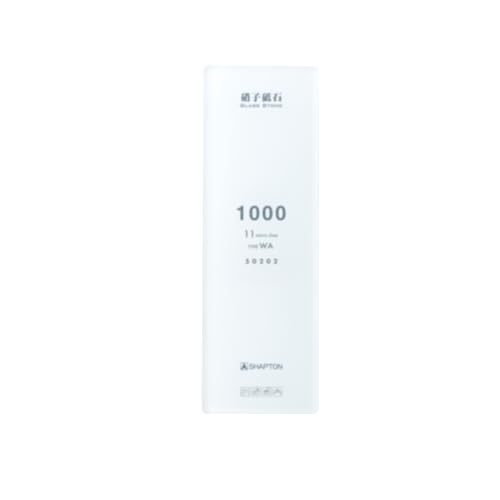 Shapton Glass Stone 1000 | Hard steels and no patience for soaking | 8.3 | |
| 5 | 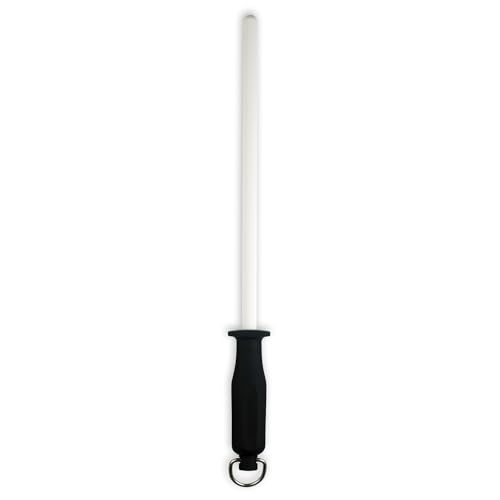 Messermeister 12" Fine Ceramic Sharpening Rod (CR-12F) | Maintaining a hard Japanese edge between sharpenings | 8.8 |
"Waterproof knife sharpener" is a query people type for one of two reasons, and they want different answers. Either you want a sharpener you can clean properly - because metal swarf and abrasive slurry are genuinely filthy and a wipe does not get it out of the corners - or you sharpen in a wet environment and you are worried about ruining the thing. Both reasons point the same way: away from anything with a motor.
What water actually breaks
It is worth being precise, because the abrasive is almost never the problem. Diamond, ceramic and bonded aluminium oxide are all used wet as a matter of routine - water is the lubricant that floats steel particles out of the abrasive so it keeps cutting. What water ruins is everything built around the abrasive: motor windings, a mains cable, a sealed bearing, a glued composite handle, and the steel backing plate a diamond surface is bonded to if you leave it wet.
So the honest version of this page is a list of sharpeners with nothing vulnerable in them. Three of the five are water stones, which are the original wet sharpening tool. One is an all-metal roller. One is a ceramic rod that rinses clean in seconds.
Which of these is for you
| Pick | How it handles water | The limit |
|---|---|---|
| Tumbler rolling sharpener | Steel body and magnetic holder - rinse and dry | Fixed at 15 or 20 degrees; cannot repair a chip |
| King 1000/6000 | Designed to be soaked 10-15 minutes before every session | Clay binder dishes fast and must not be stored wet long-term |
| Suehiro Cerax 1010 | Short soak required, then kept wet throughout | Slurry is messy; not a five-minute job |
| Shapton Glass 1000 | Splash and go - non-absorbent binder on a glass base | Only 5 mm of abrasive; quiet feedback |
| Messermeister ceramic rod | Ceramic abrasive over a ceramic core - wash it like a spoon | Brittle, and it hones rather than sharpens |
Soaking, splashing and storage
Among the stones there is a real split, and it is the thing that decides whether you will actually use one. The King needs its 1,000-grit side in a tub of water for ten to fifteen minutes before you can start, which makes sharpening a planned activity. The Shapton Glass needs a squirt bottle and nothing else: water on, sharpen, done. The Suehiro sits in between with a short soak. We go into the trade-off at length on do you need to soak a whetstone.
Storage is where waterproof stops being a virtue. A soaking stone left in its tub for weeks goes slimy; a magnesia-bonded stone stored wet degrades; any stone left full of water in an unheated garage over winter can crack when it freezes. Rinse, wipe, air-dry, shelve. That applies to every stone on the site, including the ones on the main whetstone roundup.
What not to buy if water is the concern
Any electric sharpener. The abrasive wheels would be fine. The motor and the cable will not be. If an electric machine is otherwise the right answer for your knives, our electric picks explain who that is - and you wipe them, you do not wash them.
A guided system with a leather strop in the kit. Leather and water are a bad combination. The top pick on the manual page ships one; keep that one component dry.
A wooden-bodied rolling sharpener, submerged. Oiled oak and walnut survive splashes and wipes. They are not dishwasher parts.
How these were chosen
Candidates had to be currently sold to US buyers, hand-powered, and documented by a manufacturer or specialist retailer we could cite on the points that matter here - binder type, soaking requirement, and what the body is made of. We score each on effectiveness, kindness to the edge, durability and value, using the rubric on our methodology page. We have not water-tested anything; the claims above rest on published construction and on how these tools are designed to be used.
Prices come from the live listing for each pick and carry the date they were read. If a listing has no live offer, the button says so rather than showing a number we cannot stand behind.
One last practical note. The reason wet sharpening is worth the mess is that water carries swarf away and keeps the abrasive cutting, which means fewer strokes and less heat at the edge. If you have been sharpening dry and wondering why it takes so long, that is the answer - and how to use a whetstone covers the rest of the technique.
The picks in detail
#1 · People who want a fixed angle and hate gear
Tumbler Rolling Knife Sharpener
A magnetic holder and a rolling abrasive disc that fixes your angle at 15 or 20 degrees. Two pieces, almost no learning curve.
What it does well
- Two pieces, nothing to assemble, nothing to set
- 15-degree setting is the correct angle for most Japanese kitchen knives
- Cheaper than the German alternative and, in side-by-side comparisons, as sharp
Where it gives way
- Magnetic holder limits you to the angles it offers
- Rolls less smoothly than the Horl 2
- Does nothing for a chipped or badly reprofiled edge
Skip it if: Anyone who wants to learn to sharpen. It works by removing the skill, which means you never acquire it.
| Angles | 15 degrees and 20 degrees |
|---|---|
| Components | Sharpening roller + magnetic knife holder |
| Origin | Made in China |
#2 · Your first stone
King 1000/6000 Combination Whetstone (Starter Set)
The stone almost everyone learns on. Soft, forgiving, cheap, and it tells you loudly when your angle wanders.
What it does well
- Two useful grits in one block for the price of half a premium stone
- Soft binder builds slurry readily, which gives beginners real feedback
- Almost impossible to damage a knife on it
Where it gives way
- Dishes quickly and needs flattening often
- The soak is a real commitment — you cannot sharpen on a whim
- Slow on hard powder steels like SG2
Skip it if: Impatient people. The 1000 side wants a 10-15 minute soak before every session and the clay binder dishes fast.
| Grits | #1000 / #6000, combination |
|---|---|
| Binder | Clay |
| Soaking | #1000 side: 10-15 minutes. #6000 side: splash only |
| Size | 207 x 66 x 36 mm |
| Weight | approx. 956 g |
| In the box | Stone, plastic base, angle holder and wiping cloth |
#3 · SG2, HAP40 and other powder steels
Suehiro Cerax 1010 (#1000)
High abrasive concentration, minimal binder. It bites hard, abrasion-resistant steels that politer stones skate over.
What it does well
- High abrasive concentration cuts hard steels quickly
- Builds slurry well and gives good tactile feedback
- Middle-of-the-road hardness suits most kitchen steels
Where it gives way
- Needs a soak, so it is not a five-minute job
- Slurry is messy
- Less widely stocked in the US than King or Shapton
Skip it if: Splash-and-go convenience. It wants a short soak first, every time.
| Grit | #1000 |
|---|---|
| Model | Cerax 1010 |
| Soaking | Short soak required |
| Hardness | Softer than a Shapton Pro, harder than a Naniwa Super Stone |
#4 · Hard steels and no patience for soaking
Shapton Glass Stone 1000
5 mm of hard abrasive bonded to a glass plate. Splash and go, dishes slowly, and cuts hard steel that a King barely scratches.
What it does well
- Genuinely splash and go — water on, sharpen, done in five minutes
- Hard binder dishes far more slowly than a clay stone
- Cuts hard powder steels that soft stones struggle with
Where it gives way
- Only 5 mm of usable abrasive; the glass base is not a stone
- Hard and quiet, so it hides angle errors from a beginner
- Costs roughly what a full King combination stone does, for one grit
Skip it if: Learning on. It is hard and quiet — it gives far less feedback than a soft stone, which is exactly what a beginner needs.
| Grit | 1000 (Shapton scale) |
|---|---|
| Size | 210 x 70 mm, 5 mm abrasive on a 5 mm glass base |
| Soaking | None - splash and go; keep the surface wet with a squirt bottle |
| Binder | Non-absorbent ceramic |
#5 · Maintaining a hard Japanese edge between sharpenings
Messermeister 12" Fine Ceramic Sharpening Rod (CR-12F)
The honing rod that is actually harder than your knife. Fine 1200-grit ceramic, which is roughly 3000-3500 on the Japanese scale.
What it does well
- Ceramic is harder than the steel in a 60+ HRC Japanese knife; a steel rod often is not
- 1200 grit realigns without removing meaningful steel
- 12 in of rod handles a 240 mm gyuto in one pass
Where it gives way
- Ceramic is brittle — one hard knock on a stone counter and it is done
- Removes so little steel that it cannot rescue a truly dull knife
- 12 in is longer than some drawers
Skip it if: Anyone who bangs the rod on the counter. Ceramic chips; steel does not.
| Rod length | 12 in |
|---|---|
| Overall length | 18.25 in |
| Grit | Fine, 1200 grit (approx. 3500 JIS) |
| Material | Ceramic abrasive over a ceramic core |
| Handle | Soft-grip ABS with a metal hang ring |
| Weight | 8.2 oz (235 g) |
| Origin | Made in China |
Common questions
What makes a knife sharpener waterproof?
Can I rinse a whetstone under the tap?
Is an electric knife sharpener waterproof?
Does water damage a diamond sharpening surface?
Should I sharpen with water or oil?
Sources
Read next
Sharpeners
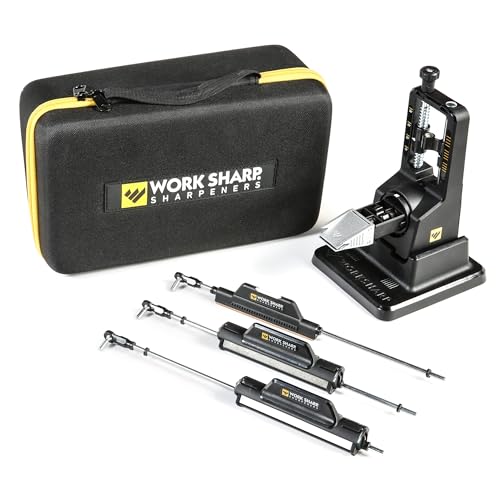
Best Manual Knife Sharpeners
Whetstones & Skill
Do You Need to Soak a Whetstone?
Whetstones & Skill
Best Splash and Go Whetstones
Sharpeners
Best Knife Sharpeners Under $100
Whetstones & Skill
How to Use a Whetstone