Brands
Tojiro vs Wüsthof
What this is based on: published manufacturer specifications and retailer listings, cited on each product; the weight of professional and owner reviews across multiple retailers; and hands-on experience sharpening and cooking with knives of this type. We have not individually tested every model listed, we do not run instrumented sharpness testing, and we do not claim a test we did not run.
Quick picks
| # | Product | Best for | Score | Price |
|---|---|---|---|---|
| 1 |  Tojiro DP Gyuto 210mm (F-808) | First Japanese knife | 8.6 | |
| 2 | 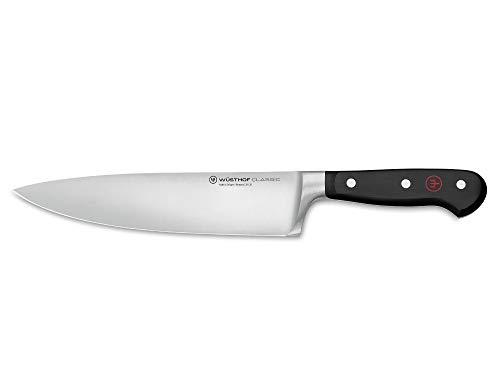 Wüsthof Classic 8" Chef's Knife | Cooks who want weight and a bolster | 7.4 | |
| 3 | 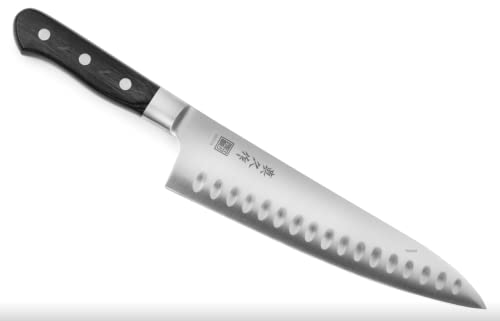 MAC Professional 8" Chef's Knife with Dimples (MTH-80) | The one-knife kitchen | 8.8 |
This is the most common upgrade on this site. The Wüsthof Classic is the knife in most serious home kitchens, and the Tojiro DP is the knife people buy when they decide the Wüsthof is the problem. Sometimes it is. Often the real answer is to own both and give each the work it is built for.
The published numbers
| Tojiro DP F-808 | Wüsthof Classic 8" | |
|---|---|---|
| Blade length | 210 mm (8.3 in) | 200 mm (8 in) |
| Steel | VG-10 core, 13-chrome stainless cladding (san mai) | X50CrMoV15, mono-steel, forged |
| Hardness | 59-60 HRC | 58 HRC |
| Factory edge | Double bevel, Japanese grind | 14° per side (28° inclusive) |
| Heel height | 43 mm | 1.9 in (47 mm) |
| Spine at heel | 1.9 mm | 3 mm |
| Weight | approx. 187 g | 9.3 oz (265 g) |
| Handle | Western laminated composite, stainless bolster | Riveted synthetic, full forged bolster |
1.1 mm of spine is the whole difference
Set hardness aside for a moment. The Wüsthof is 3 mm thick at the spine and the Tojiro is 1.9 mm. That is 37 percent less steel to push through the food, and it is the reason a German knife splits a sweet potato in half rather than slicing it and the reason it bruises basil that a thin blade leaves green.
No amount of sharpening changes this. Sharpness is the apex; wedging is the geometry behind it. If your complaint is "my knife is sharp but it still fights dense vegetables", you are describing a spine problem and a thinner blade is the only fix. Our Japanese against German comparison works through the category version of this argument.
Hardness beats a steeper factory bevel
Wüsthof grinds the Classic to 14 degrees per side, which is genuinely more acute than most people assume and more acute than MAC's 15. On paper the German knife should hold the sharper edge. It does not, because 58 HRC steel cannot support a 14-degree bevel under load; it rolls. That is exactly why a German knife ships with a honing rod and why honing is not sharpening matters more for the Wüsthof than for the Tojiro.
VG-10 at 59 to 60 HRC in a san mai sandwich keeps its working edge noticeably longer. The cost is brittleness: the hard core will chip where the German blade would deform. Tojiro also clads the core in soft 13-chrome stainless, which protects the core but scratches if you look at it.
Nobody's first whetstone session goes well. Doing it to a Wüsthof Classic is expensive; doing it to a Tojiro DP is a Tuesday. VG-10 also responds clearly to a 1000-grit stone, so you can feel whether you are hitting the bevel. Our first whetstone picks pair with this knife specifically.
Weight, bolster and the hand
265 g against 187 g is a 40 percent difference and it is the first thing anyone notices. The Wüsthof drops through an onion under its own mass; the Tojiro asks you to steer it and tells you far more about what the edge is doing. Over an hour of prep most cooks prefer the lighter knife. Over a butternut squash most prefer the heavier one.
The Wüsthof is also the taller blade at 47 mm against 43, so it clears large knuckles better, and its full forged bolster is either reassuring or an obstacle depending on whether you like to choke your index finger up onto the spine. The bolster is a real nuisance when you sharpen the heel, which is one more reason Germans knives end up at a professional service while Japanese knives end up on a stone.
Which one to buy
- Your knife wedges and bruises. Tojiro DP gyuto. 1.9 mm of spine is the answer and it costs very little.
- You break down chickens and halve squash. Keep the Wüsthof. 58 HRC and 3 mm of spine is the right tool for work that would chip a thin Japanese edge.
- You want one knife that does most of both. MAC MTH-80: 61 HRC, 15 degrees, 2.5 mm spine, 6.8 oz, and a Western handle.
- You will never sharpen anything yourself. Wüsthof, and a ceramic rod. A Japanese knife you refuse to maintain is worse than a German one you hone every week.
The two-knife kitchen, costed
The honest recommendation here is rarely one knife. A Tojiro DP gyuto and the Wüsthof you already own is a better kitchen than either alone, and it costs only the price of the Tojiro. The Japanese knife takes the onions, the herbs, the proteins and anything where a clean cut shows; the German knife takes the squash, the chicken joints and the frozen edge of something you forgot to defrost.
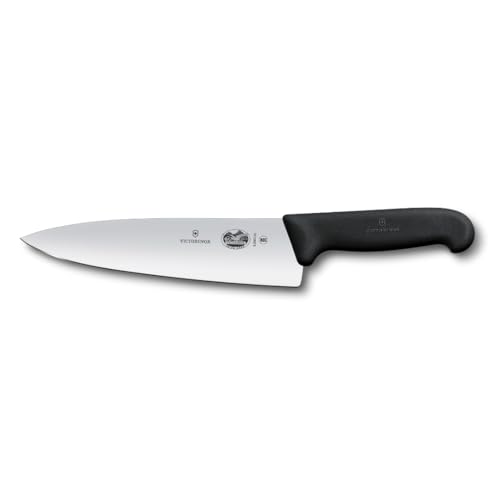
If you are starting from nothing, buy the Tojiro first and add a cheap, soft beater second rather than a second premium knife - a Victorinox Fibrox at 56 HRC costs very little and will absorb the abuse that would chip VG-10. That is the same logic our page on how many knives you need arrives at, and it is why neither of these two is really competing with the other.
The verdict
The Tojiro DP is the better cutter, the better teacher and the cheaper knife; the Wüsthof Classic is the tougher tool and the better choice for the jobs that involve bone, frost or force. If you are replacing one with the other you will probably be happy, but the cheaper and smarter move is to own both and stop asking either to do the other's work. The detail is in our Tojiro DP review, and Shun against Wüsthof covers the prettier version of the same decision.
The full write-up on the German side of this pairing is our Wüsthof Classic 8 inch review, which goes through its published figures - and the two it does not publish - in detail.
The picks in detail
#1 · First Japanese knife
Tojiro DP Gyuto 210mm (F-808)
The default answer to 'my first real Japanese knife'. VG-10 at around 60 HRC in a plain three-layer build, at a price that makes the inevitable first chip survivable.
What it does well
- VG-10 at 59-60 HRC takes a genuinely fine edge and holds it far longer than a German knife at 56-58
- 1.9 mm spine and 43 mm heel make it thin behind the edge without being fragile
- Cheap enough that learning to sharpen on it is not frightening
Where it gives way
- Handle finish is functional and unlovely; some units need the bolster easing with sandpaper
- Stainless cladding is soft and scratches readily
- Nothing about the fit and finish will impress anyone
Skip it if: Anyone who wants the knife to be beautiful. The handle is a workmanlike composite with a stainless bolster and nothing about it is charming.
| Blade length | 210 mm (8.3 in) |
|---|---|
| Steel | VG-10 core, 13-chrome stainless cladding (san mai) |
| Hardness | 59-60 HRC |
| Heel height | 43 mm |
| Spine at heel | 1.9 mm |
| Weight | approx. 187 g |
| Handle | Western, laminated composite wood with stainless bolster |
#2 · Cooks who want weight and a bolster
Wüsthof Classic 8" Chef's Knife
The German benchmark, and the knife most of this site's readers are replacing. 265 g, a 3 mm spine, 58 HRC, and a 14-degree-per-side factory edge that is more acute than its reputation suggests.
What it does well
- Forged, full tang, triple-riveted — it will outlive you
- 14 degrees per side from Wüsthof's Precision Edge Technology is sharper than most people assume
- Soft enough at 58 HRC to be nearly chip-proof
Where it gives way
- 265 g is heavy; the 3 mm spine wedges in dense produce
- 58 HRC gives up meaningful edge retention to a 61 HRC Japanese blade
- Full bolster gets in the way when you sharpen the heel
Skip it if: Anyone whose complaint is 'my knife feels heavy and wedges in a sweet potato' — that is the 3 mm spine, and a thinner Japanese blade is the fix.
| Blade length | 8 in (200 mm) |
|---|---|
| Steel | X50CrMoV15 high-carbon stainless |
| Hardness | 58 HRC |
| Edge angle | 14 degrees per side (28 degrees inclusive) |
| Blade height | 1.9 in (47 mm) |
| Spine | 3 mm |
| Weight | 9.3 oz (265 g) |
#3 · The one-knife kitchen
MAC Professional 8" Chef's Knife with Dimples (MTH-80)
The knife that wins the most side-by-side tests and asks the least of you. Thin, light, 61 HRC, and forgiving enough that a mediocre sharpening job still cuts well.
What it does well
- 6.8 oz with a 2.5 mm spine — genuinely light in the hand over a long prep session
- 15 degrees per side from the factory, which is the angle you will maintain anyway
- 25-year warranty and a reputation for consistency unit to unit
Where it gives way
- Costs meaningfully more than a Tojiro DP for a similar hardness
- Mono-steel, so no cladding to protect the core if you drop it edge-first
- The dimples do less for release than the marketing implies
Skip it if: Anyone chasing maximum edge retention. At 61 HRC in a mono-steel it will not out-last a powder-steel blade, and the dimples are cosmetic more often than useful.
| Blade length | 8 in (approx. 200 mm) |
|---|---|
| Steel | Sub-zero tempered high-carbon molybdenum vanadium alloy |
| Hardness | 61 HRC |
| Edge angle | 15 degrees per side (double bevel) |
| Blade height | 1 7/8 in |
| Spine at heel | 2.5 mm |
| Weight | 6.8 oz |
| Handle | Riveted Pakkawood with integrated bolster |
Common questions
Is Tojiro better than Wüsthof?
Why does my Wüsthof wedge in a sweet potato?
Is the Wüsthof 14-degree edge sharper than Tojiro's?
Should I replace my Wüsthof or add to it?
Sources
Read next
Brands
Tojiro vs Shun
Brands
Shun vs Wüsthof
Brands
Victorinox vs Wüsthof
Japanese Knives
Japanese vs German Knives
Brands