Brands
Best Shun Knives
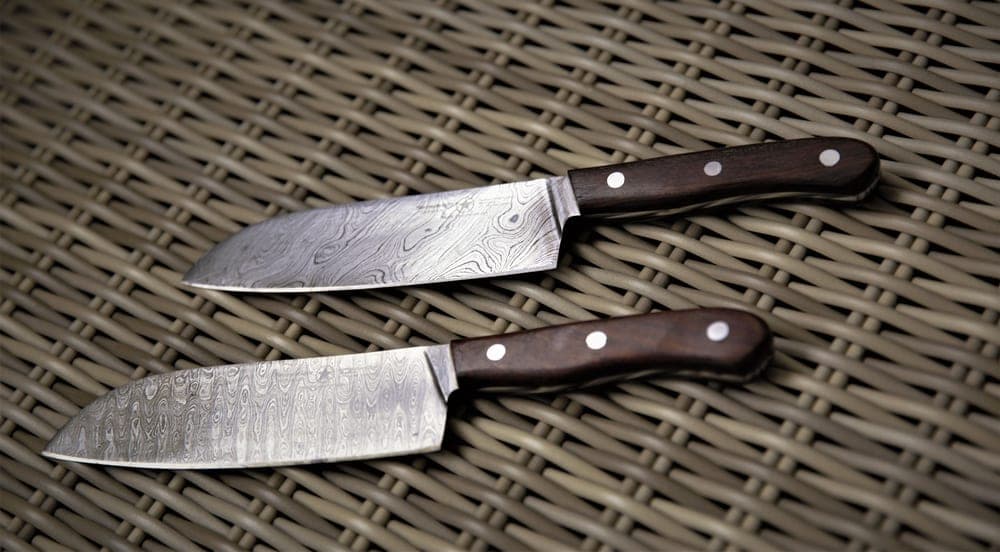
What this is based on: published manufacturer specifications and retailer listings, cited on each product; the weight of professional and owner reviews across multiple retailers; and hands-on experience sharpening and cooking with knives of this type. We have not individually tested every model listed, we do not run instrumented sharpness testing, and we do not claim a test we did not run.
Quick picks
| # | Product | Best for | Score | Price |
|---|---|---|---|---|
| 1 | 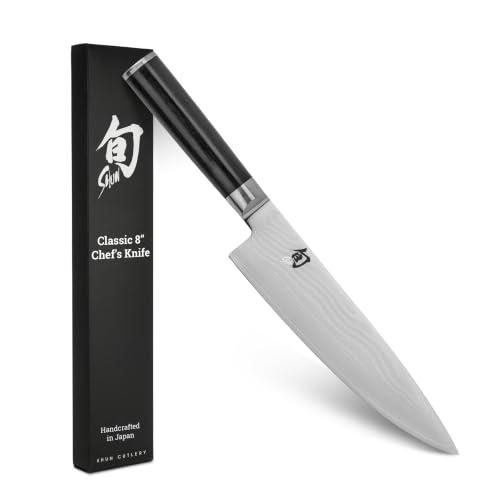 Shun Classic 8" Chef's Knife (DM0706) | A knife you want to look at | 8.3 | |
| 2 | 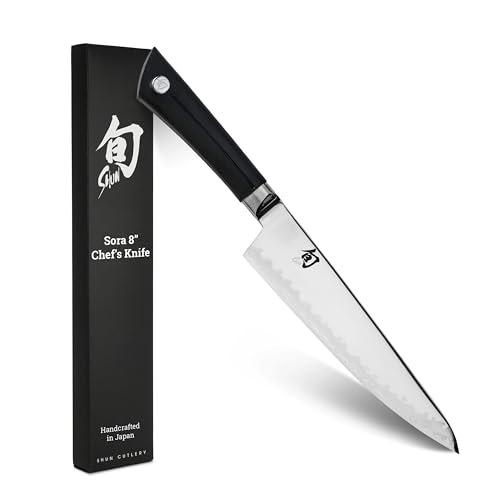 Shun Sora 8" Chef's Knife (VB0706) | A real Japanese edge under $100 | 8.0 | |
| 3 | 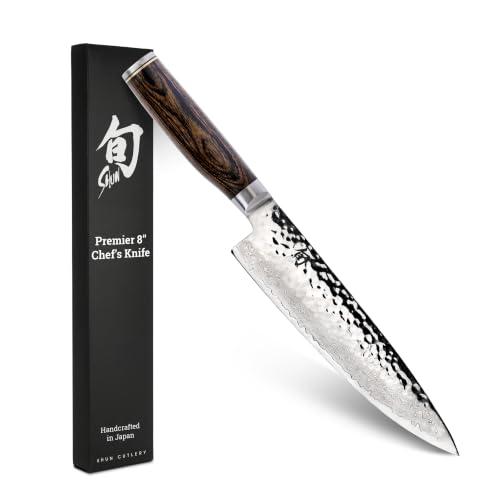 Shun Premier 8" Chef's Knife (TDM0706) | A right- or left-handed cook who wants the Shun edge without a D-handle | 8.2 | |
| 4 | 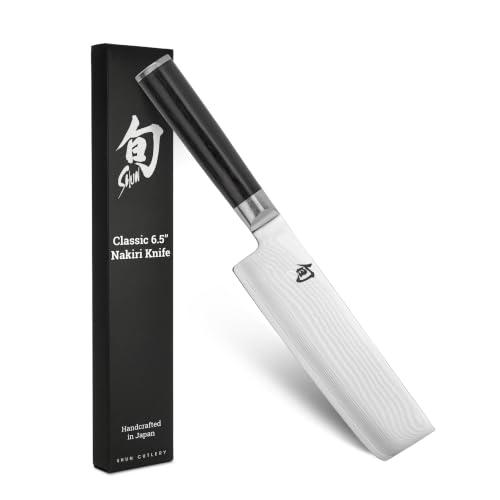 Shun Classic 6.5" Nakiri (DM0728) | An upgrade nakiri | 8.3 | |
| 5 | 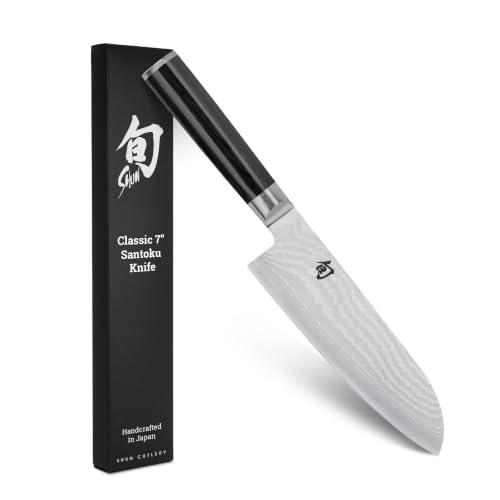 Shun Classic 7" Santoku | Small boards and short cooks | 8.2 |
Shun is one edge sold four ways. Once you understand that, the range stops being confusing and the buying decision collapses into two questions: what shape do you need, and how much finish do you want around it.
What the lines actually differ on
The Classic and the Premier share a core, a published hardness and an edge angle. What separates them is the handle - a right-hand-shaped D against a symmetrical contoured walnut - the spine thickness, and a hammered tsuchime face on the Premier that measurably reduces how much wet food clings to the blade. The Sora sits below both: a VG10 cutting core braze-welded to a plain 420J blade upper, with a textured polymer handle.
That construction is the Sora's whole story and it is more honest than it sounds. The saving comes from the parts of the knife that do not touch food. The join between the two blade sections is visible, and people either ignore it completely or cannot stop seeing it. If you want the full Classic-versus-Premier breakdown, we have it on Shun Classic against Premier.
Which of these is for you
| Pick | Core and edge | Buy it for |
|---|---|---|
| Shun Classic 8 in (DM0706) | VG-MAX, 61 HRC, 16 degrees per side | The default Shun, if you are right-handed |
| Shun Sora 8 in (VB0706) | VG10 san mai core, 16 degrees per side, hardness not published | The lowest price into a real Shun edge |
| Shun Premier 8 in (TDM0706) | VG-MAX, 60-61 HRC, 1.9 mm spine, 7.5 oz | Either hand, and a hammered face that sheds food |
| Shun Classic Nakiri (DM0728) | VG-MAX, 69 Damascus layers, flat ground | A board full of vegetables, left or right handed |
| Shun Classic 7 in Santoku | VG-MAX, 61 HRC, Damascus-clad | A small board and a shorter reach |
Three things Shun is not good at
Value per dollar of cutting performance. A MAC MTH-80 or a Tojiro DP cuts as well or better for less money. What Shun sells on top of that is finish, warranty and the Damascus face. We lay out the five honest alternatives on Shun alternatives.
Handedness, in the Classic line. The D-handle is shaped for a right hand and that is a real limitation rather than a preference - left-handed Japanese knives covers the options.
Tip durability. A 61 HRC blade ground thin at the tip dings on a board corner. That is a property of hard steel, not a defect - why is my knife chipping explains the mechanism.
Is the Damascus doing anything?
Structurally, almost nothing you will notice. The 34 layers per side on a Classic are cladding wrapped around a VG-MAX core; the cutting is done by the core, and the layers are cosmetic above the first few millimetres of the edge. They do add toughness in the sense that any soft cladding over a hard core does, which is why san mai construction exists at all - but a plain three-layer Tojiro gets that same benefit without the pattern.
None of which makes the pattern worthless. People buy knives they want to look at, and a knife you enjoy using gets used. We just think it is worth knowing which part of the price is performance and which part is finish. Our longer treatment is at is Damascus steel worth it, and the Damascus roundup ranks Shun against the rest of that field.
How these were chosen
Every pick is a Shun knife in our registry, currently sold to US buyers, with its core steel, edge angle and construction stated by Kai or by a specialist retailer we could cite. Where Shun publishes nothing - the Sora's hardness and weight, for instance - we say so in the pick rather than filling the gap with a number from elsewhere.
We score each on edge and steel, geometry, handle and value, on the rubric at our methodology page. Those are editorial judgments, not measurements; we have run no cutting or retention tests and make no claim to. Prices come from the live listing for each pick with the date they were read beside the button, and a listing with no live offer shows that instead of a stale figure.
The picks in detail
#1 · A knife you want to look at
Shun Classic 8" Chef's Knife (DM0706)
The Damascus-clad knife people actually buy. A 16-degree-per-side VG-MAX edge at 61 HRC, a D-shaped pakkawood handle, and a look that sells itself.
What it does well
- 16 degrees per side is a sensible factory angle — acute, but not so thin it chips on a carrot
- Handle geometry is genuinely comfortable in a pinch grip
- Kai's warranty and free sharpening service are real, useful things
Where it gives way
- You pay a significant premium over a MAC or Tojiro for the Damascus cladding
- The D-shaped handle is oriented for right-handed use
- Thin tip is easy to snap if you twist it in a squash
Skip it if: Left-handed cooks who dislike a D-shaped handle, and anyone who resents paying for 68 layers of cladding that do nothing for cutting.
| Blade length | 8 in |
|---|---|
| Steel | VG-MAX core, 34 layers Damascus cladding each side |
| Hardness | 61 HRC |
| Edge angle | 16 degrees per side |
| Handle | D-shaped pakkawood with stainless bolster and end cap |
| Warranty | Limited lifetime |
#2 · A real Japanese edge under $100
Shun Sora 8" Chef's Knife (VB0706)
The cheapest genuine VG10 edge we can find, at the same hand-sharpened 16 degrees as a Shun Classic. The saving comes from a braze-welded 420J blade upper and a polymer handle, not from the part that cuts.
What it does well
- A VG10 san mai cutting core at the same hand-sharpened 16 degrees per side as the Shun Classic, for well under half the money
- Made in Japan, and the part of the blade that touches food is the same idea as the premium lines
- The polymer handle is textured and grippy wet, which the Classic's pakkawood is not
Where it gives way
- Shun publishes no hardness figure and no weight for the Sora, so you cannot check it against the Classic on either
- The braze-welded join between the VG10 edge section and the 420J upper is visible and is the thing people either ignore or dislike
- Textured polymer handle - durable and entirely charmless next to a pakkawood or an octagonal wa handle
Skip it if: Anyone buying a Shun for the look. The handle is textured polymer, the blade upper is plain 420J, and the join between the two sections is visible.
| Blade length | 8 in (20.3 cm) |
|---|---|
| Cutting edge | VG10 san mai core, one layer of stainless cladding each side |
| Blade upper | Japanese 420J stainless |
| Construction | Composite Blade - the two sections are laser cut, fitted and braze welded |
| Factory edge | 16 degrees per side (32 degrees inclusive), hand sharpened |
| Hardness | Not published |
| Weight | Not published |
| Handle | Textured PP/TPE polymer blend |
| Origin | Handcrafted in Japan |
#3 · A right- or left-handed cook who wants the Shun edge without a D-handle
Shun Premier 8" Chef's Knife (TDM0706)
The same VG-MAX core and 16-degree edge as the Classic, in a thinner blade with a hammered tsuchime face and a contoured walnut handle. You are buying the finish and the grip, not a better cutter.
What it does well
- Contoured symmetrical handle works in either hand, unlike the Classic D-handle
- 1.9 mm spine is thinner than the Classic at the same blade height, so it wedges less
- Hammered face measurably reduces how much wet food clings to the blade
Where it gives way
- List price sits above the Classic for the same steel, hardness and edge angle, though street prices often overlap
- The walnut handle has no bolster, which some cooks read as less secure
- Hammered finish is cosmetic above the first few millimeters of the edge
Skip it if: Anyone chasing cutting performance per dollar. A MAC MTH-80 or a Tojiro DP cuts as well or better for less.
| Blade length | 8 in (200 mm) |
|---|---|
| Blade height | 1.9 in (47 mm) |
| Spine thickness | 1.9 mm |
| Steel | VG-MAX core, 34-layer SUS410/SUS431 Damascus each side |
| Hardness | 60-61 HRC |
| Edge angle | Approximately 16 degrees per side, double bevel |
| Finish | Hammered tsuchime |
| Handle | Contoured walnut PakkaWood, stainless end cap, 5 in |
| Weight | 7.5 oz (215 g) |
| Origin | Seki, Japan |
| Warranty | Limited lifetime |
#4 · An upgrade nakiri
Shun Classic 6.5" Nakiri (DM0728)
Flat-ground, double-bevelled to 16 degrees per side, 69-layer Damascus over a VG-MAX core. The nakiri for someone who already knows they want one.
What it does well
- Flat grind gives excellent release on dense vegetables
- Handle works for left-handed cooks, unlike the D-shaped Classic chef's knife
- Kai's lifetime warranty applies
Where it gives way
- Several times the price of the Tojiro for a knife doing the same job
- Thin tip corners are easy to ding on the board
- Damascus cladding is cosmetic
Skip it if: A first nakiri. Buy the Tojiro, decide you use it, then buy this.
| Blade length | 6.5 in (165 mm) |
|---|---|
| Steel | VG-MAX core, 34 Damascus layers each side (69 total) |
| Edge | Double bevel, flat ground, 16 degrees per side |
| Handle | Pakkawood, usable left or right handed |
#5 · Small boards and short cooks
Shun Classic 7" Santoku
The same VG-MAX core and 16-degree edge as the Classic chef's knife, in the shorter, flatter profile that suits a small board.
What it does well
- Short enough to control on a 12-inch board
- Flat profile suits push cutting, which is how Japanese knives want to be used
- Same steel and warranty as the full-size Classic
Where it gives way
- 7 in is short for breaking down a chicken or a large squash
- Premium over a Tojiro santoku is large
- D-handle is right-hand oriented
Skip it if: Anyone who rocks-chops. The flat profile punishes that grip.
| Blade length | 7 in |
|---|---|
| Steel | VG-MAX core, Damascus-clad |
| Hardness | 61 HRC |
| Edge angle | 16 degrees per side |
| Handle | D-shaped pakkawood |
Common questions
Which Shun knife should I buy first?
Is the Premier better than the Classic?
Is VG-MAX the same as VG-10?
Is the Shun D-handle a problem if I am left-handed?
Can I put a Shun through a pull-through sharpener?
Sources
Read next
Brands
Shun Classic vs Premier
Brands
Shun Alternatives
Brands
Shun Premier Review
Japanese Knives