Brands
Shun vs Dalstrong
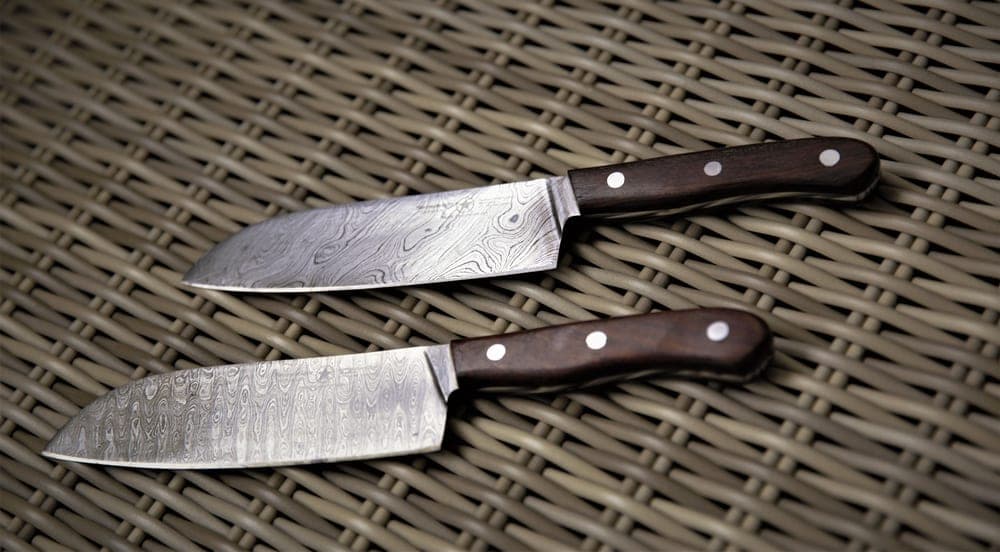
What this is based on: published manufacturer specifications and retailer listings, cited on each product; the weight of professional and owner reviews across multiple retailers; and hands-on experience sharpening and cooking with knives of this type. We have not individually tested every model listed, we do not run instrumented sharpness testing, and we do not claim a test we did not run.
Quick picks
| # | Product | Best for | Score | Price |
|---|---|---|---|---|
| 1 | 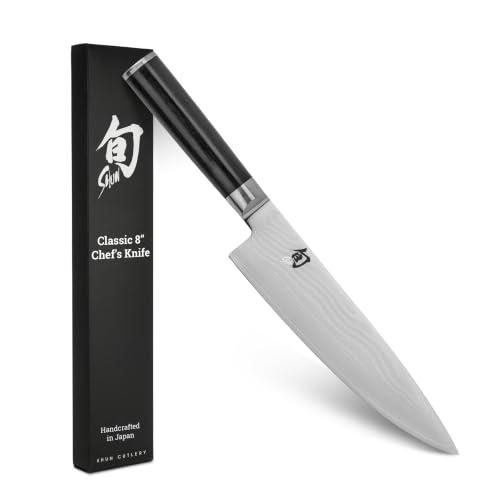 Shun Classic 8" Chef's Knife (DM0706) | A knife you want to look at | 8.3 | |
| 2 | 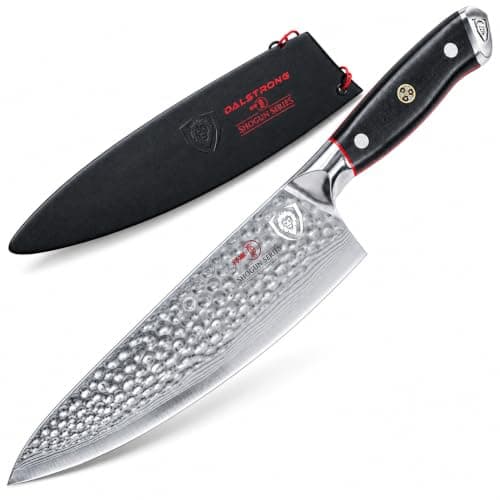 Dalstrong Shogun Series 8" Chef's Knife | A hard, keen edge at the lowest price in this registry | 7.9 | |
| 3 | 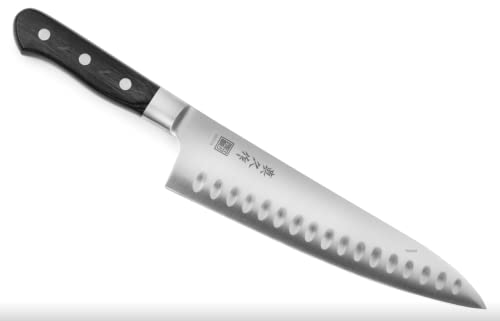 MAC Professional 8" Chef's Knife with Dimples (MTH-80) | The one-knife kitchen | 8.8 |
These two knives look like each other on a shelf. Both are 8 inch Western chef's knives, both wrap a hard stainless core in patterned cladding, both photograph beautifully, and one costs roughly twice the other. That price gap is the whole reason the query exists, and it is not explained by the two specifications most buyers compare. It is explained by the four specifications only one of these makers prints.
The published numbers
| Shun Classic 8" | Dalstrong Shogun 8" | |
|---|---|---|
| Blade length | 8 in | 8 in |
| Core steel | VG-MAX | AUS-10V |
| Cladding | 34 Damascus layers each side | 66-layer Damascus |
| Hardness | 61 HRC | 62+ HRC (a floor, not a figure) |
| Factory edge | 16° per side | 8-12° per side (a range) |
| Blade height | Not published | Not published |
| Spine at heel | Not published for the Classic chef's knife | Not published |
| Weight | Not published | Not published |
| Handle | D-shaped pakkawood, stainless bolster and end cap | Military-spec G10, full tang, triple riveted, stainless end cap |
| Origin | Seki, Japan | Not published |
| Warranty | Limited lifetime | Lifetime against defects |
Empty cells stay empty here. Shun does not publish a spine thickness or a weight for the Classic chef's knife, and Dalstrong publishes neither of those nor a blade height, so there is no honest way to put a number in those rows. What we will not do is estimate one and let it look like a measurement.
"62+ HRC" is a floor, and "8-12 degrees" is a range
Shun publishes 61 HRC and 16 degrees per side. Those are two figures. Dalstrong publishes 62+ HRC and an 8-12 degree edge. Those are two tolerance bands, and the difference matters more than the one-point hardness gap does.
A hardness floor tells you the softest the steel is allowed to be and nothing about the spread above it. An edge-angle range four degrees wide, on a knife sold as hand-sharpened, tells you that the bevel you receive depends on who finished it. Eight degrees per side and twelve degrees per side are not variations of the same edge: at 8 degrees on 62 HRC steel you have a blade that will micro-chip on a butternut skin, and at 12 degrees you have something that behaves much like a Japanese maker's 15. You will not know which one arrived until you use it, and you cannot tell by looking.
A point of Rockwell hardness is worth having and it is not worth much on its own. Hardness lets a thin bevel stay straight instead of rolling over, which is why 61 and 62 HRC blades can carry 15- and 16-degree edges that a 57 HRC German knife cannot hold. What hardness does not do is make a thick blade cut like a thin one. If your complaint is that the knife wedges in dense produce, that is geometry - and neither of these makers will tell you their geometry. Our knife steel guide puts the whole hardness ladder in one table.
66 layers against 34, and why neither number is a performance spec
Dalstrong prints 66 layers. Shun prints 34 each side. Read as a contest, Dalstrong wins it. Read honestly, neither figure describes anything that touches food. In both knives the pattern lives in soft stainless cladding wrapped around a hard core, and the core does all of the cutting. The cladding's functional job is to support and protect that core; its other job, the one it is actually sold for, is to look like this.
That is worth saying plainly, because the layer count is the headline on both listings and it is the single least useful number on either. If you want the long version, is Damascus steel worth it takes it apart and Damascus against high carbon steel covers why those two terms are not even alternatives. The short version: buy the pattern because you like the pattern.
The four specifications that decide how a knife cuts
Spine thickness at the heel, spine thickness near the tip, blade height and weight. Those four numbers tell you more about how a chef's knife behaves in food than steel and hardness combined, and between these two knives you can obtain exactly none of them from the maker.
Shun at least gives you a sibling to triangulate from: the Shun Premier, same VG-MAX core and the same line's grind, publishes a 1.9 mm spine. The Classic is not the Premier, but it is the same maker's stock and that is a real reference point. Dalstrong gives you nothing to triangulate with: no figure on the Shogun, none on its siblings, and a listing that leads on layer count and finish name instead.
For contrast, here is what a maker who expects to be checked publishes. MAC prints 2.5 mm at the spine, 1 7/8 in of blade height, 6.8 oz, 61 HRC and 15 degrees per side for the MTH-80. Every one of those is a number you can hold a caliper or a kitchen scale against. On a knife you intend to own for twenty years that is not a side issue - it is how you find out, before paying, whether the blade fixes the problem you are trying to fix.
G10 against a D-shaped pakkawood handle
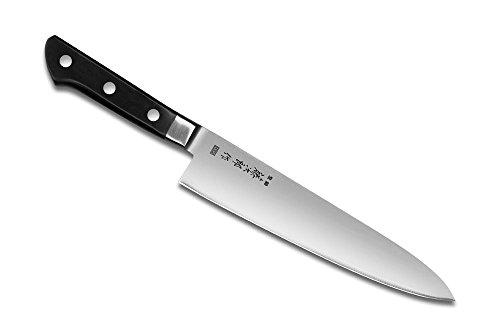
The Shun Classic's handle is a D-shape in laminated pakkawood with a stainless bolster and end cap. It is comfortable in a pinch grip, it is the nicest-feeling handle of the three knives on this page, and it is oriented for right-handed use - left-handed cooks should read our left-handed guide before buying one.
The Dalstrong's handle is military-spec G10 fiberglass over a full, triple-riveted tang. G10 is the most abuse-tolerant handle material in our registry: it does not swell, it does not crack when it dries out, it does not care how long it sat in the sink, and it stays grippy wet. It is also symmetrical, so it has no handedness at all. Against that, it is a molded industrial material and it feels like one - there is no warmth in it and no shaping beyond the mold.
Which way that cuts depends on your kitchen rather than your taste. A shared kitchen, a wet kitchen, or a kitchen where the knife gets left out favors the G10 every time. A knife you look after yourself and enjoy picking up favors the pakkawood.
Sharpening a 62 HRC edge
Both of these are hard stainless blades and both want the same treatment: stones, not a grooved steel rod. A ribbed steel rod is roughly as hard as a 61 or 62 HRC edge and will skate across it rather than realign it - the reasoning is in honing steel against ceramic rod. A fine ceramic rod between stone sessions is the right habit for either knife, and honing is not sharpening sets out why that is maintenance rather than sharpening.
The practical difference on the stones is the factory bevel. The Shun arrives at a known 16 degrees per side, so you can match it on the first pass and keep matching it forever. The Dalstrong arrives somewhere inside an 8-12 degree band, which makes your first real session a decision as well as a chore: either hunt for whatever angle it shipped at, or set your own and grind through the factory bevel once. Most owners should simply set 15 degrees per side and stop thinking about it - our angle guide covers how to hold it and how to sharpen a Japanese knife covers the session itself.
One asymmetry in aftercare is worth knowing before you spend. Kai runs a sharpening service for Shun owners, which is a genuine reason to buy into the range if you would rather not learn the stones. Dalstrong's published aftercare is a lifetime warranty against defects and a 70-day money-back guarantee; there is no maker sharpening service in it. On a 62 HRC blade that is a real difference, because hard steel chips rather than rolls and a chip is a repair job, not a touch-up.
Which one to buy
- You want the hardest edge for the least money. Dalstrong Shogun. 62+ HRC behind an acute factory bevel, at well under the Shun's price, is a real offer - and the G10 handle will outlive the kitchen.
- You want to know what you are buying. Shun Classic. Published hardness, published angle, a stated country of manufacture, a sibling model with a published spine, and a maker who will sharpen it.
- Your actual complaint is that your knife feels thick. Neither of these publishes a spine thickness, so neither can promise to fix it. The MAC MTH-80 publishes 2.5 mm and 6.8 oz, and it is the knife we would buy with this budget.
- You are left handed. Not the Shun Classic - the D-handle is right-hand oriented. The Dalstrong's G10 handle and the MAC are both symmetrical.
- The knife is going into a shared or busy kitchen. Dalstrong. G10 over a full tang tolerates handling that will mark a pakkawood handle, and the replacement cost is lower when something goes wrong.
The verdict
The Dalstrong Shogun is a better knife than its marketing deserves and a worse purchase than its specification sheet implies, because the specification sheet is mostly missing. At its price it is the cheapest hard, keen, Damascus-clad blade we can verify as currently sold, and if that is the brief, it wins. The Shun Classic costs more and tells you more, and what it is really selling beyond the look is that you can check it and that someone will fix it.
If you are here because you want a visible upgrade from a block-set knife, either will deliver one. If you are here because your current knife wedges and goes dull, the honest answer is the third knife on this page: the MAC MTH-80 publishes every number that matters and is thinner than either of these two is willing to admit to being. The full write-up on the Shun is our Shun Classic review, MAC against Shun settles that pairing, and our brands guide maps where every maker on this site sits.
Patchy specification sheets are not only a value-brand problem, incidentally. Our Wüsthof Classic review works through a premium German knife whose maker publishes a hardness and an edge angle but neither a spine thickness nor a weight - and whose own page will not even name the steel grade.
The picks in detail
#1 · A knife you want to look at
Shun Classic 8" Chef's Knife (DM0706)
The Damascus-clad knife people actually buy. A 16-degree-per-side VG-MAX edge at 61 HRC, a D-shaped pakkawood handle, and a look that sells itself.
What it does well
- 16 degrees per side is a sensible factory angle — acute, but not so thin it chips on a carrot
- Handle geometry is genuinely comfortable in a pinch grip
- Kai's warranty and free sharpening service are real, useful things
Where it gives way
- You pay a significant premium over a MAC or Tojiro for the Damascus cladding
- The D-shaped handle is oriented for right-handed use
- Thin tip is easy to snap if you twist it in a squash
Skip it if: Left-handed cooks who dislike a D-shaped handle, and anyone who resents paying for 68 layers of cladding that do nothing for cutting.
| Blade length | 8 in |
|---|---|
| Steel | VG-MAX core, 34 layers Damascus cladding each side |
| Hardness | 61 HRC |
| Edge angle | 16 degrees per side |
| Handle | D-shaped pakkawood with stainless bolster and end cap |
| Warranty | Limited lifetime |
#2 · A hard, keen edge at the lowest price in this registry
Dalstrong Shogun Series 8" Chef's Knife
The Amazon-native Damascus knife, and a better blade than its marketing deserves. AUS-10V at a published 62+ HRC behind an 8-12 degree edge, under 66 layers of cladding - but Dalstrong publishes no spine, no height and no weight, so you buy the geometry blind.
What it does well
- A published 62+ HRC floor is harder than every German knife here and harder than the Shun Classic's 61
- G10 is the most abuse-tolerant handle material in this registry - it does not swell, crack or care about water
- The cheapest route to a 60+ HRC blade we list, by a wide margin
Where it gives way
- No published spine thickness, blade height or weight, so you cannot compare its geometry to anything before it arrives
- "62+ HRC" and "8-12 degrees" are tolerance bands, not specifications - two knives off the same line can behave differently
- The Damascus cladding is cosmetic; all the cutting is done by the AUS-10V core underneath it
- No stated country of manufacture, and no maker's sharpening service of the kind Kai and Shun run
- Amazon lists it as "8" Japanese Chef Knife Gyuto" without the series name, so you have to match it on the 66-layer AUS-10V spec rather than on the box
Skip it if: Anyone who wants to know what they are buying before it arrives. Dalstrong publishes a hardness range and an edge-angle range and nothing about the blade's dimensions, which is the opposite of how a Japanese maker lists a knife.
| Blade length | 8 in |
|---|---|
| Steel | AUS-10V core, 66-layer Damascus cladding |
| Hardness | 62+ HRC (published as a floor, not a figure) |
| Factory edge | 8-12 degrees per side (published as a range) |
| Finish | Tsunami Rose Damascus |
| Spine at heel | Not published |
| Blade height | Not published |
| Weight | Not published |
| Handle | Military-spec G10 fiberglass, full tang, triple riveted |
| End cap | Engraved stainless steel |
| Origin | Not published |
| Warranty | Lifetime against defects |
#3 · The one-knife kitchen
MAC Professional 8" Chef's Knife with Dimples (MTH-80)
The knife that wins the most side-by-side tests and asks the least of you. Thin, light, 61 HRC, and forgiving enough that a mediocre sharpening job still cuts well.
What it does well
- 6.8 oz with a 2.5 mm spine — genuinely light in the hand over a long prep session
- 15 degrees per side from the factory, which is the angle you will maintain anyway
- 25-year warranty and a reputation for consistency unit to unit
Where it gives way
- Costs meaningfully more than a Tojiro DP for a similar hardness
- Mono-steel, so no cladding to protect the core if you drop it edge-first
- The dimples do less for release than the marketing implies
Skip it if: Anyone chasing maximum edge retention. At 61 HRC in a mono-steel it will not out-last a powder-steel blade, and the dimples are cosmetic more often than useful.
| Blade length | 8 in (approx. 200 mm) |
|---|---|
| Steel | Sub-zero tempered high-carbon molybdenum vanadium alloy |
| Hardness | 61 HRC |
| Edge angle | 15 degrees per side (double bevel) |
| Blade height | 1 7/8 in |
| Spine at heel | 2.5 mm |
| Weight | 6.8 oz |
| Handle | Riveted Pakkawood with integrated bolster |
Common questions
Is Dalstrong as good as Shun?
Is AUS-10V the same steel as AUS-10?
Where are Dalstrong knives made?
Is an 8 to 12 degree edge too thin for a home kitchen?
Does the Damascus pattern do anything?
Sources
Read next
Brands
MAC vs Shun
Steel & Care
VG-10 vs AUS-10
Steel & Care
Is Damascus Steel Worth It?
Japanese Knives