Japanese Knives
Bunka Knife Uses
What this is based on: published manufacturer specifications and retailer listings, cited on each product; the weight of professional and owner reviews across multiple retailers; and hands-on experience sharpening and cooking with knives of this type. We have not individually tested every model listed, we do not run instrumented sharpness testing, and we do not claim a test we did not run.
Quick picks
| # | Product | Best for | Score | Price |
|---|---|---|---|---|
| 1 | 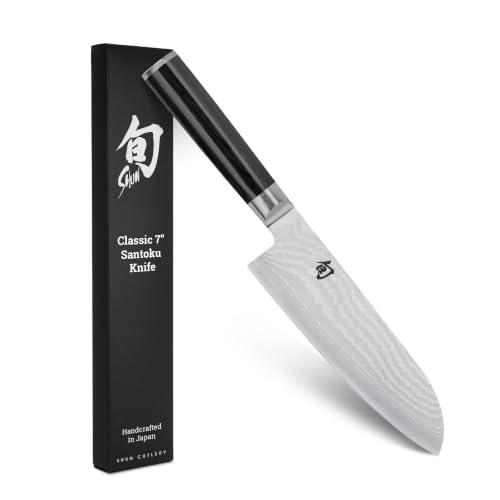 Shun Classic 7" Santoku | Small boards and short cooks | 8.2 | |
| 2 | 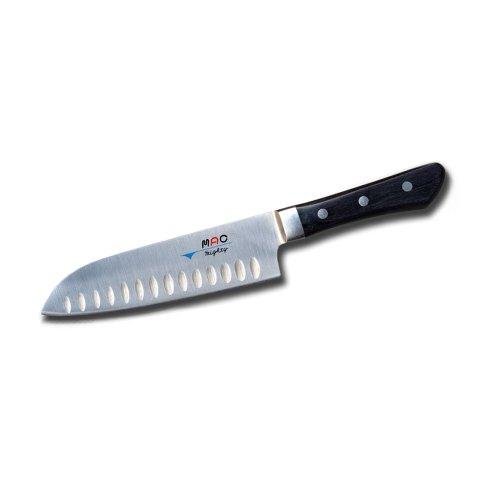 MAC Professional 6.5" Santoku (MSK-65) | Precision vegetable work | 8.5 | |
| 3 | 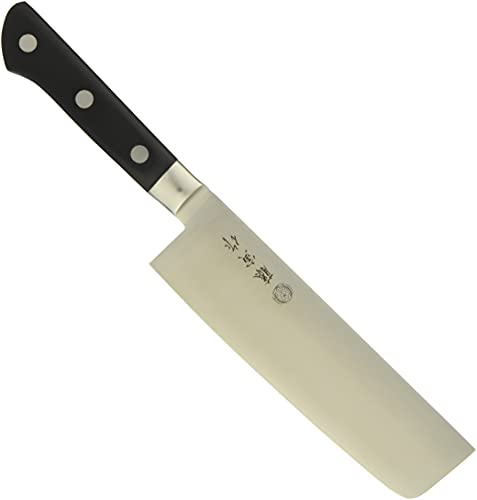 Tojiro DP Nakiri 165mm (F-502) | First nakiri | 8.7 |
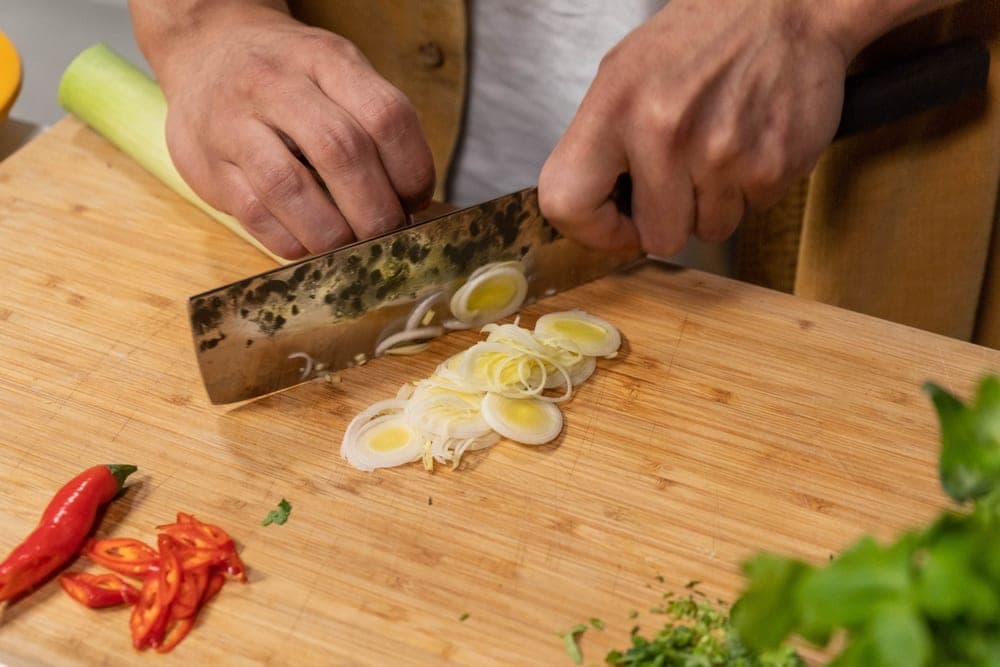
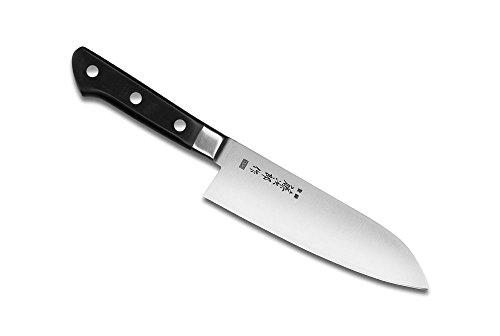
The name means culture, and specialist retailers describe the shape as a modern general-purpose knife rather than a traditional specialist one. What distinguishes it on the shelf is the tip: instead of curving down to a point, the spine drops in a straight diagonal - the reverse tanto, or k-tip, that the bunka shares with the kiritsuke and the hakata.
The jobs the shape is genuinely good at
- Push-cutting vegetables. The flat section of edge makes full contact with the board, so onion layers separate cleanly rather than staying joined. This is the same virtue a nakiri has.
- Mincing close to the board. The fine point lets you work right into a corner - garlic, ginger, shallot - without the belly of the blade lifting the heel.
- Scoring and detail cuts. Scoring fish or duck skin, cutting decorative notches, splitting a chilli lengthways. The thin angled tip enters without tearing.
- Light butchery on boneless cuts. Trimming silverskin, taking tenderloin out of a chicken breast, portioning fillets. The point does the steering while the flat edge finishes the cut.
Notice what is missing. No bone, no frozen food, no twisting through a dense squash. The k-tip is the thinnest part of a thin knife and it breaks - not rolls - when levered. That is the trade for the precision.
What to look for if you are shopping for one
- Length. Most bunka sit in the 165 to 180 mm range, which puts them squarely in santoku territory rather than gyuto territory. A 180 mm bunka on a small board is a lot of knife.
- Bevel. Modern bunka are usually double-bevel, which is what you want in a home kitchen. A single-bevel k-tip is a different and much more demanding tool.
- Tip thickness. Look at how much steel is behind the point. A very acute, very thin k-tip looks dramatic and dings on the first drawer encounter.
- Steel and hardness. The same logic as any Japanese knife - 60 HRC and up holds an edge, and asks for a soft board in return. Our knife steel guide covers the trade-off.
The practical problem is availability. Bunka stock is thin at mainstream retailers compared to santoku and gyuto, and the registry on this site deliberately carries only knives that are reliably purchasable. So the picks below are the knives that cover a bunka's jobs rather than bunka themselves.
This is the whole decision. Spend a week noticing how often you use the first inch of your knife. If the answer is rarely, a nakiri gives you a better flat edge and more height for less money. If the answer is constantly, the k-tip family earns its keep - and so does a santoku with a decent point.
What to buy instead
- The closest shape you can buy easily. Shun Classic Santoku, 7 inches: VG-MAX at 61 HRC, 16 degrees per side, flat profile, usable tip.
- The best tip work in the size class. MAC Professional Santoku MSK-65. Exceptionally thin behind the edge at 15 degrees per side, which is what makes detail work feel effortless.
- You only want the flat edge. Tojiro DP Nakiri. 45 mm of height and a genuinely flat 165 mm edge for a fraction of either santoku.
Looking after a k-tip
Two rules. Store it where the point cannot touch anything - a saya, a magnetic rack or a knife roll, never loose in a drawer - and keep it off hard boards. Our storage guide covers the options, and our board picks matter more for this shape than for a sturdier one.
Sharpening is ordinary double-bevel work, with one caveat: the angled tip has a very short edge section and it is easy to round it off by letting the knife drift as you reach the end of the stroke. Work the tip deliberately and separately. Our Japanese knife sharpening guide sets out the sequence.
Length, weight and what size to get
Most bunka land between 165 and 180 mm, which makes the size decision the same one you would make for a santoku rather than for a gyuto. 165 mm is the easier knife on a small board and for a shorter cook; 180 mm gives you more edge for a cabbage and starts to overhang a 12 inch board. If you already own a 210 mm gyuto, the shorter bunka is the one that earns a place rather than duplicating what you have.
Weight matters more than it does on a longer knife, because a bunka is often used for fine work near the tip. Something in the 150 to 200 g range feels controlled; heavier than that and the point stops feeling precise, which defeats the reason you bought the shape. Our sizes guide sets out how length, height and weight interact across the Japanese range, and nakiri against bunka covers the other shape in this size class.
The verdict
A bunka is for a cook who push-cuts on the board and also wants a genuinely fine point - vegetables, boneless proteins, scoring, mincing, trimming. It is not for bone, frost or force, and it is not the easiest first Japanese knife to own or to find. If the tip work matters to you, a santoku comes very close and is far easier to buy; if it does not, a nakiri gives you a better flat edge for less. The head-to-heads are in santoku against bunka and gyuto against bunka.
The picks in detail
#1 · Small boards and short cooks
Shun Classic 7" Santoku
The same VG-MAX core and 16-degree edge as the Classic chef's knife, in the shorter, flatter profile that suits a small board.
What it does well
- Short enough to control on a 12-inch board
- Flat profile suits push cutting, which is how Japanese knives want to be used
- Same steel and warranty as the full-size Classic
Where it gives way
- 7 in is short for breaking down a chicken or a large squash
- Premium over a Tojiro santoku is large
- D-handle is right-hand oriented
Skip it if: Anyone who rocks-chops. The flat profile punishes that grip.
| Blade length | 7 in |
|---|---|
| Steel | VG-MAX core, Damascus-clad |
| Hardness | 61 HRC |
| Edge angle | 16 degrees per side |
| Handle | D-shaped pakkawood |
#2 · Precision vegetable work
MAC Professional 6.5" Santoku (MSK-65)
The MTH-80's logic in a santoku: thin, light, 15 degrees per side, and consistent from unit to unit.
What it does well
- Extremely thin behind the edge for its price
- Same 15-degree factory geometry as the rest of the Professional line
- Light and neutral in the hand
Where it gives way
- Thin tip is easy to damage
- No bolster to protect your knuckles in a heavy grip
- Costs more than the Tojiro equivalent
Skip it if: Heavy jobs. It is thin, and thin blades dislike bone and frozen food.
| Blade length | 6.5 in |
|---|---|
| Steel | Sub-zero tempered high-carbon molybdenum vanadium alloy |
| Hardness | approx. 61 HRC (MAC Professional line) |
| Edge angle | 15 degrees per side |
#3 · First nakiri
Tojiro DP Nakiri 165mm (F-502)
A flat 165 mm edge in VG-10 at 59-61 HRC for the price of a mid-range German paring knife. The obvious first nakiri.
What it does well
- 45 mm of blade height means your knuckles clear the board
- Genuinely flat edge — full contact, no accordion slices
- 1.8 mm spine falls through vegetables rather than wedging
Where it gives way
- No tip, so it cannot do fine tip work at all
- 207 g is heavier than the profile suggests
- Western handle and bolster feel dense for such a light job
Skip it if: Anyone expecting it to replace a chef's knife. A nakiri does not have a tip and cannot break down a chicken.
| Blade length | 165-170 mm |
|---|---|
| Steel | Takefu VG-10 core, three-layer |
| Hardness | 59-61 HRC |
| Heel height | 45 mm |
| Spine | 1.8 mm, consistent |
| Weight | approx. 207 g |
Common questions
What is a bunka knife used for?
Is a bunka better than a santoku?
What does bunka mean?
Is a bunka good for a first Japanese knife?
Sources
Read next
Japanese Knives
Santoku vs Bunka

Japanese Knives
Gyuto vs Bunka
Japanese Knives
Nakiri vs Bunka
Japanese Knives
Japanese Flat Tipped Knives
Japanese Knives
Santoku Knife Uses
Japanese Knives