Japanese Knives
Japanese Flat Tipped Knives
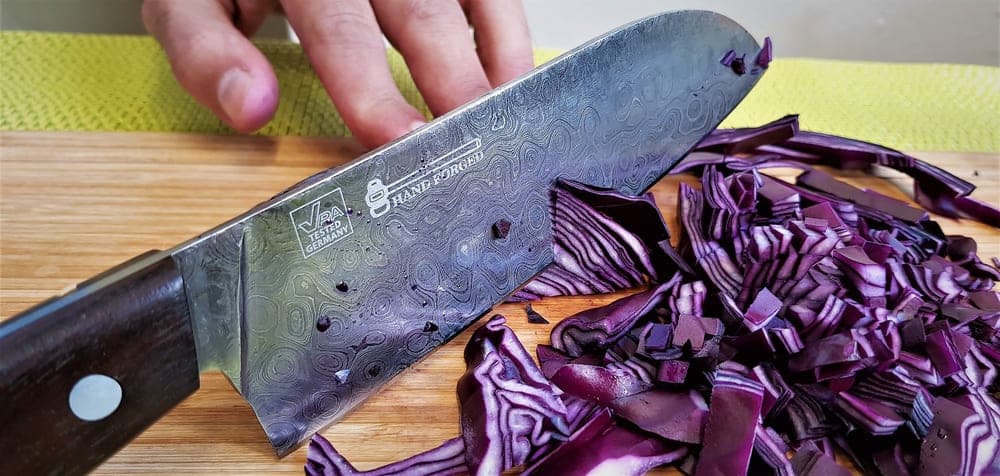
What this is based on: published manufacturer specifications and retailer listings, cited on each product; the weight of professional and owner reviews across multiple retailers; and hands-on experience sharpening and cooking with knives of this type. We have not individually tested every model listed, we do not run instrumented sharpness testing, and we do not claim a test we did not run.
Quick picks
| # | Product | Best for | Score | Price |
|---|---|---|---|---|
| 1 | 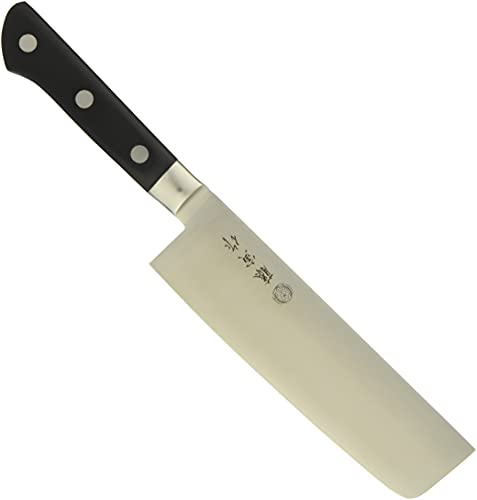 Tojiro DP Nakiri 165mm (F-502) | First nakiri | 8.7 | |
| 2 | 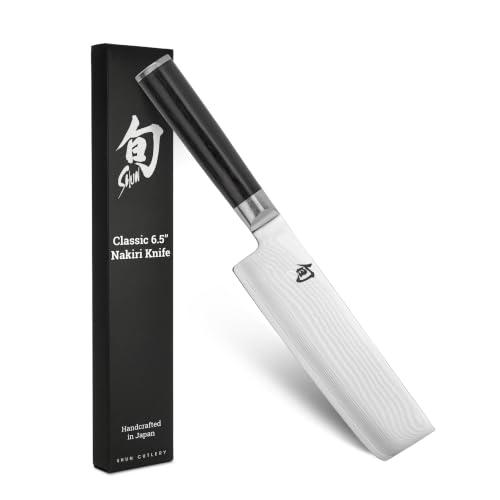 Shun Classic 6.5" Nakiri (DM0728) | An upgrade nakiri | 8.3 | |
| 3 | 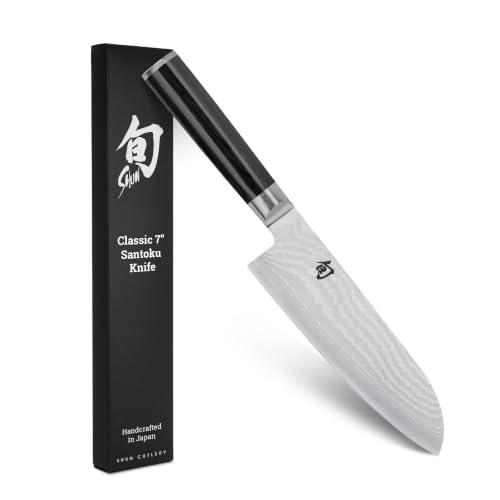 Shun Classic 7" Santoku | Small boards and short cooks | 8.2 | |
| 4 | 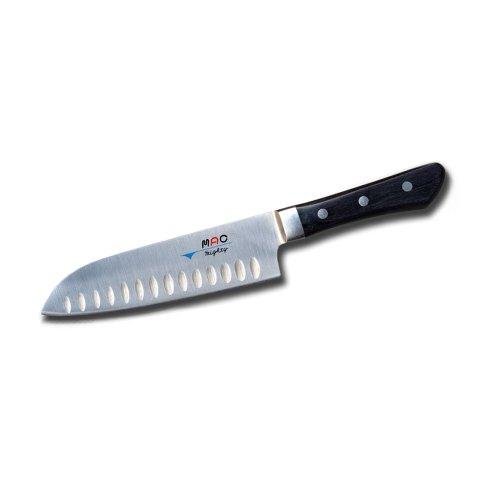 MAC Professional 6.5" Santoku (MSK-65) | Precision vegetable work | 8.5 |
"Flat tipped" gets used for several different Japanese shapes and they do not behave alike. One has no point whatsoever. One is a single-bevel professional tool. One has a flat edge and a rounded tip. And one has a dramatic angled grind running to a very fine point. Knowing which you are looking at matters more than the brand on it.
The four shapes people mean
| Shape | Tip | Edge | Bevel | Built for |
|---|---|---|---|---|
| Nakiri | Squared off, no point | Flat | Double | Home vegetable prep |
| Usuba | Squared or angled, no point | Flat | Single | Professional Japanese vegetable work |
| Santoku | Rounded sheepsfoot | Flat with slight curve | Double | One-knife kitchens, small boards |
| Kiritsuke / bunka (k-tip) | Angled flat grind to a fine point | Flat | Double, usually | Flat-edge cutting plus tip work |
The k-tip family is where the confusion starts. A kiritsuke or bunka tip looks flat because the spine drops to the point in a straight diagonal rather than a curve - the shape specialist retailers call a reverse tanto. It is not a blunt tip at all; it is a very fine one, and it is more fragile than the squared end of a nakiri, not less.
Why a flat edge changes how you cut
A German chef's knife has a curved belly so it can rock. The cost of that curve is that only part of the edge touches the board at any moment, which is what leaves a half-cut onion hanging together. A flat 165 mm edge meets the board along its whole length in one push, so everything separates.
Height comes with it. The Tojiro DP nakiri publishes 45 mm of heel height, which is more than most 8 inch chef's knives, and that is the number that decides whether your knuckles hit the board. Combined with a 1.8 mm spine it falls through dense vegetables instead of wedging. Our vegetable knife roundup makes the height-and-thinness argument in full.
The technique is forward and down, letting the flat edge land along its length, then lift and advance. If you try to rock a nakiri you will get a bruised wrist and an uneven cut, and you will conclude the knife is bad. Give it a week of push cutting before judging it.
What to look for before you choose
- Is the edge actually flat? Some knives sold as nakiri have a slight belly, which defeats the point. Lay the edge on a flat surface and look for light under the middle.
- Heel height. 45 mm and up gives knuckle clearance. Below about 40 mm you have bought a short chef's knife with a strange tip.
- Single or double bevel. An usuba is single-bevel and needs a different sharpening approach entirely - see single bevel against double bevel. For a home kitchen, double.
- Tip corners. The squared end of a nakiri is thin and easy to ding on a board or in a drawer. A saya or a magnetic rack is not optional for this shape.
Which one to buy
- You want the flat-tipped experience cheaply. Tojiro DP Nakiri 165 mm. VG-10, 45 mm heel, 1.8 mm spine, and inexpensive enough to learn stone work on.
- You already use a nakiri daily. Shun Classic Nakiri. Flat ground, 16 degrees per side over a VG-MAX core, and the handle works for left-handed cooks, unlike Shun's D-shaped chef's knife.
- You need a flat edge but cannot give up the tip. Shun Classic Santoku at 7 inches: the same VG-MAX core and 16-degree edge in a shape that can still core a pepper.
- Precision vegetable work, lightest possible blade. MAC Professional Santoku MSK-65 - 6.5 inches, 15 degrees per side, exceptionally thin behind the edge.
What a flat tip cannot do
A nakiri cannot break down a chicken, cannot segment a citrus and cannot do any work that needs a point. That is not a flaw to be engineered around - it is the trade you accepted in exchange for a flat edge and a tall blade. If you own one knife and it must do everything, you want a santoku or a gyuto; the nakiri is a second knife, and it is the best-value second knife in this category.
The usuba is a further step away from the home kitchen. Single-bevel, traditionally carbon-cored, and sharpened asymmetrically - a genuinely professional tool whose maintenance is a hobby in itself. We take that comparison apart in nakiri against usuba.
Technique, in one paragraph
The grip is a pinch: thumb and forefinger on the blade just forward of the handle, remaining fingers curled around the handle. The motion is forward and down - push the blade away from you and through the food, let the flat edge land along its length, then lift and advance. Your guiding hand holds the vegetable in a claw, knuckles forward, so the flat of the blade rides against your knuckles and the fingertips are tucked back out of the way.
Two things make a flat-tipped knife feel wrong in the first week. Rocking, which there is no belly for, and chopping straight down with no forward component, which crushes rather than cuts. Both resolve with a little deliberate practice. If your knuckles hit the board, the fix is usually a thicker board rather than a taller blade - the argument in our big hands roundup.
The verdict
Buy the Tojiro DP nakiri. It is the shape most people mean by a flat-tipped Japanese knife, it is the cheapest honest version of it, and the 45 mm height and flat edge deliver the one thing a curved Western blade cannot. Add a santoku if you need a tip, and read our guide to Japanese knife types if you are still mapping the vocabulary onto the shapes.
The picks in detail
#1 · First nakiri
Tojiro DP Nakiri 165mm (F-502)
A flat 165 mm edge in VG-10 at 59-61 HRC for the price of a mid-range German paring knife. The obvious first nakiri.
What it does well
- 45 mm of blade height means your knuckles clear the board
- Genuinely flat edge — full contact, no accordion slices
- 1.8 mm spine falls through vegetables rather than wedging
Where it gives way
- No tip, so it cannot do fine tip work at all
- 207 g is heavier than the profile suggests
- Western handle and bolster feel dense for such a light job
Skip it if: Anyone expecting it to replace a chef's knife. A nakiri does not have a tip and cannot break down a chicken.
| Blade length | 165-170 mm |
|---|---|
| Steel | Takefu VG-10 core, three-layer |
| Hardness | 59-61 HRC |
| Heel height | 45 mm |
| Spine | 1.8 mm, consistent |
| Weight | approx. 207 g |
#2 · An upgrade nakiri
Shun Classic 6.5" Nakiri (DM0728)
Flat-ground, double-bevelled to 16 degrees per side, 69-layer Damascus over a VG-MAX core. The nakiri for someone who already knows they want one.
What it does well
- Flat grind gives excellent release on dense vegetables
- Handle works for left-handed cooks, unlike the D-shaped Classic chef's knife
- Kai's lifetime warranty applies
Where it gives way
- Several times the price of the Tojiro for a knife doing the same job
- Thin tip corners are easy to ding on the board
- Damascus cladding is cosmetic
Skip it if: A first nakiri. Buy the Tojiro, decide you use it, then buy this.
| Blade length | 6.5 in (165 mm) |
|---|---|
| Steel | VG-MAX core, 34 Damascus layers each side (69 total) |
| Edge | Double bevel, flat ground, 16 degrees per side |
| Handle | Pakkawood, usable left or right handed |
#3 · Small boards and short cooks
Shun Classic 7" Santoku
The same VG-MAX core and 16-degree edge as the Classic chef's knife, in the shorter, flatter profile that suits a small board.
What it does well
- Short enough to control on a 12-inch board
- Flat profile suits push cutting, which is how Japanese knives want to be used
- Same steel and warranty as the full-size Classic
Where it gives way
- 7 in is short for breaking down a chicken or a large squash
- Premium over a Tojiro santoku is large
- D-handle is right-hand oriented
Skip it if: Anyone who rocks-chops. The flat profile punishes that grip.
| Blade length | 7 in |
|---|---|
| Steel | VG-MAX core, Damascus-clad |
| Hardness | 61 HRC |
| Edge angle | 16 degrees per side |
| Handle | D-shaped pakkawood |
#4 · Precision vegetable work
MAC Professional 6.5" Santoku (MSK-65)
The MTH-80's logic in a santoku: thin, light, 15 degrees per side, and consistent from unit to unit.
What it does well
- Extremely thin behind the edge for its price
- Same 15-degree factory geometry as the rest of the Professional line
- Light and neutral in the hand
Where it gives way
- Thin tip is easy to damage
- No bolster to protect your knuckles in a heavy grip
- Costs more than the Tojiro equivalent
Skip it if: Heavy jobs. It is thin, and thin blades dislike bone and frozen food.
| Blade length | 6.5 in |
|---|---|
| Steel | Sub-zero tempered high-carbon molybdenum vanadium alloy |
| Hardness | approx. 61 HRC (MAC Professional line) |
| Edge angle | 15 degrees per side |
Common questions
What is a Japanese flat tipped knife called?
Why would you want a knife with no tip?
Is a nakiri or a santoku better?
Can a flat-tipped knife rock chop?
Sources
Read next
Japanese Knives
Best Nakiri Knives

Japanese Knives
Japanese Knife Types
Japanese Knives
Nakiri vs Usuba
Japanese Knives
Nakiri vs Chef Knife
Japanese Knives
Best Knives for Cutting Vegetables
Japanese Knives