Japanese Knives
Best Chef Knives for Small Hands
What this is based on: published manufacturer specifications and retailer listings, cited on each product; the weight of professional and owner reviews across multiple retailers; and hands-on experience sharpening and cooking with knives of this type. We have not individually tested every model listed, we do not run instrumented sharpness testing, and we do not claim a test we did not run.
Quick picks
| # | Product | Best for | Score | Price |
|---|---|---|---|---|
| 1 | 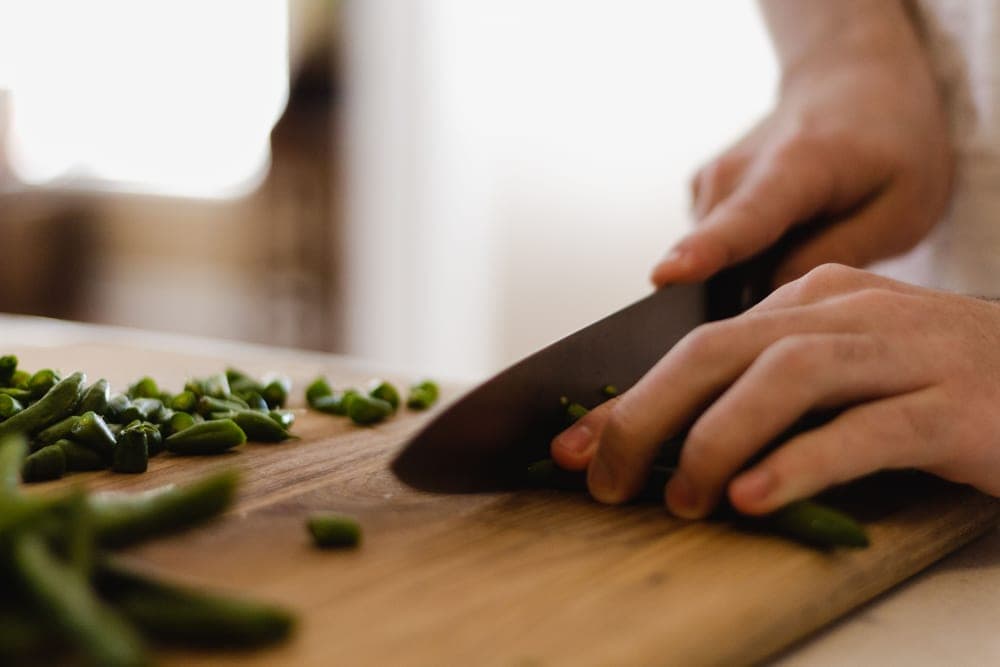 MAC Professional 6.5" Santoku (MSK-65) | Precision vegetable work | 8.5 | |
| 2 | 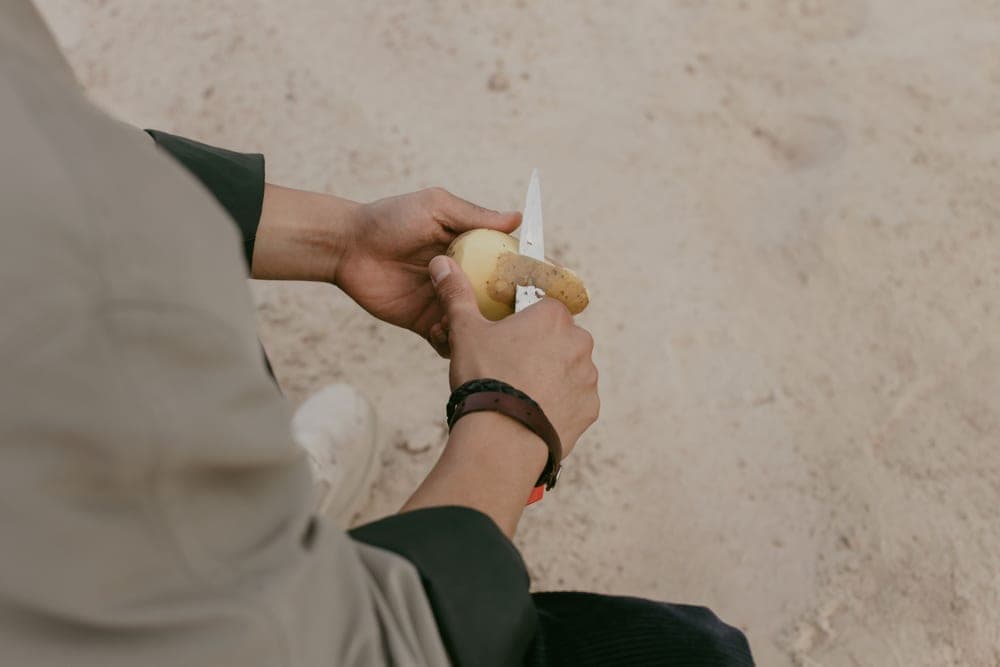 Tojiro DP Santoku 170mm (F-503) | A second Japanese knife on a budget | 8.4 | |
| 3 |  Global G-2 8" Chef's Knife | Cooks who want the lightest knife in the drawer | 7.6 | |
| 4 | Shun Classic 7" Santoku | Small boards and short cooks | 8.2 |
Almost every "best chef knife" list assumes one hand size. The default 8-inch Western chef's knife was not designed around a small hand, and the usual advice — hold it further back — makes the problem worse, because moving your grip back moves the balance point forward. The fix is a shorter blade, not a different grip.
The three numbers to check
- Blade length. 165 to 180 mm. A santoku at that length keeps the full blade height a chef's knife gives you, so you lose reach and nothing else. Our sizes guide covers what you give up at each length.
- Weight. Under roughly 200 g. The Global G-2 is 170 g, the MAC MTH-80 is 6.8 oz, and a Wüsthof Classic 8-inch is 265 g. That is more than a 50 percent difference in what your pinch grip has to stabilize.
- Bolster height. A full bolster running down to the edge blocks the pinch grip, where thumb and forefinger sit on the blade itself. That grip is where small-handed control comes from, so a knife that prevents it is the wrong knife.
How the four picks compare
| Knife | Length | Weight | Handle | Left-hand friendly? |
|---|---|---|---|---|
| MAC Professional Santoku MSK-65 | 6.5 in | Not published | Pakkawood, no bolster | Yes |
| Tojiro DP Santoku F-503 | 170 mm | Not published | Western composite with bolster | Yes |
| Global G-2 | 200 mm (8 in) | 170 g (6 oz) | One-piece dimpled steel | Yes |
| Shun Classic Santoku | 7 in | Not published | D-shaped pakkawood | No — the D-handle is right-hand oriented |
Handle shape is not the same as handle size
A D-shaped handle like the Shun Classic's fills the palm asymmetrically. Some small-handed cooks find that supportive and some find it crowded, and there is no way to know which you are without holding one. A round or oval Western handle like the Tojiro's is more neutral, and Global's one-piece steel handle is the narrowest of the four — which also makes it the slipperiest when wet. The full handle comparison is here.
Hand fit is the one specification you cannot read off a listing. If you can hold the knife in a shop first, do that. If you cannot, buy where you can send it back, and hold it in a pinch grip the moment it arrives rather than after you have cut with it.
If the problem is grip strength rather than hand size
Those are different problems with different answers. A small hand wants a shorter, neutrally balanced blade. A weak or painful grip wants a soft, high-friction handle and the lowest weight available — which points at the Victorinox Fibrox Pro, whose thermoplastic handle holds wet hands better than any wood or steel handle here and which weighs 5.6 oz. It is a 56 HRC stamped knife rather than a Japanese one, and that is often the right trade. What you give up going that way.
The verdict
MAC MSK-65 if you want the best of these and will look after a thin tip. Tojiro DP santoku for most of the same geometry at a fraction of the price, with a plain handle and a bolster you may want to ease. Global G-2 if you want a full 200 mm of blade at 170 g and you have held one first. Shun Classic santoku if you are right-handed, you like a D-handle, and the object matters to you as much as the cutting does.
The picks in detail
#1 · Precision vegetable work
MAC Professional 6.5" Santoku (MSK-65)
The MTH-80's logic in a santoku: thin, light, 15 degrees per side, and consistent from unit to unit.
What it does well
- Extremely thin behind the edge for its price
- Same 15-degree factory geometry as the rest of the Professional line
- Light and neutral in the hand
Where it gives way
- Thin tip is easy to damage
- No bolster to protect your knuckles in a heavy grip
- Costs more than the Tojiro equivalent
Skip it if: Heavy jobs. It is thin, and thin blades dislike bone and frozen food.
| Blade length | 6.5 in |
|---|---|
| Steel | Sub-zero tempered high-carbon molybdenum vanadium alloy |
| Hardness | approx. 61 HRC (MAC Professional line) |
| Edge angle | 15 degrees per side |
#2 · A second Japanese knife on a budget
Tojiro DP Santoku 170mm (F-503)
The gyuto's sibling: same VG-10 san mai, same price bracket, shorter and flatter. The cheapest honest route into a Japanese santoku.
What it does well
- Same steel and geometry philosophy as the F-808 gyuto
- Light and easy to control for shorter cooks
- Inexpensive enough to learn stone work on
Where it gives way
- Plain finish, same as the rest of the DP line
- 170 mm limits you on anything large
- Soft cladding scratches quickly
Skip it if: Anyone who already has a 210 mm gyuto and a small board — the overlap is large.
| Blade length | 170 mm |
|---|---|
| Steel | VG-10 core, three-layer stainless cladding |
| Hardness | 59-61 HRC |
| Handle | Western composite wood with bolster |
#3 · Cooks who want the lightest knife in the drawer
Global G-2 8" Chef's Knife
One piece of steel, dimpled hollow handle, 170 g. Nothing else feels like it — which is exactly why you should hold one before you buy.
What it does well
- 170 g and perfectly balanced — the least tiring knife here over two hours of prep
- One-piece construction with no rivets or bolster to trap food
- 2 mm spine means it is thin behind the edge out of the box
Where it gives way
- 56-58 HRC is soft for a Japanese knife; expect to hone it often
- The dimpled steel handle is polarizing and slick when wet
- CROMOVA 18 does not take as fine a finishing edge as VG-10
Skip it if: Anyone with wet hands and no patience: the smooth steel handle gets slippery, and at 56-58 HRC it will not hold an edge like a 61 HRC blade.
| Blade length | 8 in (200 mm) |
|---|---|
| Steel | CROMOVA 18 stainless |
| Hardness | 56-58 HRC |
| Edge angle | 10-15 degrees, double bevel |
| Blade height | 1.7 in (45 mm) |
| Spine | 2 mm |
| Weight | 6 oz (170 g) |
#4 · Small boards and short cooks
Shun Classic 7" Santoku
The same VG-MAX core and 16-degree edge as the Classic chef's knife, in the shorter, flatter profile that suits a small board.
What it does well
- Short enough to control on a 12-inch board
- Flat profile suits push cutting, which is how Japanese knives want to be used
- Same steel and warranty as the full-size Classic
Where it gives way
- 7 in is short for breaking down a chicken or a large squash
- Premium over a Tojiro santoku is large
- D-handle is right-hand oriented
Skip it if: Anyone who rocks-chops. The flat profile punishes that grip.
| Blade length | 7 in |
|---|---|
| Steel | VG-MAX core, Damascus-clad |
| Hardness | 61 HRC |
| Edge angle | 16 degrees per side |
| Handle | D-shaped pakkawood |
Common questions
What size chef's knife is best for small hands?
Does a lighter knife help if you have small hands?
Is handle thickness or blade length more important?
Should I avoid a bolster?
Sources
Read next
Japanese Knives
Best Santoku Knives
Japanese Knives
Japanese Knife Sizes
Japanese Knives
Gyuto vs Santoku: Which Should You Buy?
Steel & Care
Japanese vs Western Knife Handles
Japanese Knives
Best Knives for Cutting Vegetables
Japanese Knives