Steel & Care
Japanese vs Western Knife Handles
What this is based on: published manufacturer specifications and retailer listings, cited on each product; the weight of professional and owner reviews across multiple retailers; and hands-on experience sharpening and cooking with knives of this type. We have not individually tested every model listed, we do not run instrumented sharpness testing, and we do not claim a test we did not run.
Quick picks
| # | Product | Best for | Score | Price |
|---|---|---|---|---|
| 1 |  Tojiro DP Gyuto 210mm (F-808) | First Japanese knife | 8.6 | |
| 2 |  MAC Professional 8" Chef's Knife with Dimples (MTH-80) | The one-knife kitchen | 8.8 | |
| 3 | 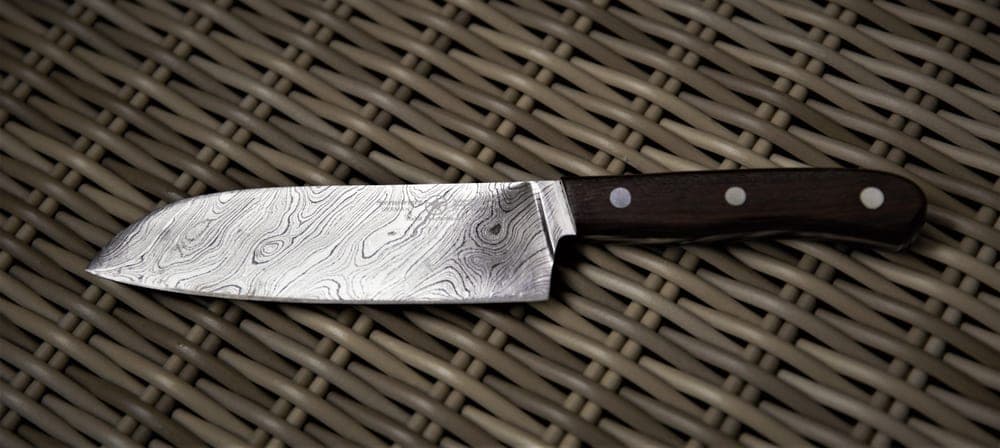 Shun Classic 8" Chef's Knife (DM0706) | A knife you want to look at | 8.3 | |
| 4 | Global G-2 8" Chef's Knife | Cooks who want the lightest knife in the drawer | 7.6 |
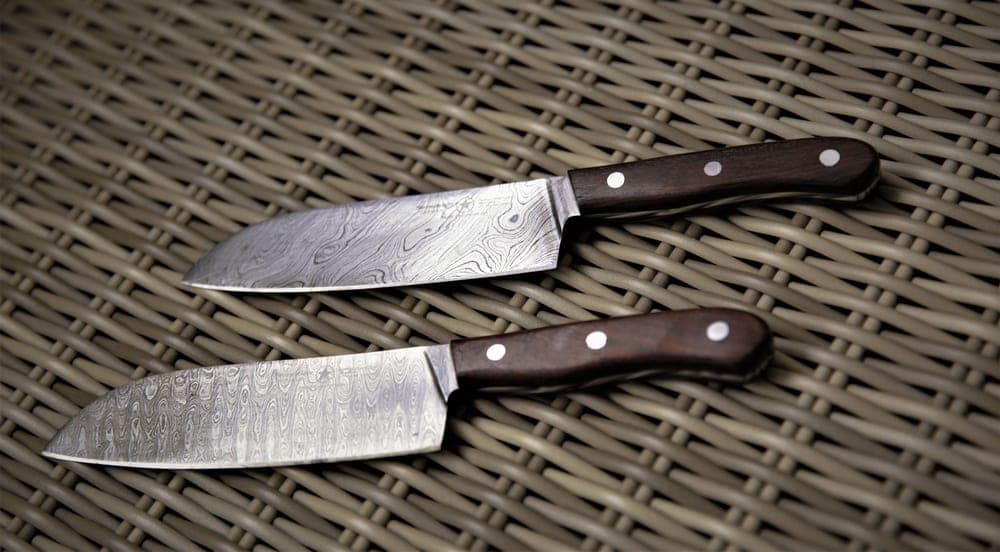
The two words worth knowing are wa (Japanese) and yo(western). A wa handle is a sleeve of wood with a tapered hole, which the blade's tang is driven into — no rivets, no bolster, often no metal at all beyond a horn or plastic ferrule. A yo handle is the shape you already know: two scales riveted to a tang, or a moulded handle bonded to one, usually with a bolster where blade meets handle.
What each handle changes
| Property | Japanese (wa) | Western (yo) |
|---|---|---|
| Weight | Very light; often under 50 g | Heavier, and intentionally so |
| Balance point | Further forward, toward the blade | At or behind the bolster |
| Grip when wet | Bare wood gets slick | Pakkawood and thermoplastic hold better |
| Handedness | Octagonal: none. D-shaped: handed. | Round or oval: none. D-shaped: handed. |
| Repairability | Replaceable at home, cheaply | Workshop job, or impossible on one-piece knives |
| Tolerance of soaking | Poor — the wood swells and the joint moves | Good on pakkawood; excellent on thermoplastic |
The balance line is the one people feel first. Take the same blade, put a 40 g wa handle on it instead of a 90 g western handle, and the knife feels blade-heavy and eager. Whether that reads as agile or as tiring depends entirely on how you hold it — which is why this is a preference and not a ranking.
What the knives we recommend actually use
- Tojiro DP F-808 — western. Laminated composite wood with a stainless bolster. Plain, durable, slightly square at the bolster; ten minutes with 400-grit paper eases it if it catches your forefinger.
- MAC MTH-80 — western. Riveted pakkawood with an integrated bolster. The most comfortable western handle of our picks and the least opinionated.
- Shun Classic — D-shaped hybrid. Pakkawood shaped like a wa handle but fitted with a stainless bolster and end cap, oriented for right-handed use. What that means if you are left-handed.
- Global G-2 — neither. One continuous piece of steel with a dimpled grip. Nothing to trap food and nothing to come loose, at the cost of being the slipperiest handle here when wet.
- Victorinox Fibrox Pro — western, no bolster. Thermoplastic elastomer, and the best wet grip of any handle on this site.
Not because they are worse. Traditional wa-handled knives are mostly sold by specialist importers rather than through the retailer this site links to, and we only recommend products a reader can actually buy through the links on the page. If you want an octagonal wa handle, buy from a specialist Japanese knife shop — and know that a wa handle is the one part of the knife you should expect to replace. How we choose what to recommend.
Which should you buy
- Buy western if your knife shares a kitchen, gets washed by other people, or you want the most secure grip with wet hands. This covers most readers.
- Buy a D-shaped hybrid if you are right-handed, you cook with a pinch grip, and you want a handle that fills the palm. Hold one first.
- Buy wa if you want the lightest possible knife, you will dry it immediately every time, and you are comfortable replacing the handle in a few years.
- Buy one-piece steel if hygiene outranks everything and you have held a Global and liked it.
Whichever you buy, the handle is the part of the knife that care actually protects. Wood does not belong in a dishwasher or a sink of standing water, and a loose handle is almost always a drying problem rather than a manufacturing one. The care rules that matter are short, and this is most of them.
The picks in detail
#1 · First Japanese knife
Tojiro DP Gyuto 210mm (F-808)
The default answer to 'my first real Japanese knife'. VG-10 at around 60 HRC in a plain three-layer build, at a price that makes the inevitable first chip survivable.
What it does well
- VG-10 at 59-60 HRC takes a genuinely fine edge and holds it far longer than a German knife at 56-58
- 1.9 mm spine and 43 mm heel make it thin behind the edge without being fragile
- Cheap enough that learning to sharpen on it is not frightening
Where it gives way
- Handle finish is functional and unlovely; some units need the bolster easing with sandpaper
- Stainless cladding is soft and scratches readily
- Nothing about the fit and finish will impress anyone
Skip it if: Anyone who wants the knife to be beautiful. The handle is a workmanlike composite with a stainless bolster and nothing about it is charming.
| Blade length | 210 mm (8.3 in) |
|---|---|
| Steel | VG-10 core, 13-chrome stainless cladding (san mai) |
| Hardness | 59-60 HRC |
| Heel height | 43 mm |
| Spine at heel | 1.9 mm |
| Weight | approx. 187 g |
| Handle | Western, laminated composite wood with stainless bolster |
#2 · The one-knife kitchen
MAC Professional 8" Chef's Knife with Dimples (MTH-80)
The knife that wins the most side-by-side tests and asks the least of you. Thin, light, 61 HRC, and forgiving enough that a mediocre sharpening job still cuts well.
What it does well
- 6.8 oz with a 2.5 mm spine — genuinely light in the hand over a long prep session
- 15 degrees per side from the factory, which is the angle you will maintain anyway
- 25-year warranty and a reputation for consistency unit to unit
Where it gives way
- Costs meaningfully more than a Tojiro DP for a similar hardness
- Mono-steel, so no cladding to protect the core if you drop it edge-first
- The dimples do less for release than the marketing implies
Skip it if: Anyone chasing maximum edge retention. At 61 HRC in a mono-steel it will not out-last a powder-steel blade, and the dimples are cosmetic more often than useful.
| Blade length | 8 in (approx. 200 mm) |
|---|---|
| Steel | Sub-zero tempered high-carbon molybdenum vanadium alloy |
| Hardness | 61 HRC |
| Edge angle | 15 degrees per side (double bevel) |
| Blade height | 1 7/8 in |
| Spine at heel | 2.5 mm |
| Weight | 6.8 oz |
| Handle | Riveted Pakkawood with integrated bolster |
#3 · A knife you want to look at
Shun Classic 8" Chef's Knife (DM0706)
The Damascus-clad knife people actually buy. A 16-degree-per-side VG-MAX edge at 61 HRC, a D-shaped pakkawood handle, and a look that sells itself.
What it does well
- 16 degrees per side is a sensible factory angle — acute, but not so thin it chips on a carrot
- Handle geometry is genuinely comfortable in a pinch grip
- Kai's warranty and free sharpening service are real, useful things
Where it gives way
- You pay a significant premium over a MAC or Tojiro for the Damascus cladding
- The D-shaped handle is oriented for right-handed use
- Thin tip is easy to snap if you twist it in a squash
Skip it if: Left-handed cooks who dislike a D-shaped handle, and anyone who resents paying for 68 layers of cladding that do nothing for cutting.
| Blade length | 8 in |
|---|---|
| Steel | VG-MAX core, 34 layers Damascus cladding each side |
| Hardness | 61 HRC |
| Edge angle | 16 degrees per side |
| Handle | D-shaped pakkawood with stainless bolster and end cap |
| Warranty | Limited lifetime |
#4 · Cooks who want the lightest knife in the drawer
Global G-2 8" Chef's Knife
One piece of steel, dimpled hollow handle, 170 g. Nothing else feels like it — which is exactly why you should hold one before you buy.
What it does well
- 170 g and perfectly balanced — the least tiring knife here over two hours of prep
- One-piece construction with no rivets or bolster to trap food
- 2 mm spine means it is thin behind the edge out of the box
Where it gives way
- 56-58 HRC is soft for a Japanese knife; expect to hone it often
- The dimpled steel handle is polarizing and slick when wet
- CROMOVA 18 does not take as fine a finishing edge as VG-10
Skip it if: Anyone with wet hands and no patience: the smooth steel handle gets slippery, and at 56-58 HRC it will not hold an edge like a 61 HRC blade.
| Blade length | 8 in (200 mm) |
|---|---|
| Steel | CROMOVA 18 stainless |
| Hardness | 56-58 HRC |
| Edge angle | 10-15 degrees, double bevel |
| Blade height | 1.7 in (45 mm) |
| Spine | 2 mm |
| Weight | 6 oz (170 g) |
Common questions
What is the difference between a Japanese and a western knife handle?
Is a wa handle better?
What is a D-shaped handle?
Can you replace a knife handle?
Sources
Read next
Japanese Knives
Best Chef Knives for Small Hands
Japanese Knives
Left-Handed Japanese Knives
Japanese Knives
Your First Japanese Knife
Brands
Shun vs Wüsthof
Japanese Knives
Japanese vs German Knives
Steel & Care