Japanese Knives
Chef Knife vs Cleaver
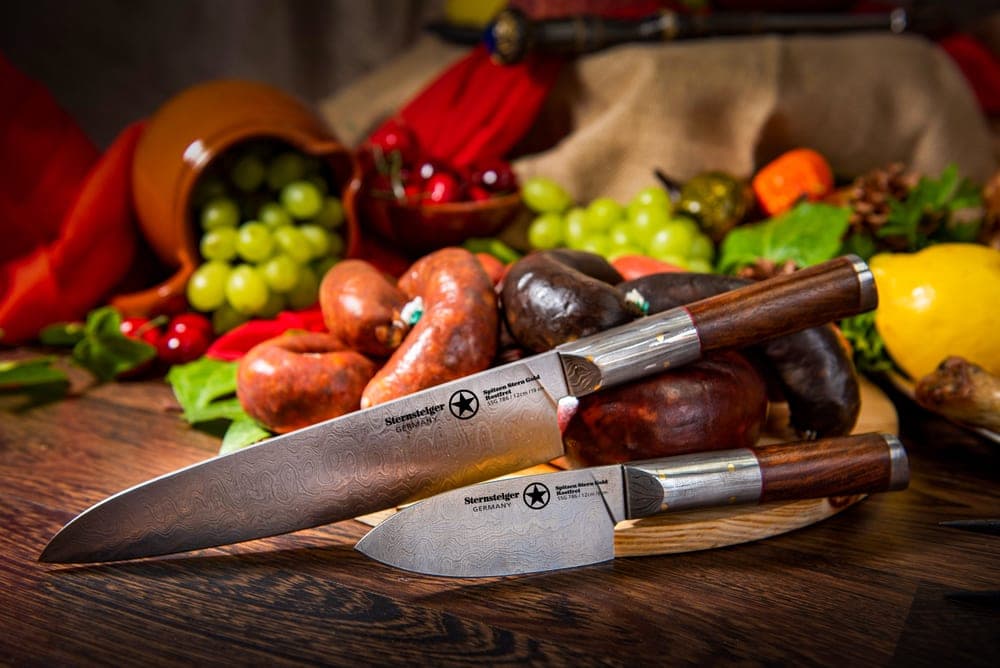
What this is based on: published manufacturer specifications and retailer listings, cited on each product; the weight of professional and owner reviews across multiple retailers; and hands-on experience sharpening and cooking with knives of this type. We have not individually tested every model listed, we do not run instrumented sharpness testing, and we do not claim a test we did not run.
Quick picks
| # | Product | Best for | Score | Price |
|---|---|---|---|---|
| 1 | 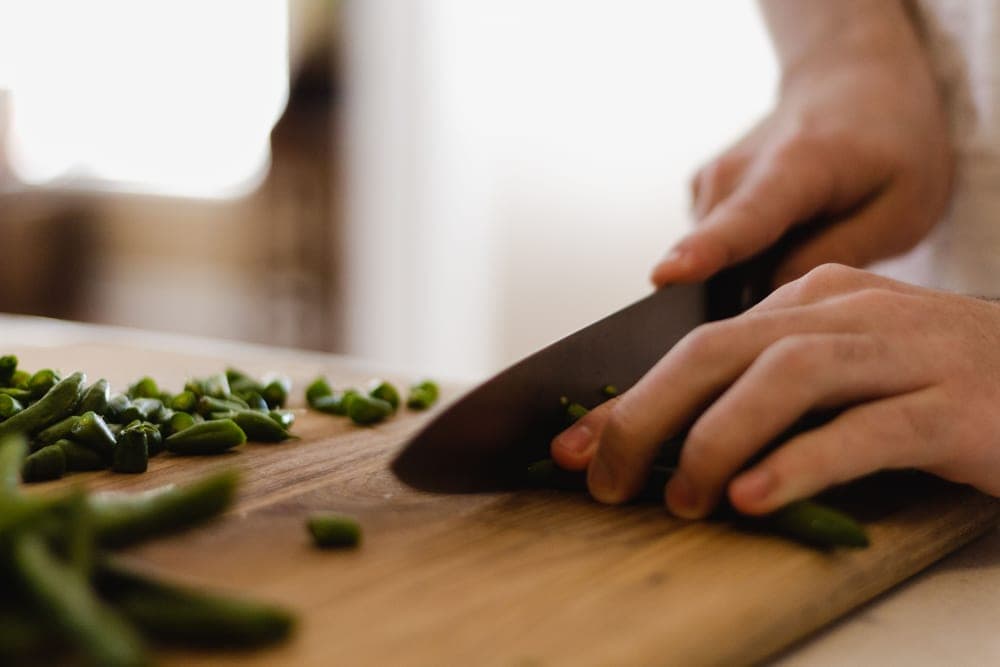 Tojiro DP Gyuto 210mm (F-808) | First Japanese knife | 8.6 | |
| 2 | 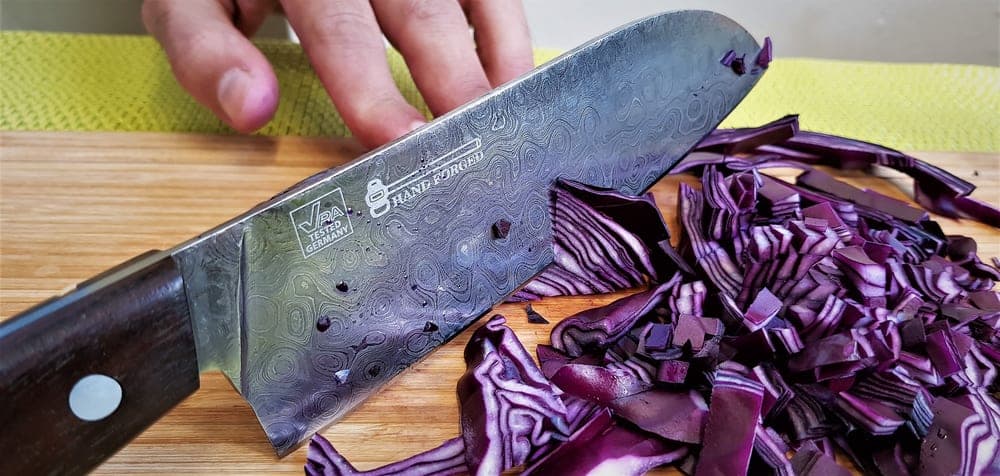 Tojiro DP Nakiri 165mm (F-502) | First nakiri | 8.7 | |
| 3 | MAC Professional 6.5" Santoku (MSK-65) | Precision vegetable work | 8.5 |
Most of the confusion in this comparison comes from the word. In an American kitchen store, "cleaver" usually means a heavy butcher's cleaver: thick spine, obtuse edge, built to be swung through poultry bone without folding over. In a Chinese kitchen the same silhouette is a caidao — a thin, acutely ground vegetable and general-purpose knife that would be destroyed by one swing at a bone. Deciding between "a chef knife" and "a cleaver" is impossible until you know which cleaver you mean.
Three tools, not two
| Blade | Spine | Edge | Built for | Will it survive bone? |
|---|---|---|---|---|
| Chef's knife / gyuto | Thin, under 2.5 mm on a Japanese blade | 15-20 degrees per side | Everything, with a tip for fine work | No |
| Butcher's cleaver | Very thick, heavy | Obtuse, often 25 degrees or more | Chopping through bone and joints | Yes — that is the whole point |
| Chinese vegetable cleaver (caidao) | Thin | Acute, like a chef's knife | High-volume vegetable slicing and scooping | No |
| Nakiri | 1.8 mm on the Tojiro DP | Acute, double bevel | Vegetables on a home-sized board | No |
The practical consequence of that table: if the appeal of a cleaver is the tall flat blade and the board clearance, what you want is a thin one — and on a home board a nakiri gives you the same geometry in a size that fits. If the appeal is chopping through a chicken carcass, no Japanese knife on this site is the answer and you should buy a dedicated heavy cleaver from a butcher-supply brand.
Where each one wins
The chef's knife wins at
- Anything needing a tip. Trimming silverskin, scoring skin, splitting a chili, following a joint. A cleaver has a corner, not a tip.
- Protein. The belly lets you slice with a drawing motion instead of chopping, which matters on anything that can tear.
- Being the only knife you own. 210 mm of gyuto covers roughly 85 percent of a home kitchen's work.
A cleaver wins at
- Volume. A tall blade moves more food per stroke and doubles as a scoop to carry it to the pan — the single most underrated advantage of the shape.
- Bone, if it is the heavy kind. Spatchcocking, splitting ribs, portioning bone-in chicken.
- Smashing garlic and ginger. The broad flat side is a better tool for this than a chef's knife, and it is the one job where a cleaver has no real rival.
The mistake that ruins knives
Using a thin cleaver — or a thin chef's knife — on bone. A 60 HRC Japanese blade at 15 degrees per side has almost no steel behind the edge, and bone does not yield. The result is a chip rather than a cut, and a chip is a sharpening job rather than a wipe-down. The six usual causes of chipping start with exactly this.
A 170 mm santoku splits the difference. It has more height than a chef's knife and a flatter edge, so it behaves a little like a small cleaver on vegetables, while keeping a usable tip. Gyuto against santoku covers that trade in full.
The verdict
Buy a 210 mm gyuto — the Tojiro DP F-808 if you want the cheapest genuinely good one. Add the Tojiro DP nakiri instead of a vegetable cleaver, because it is the same geometry on a scale that suits a home board. Buy a real heavy cleaver only if you break down bone-in meat regularly, and keep it well away from your Japanese edges.
The picks in detail
#1 · First Japanese knife
Tojiro DP Gyuto 210mm (F-808)
The default answer to 'my first real Japanese knife'. VG-10 at around 60 HRC in a plain three-layer build, at a price that makes the inevitable first chip survivable.
What it does well
- VG-10 at 59-60 HRC takes a genuinely fine edge and holds it far longer than a German knife at 56-58
- 1.9 mm spine and 43 mm heel make it thin behind the edge without being fragile
- Cheap enough that learning to sharpen on it is not frightening
Where it gives way
- Handle finish is functional and unlovely; some units need the bolster easing with sandpaper
- Stainless cladding is soft and scratches readily
- Nothing about the fit and finish will impress anyone
Skip it if: Anyone who wants the knife to be beautiful. The handle is a workmanlike composite with a stainless bolster and nothing about it is charming.
| Blade length | 210 mm (8.3 in) |
|---|---|
| Steel | VG-10 core, 13-chrome stainless cladding (san mai) |
| Hardness | 59-60 HRC |
| Heel height | 43 mm |
| Spine at heel | 1.9 mm |
| Weight | approx. 187 g |
| Handle | Western, laminated composite wood with stainless bolster |
#2 · First nakiri
Tojiro DP Nakiri 165mm (F-502)
A flat 165 mm edge in VG-10 at 59-61 HRC for the price of a mid-range German paring knife. The obvious first nakiri.
What it does well
- 45 mm of blade height means your knuckles clear the board
- Genuinely flat edge — full contact, no accordion slices
- 1.8 mm spine falls through vegetables rather than wedging
Where it gives way
- No tip, so it cannot do fine tip work at all
- 207 g is heavier than the profile suggests
- Western handle and bolster feel dense for such a light job
Skip it if: Anyone expecting it to replace a chef's knife. A nakiri does not have a tip and cannot break down a chicken.
| Blade length | 165-170 mm |
|---|---|
| Steel | Takefu VG-10 core, three-layer |
| Hardness | 59-61 HRC |
| Heel height | 45 mm |
| Spine | 1.8 mm, consistent |
| Weight | approx. 207 g |
#3 · Precision vegetable work
MAC Professional 6.5" Santoku (MSK-65)
The MTH-80's logic in a santoku: thin, light, 15 degrees per side, and consistent from unit to unit.
What it does well
- Extremely thin behind the edge for its price
- Same 15-degree factory geometry as the rest of the Professional line
- Light and neutral in the hand
Where it gives way
- Thin tip is easy to damage
- No bolster to protect your knuckles in a heavy grip
- Costs more than the Tojiro equivalent
Skip it if: Heavy jobs. It is thin, and thin blades dislike bone and frozen food.
| Blade length | 6.5 in |
|---|---|
| Steel | Sub-zero tempered high-carbon molybdenum vanadium alloy |
| Hardness | approx. 61 HRC (MAC Professional line) |
| Edge angle | 15 degrees per side |
Common questions
Should I buy a chef's knife or a cleaver?
What is the difference between a meat cleaver and a Chinese cleaver?
Is a nakiri the same as a vegetable cleaver?
Can a cleaver replace a chef's knife?
Sources
Read next
Japanese Knives
Japanese Knife Types
Japanese Knives
Nakiri vs Chef Knife
Japanese Knives
Best Knives for Cutting Vegetables
Japanese Knives
Best Nakiri Knives
Japanese Knives
Gyuto vs Santoku: Which Should You Buy?
Steel & Care