Japanese Knives
Nakiri vs Chinese Cleaver
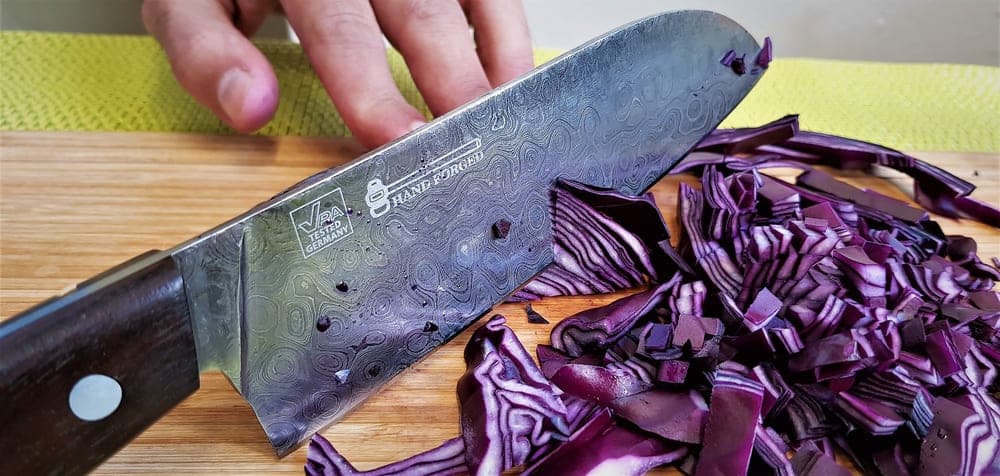
What this is based on: published manufacturer specifications and retailer listings, cited on each product; the weight of professional and owner reviews across multiple retailers; and hands-on experience sharpening and cooking with knives of this type. We have not individually tested every model listed, we do not run instrumented sharpness testing, and we do not claim a test we did not run.
Quick picks
| # | Product | Best for | Score | Price |
|---|---|---|---|---|
| 1 | 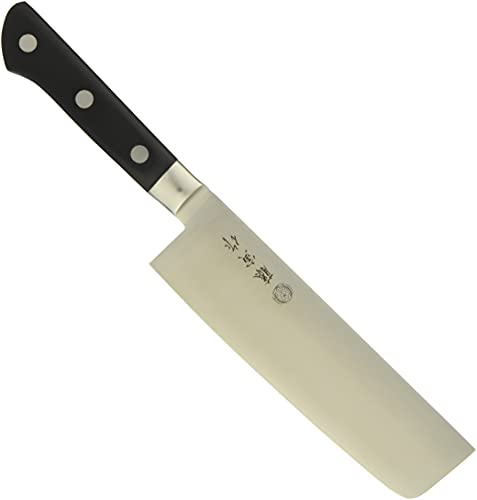 Tojiro DP Nakiri 165mm (F-502) | First nakiri | 8.7 | |
| 2 | 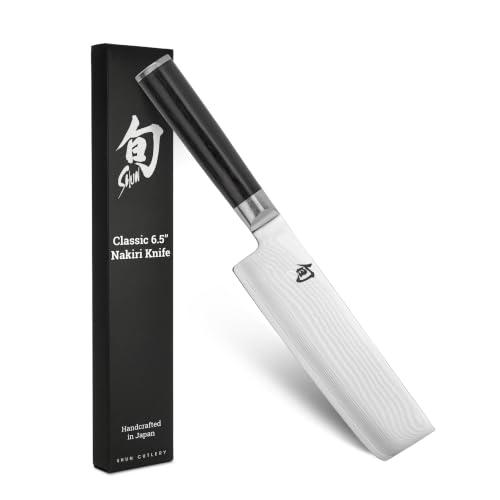 Shun Classic 6.5" Nakiri (DM0728) | An upgrade nakiri | 8.3 | |
| 3 |  Tojiro DP Gyuto 210mm (F-808) | First Japanese knife | 8.6 |
These two shapes solve the same problem from opposite directions. Both are tall, both have a flat edge, and neither has a point, which is exactly what makes them good at vegetables. Where they part company is scale - and the Chinese cleaver is twice the blade.
The published numbers
| CCK stainless Chinese cleaver | Tojiro DP Nakiri F-502 | |
|---|---|---|
| Edge length | 205 mm | 165-170 mm |
| Blade height at heel | 92 mm | 45 mm |
| Overall length | 315 mm | Not published |
| Weight | 274 g | approx. 207 g |
| Hardness | 61 HRC | 59-61 HRC |
| Spine | Not published | 1.8 mm, consistent |
| Steel | Stainless | Takefu VG-10 core, three-layer |
Specialist retailers put the vegetable cleaver family at 18 to 22 cm of blade length and the nakiri at 16 to 18 cm, so the example above is representative rather than extreme. The height figure is the one to sit with: 92 mm against 45 mm is not a refinement, it is a different tool.
What the extra height buys
Three things. First, support: a wide slice of cabbage or daikon stays flat against the blade instead of folding away, so the cut is cleaner and the pile stays organised. Second, transfer: the flat of a cleaver carries half a board of diced onion to the pan in one movement, which is genuinely faster and the reason professional Chinese kitchens use nothing else. Third, crushing - garlic, ginger, lemongrass - under the flat, which a 45 mm nakiri does less convincingly.
The costs are real too. 274 g on a tall blade needs a grip you have to learn, the knife does not fit most knife blocks or drawers, and on a 12 inch board the overhang makes you nervous. A nakiri at 45 mm already clears your knuckles, which was the main ergonomic argument for height in the first place.
Chinese kitchens keep the two separate. The caidao is a thin slicing cleaver for vegetables, herbs, fruit and boneless meat; bone work belongs to a much heavier, thicker knife. Using a 61 HRC thin cleaver on a chicken joint chips it, the same way it would chip a nakiri. See why knives chip.
On the board, they cut almost identically
Both are push-cutting knives. The flat edge lands along its length, the slices separate, and neither rocks because neither has a belly to rock on. If you came off a German chef's knife, both will feel strange for a week and then correct. The nakiri's 1.8 mm spine is thin enough that it falls through dense produce rather than wedging, which is the virtue people are usually chasing when they shop for either shape.
Where the nakiri wins outright is precision. Lighter blade, shorter edge, less mass to steer - it is the better knife for a fine julienne or a tidy brunoise. Our vegetable knife roundup ranks the picks on exactly that axis, and nakiri against chef's knife covers the comparison most people make before this one.
Which one to buy
- Normal kitchen, normal board, produce-heavy cooking. Tojiro DP Nakiri. 45 mm of height, a flat 165 mm edge, VG-10, and very little money.
- You use a nakiri daily and want better. Shun Classic Nakiri - flat ground, 16 degrees per side over VG-MAX, and a handle that works left-handed.
- You want one knife for all of it, including proteins. Neither tipless shape: a 210 mm Tojiro DP gyuto gives you a tip, 43 mm of height and the same thin Japanese grind.
- Large board, high volume, and you like the scoop. A thin stainless vegetable cleaver is the right tool - and this site does not stock one, so buy from a specialist who publishes the height and weight.
Storage, sharpening and the grip
A 92 mm tall blade does not fit a knife block and overhangs most magnetic racks. It also needs a wider stone, or a more deliberate stroke, to keep the bevel even from heel to spine - with 45 mm of nakiri you can work the whole bevel in one pass on a 70 mm stone, and with a cleaver you cannot. Neither is difficult, but the cleaver quietly asks for more kit.
The grip is different too. A cleaver is held with the thumb and forefinger pinching high on the blade and the handle sitting in the palm, and the weight does a lot of the work for you. A nakiri is held like a chef's knife and steered. If you have only ever used a Western knife, the nakiri transfers directly and the cleaver does not - which is a genuine argument for starting with the smaller blade. Our board picks matter for both, because a flat tall edge shows up a warped board immediately.
The verdict
The Chinese vegetable cleaver is the more versatile tool and the nakiri is the more practical one. 92 mm of blade height genuinely buys support, transfer and crushing; it also buys storage problems and a grip to learn. For almost every home kitchen, the nakiri delivers the cleaner produce cut, the knuckle clearance and the flat edge for a third of the mass. Start there, and if you find yourself wishing for more blade, you will know exactly why. The wider shape map is in Japanese flat tipped knives.
The picks in detail
#1 · First nakiri
Tojiro DP Nakiri 165mm (F-502)
A flat 165 mm edge in VG-10 at 59-61 HRC for the price of a mid-range German paring knife. The obvious first nakiri.
What it does well
- 45 mm of blade height means your knuckles clear the board
- Genuinely flat edge — full contact, no accordion slices
- 1.8 mm spine falls through vegetables rather than wedging
Where it gives way
- No tip, so it cannot do fine tip work at all
- 207 g is heavier than the profile suggests
- Western handle and bolster feel dense for such a light job
Skip it if: Anyone expecting it to replace a chef's knife. A nakiri does not have a tip and cannot break down a chicken.
| Blade length | 165-170 mm |
|---|---|
| Steel | Takefu VG-10 core, three-layer |
| Hardness | 59-61 HRC |
| Heel height | 45 mm |
| Spine | 1.8 mm, consistent |
| Weight | approx. 207 g |
#2 · An upgrade nakiri
Shun Classic 6.5" Nakiri (DM0728)
Flat-ground, double-bevelled to 16 degrees per side, 69-layer Damascus over a VG-MAX core. The nakiri for someone who already knows they want one.
What it does well
- Flat grind gives excellent release on dense vegetables
- Handle works for left-handed cooks, unlike the D-shaped Classic chef's knife
- Kai's lifetime warranty applies
Where it gives way
- Several times the price of the Tojiro for a knife doing the same job
- Thin tip corners are easy to ding on the board
- Damascus cladding is cosmetic
Skip it if: A first nakiri. Buy the Tojiro, decide you use it, then buy this.
| Blade length | 6.5 in (165 mm) |
|---|---|
| Steel | VG-MAX core, 34 Damascus layers each side (69 total) |
| Edge | Double bevel, flat ground, 16 degrees per side |
| Handle | Pakkawood, usable left or right handed |
#3 · First Japanese knife
Tojiro DP Gyuto 210mm (F-808)
The default answer to 'my first real Japanese knife'. VG-10 at around 60 HRC in a plain three-layer build, at a price that makes the inevitable first chip survivable.
What it does well
- VG-10 at 59-60 HRC takes a genuinely fine edge and holds it far longer than a German knife at 56-58
- 1.9 mm spine and 43 mm heel make it thin behind the edge without being fragile
- Cheap enough that learning to sharpen on it is not frightening
Where it gives way
- Handle finish is functional and unlovely; some units need the bolster easing with sandpaper
- Stainless cladding is soft and scratches readily
- Nothing about the fit and finish will impress anyone
Skip it if: Anyone who wants the knife to be beautiful. The handle is a workmanlike composite with a stainless bolster and nothing about it is charming.
| Blade length | 210 mm (8.3 in) |
|---|---|
| Steel | VG-10 core, 13-chrome stainless cladding (san mai) |
| Hardness | 59-60 HRC |
| Heel height | 43 mm |
| Spine at heel | 1.9 mm |
| Weight | approx. 187 g |
| Handle | Western, laminated composite wood with stainless bolster |
Common questions
Is a Chinese cleaver better than a nakiri?
Can a Chinese cleaver chop bone?
Which is better for vegetables?
Do they sharpen the same way?
Sources
Read next
Japanese Knives
Nakiri vs Chef Knife
Japanese Knives
Chef Knife vs Cleaver
Japanese Knives
Best Nakiri Knives
Japanese Knives
Nakiri vs Usuba
Japanese Knives
Japanese Flat Tipped Knives
Japanese Knives