Steel & Care
What Size Cutting Board Do I Need?
What this is based on: published manufacturer specifications and retailer listings, cited on each product; the weight of professional and owner reviews across multiple retailers; and hands-on experience sharpening and cooking with knives of this type. We have not individually tested every model listed, we do not run instrumented sharpness testing, and we do not claim a test we did not run.
Quick picks
| # | Product | Best for | Score | Price |
|---|---|---|---|---|
| 1 | 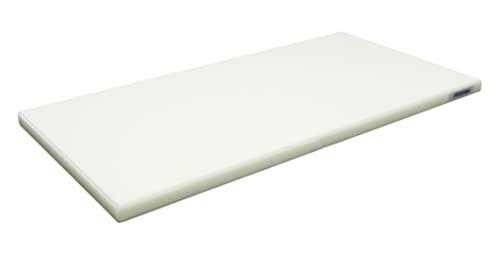 Hasegawa Karugaru Wood-Core Cutting Board (SD20-4123) | The last board you buy | 8.5 | |
| 2 | 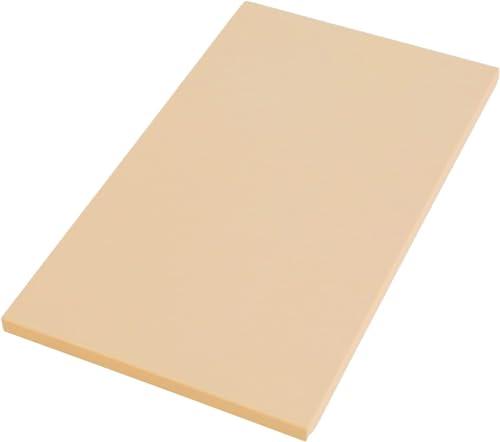 Asahi Cookin' Cut Rubber Cutting Board | Edge friendliness per dollar | 8.5 | |
| 3 | 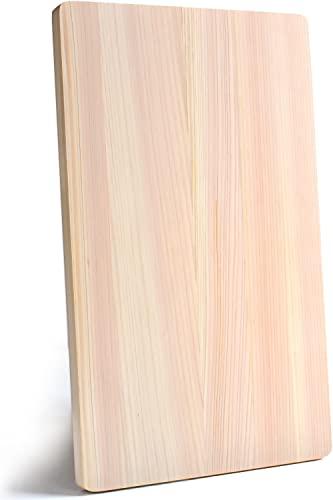 Yamasan Hinoki (Japanese Cypress) Cutting Board, Small | Cooks who want wood and will look after it | 7.9 |
Board size is the least discussed variable in a knife kitchen and one of the most consequential. A board that is too small does not just feel cramped; it changes your cutting motion, forces you to chop in the middle of a crowded surface, and puts the knife edge into the counter when the heel runs out of room.
Length: double the blade
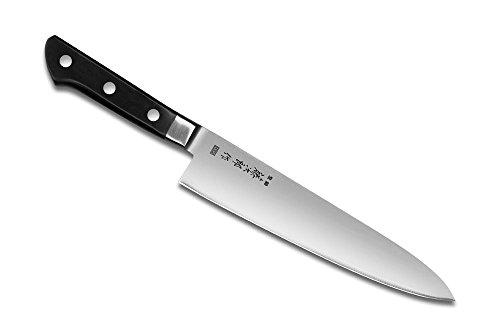
A push cut moves the knife forward through the food, so the heel finishes past where the tip began. On a 210 mm blade that means the working stroke needs roughly 400 mm of board to complete without the heel dropping off the far edge. A 240 mm gyuto wants 450 mm or more.
If you are not sure what length knife you have — or are choosing one — the relationship runs both ways: 210 mm or 240 mm is a board decision as much as a knife decision.
Depth: enough for a second pile
Depth is about workflow rather than geometry. 230 mm (9 in) gives you a cutting lane at the front and a holding area at the back, so you can slice an onion and push it aside without transferring it to a bowl every thirty seconds. Anything under about 200 mm and every single component needs its own container.
A full-size board of 410 x 230 mm is the standard home answer, which is exactly what the Hasegawa wood-core board measures. The Asahi rubber board is slightly larger again at 420 x 250 mm.
Thickness: stability, not edge protection
Thickness does not make a board kinder to your knife — that is a material property, not a dimension. What thickness buys is mass and rigidity. A thin board flexes under the knife and slides on the counter, and a sliding board is a safety problem before it is anything else.
Around 13 to 15 mm is the practical sweet spot for a synthetic or softwood board: heavy enough to stay put, light enough to lift to the sink with one hand. Thick end-grain butcher blocks at 40 mm and up are lovely and are a different category of object — you do not move them, you work around them.
The three sizes worth owning
| Board | Size | Suits |
|---|---|---|
| Hasegawa wood-core | 410 x 230 mm | Main board for a 210 mm knife; dishwasher safe, re-planeable |
| Asahi rubber | 420 x 250 x 13 mm | Main board, largest surface here; hand wash only |
| Yamasan hinoki, small | 360 x 220 x 15 mm | Second board for garlic, citrus, fish; light to handle |
One full-size board plus one small one covers almost every home kitchen. The small board does the odd jobs and keeps raw protein off the main surface; the big board does everything else. Material matters more than either dimension, and that is covered in the board roundup.
Check it fits your sink and your counter
- The sink. A board you cannot lay flat in the sink is a board you will wash badly. Measure before you buy, especially for a 450 mm board.
- Counter depth. A 250 mm-deep board on a shallow counter leaves no room for a bowl, and you end up working at the very front edge.
- Standing height. A thick board raises the cutting surface, which helps if you are short and hurts if you are tall. Tall cooks usually want a thinner board, not a thicker one — more on that in setup for tall people.
- Storage. A board that lives on the counter gets used. A board that lives behind the toaster does not.
A 450 mm glass or bamboo board is still harder than your knife steel. Getting the dimensions right matters, but material is the decision that determines how long your edge lasts — see why your knife dulls so fast.
Board size by knife length
| Knife | Minimum board length | Comfortable |
|---|---|---|
| 150-165 mm petty or nakiri | 300 mm | 360 mm |
| 170-180 mm santoku | 330 mm | 400 mm |
| 210 mm gyuto / 8 in chef | 400 mm | 410-420 mm |
| 240 mm gyuto | 450 mm | 500 mm |
The “minimum” column is where the heel still clears the board on a full push cut. The “comfortable” column adds room to hold prepped food without transferring it. If you own both a nakiri and a 210 mm gyuto, size the board for the gyuto — the shorter knife is happy on a bigger board and the reverse is not true.
Two boards, not one or four
One full-size board is the minimum and two is the practical answer. The second board does not need to match: a 360 mm softwood board handles garlic, citrus, herbs and fish, keeps strong smells off the main surface, and is light enough to rinse one-handed mid-cook. It is also the board you grab for one shallot rather than hauling out the big one.
Beyond two, boards stop earning their storage space. A color-coded set of four thin plastic boards is worse than one good board and one small one, because thin boards flex, slide and dull edges faster than their size suggests. Material and thickness beat quantity: the board roundup works through what each surface does to an edge.
The short answer
400 x 230 mm, around 13 to 15 mm thick, in soft rubber or a wood-core construction. That fits a 210 mm Japanese knife properly, gives you a holding area, stays put on the counter and still fits in a standard sink.
Add a small 360 mm board for the quick jobs once the main one is in use. Then stop buying boards and spend the next money on keeping the knife right.
The picks in detail
#1 · The last board you buy
Hasegawa Karugaru Wood-Core Cutting Board (SD20-4123)
A wood core faced with soft polyethylene: rigid enough not to warp, soft enough that it does not blunt a thin Japanese edge. Dishwasher safe, and the surface can be re-planed.
What it does well
- Wood core keeps it rigid and light — it will not bow like a solid plastic board
- Soft face does not catch or roll a freshly stoned edge
- Dishwasher safe, unlike rubber boards and unlike end-grain wood
Where it gives way
- Expensive
- Plain white utility look, not a serving board
- Re-planing is a service, not a weekend job
Skip it if: A modest budget. This is the expensive answer, and a rubber board gets you most of the way.
| Construction | Wood core with soft polyethylene surface layers |
|---|---|
| Size | 410 x 230 mm (16.1 x 9.1 in) |
| Dishwasher | Yes |
| Serviceable | Surface can be re-planed |
#2 · Edge friendliness per dollar
Asahi Cookin' Cut Rubber Cutting Board
Synthetic rubber that cushions the edge on every cut, does not absorb juice, does not warp, and shrugs off turmeric and beets. The value answer in this category.
What it does well
- Soft surface cushions the blade on every cut
- Does not absorb juice, warp, or need oiling
- Resists staining from turmeric, beets and tomato
Where it gives way
- Not dishwasher safe
- Heavier than it looks for its size
- Rubber smell on a new board takes a few washes to fade
Skip it if: The dishwasher. Asahi boards are not dishwasher safe; Hasegawa boards are.
| Material | Synthetic rubber |
|---|---|
| Size | 16.5 x 9.8 x 0.5 in (420 x 250 x 13 mm) |
| Dishwasher | No |
| Service life | 10+ years in professional use before re-planing |
#3 · Cooks who want wood and will look after it
Yamasan Hinoki (Japanese Cypress) Cutting Board, Small
Soft, light, aromatic softwood with natural antibacterial properties. Kind to an edge — including 63-66 HRC blades — and it scars visibly to prove it.
What it does well
- Among the kindest surfaces to a thin, hard edge
- Light enough to move and wash one-handed
- Naturally aromatic and mildly antibacterial
Where it gives way
- Softwood: it scars, dents and stains visibly
- Requires real care — no soaking, no dishwasher
- Shorter service life than rubber or a wood-core board
Skip it if: Anyone who leaves boards wet in the sink. Hinoki is a softwood and will stain, scar and eventually split if neglected.
| Material | Japanese cypress (hinoki) |
|---|---|
| Size | 14.17 x 8.66 x 0.59 in (360 x 220 x 15 mm) |
| Edge friendliness | Suits high-hardness blades at 63-66 HRC |
| Care | Hand wash, dry upright, never soak, never dishwasher |
Common questions
What size cutting board do I need?
How much bigger than the knife should a cutting board be?
Does cutting board thickness matter?
Is a small cutting board ever the right choice?
Sources
Read next
Steel & Care
Best Cutting Boards for Japanese Knives
Japanese Knives
Japanese Knife Sizes
Steel & Care
Japanese Knife Care Guide
Whetstones & Skill
Why Does My Knife Get Dull So Fast?
Steel & Care
Knife Storage Guide
Japanese Knives