Gift Guides
Gifts for Someone Learning to Sharpen
What this is based on: published manufacturer specifications and retailer listings, cited on each product; the weight of professional and owner reviews across multiple retailers; and hands-on experience sharpening and cooking with knives of this type. We have not individually tested every model listed, we do not run instrumented sharpness testing, and we do not claim a test we did not run.
Quick picks
| # | Product | Best for | Score | Price |
|---|---|---|---|---|
| 1 |  King KDS Combination Whetstone #1000/#6000 | Your first stone | 8.4 | |
| 2 |  Leather Bench Strop with Stropping Compound | Finishing after the stones | 8.0 | |
| 3 |  Tumbler Rolling Knife Sharpener | People who want a fixed angle and hate gear | 8.0 | |
| 4 | 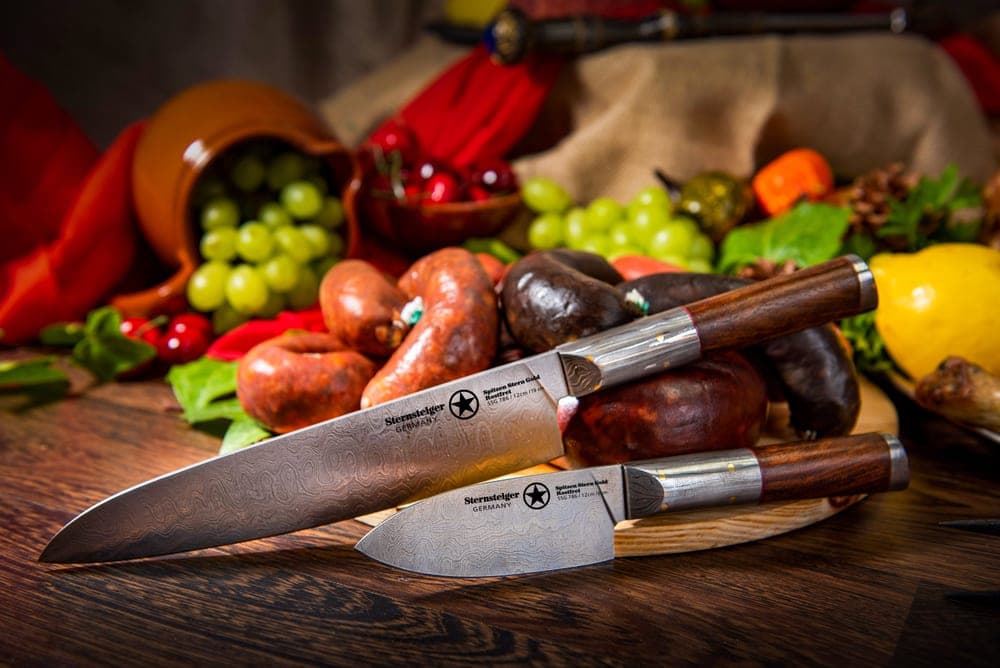 Victorinox Fibrox Pro 8" Chef's Knife | A beater, or a sanity check before you spend more | 7.0 |
Why a soft stone teaches better
Sharpening is a feedback skill. You are trying to learn what the correct angle feels like, when the bevel is flat on the stone, and when a burr has formed. All of that information arrives through your fingers.
A soft clay-bonded stone builds slurry readily and communicates loudly: you can feel the bevel sit flat, hear the change when the angle wanders, and feel the burr come up. A hard, fast, splash-and-go premium stone is quieter and more efficient, which makes it an excellent tool and a poor teacher.
Everyone gouges their first stone, dishes it unevenly, and flattens it badly. That is a much better thing to do to an inexpensive one.
What to give, in order
- A King KDS 1,000/6,000 combination stone. Two useful grits, soft and forgiving, and cheap. Mention that the 1,000 side wants a 10 to 15 minute soak and the 6,000 side needs only a splash.
- A leather strop with compound. The burr is the number one beginner failure — a knife that feels razor sharp and then fails on a tomato, because the burr tore off. A strop fixes that in two minutes. How to strop.
- A cheap knife to practice on. A Victorinox Fibrox at 56 HRC is soft, easy to sharpen, and costs little enough that the first few clumsy attempts do not matter. Nobody should learn on the knife they love.
The guided-system question
A rolling sharpener like the Tumbler fixes the angle magnetically at 15 or 20 degrees and produces a good edge immediately with essentially no skill. That is either exactly right or exactly wrong, depending on the person.
- Give the rolling sharpener if they have said they find sharpening intimidating, or if the realistic alternative is a drawer of permanently dull knives.
- Give the stone if they have said they want to learn. The guide performs the skill for them, so they never acquire it.
Two free things to include
- A permanent marker. Coloring the bevel and checking where the ink comes off is the single most useful diagnostic in sharpening, and almost nobody is told about it. The angle guide.
- A note about the burr. Raising one is how you know you have reached the apex; removing it is how you finish. That one idea prevents most beginner frustration. Why it matters.
The verdict
The King KDS stone and a strop, with a note pointing at the technique guide. That is a complete, forgiving, inexpensive starting point, and the person who receives it will still be using the skill in twenty years.
The picks in detail
#1 · Your first stone
King KDS Combination Whetstone #1000/#6000
The stone almost everyone learns on. Soft, forgiving, cheap, and it tells you loudly when your angle wanders.
What it does well
- Two useful grits in one block for the price of half a premium stone
- Soft binder builds slurry readily, which gives beginners real feedback
- Almost impossible to damage a knife on it
Where it gives way
- Dishes quickly and needs flattening often
- The soak is a real commitment — you cannot sharpen on a whim
- Slow on hard powder steels like SG2
Skip it if: Impatient people. The 1000 side wants a 10-15 minute soak before every session and the clay binder dishes fast.
| Grits | #1000 / #6000, combination |
|---|---|
| Binder | Clay |
| Soaking | #1000 side: 10-15 minutes. #6000 side: splash only |
| Size | 207 x 66 x 36 mm |
| Weight | approx. 956 g |
#2 · Finishing after the stones
Leather Bench Strop with Stropping Compound
Ten dollars of leather and abrasive that removes the burr your finishing stone left behind. The cheapest real improvement in this whole category.
What it does well
- Turns a good stone edge into a noticeably better one in two minutes
- Extends the interval between full sharpenings
- Costs less than almost anything else in the kitchen
Where it gives way
- Easy to round the edge over if you lift the spine
- Does nothing for a genuinely dull knife
- Leather needs re-charging with compound periodically
Skip it if: Sharpening. A strop refines and deburrs; it removes almost no steel and will not fix a dull knife.
| Function | Burr removal and edge refinement |
|---|---|
| Compound | Typically chromium oxide, roughly 0.5 micron |
| Direction | Edge-trailing strokes only |
#3 · People who want a fixed angle and hate gear
Tumbler Rolling Knife Sharpener
A magnetic holder and a rolling abrasive disc that fixes your angle at 15 or 20 degrees. Two pieces, almost no learning curve.
What it does well
- Two pieces, nothing to assemble, nothing to set
- 15-degree setting is the correct angle for most Japanese kitchen knives
- Cheaper than the German alternative and, in side-by-side comparisons, as sharp
Where it gives way
- Magnetic holder limits you to the angles it offers
- Rolls less smoothly than the Horl 2
- Does nothing for a chipped or badly reprofiled edge
Skip it if: Anyone who wants to learn to sharpen. It works by removing the skill, which means you never acquire it.
| Angles | 15 degrees and 20 degrees |
|---|---|
| Components | Sharpening roller + magnetic knife holder |
| Origin | Made in China |
#4 · A beater, or a sanity check before you spend more
Victorinox Fibrox Pro 8" Chef's Knife
Not a Japanese knife and not pretending to be. It is the control sample: if your cooking does not improve after upgrading from this, the knife was never the problem.
What it does well
- Stamped, light and genuinely non-slip when wet
- Soft enough that a pull-through sharpener will not destroy it
- Costs a fraction of everything else here
Where it gives way
- 56 HRC means frequent honing and frequent sharpening
- 18-degree edge is blunt by Japanese standards
- No bolster, no heft, no presence — it feels like a tool because it is one
Skip it if: This site's usual reader. At 56 HRC with an 18-degree edge it is a softer, blunter tool than anything else on this page.
| Blade length | 8 in |
|---|---|
| Steel | X55CrMo14 high-carbon stainless |
| Hardness | 56 HRC |
| Edge angle | 18 degrees |
| Weight | 5.6 oz |
| Handle | Fibrox Pro thermoplastic elastomer, no bolster |
Common questions
What is the best whetstone for a beginner?
Should I buy a beginner an expensive stone?
What else does a beginner sharpener need?
Is a guided system a good gift for a beginner?
Sources
Read next
Gift Guides
Kitchen Knife Gifts Under $50
Gift Guides
Best Gifts for Home Cooks
Whetstones & Skill
How to Use a Whetstone
Whetstones & Skill
Best Whetstones for Kitchen Knives
Whetstones & Skill
Common Knife Sharpening Mistakes
Sharpeners