Gift Guides
Best Gifts for Home Cooks
What this is based on: published manufacturer specifications and retailer listings, cited on each product; the weight of professional and owner reviews across multiple retailers; and hands-on experience sharpening and cooking with knives of this type. We have not individually tested every model listed, we do not run instrumented sharpness testing, and we do not claim a test we did not run.
Quick picks
| # | Product | Best for | Score | Price |
|---|---|---|---|---|
| 1 | 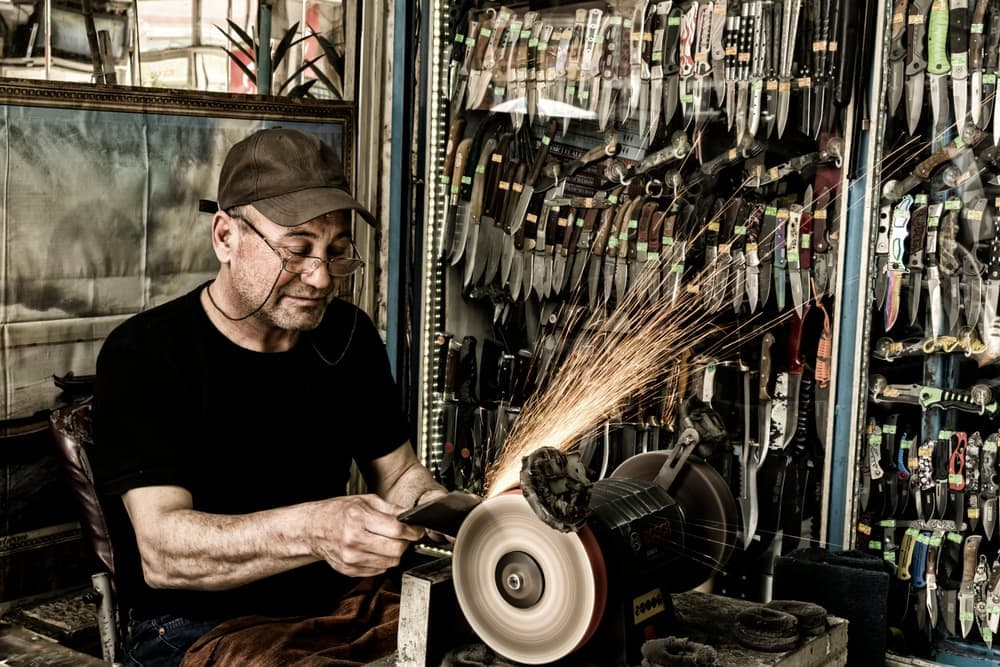 King KDS Combination Whetstone #1000/#6000 | Your first stone | 8.4 | |
| 2 | 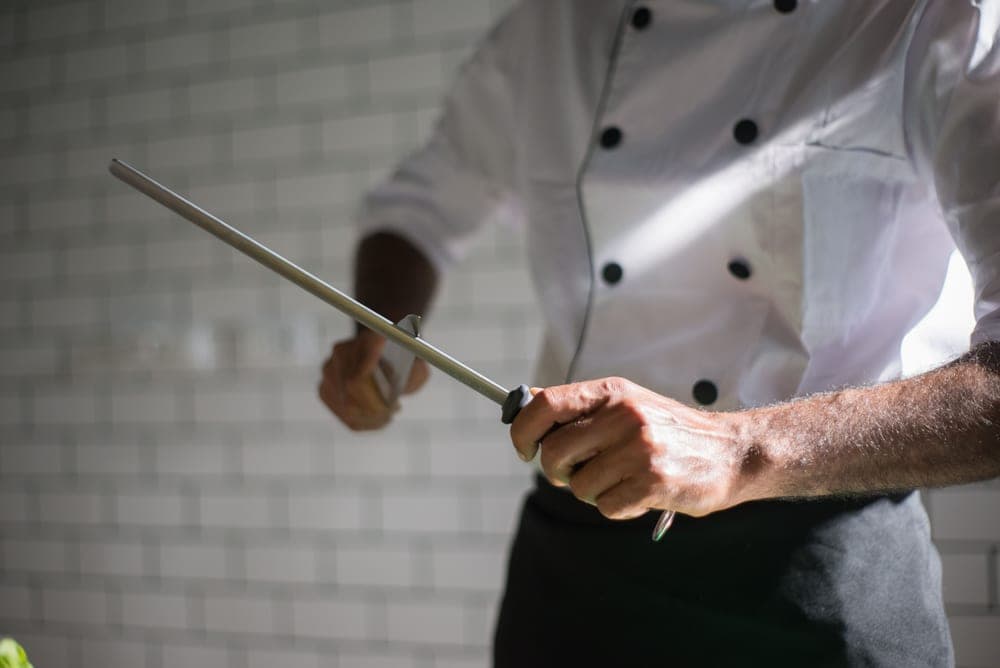 Idahone Fine Ceramic Honing Rod, 12" | Maintaining a hard Japanese edge between sharpenings | 8.8 | |
| 3 |  Asahi Cookin' Cut Rubber Cutting Board | Edge friendliness per dollar | 8.5 | |
| 4 |  Tojiro DP Gyuto 210mm (F-808) | First Japanese knife | 8.6 | |
| 5 | Saya / Magnetic Blade Guard | Anyone whose knives live in a drawer | 8.9 |
Why the knife is the risky gift
Knife preference is genuinely personal. Weight, handle shape, blade length and profile all matter, and someone who cooks most days usually already knows what they want. A 210mm gyuto is wrong for a person with a small board; a D-shaped handle is wrong for a left-handed cook; a heavy German knife is wrong for someone who complained their last one was tiring.
If you do want to give a knife, the safest choice is a good, inexpensive one they can use as a second knife without guilt — which is exactly what the Tojiro DP gyuto is. It is real VG-10 at 59 to 60 HRC with a genuinely thin 1.9mm spine, and nobody who cooks is unhappy to own one.
Three things to check first
- What board do they cut on? If it is glass, stone, ceramic or bamboo, that is your gift decided. Those surfaces are harder than the steel and they quietly destroy edges. Board guide.
- Do they own a sharpening stone? Most people do not, including people with expensive knives. A stone is the single best gift in this whole category.
- Are they left-handed? It rules out some Japanese handle shapes entirely, and it is an easy thing to check without spoiling the surprise.
What actually lands
A whetstone
The gift most likely to be used and least likely to be owned already. A King KDS 1,000/6,000 covers sharpening and finishing in one block, is soft and forgiving to learn on, and costs a fraction of a decent knife. It improves every knife the recipient owns.
Pair it with a link to how to use one and you have given them a skill rather than an object.
A ceramic honing rod
Small, inexpensive, and genuinely useful weekly. Most kitchens have a steel rod that came with a block set — and if the recipient owns Japanese knives at 60+ HRC, that steel rod does essentially nothing, because it is not harder than the blade. Ceramic is roughly four times harder than most knife steels.
A good cutting board
Unromantic and quietly transformative. A soft rubber board cushions the edge on every cut, does not absorb juice, does not warp and does not stain from turmeric or beets. If they are currently cutting on bamboo, this gift doubles how long their knives stay sharp.
Blade guards
The stocking filler that solves a real problem. Loose drawer storage chips more knife tips than cutting does, and a sheath costs a few dollars.
A knife block set. It spends the money on pieces nobody uses and compromises the one knife they will.
An electric sharpener, if they own Japanese knives. It reprofiles a 15-degree edge toward 20 and removes a great deal of steel. Why.
Anything with a carbide pull-through slot. Same problem, worse. The explanation.
The verdict
The stone. A King KDS 1,000/6,000 is the gift most likely to be genuinely used, least likely to be owned already, and the only one that makes everything else in their kitchen work better.
If you want something smaller, the ceramic rod. If you want something they will notice every single day, the board. And if it has to be a knife, make it the Tojiro — inexpensive enough to be a pleasure rather than an obligation.
The picks in detail
#1 · Your first stone
King KDS Combination Whetstone #1000/#6000
The stone almost everyone learns on. Soft, forgiving, cheap, and it tells you loudly when your angle wanders.
What it does well
- Two useful grits in one block for the price of half a premium stone
- Soft binder builds slurry readily, which gives beginners real feedback
- Almost impossible to damage a knife on it
Where it gives way
- Dishes quickly and needs flattening often
- The soak is a real commitment — you cannot sharpen on a whim
- Slow on hard powder steels like SG2
Skip it if: Impatient people. The 1000 side wants a 10-15 minute soak before every session and the clay binder dishes fast.
| Grits | #1000 / #6000, combination |
|---|---|
| Binder | Clay |
| Soaking | #1000 side: 10-15 minutes. #6000 side: splash only |
| Size | 207 x 66 x 36 mm |
| Weight | approx. 956 g |
#2 · Maintaining a hard Japanese edge between sharpenings
Idahone Fine Ceramic Honing Rod, 12"
The honing rod that is actually harder than your knife. 1200 ANSI alumina ceramic, which is roughly 3000-3500 on the Japanese scale.
What it does well
- Ceramic is harder than the steel in a 60+ HRC Japanese knife; a steel rod often is not
- 1200 ANSI realigns without removing meaningful steel
- High-alumina body resists the grooving that ruins cheaper rods
Where it gives way
- Ceramic is brittle — one hard knock on a stone counter and it is done
- Removes so little steel that it cannot rescue a truly dull knife
- 12 in is longer than some drawers
Skip it if: Anyone who bangs the rod on the counter. Ceramic chips; steel does not.
| Rod length | 12 in (30.5 cm) |
|---|---|
| Rod diameter | 1/2 in (12.7 mm) |
| Overall length | 17.5 in (44.5 cm) |
| Grit | Fine, 1200 ANSI (approx. 3500 JIS) |
| Material | High-alumina ceramic |
| Handle | Hard rock maple, 5.25 in |
| Origin | Made in the USA |
#3 · Edge friendliness per dollar
Asahi Cookin' Cut Rubber Cutting Board
Synthetic rubber that cushions the edge on every cut, does not absorb juice, does not warp, and shrugs off turmeric and beets. The value answer in this category.
What it does well
- Soft surface cushions the blade on every cut
- Does not absorb juice, warp, or need oiling
- Resists staining from turmeric, beets and tomato
Where it gives way
- Not dishwasher safe
- Heavier than it looks for its size
- Rubber smell on a new board takes a few washes to fade
Skip it if: The dishwasher. Asahi boards are not dishwasher safe; Hasegawa boards are.
| Material | Synthetic rubber |
|---|---|
| Typical thickness | 5-10 mm |
| Dishwasher | No |
| Service life | 10+ years in professional use before re-planing |
#4 · First Japanese knife
Tojiro DP Gyuto 210mm (F-808)
The default answer to 'my first real Japanese knife'. VG-10 at around 60 HRC in a plain three-layer build, at a price that makes the inevitable first chip survivable.
What it does well
- VG-10 at 59-60 HRC takes a genuinely fine edge and holds it far longer than a German knife at 56-58
- 1.9 mm spine and 43 mm heel make it thin behind the edge without being fragile
- Cheap enough that learning to sharpen on it is not frightening
Where it gives way
- Handle finish is functional and unlovely; some units need the bolster easing with sandpaper
- Stainless cladding is soft and scratches readily
- Nothing about the fit and finish will impress anyone
Skip it if: Anyone who wants the knife to be beautiful. The handle is a workmanlike composite with a stainless bolster and nothing about it is charming.
| Blade length | 210 mm (8.3 in) |
|---|---|
| Steel | VG-10 core, 13-chrome stainless cladding (san mai) |
| Hardness | 59-60 HRC |
| Heel height | 43 mm |
| Spine at heel | 1.9 mm |
| Weight | approx. 187 g |
| Handle | Western, laminated composite wood with stainless bolster |
#5 · Anyone whose knives live in a drawer
Saya / Magnetic Blade Guard
The cheapest way to stop a drawer from ruining a good edge. A sheath costs a few dollars; re-profiling a chipped tip costs an evening.
What it does well
- Stops the single most common cause of chipped tips: loose drawer storage
- Cheap enough to buy one per knife
- Makes it safe to reach into a drawer
Where it gives way
- A wet knife sheathed in wood will corrode — dry it properly first
- Sizes are fussy; a loose saya is worse than none
- Adds a step to putting the knife away
Skip it if: Nobody, really — but if you already have a magnetic rack or a proper block, you do not need one too.
| Function | Edge protection in storage and transit |
|---|---|
| Materials | Wood (saya), plastic, or magnet-lined guards |
Common questions
Is a knife a good gift for someone who cooks?
What should I check before buying a cooking gift?
What is a good gift for someone who already has everything?
Is it bad luck to give a knife as a gift?
Sources
Read next
Gift Guides
Kitchen Knife Gifts Under $50
Gift Guides
Gifts for Someone Learning to Sharpen
Japanese Knives
Best Japanese Chef Knives for Home Cooks
Whetstones & Skill
Best Whetstones for Kitchen Knives
Steel & Care
Best Cutting Boards for Japanese Knives
Japanese Knives